

Introduction
As Fiber-to-the-Home (FTTH) and Passive Optical Network (PON) deployments continue to expand worldwide, network operators face a common challenge: how to connect more subscribers while controlling infrastructure costs and maintaining network performance.
The answer lies in one of the most important passive components in modern fiber networks-the optical splitter.
An optical splitter enables a single optical signal to be distributed to multiple end users, making large-scale FTTH and GPON deployments economically viable. Without optical splitters, every subscriber would require a dedicated fiber connection from the central office, dramatically increasing fiber consumption, installation costs, and maintenance complexity.
Whether you are designing a GPON network, planning an Optical Distribution Network (ODN), or selecting components for a new FTTx deployment, understanding optical splitters is essential.
In this guide, you'll learn:
What an optical splitter is and how it works
PLC splitter vs FBT splitter differences
Common split ratios and real-world insertion loss
Centralized vs cascaded splitting architectures
Types of PLC splitter packaging for different environments
Best practices for reliable FTTH deployment
Technical Review & Overview
Technical Review By: Spring Optical Engineering Team
Target Audience: Network Engineers, FTTx Procurement Managers, Telecom Integrators
Standards Compliance: ITU-T G.984 (GPON), ITU-T G.9807.1 (XGS-PON), Telcordia GR-1209/1221-CORE
What Is an Optical Splitter?
Definition
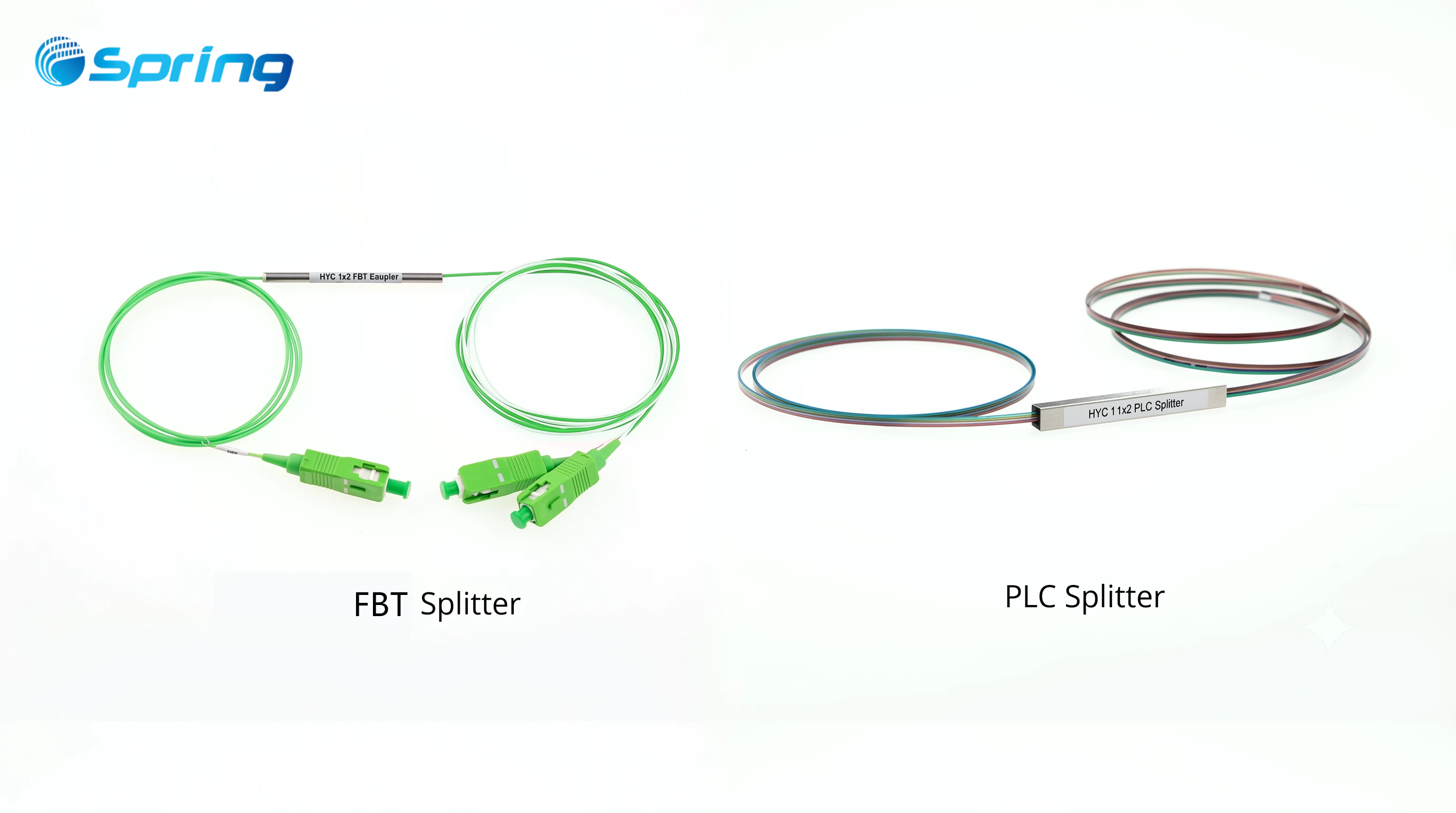
An optical splitter, also known as a fiber optic splitter, is a passive optical device that divides a single incoming optical signal into multiple output signals.
Unlike active networking equipment, optical splitters require no electrical power and perform signal distribution entirely through optical technology. Their primary role is to support point-to-multipoint (P2MP) network architectures used in FTTH, GPON, EPON, and next-generation XGS-PON.
For example, a 1 × 8 optical splitter takes one incoming fiber and distributes the signal to eight output fibers, while a 1 × 32 splitter distributes the same signal to 32 subscribers.
Key Takeaway
An optical splitter allows multiple users to share a single feeder fiber, significantly reducing network deployment costs.
Why Optical Splitters Are Essential in PON Networks
Optical splitters are the foundation of modern PON architectures. Without splitters, service providers would need dedicated fibers from the Optical Line Terminal (OLT) to every single subscriber, creating a costly and unmanageable point-to-point network.
Benefits of optical splitters include:
Reduced fiber infrastructure costs: Minimizes the total mileage of feeder cables required from the central office.
Improved fiber utilization: Maximizes the capacity of each OLT port.
Simplified network expansion: Allows network scaling by adding splitters closer to user clusters.
Lower maintenance requirements: Passive components have no power consumption, no software failures, and exceptionally long service lifespans.
In GPON networks, a single OLT port can often serve 32, 64, or even 128 subscribers through properly designed splitter architectures.
Real-World Example
A GPON OLT port connected to a 1 × 32 PLC splitter can serve 32 homes simultaneously, reducing feeder fiber requirements by more than 90%.
How Does an Optical Splitter Work?

Optical Power Distribution Principle
When an optical signal enters a splitter, the total optical power is divided among the output ports based on physical laws.
| Split Ratio | Optical Power Per Output (Theoretical) |
| 1×2 | 50% |
| 1×4 | 25% |
| 1×8 | 12.5% |
| 1×16 | 6.25% |
| 1×32 | 3.125% |
As the split ratio increases, the optical power available at each individual output decreases. This reduction in signal strength is known as insertion loss and is a critical factor in ODN design.
Key Takeaway
Higher split ratios improve subscriber density but increase optical loss, requiring precise link budget planning.
Signal Splitting Process
A typical FTTH network follows this path:
OLT→Feeder Fiber→Optical Splitter→Distribution Fiber→ONT/ONU
The optical splitter simply distributes optical power and does not amplify, regenerate, or alter the signal wavelengths. Because it contains no active electronics, it offers high reliability and a service life that often spans decades under proper operating conditions.
Optical Splitter vs WDM
Optical splitters and wavelength division multiplexers (WDM) serve entirely different functions in fiber networks.
| Feature | Optical Splitter | WDM |
| Function | Divides optical power | Combines or separates different wavelengths |
| Output Output | Same wavelength on all outputs | Different wavelengths on separate outputs |
| Application | Used in GPON/EPON/XGS-PON networks | Used in CWDM/DWDM and WDM-PON systems |
| Purpose | Supports subscriber sharing | Supports wavelength multiplexing over one fiber |
Key Takeaway
Splitters divide optical power, while WDM devices manage wavelengths.
Types of Optical Splitters: PLC vs. FBT
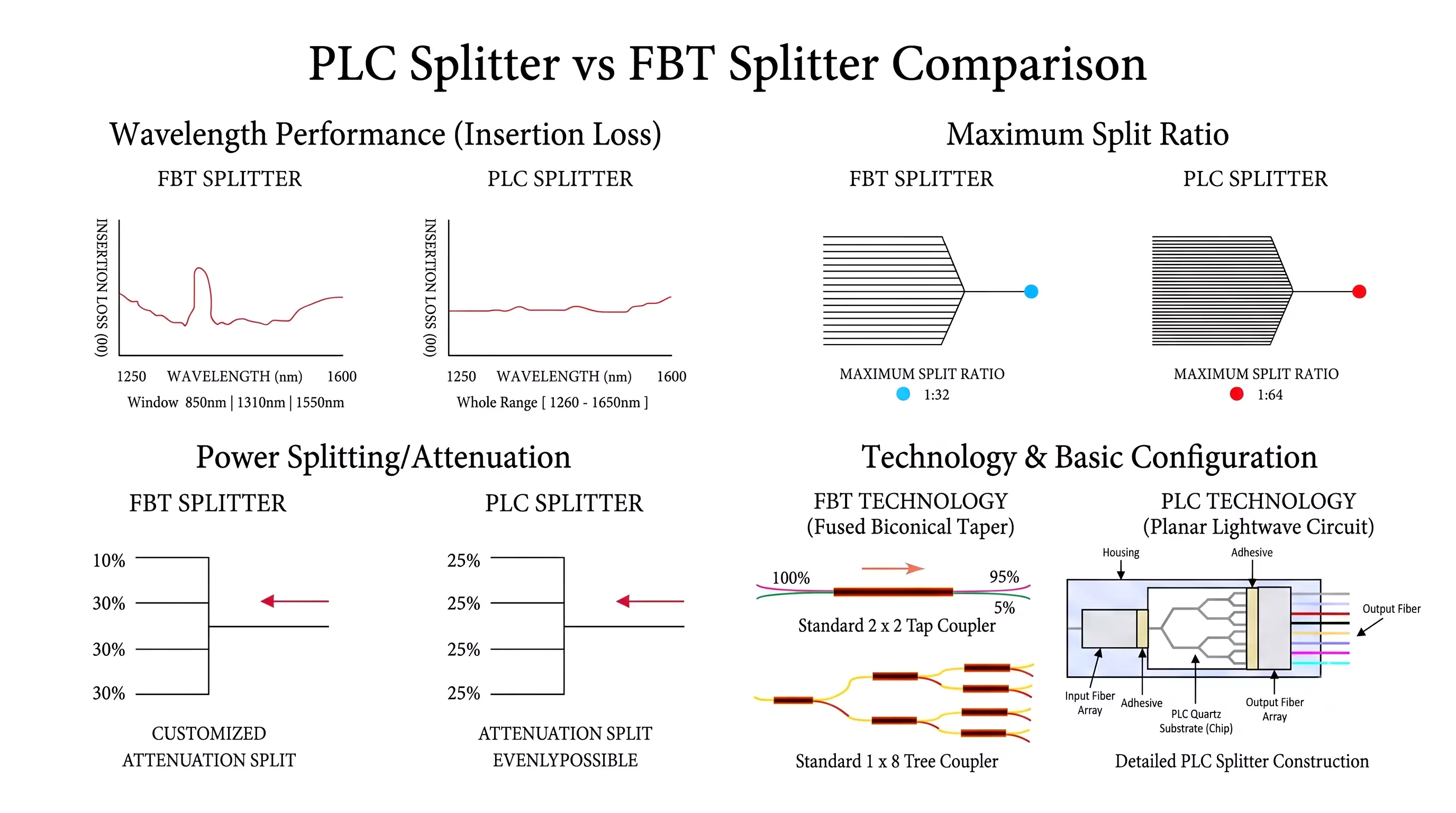
Two splitter technologies dominate the telecommunications industry: Planar Lightwave Circuit (PLC) and Fused Biconical Taper (FBT).
PLC Splitter
PLC splitters are manufactured using semiconductor-style photolithography technology on silica glass substrates. This allows the creation of a precise waveguide circuit that can split light uniformly.
Advantages include:
Uniform signal distribution: Minimal variation in loss across all output ports.
Low polarization-dependent loss (PDL): Typically ≦ 0.2 dB to 0.3 dB, ensuring stable signal performance.
Wide wavelength range: Fully supports operation from 1260nm to 1650nm, making it compatible with GPON, EPON, and XGS-PON simultaneously.
High split ratios: Easily achieves configurations up to 1 × 64 or 1 × 128 in compact footprints.
Industry Recommendation
For most modern FTTH projects, PLC splitters are considered the standard choice because of their scalability, temperature stability (-40°C to +85°C), and consistency.
FBT Splitter
FBT splitters are manufactured using a traditional technology where two or more optical fibers are twisted, fused, and stretched together under a heat source.
Advantages include:
Lower cost for small split ratios: Highly economical for 1 × 2 or 1 × 4 configurations.
Custom unequal split ratios: Can be made to split power unevenly (e.g., 90/10 or 70/30), which is essential for specialized linear topologies.
Common applications:
CATV networks
Optical monitoring and tap systems
Laboratory testing environments
PLC vs. FBT Quick Comparison Table
| Feature | PLC Splitter | FBT Splitter |
| Technology | Planar Waveguide (Semiconductor) | Fiber Fusion & Stretching |
| Uniformity | Excellent (Equal splitting across all ports) | Moderate (Higher port-to-port variance) |
| Operating Wavelength | Wide (1260nm - 1650nm) | Narrower (Typically limited to 1-3 specific windows) |
| High Split Ratios | Excellent (Up to 1×128) | Limited (Hard to exceed 1×32 reliably) |
| Unequal Splits | Not available | Yes (Highly customizable) |
| FTTH Suitability | Preferred Standard | Less Common (Used mostly in specialized taps) |
Engineering Note from Spring Optical: While standard PLC splitters support wide wavelengths, low Polarization Dependent Loss (PDL) and high return loss (≧55 dB for APC connectors) are the true indicators of a premium wafer. In harsh outdoor FTTx environments, ensure your splitters pass Telcordia GR-1209-CORE and GR-1221-CORE reliability tests to prevent signal degradation over time.
Common Split Ratios and Their Applications
Selecting the correct split ratio directly impacts network performance, physical footprint, and subscriber capacity per OLT port.
1×2 & 1×4 Splitters
Applications: Small business campuses, enterprise fiber networks, building access systems, and redundant network pathing. FBT 1 × 2 splitters are also widely used for optical monitoring taps.
1×8 & 1×16 Splitters
Applications: Rural FTTH projects, low-density residential developments, and first-stage splitting in cascaded architectures.
1×32 Splitter
The Industry Standard: The most commonly deployed split ratio in mainstream GPON networks.
Advantages: Offers an optimal balance between subscriber capacity and optical budget limits defined by ITU-T G.984.
1×64 & 1×128 Splitters
Applications: High-density urban FTTH, large apartment complexes (MDUs), and next-generation XGS-PON networks. These require stringent optical budget planning due to high insertion loss.
Optical Splitter Insertion Loss Chart
Typical Loss Values (Including Connectors)
| Split Ratio | Max Insertion Loss (dB) | Port Uniformity (dB) |
| 1×2 | ≦ 3.8 | ≦ 0.4 |
| 1×4 | ≦ 7.2 | ≦ 0.6 |
| 1×8 | ≦ 10.5 | ≦ 0.8 |
| 1×16 | ≦ 13.8 | ≦ 1.2 |
| 1×32 | ≦ 17.0 | ≦ 1.5 |
| 1×64 | ≦ 20.5 | ≦ 2.0 |
| 1×128 | ≦ 24.2 | ≦ 2.5 |
Actual values may vary slightly based on connector types (SC/APC vs. LC/UPC) and manufacturing precision.
Loss Budget Calculation Example
Consider a standard GPON Class B+ optical link with a maximum allowable budget of 28.0 dB:
Fiber Attenuation Loss (approx. 15km at 1310nm): 5.2 dB
Connector Loss (approx. 4 connectors): 1.2 dB
Splice Loss (approx. 6 fusion splices): 0.6 dB
1×32 PLC Splitter Loss: 17.0 dB
Total Estimated ODN Loss:
5.2 dB + 1.2 dB + 0.6 dB + 17.0 dB = 24.0 dB
Remaining Power Margin:
28.0 dB - 24.0 dB = 4.0 dB
This remaining 4.0 dB margin is critical. It provides a safety net for network aging, environmental degradation, and future emergency maintenance splices.
Centralized vs. Cascaded Splitting Architectures
Designing the Optical Distribution Network (ODN) typically involves choosing between two major architectural approaches.
Centralized Splitting (Single-Stage)
In a centralized architecture, a single splitter (typically a 1 × 32 or 1 × 64) is placed in a central hub location, such as a Fiber Distribution Hub (FDH) cabinet. Each subscriber has a direct, individual distribution fiber running back to this central cabinet.
Advantages: Simpler troubleshooting, easier capacity management, and lower port waste.
Disadvantages: Requires a significantly higher volume of distribution fiber cables radiating from the hub, leading to higher initial fiber deployment costs in low-density areas.
Cascaded Splitting (Multi-Stage)
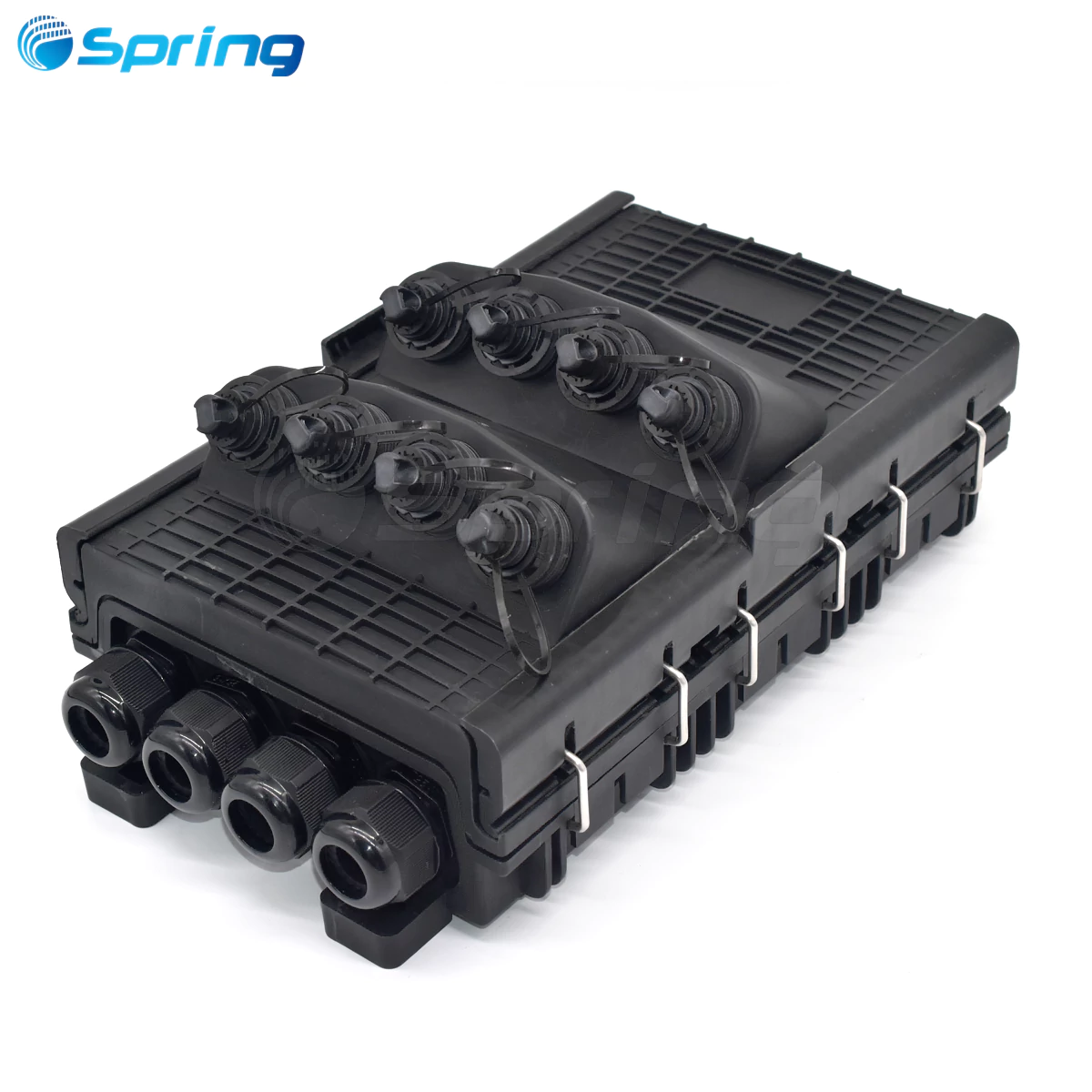
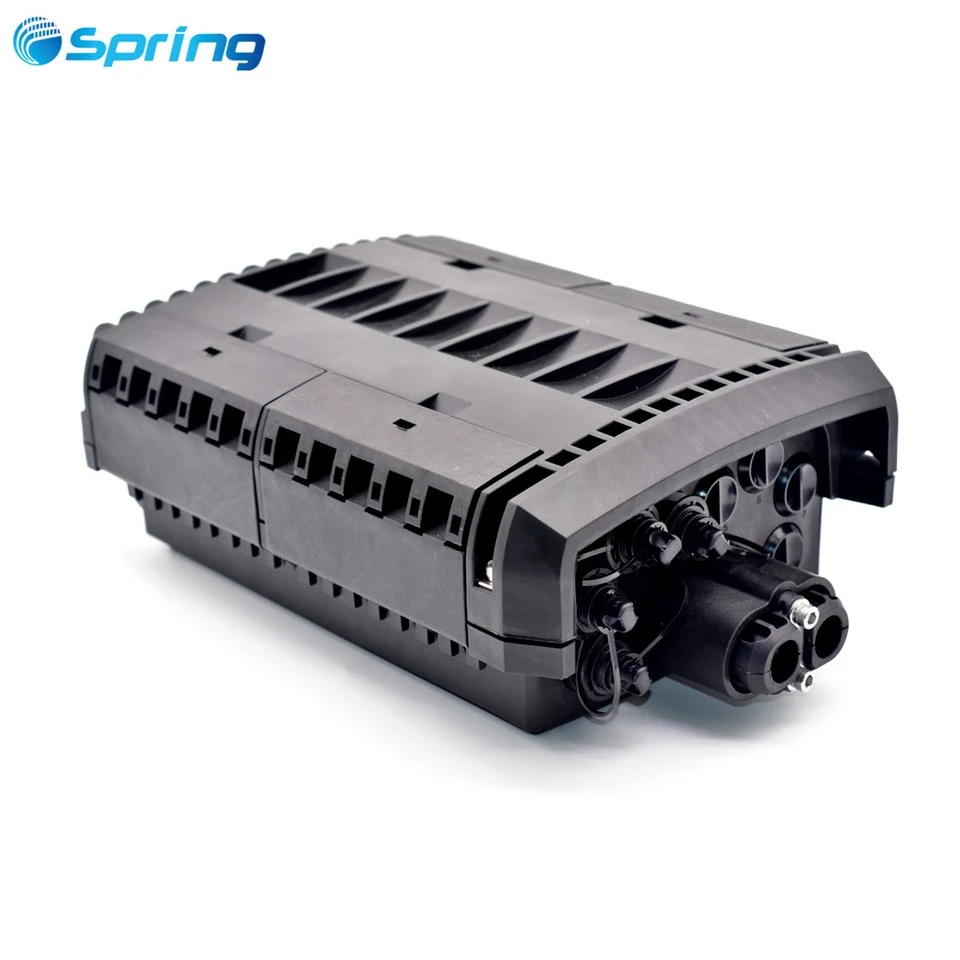
A cascaded architecture utilizes multiple stages of splitters. For example, a 1 × 4 splitter located in an outdoor enclosure near the central office connects to four separate 1 × 8 splitters housed in Multiport Service Terminals (MST Boxes) closer to individual subscriber streets.
Advantages: Drastically reduces the amount of fiber cable required, maximizing fiber utilization. Highly cost-effective for initial rollouts.
Disadvantages: Makes troubleshooting more complex, increases total connector/splice points, and risks higher cumulative insertion loss if not installed precisely.
Selection Guide
Urban Areas (High Density): Centralized splitting is generally preferred because maintenance is easier, and subscriber density justifies the fiber cable mass.
Rural or Suburban Areas (Low Density): Cascaded splitting often provides the best balance of fiber utilization and lower upfront deployment costs, utilizing hardened MST boxes to drop connections locally.
Types of PLC Splitter Packaging


Matching the physical package style to your installation environment is essential for protection and spatial efficiency.
Bare Fiber PLC Splitter: Best suited for integration directly into fusion splice trays, fiber patch panels, and joint closures.
Mini Steel Tube PLC Splitter: A compact design ideal for splice trays, fiber distribution boxes, and space-limited environments.
ABS Box PLC Splitter: Wrapped in a rugged plastic module. This style is widely utilized in standard wall-mount FTTH distribution boxes and pole-mounted enclosures.
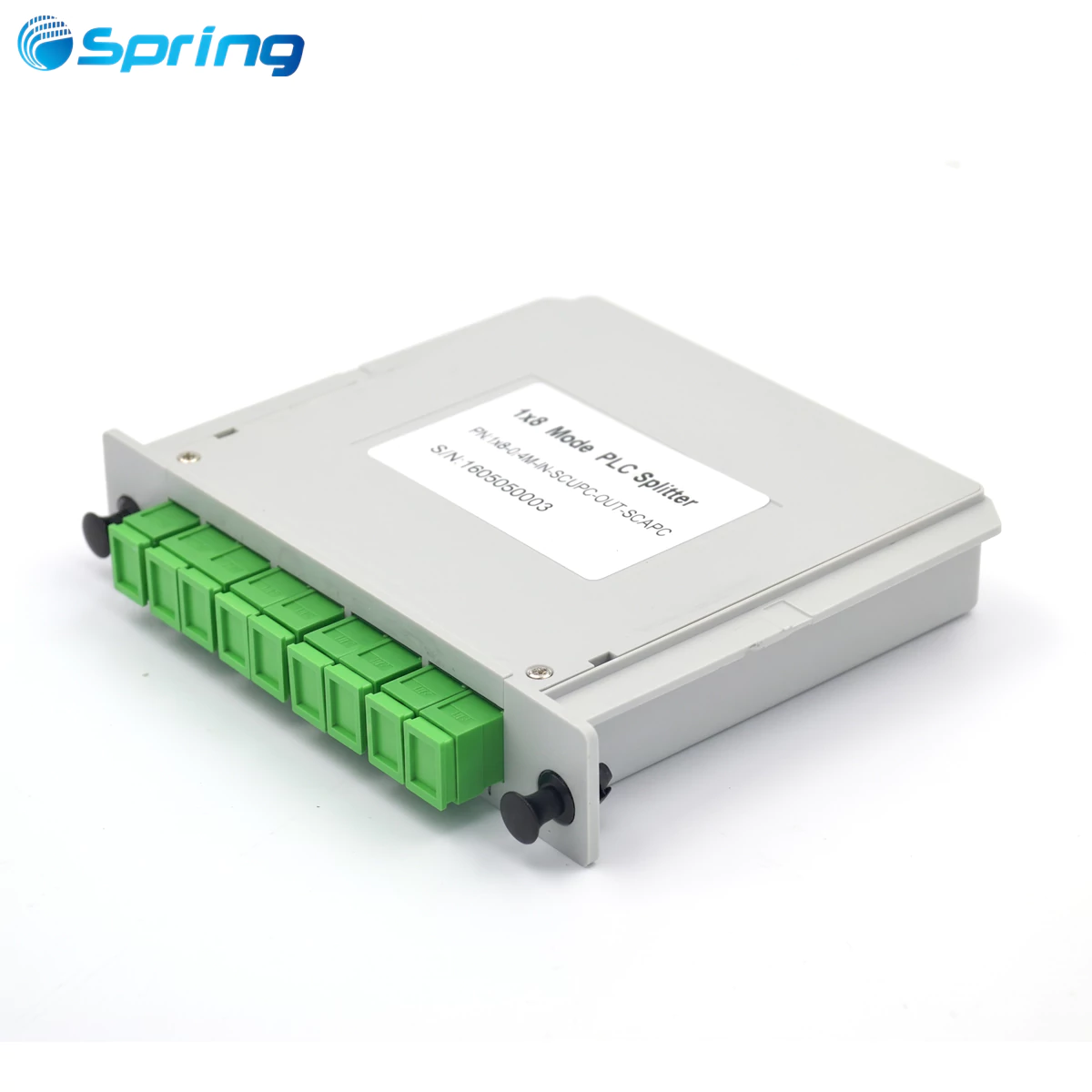
LGX Cassette PLC Splitter: Features modular, plug-and-play configurations. Perfect for quick deployment in central office rack enclosures and high-density data centers.
Rack Mount PLC Splitter: Pre-installed inside standard 19-inch chassis systems to support centralized high-density fiber management.
Best Practices for FTTH Splitter Deployment
To ensure long-term network reliability and meet strict optical link budgets, adhere to the following field deployment practices:
Strict Bend Radius Management: Ensure bend radii are kept within standard specification limits (typically G.657.A1 or A2 bend-insensitive fiber defaults) to prevent micro-bend radiation losses inside closures.
Contamination Prevention: Always clean every optical connector face with specialized fiber wipes or click-cleaners prior to insertion. Dust particles on a 1 × 32 or 1 × 64 port can easily compromise the power budget of multiple downstream users.
Accurate Labeling and Documentation: Clearly map every splitter input and output port within your physical asset management software. This reduces technician error during subscriber turn-up and rapid troubleshooting.
Strategic Placement for Future Migrations: Position splitters so that upgrading from GPON to XGS-PON or higher-capacity architectures can be performed at the central hub without restructuring the local distribution drop lines.
Frequently Asked Questions
What is the exact difference between PLC and FBT splitters?
PLC splitters use semiconductor waveguide circuits to provide uniform power distribution across wide wavelength spectrums (ideal for FTTH). FBT splitters are made by fusing fibers together, making them cheaper for low split ratios but limited in wavelength uniformity and high split counts.
Which splitter is best for FTTH networks?
PLC splitters are the universal choice for modern FTTH networks due to their wide operating wavelength window (1260nm–1650nm), high port uniformity, and reliable performance across varying environmental temperatures.
What is the typical insertion loss of a 1×32 splitter?
The typical insertion loss of a high-quality 1 × 32 PLC splitter is ≦< 17.0 dB (usually ranging from 16.5 dB to 17.5 dB including connectors), complying with standard ITU-T G.984 GPON infrastructure rules.
Can optical splitters work bidirectionally?
Yes, optical splitters are completely bidirectional passive devices. In the downstream direction (OLT to subscriber), they function as splitters. In the upstream direction (subscriber to OLT), they act as optical combiners.
What splitter ratio is most commonly used in GPON?
The 1 × 32 split ratio is the most widely deployed configuration globally, offering an optimal balance between maximizing OLT port efficiency and staying comfortably within the 28 dB optical loss budget.
Conclusion
Optical splitters are a fundamental component of FTTH, GPON, and next-generation PON networks. Understanding splitter technologies, split ratios, insertion loss metrics, packaging options, and deployment architectures is essential for building efficient, reliable, and scalable fiber access networks.
For most modern FTTH deployments, PLC splitters offer the best balance of performance, reliability, and scalability. However, proper splitter selection should always consider optical budget, subscriber density, and future network growth.
Need Help Choosing the Right Optical Splitter?
Spring Optical provides high-performance passive components manufactured under stringent quality controls to ensure premium network longevity:
Comprehensive PLC Splitter Range: Configurable from 1 × 2 up to 1 × 128 architectures.
Premium Optical Performance: Exceptionally low PDL and premium insertion loss tolerances.
Versatile Connectivity: Full options for SC/APC, SC/UPC, LC/APC, and LC/UPC termination.
Flexible Packaging Solutions: ABS Box, LGX Cassette, Rack Mount, and Mini Steel Tube designs.
Full OEM & ODM Services: Custom packaging, breakout lengths, and kitting for specific ODN project rollouts.
Contact Spring Optical today for professional optical splitter selection, technical network design assistance, and detailed project quotations.
Articles on optical splitters
PLC Splitter - The Heart of Optical Distribution Network
Balanced VS Unbalanced Optical Splitters - A Guide to Pre-Connectorized ODN Design
Optical Fiber PLC Splitter (0.9mm Steel Tube Type): Design, Manufacturing, and FTTH Applications