

-
![Figure-8 & Tight-Buffered Fiber Optic Cable – 0.9/2.0/3.0mm, OM1~OM5 & Single-mode]() Figure-8 & Tight-Buffered Fiber Optic Cable – 0.9/2.0/3.0mm, OM1~OM5 & Single-modeFiber Type: OM1~OM5 / Single-modeCore Count: 1 / 2 / 4 / 8 / 12 / 16 / 24Outer Diameter: 0.9–3.0 mmOuter Jacket: PVC / LSZHFilling Material: NoneLong-term Tensile Force: 3–80 NShort-term Tensile
Figure-8 & Tight-Buffered Fiber Optic Cable – 0.9/2.0/3.0mm, OM1~OM5 & Single-modeFiber Type: OM1~OM5 / Single-modeCore Count: 1 / 2 / 4 / 8 / 12 / 16 / 24Outer Diameter: 0.9–3.0 mmOuter Jacket: PVC / LSZHFilling Material: NoneLong-term Tensile Force: 3–80 NShort-term Tensile -
![High-density Sub-unit Branch Multi Core Fiber Optic Cable – 36/48/72/96 Core, OM3/OM4/OM5 & Single-mode]() High-density Sub-unit Branch Multi Core Fiber Optic Cable – 36/48/72/96 Core, OM3/OM4/O...Fiber Type: OM3 / OM4 / OM5 / Single-modeCore Count: 36 / 48 / 72 / 96Outer Diameter: 13.8–28.2 mmOuter Jacket: PVC / LSZHFilling Material: NoneLong-term Tensile Force: 400 NShort-term Tensile Force:
High-density Sub-unit Branch Multi Core Fiber Optic Cable – 36/48/72/96 Core, OM3/OM4/O...Fiber Type: OM3 / OM4 / OM5 / Single-modeCore Count: 36 / 48 / 72 / 96Outer Diameter: 13.8–28.2 mmOuter Jacket: PVC / LSZHFilling Material: NoneLong-term Tensile Force: 400 NShort-term Tensile Force: -
![4.8–8.0mm Indoor Fiber Optic Bundle Cable]() 4.8–8.0mm Indoor Fiber Optic Bundle CableFiber Type: OM2~OM5 / Single-modeCore Count: 4 / 8 / 12 / 16 / 24Outer Diameter: 4.8–8.0 mmOuter Jacket: PVC / LSZHFilling Material: NoneLong-term Tensile Force: 80 NShort-term Tensile Force: 600
4.8–8.0mm Indoor Fiber Optic Bundle CableFiber Type: OM2~OM5 / Single-modeCore Count: 4 / 8 / 12 / 16 / 24Outer Diameter: 4.8–8.0 mmOuter Jacket: PVC / LSZHFilling Material: NoneLong-term Tensile Force: 80 NShort-term Tensile Force: 600 -
![Sub-unit Branch Indoor Distribution Fiber Optic Cable – 4/6/8/12/24 Core, OM1~OM5 & Single-mode]() Sub-unit Branch Indoor Distribution Fiber Optic Cable – 4/6/8/12/24 Core, OM1~OM5 & Sin...Fiber Type: OM1~OM5 / Single-modeCore Count: 4 / 6 / 8 / 12 / 24Outer Diameter: 7.0–15.0 mmOuter Jacket: PVC / LSZHFilling Material: NoneLong-term Tensile Force: 200 NShort-term Tensile Force: 800
Sub-unit Branch Indoor Distribution Fiber Optic Cable – 4/6/8/12/24 Core, OM1~OM5 & Sin...Fiber Type: OM1~OM5 / Single-modeCore Count: 4 / 6 / 8 / 12 / 24Outer Diameter: 7.0–15.0 mmOuter Jacket: PVC / LSZHFilling Material: NoneLong-term Tensile Force: 200 NShort-term Tensile Force: 800 -
![9.0mm Mini Bundled Indoor Fiber Optic Cable – 48/72/96/144 Core, OM3/OM4 & Single-mode]() 9.0mm Mini Bundled Indoor Fiber Optic Cable – 48/72/96/144 Core, OM3/OM4 & Single-modeFiber Type: OM3 / OM4 / Single-modeCore Count: 48 / 72 / 96 / 144Outer Diameter: 9.0 ± 1.7 mmOuter Jacket: PVC / LSZHFilling Material: NoneLong-term Tensile Force: 400 NShort-term Tensile Force: 1300
9.0mm Mini Bundled Indoor Fiber Optic Cable – 48/72/96/144 Core, OM3/OM4 & Single-modeFiber Type: OM3 / OM4 / Single-modeCore Count: 48 / 72 / 96 / 144Outer Diameter: 9.0 ± 1.7 mmOuter Jacket: PVC / LSZHFilling Material: NoneLong-term Tensile Force: 400 NShort-term Tensile Force: 1300 -
![3.0mm Mini Bundled Indoor Fiber Optic Cable – 8/12/16/24 Core, OM3/OM4/OM5]() 3.0mm Mini Bundled Indoor Fiber Optic Cable – 8/12/16/24 Core, OM3/OM4/OM5Fiber Type: OM3 / OM4 / OM5Core Count: 8 / 12 / 16 / 24Outer Diameter: 3.0 ± 0.2 mmOuter Jacket: PVC / LSZHFilling Material : NoneLong-term Tensile Force: 80 NShort-term Tensile Force: 150 NWorking
3.0mm Mini Bundled Indoor Fiber Optic Cable – 8/12/16/24 Core, OM3/OM4/OM5Fiber Type: OM3 / OM4 / OM5Core Count: 8 / 12 / 16 / 24Outer Diameter: 3.0 ± 0.2 mmOuter Jacket: PVC / LSZHFilling Material : NoneLong-term Tensile Force: 80 NShort-term Tensile Force: 150 NWorking -
![Single-Fiber Optical Cable For Indoor GJFJV]() Single-Fiber Optical Cable For Indoor GJFJVProduct Name: GJFJV(Single-Fiber) Model: Single-Fiber optical Cable for Indoor Number: I003 Application: ☆.Adopted to indoor distribution.. ☆.As pigtail of communication equipment. ☆.Suitable for
Single-Fiber Optical Cable For Indoor GJFJVProduct Name: GJFJV(Single-Fiber) Model: Single-Fiber optical Cable for Indoor Number: I003 Application: ☆.Adopted to indoor distribution.. ☆.As pigtail of communication equipment. ☆.Suitable for -
![0.9mm Tight Buffer Cable]() 0.9mm Tight Buffer CableProduct Name: 0.9 GJFJV Model: 0.9 Indoor Cable Number: I002 Application: ☆.Components for various indoor cables. ☆.Suitable for patch cords and pigtails. ☆.Suitable for communication equipment
0.9mm Tight Buffer CableProduct Name: 0.9 GJFJV Model: 0.9 Indoor Cable Number: I002 Application: ☆.Components for various indoor cables. ☆.Suitable for patch cords and pigtails. ☆.Suitable for communication equipment -
![Duplex Zipcord Cable(GJFJV)]() Duplex Zipcord Cable(GJFJV)Product Name: Duplex Zipcord(GJFJV) Model: Duplex Zipcord Indoor Cable Number: I004 Application: ☆.Adopted to indoor distribution.. ☆.As pigtail of communication equipment. ☆.Suitable for
Duplex Zipcord Cable(GJFJV)Product Name: Duplex Zipcord(GJFJV) Model: Duplex Zipcord Indoor Cable Number: I004 Application: ☆.Adopted to indoor distribution.. ☆.As pigtail of communication equipment. ☆.Suitable for -
![Distribution Tight Buffer Optical Cable Model:GJFJV]() Distribution Tight Buffer Optical Cable Model:GJFJVProduct Name: Distribution Tight Buffer Armored Fiber Optical Ca Model: indoor optic fiber Number: I011 Application: ☆.Adopted to indoor and Outdoor distribution. ☆.As pigtail of communication
Distribution Tight Buffer Optical Cable Model:GJFJVProduct Name: Distribution Tight Buffer Armored Fiber Optical Ca Model: indoor optic fiber Number: I011 Application: ☆.Adopted to indoor and Outdoor distribution. ☆.As pigtail of communication -
![Breakout Tight Buffer Optical Cable(GJFPV)]() Breakout Tight Buffer Optical Cable(GJFPV)Product Name: Breakout Tight Buffer Optical Cable(GJFPV) Model: indoor optic cable Number: I010 Application: Indoor level and vertical laying.ceiling laying surface laying etc. Suitable for patch
Breakout Tight Buffer Optical Cable(GJFPV)Product Name: Breakout Tight Buffer Optical Cable(GJFPV) Model: indoor optic cable Number: I010 Application: Indoor level and vertical laying.ceiling laying surface laying etc. Suitable for patch -
![Single-fiber Armored Cable]() Single-fiber Armored CableProduct Name: Single-fiber armored(GJFJV) Model: Single-fiber armored Indoor cable Number: I005 Application: ☆.Adopted to indoor distribution.. ☆.As pigtail of communication equipment. ☆.Suitable for
Single-fiber Armored CableProduct Name: Single-fiber armored(GJFJV) Model: Single-fiber armored Indoor cable Number: I005 Application: ☆.Adopted to indoor distribution.. ☆.As pigtail of communication equipment. ☆.Suitable for


What Is Indoor Fiber Optic Cable?
Indoor Fiber Optic Cable is a specialized fiber cable used in interior applications such as offices, homes, data centers, server rooms, and building backbones. Unlike outdoor models, it’s built with flame-retardant materials, compact dimensions, and easier termination designs like tight-buffered construction.
Construction Overview

Fiber Type:G.652D, G.657A1/A2, OM3, OM4
Buffer Layer:250 µm or 900 µm tight-buffer
Strength Member: Aramid yarn, fiberglass
Jacket Material: LSZH, Plenum (OFNP), PVC, Armored
Core Count:4, 6, 8, 12, 24+
High Density: Available in simplex, duplex, or multi-core forms
Easy Handling: Especially with tight-buffered or uni-tube constructions
Fire Safe: LSZH and OFNP/OFNR jackets reduce flame spread and smoke
Plug-and-Play: Active Optical Cables provide fast setup
Versatile Deployment: Compatible with patch panels, wall mounts, and racks
Hybrid Integration: Optical-metallic cables reduce cabling complexity
Indoor Fiber Optic Cable Types & Their Features

Tight Buffer Cable
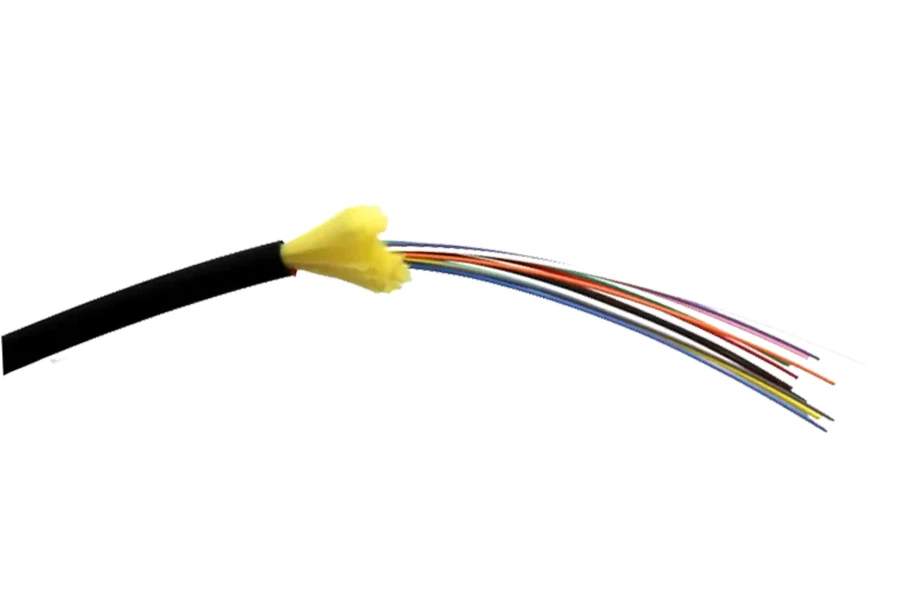
Each fiber is coated in a tight plastic buffer. Ideal for moderate indoor runs up to 328 ft. Its sturdy yet flexible structure allows easy handling for long indoor pathways, floor-to-floor risers, and patch panels.

Simplex Cable
Contains a single fiber strand for one-way signal transmission. It's the most basic fiber configuration and is cost-effective for simple point-to-point links or wavelength multiplexing setups.

Duplex Cable
Includes two parallel fibers for bidirectional transmission. Saves space compared to two simplex cables and is common for Ethernet, telephony, and FTTH indoor applications.

Uni-Tube Cable
All fibers are housed in one central, water-blocking buffer tube. Offers excellent flexibility, especially useful in horizontal floor runs or tight indoor routes with multiple bends.

Optical-Metallic Hybrid Cable
Combines fiber strands and copper conductors (e.g., UTP, coaxial) in one cable. Enables both optical and electrical transmission, simplifies installation, and allows later separation at endpoints.
Plenum Cable
Built with low-smoke, fire-retardant jackets compliant with NFPA codes. Used in air-handling spaces like ceilings. Minimizes fire spread and smoke during combustion.

LSZH Cable
Uses Low-Smoke Zero Halogen jackets that emit minimal toxic fumes. In the event of fire, these cables reduce health risks to occupants and damage to electronics.
Key Features of Indoor Fiber Optic Cable
|
Feature |
Description |
|
Tight-Buffered Construction |
Facilitates direct termination and fast installation without breakout kits. |
|
Compact & Flexible |
Slim design fits walls, ducts, and trays—ideal for data rooms, risers, and patch panels. |
|
Flame-Retardant Compliance |
Meets UL910, UL1666, and IEC 60332 standards for fire safety. |
|
Low Attenuation |
Guarantees minimal signal loss, ensuring high-speed, stable transmission. |
|
Color-Coded Fibers |
Enhances installation speed and traceability. |
|
Optional Hybrid Designs |
Combines fiber with copper conductors for power + signal applications. |
Applications of Indoor Fiber Optic Cable
Data Center Interconnects
FTTH Last-Mile Indoor Drop
Enterprise & Campus LAN Backbone
Indoor Patch Cord Assembly
Voice/Data Distribution in Buildings
Wall Plates, Faceplates, and Terminal Boxes
Ceiling Tray or Conduit Routing
Power-over-Fiber or AOC Smart Infrastructure
Indoor vs Outdoor Fiber Cables
|
Attribute |
Indoor Fiber Cable |
Outdoor Fiber Cable |
|
Structure |
Tight buffer, uni-tube, AOC, hybrid |
Loose tube, gel-filled |
|
Environment |
Dry interior spaces |
Harsh outdoor environments |
|
Fire Resistance |
High (LSZH/OFNP/OFNR) |
Often none |
|
Flexibility |
Superior |
Moderate |
|
Typical Use |
Offices, buildings, data centers |
Underground, aerial, and conduits |
FAQ – Indoor Fiber Optic Cable
Q: What are the 3 main indoor fiber cable types?
A: Simplex (1 fiber), Duplex (2 fibers), Breakout (multi-fiber bundle)
Q: Why use fiber optic cable indoors?
A: High-speed data, EMI immunity, long lifespan, lightweight construction.
Q: Can I install fiber optic cable at home?
A: Yes—especially in FTTH scenarios—but ensure proper tools and connectors are used.
Q: What’s the difference between 900μm and 250μm buffer fibers?
A: 900μm is thicker and more rugged; 250μm is more flexible for tight spaces.
Q: Which indoor fiber connector is most common?
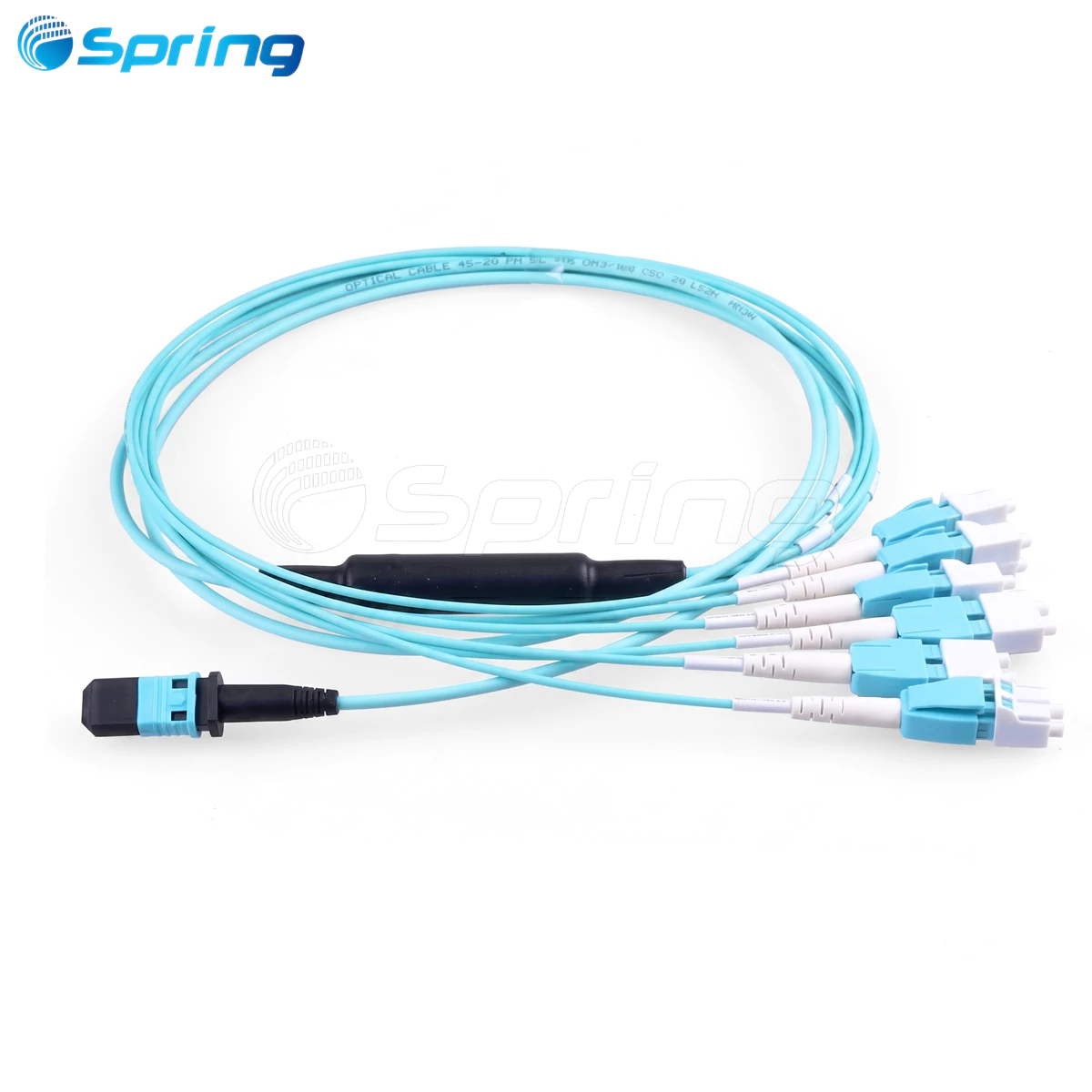
A: LC (most compact), SC (popular in FTTH), MTP/MPO (for high-density networks)
Recommended Indoor Fiber Cable Solutions from Spring Optic
LC/SC/FC/ST Indoor Patch Cords
Tight Buffer & Uni-Tube Indoor Fiber
AOC (Active Optical Cable) Modules
Indoor Hybrid Fiber + Power Cables
Wall-Mounted ODF Boxes
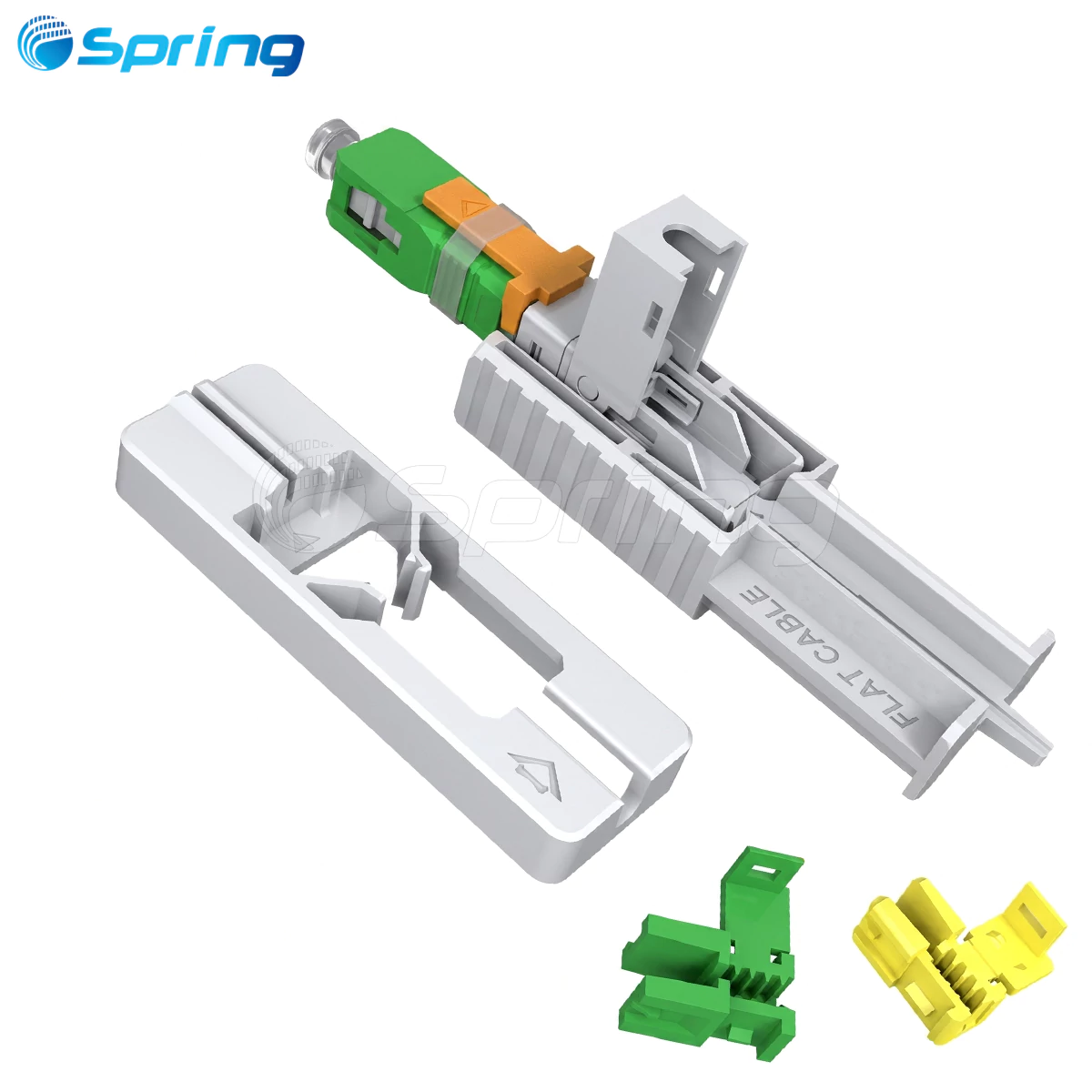
Pre-Terminated Flat Drop Indoor FTTH Cable
Spring Optic provides a full range of Indoor Fiber Optic Cable products—including simplex, duplex, multi-core, AOC, hybrid, LSZH, and plenum-rated options. All cables are tested to TIA-568, IEC, and RoHS standards and can be customized for jacket type, length, core count, and connector style.
Spring Optical Communication is one of the largest and best indoor fiber optic cable manufacturers and suppliers with rich experience. Welcome to buy our high quality products or wholesale our customized indoor fiber optic cable in stock with our factory. Also, free sample is also available if necessary.
Popular Products