

MDU (Multi-Dwelling Unit) in telecom refers to any residential or commercial building that contains multiple individual units sharing a centralized telecommunications infrastructure, typically served by fiber optic networks in modern FTTH deployments.
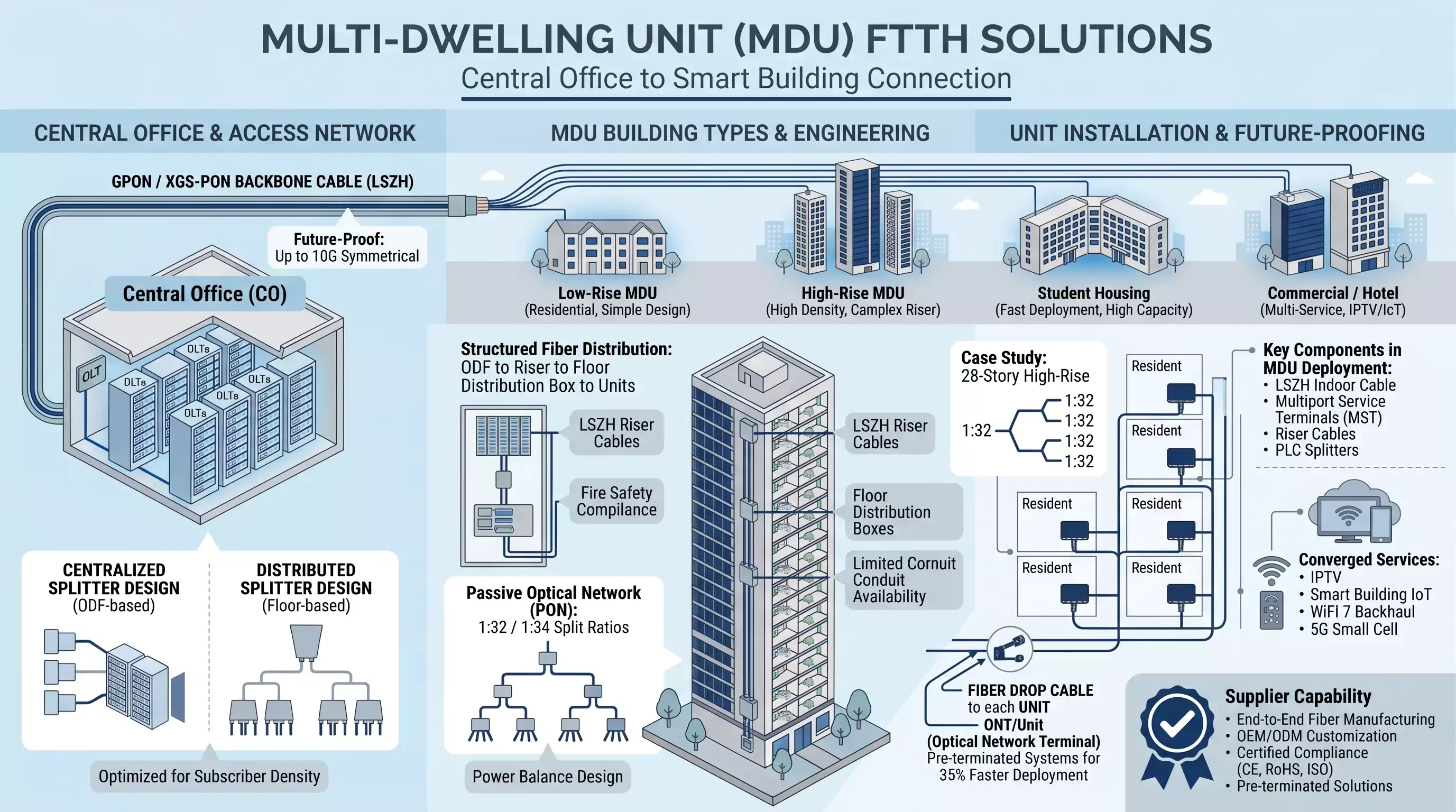
In FTTH (Fiber to the Home) architecture, MDU environments require structured fiber distribution systems that deliver optical connectivity from a central point to multiple subscriber units within the same building, often through riser cables, floor distribution points, and optical splitters.
MDU FTTH deployment is now a core component of global broadband expansion because it enables high-density fiber rollout in apartment buildings, high-rise towers, hotels, and mixed-use developments.
Key Insight
MDU FTTH networks are more complex than single-family fiber deployments because they require vertical fiber distribution, shared splitter architecture, fire-safe indoor cabling, and scalable maintenance design across multiple floors and tenants.
What Is MDU in Telecom?
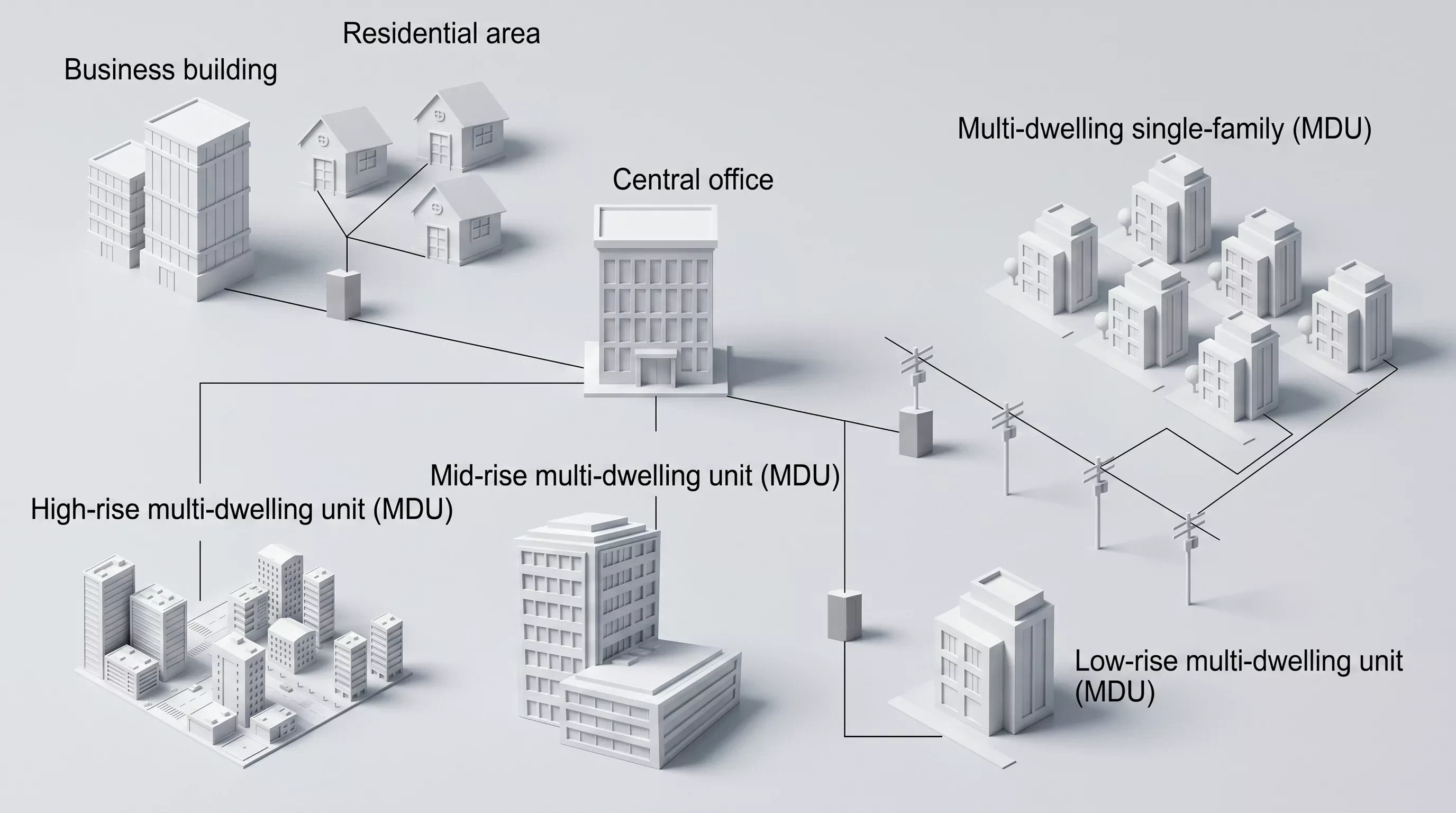
MDU stands for Multi-Dwelling Unit, a telecom infrastructure category used to describe buildings with multiple residential or commercial users sharing a unified communication system.
These environments include:
·Apartment buildings
·High-rise residential towers
·Condominiums
·Student housing complexes
·Hotels and hospitality buildings
·Office and mixed-use developments
From a network engineering perspective, MDU environments are characterized by high subscriber density within a confined physical structure, requiring optimized fiber distribution planning to ensure performance consistency and operational scalability.
Unlike single-dwelling environments, MDU networks must support simultaneous multi-user bandwidth demand while maintaining stable optical performance across shared infrastructure.
Why MDU FTTH Is Different From SDU Networks
In telecom architecture, SDU (Single-Dwelling Unit) refers to standalone homes served by direct fiber drop connections, while MDU refers to multi-user buildings requiring shared distribution systems.
Engineering Comparison
| Factor | SDU | MDU |
|---|---|---|
| Fiber topology | Direct drop | Shared distribution |
| Network complexity | Low | High |
| Splitter usage | Minimal | Centralized or distributed |
| Maintenance model | Individual | Centralized |
| Scalability | Limited | High |
Engineering Impact
MDU environments introduce additional constraints including:
·Vertical riser fiber management
·Optical splitter placement optimization
·Limited conduit availability
·Fire-rated LSZH cable requirements
·Multi-tenant coordination complexity
A key engineering mistake in FTTH deployment is applying SDU design logic to MDU environments, which leads to inefficient fiber routing, higher OPEX, and limited scalability.
MDU vs FTTB vs FTTH
MDU defines the building environment, while FTTB and FTTH define fiber termination architecture.
Architecture Overview
FTTB (Fiber to the Building): Fiber terminates in basement or telecom room, with copper or Ethernet used for final distribution
FTTH (Fiber to the Home): Fiber extends directly to each residential unit
MDU FTTH: FTTH architecture deployed within multi-dwelling buildings
Engineering Evolution Trend
The global telecom industry is rapidly migrating from FTTB → FTTH MDU due to:
·Increasing bandwidth demand
·Reduced maintenance cost of fiber vs copper
·Lower latency requirements
·Support for 10G and future PON evolution
·MDU FTTH is now considered the future-proof standard for high-density urban broadband networks.
Why MDU FTTH Deployment Is Growing Globally
Urbanization and Smart Buildings
Modern cities are increasingly dominated by high-density residential structures, where digital infrastructure is embedded into building systems.
MDU FTTH networks support:
·Smart access control systems
·AI-based surveillance
·Energy management platforms
·IoT building automation
·Cloud-connected security systems
These systems require stable fiber backbone infrastructure, making FTTH essential in modern construction planning.
Explosive Bandwidth Demand
Modern households consume significantly more bandwidth due to:
·4K/8K streaming
·Cloud gaming
·Remote work applications
·AI cloud services
·Multiple connected devices
Copper-based networks cannot maintain consistent performance under such load, especially in multi-user MDU environments.
5G + Fiber Convergence
MDU fiber infrastructure also supports:
·Indoor 5G small cells
·Distributed antenna systems (DAS)
·Edge computing nodes
·WiFi 6 / WiFi 7 backhaul
Fiber has become the core transport layer for converged digital infrastructure in buildings.
MDU Building Types and Engineering Requirements
Low-Rise Residential Buildings
Low-rise MDUs feature:
·Lower fiber density
·Shorter riser pathways
·Simpler splitter design
These environments typically use centralized PON architecture with minimal distribution complexity.
High-Rise Residential Towers
High-rise MDUs represent the most complex FTTH environments due to:
·Long vertical riser distances
·Fire safety compliance constraints
·Limited duct space
·High subscriber density per floor
These systems require carefully designed hybrid architectures combining centralized ODF management with floor-level distribution nodes.
Student Housing Networks
Student housing requires high-capacity, fast-deployment fiber systems due to extreme device density and bandwidth concurrency.
Key requirements include:
·Rapid installation cycles
·High port density PON design
·Simplified maintenance models
Hotels and Commercial MDU
Commercial buildings require multi-service fiber infrastructure supporting:
·Guest internet services
·IPTV systems
·Security surveillance
·VoIP communication
·Building management systems
These environments prioritize redundancy, uptime, and centralized network control.
MDU FTTH Network Architecture
Point-to-Point Architecture
Point-to-point architecture assigns dedicated fiber to each subscriber.
Advantages:
·Dedicated bandwidth
·High performance
·Simplified troubleshooting
Disadvantages:
·High fiber count
·Higher deployment cost
·Larger conduit requirements
Passive Optical Network (PON)
PON is the dominant architecture in MDU FTTH deployment.
It uses optical splitters to share a single fiber among multiple users.
Core Components:
OLT (Optical Line Terminal)
PLC Splitters
Fiber Distribution Boxes
Riser Cables
ONT Devices
Common Split Ratios:
1:8, 1:16, 1:32, 1:64
Proper split ratio design is critical to maintaining optical power balance and ensuring long-term network stability.
Centralized vs Distributed Splitter Design
Centralized Model
·All splitters located in telecom room (ODF-based design)
·Easier maintenance
·Simplified troubleshooting
·Centralized control
Distributed Model
·Splitters placed on floors or near users
·Reduced cable length
·Lower conduit congestion
·Higher installation complexity
·Most modern deployments adopt hybrid designs.
GPON vs XGS-PON in MDU Networks
GPON
·2.5G downstream capacity
·Suitable for standard residential broadband
·Cost-efficient
XGS-PON
·10G symmetrical bandwidth
·Designed for high-density smart buildings
·Future-ready infrastructure
·XGS-PON is increasingly deployed in:
·Smart residential towers
·Enterprise-grade MDUs
·WiFi 7 environments
·AI-driven digital buildings
Key Components in MDU FTTH Deployment
MDU FTTH networks rely on structured fiber components optimized for high-density environments.
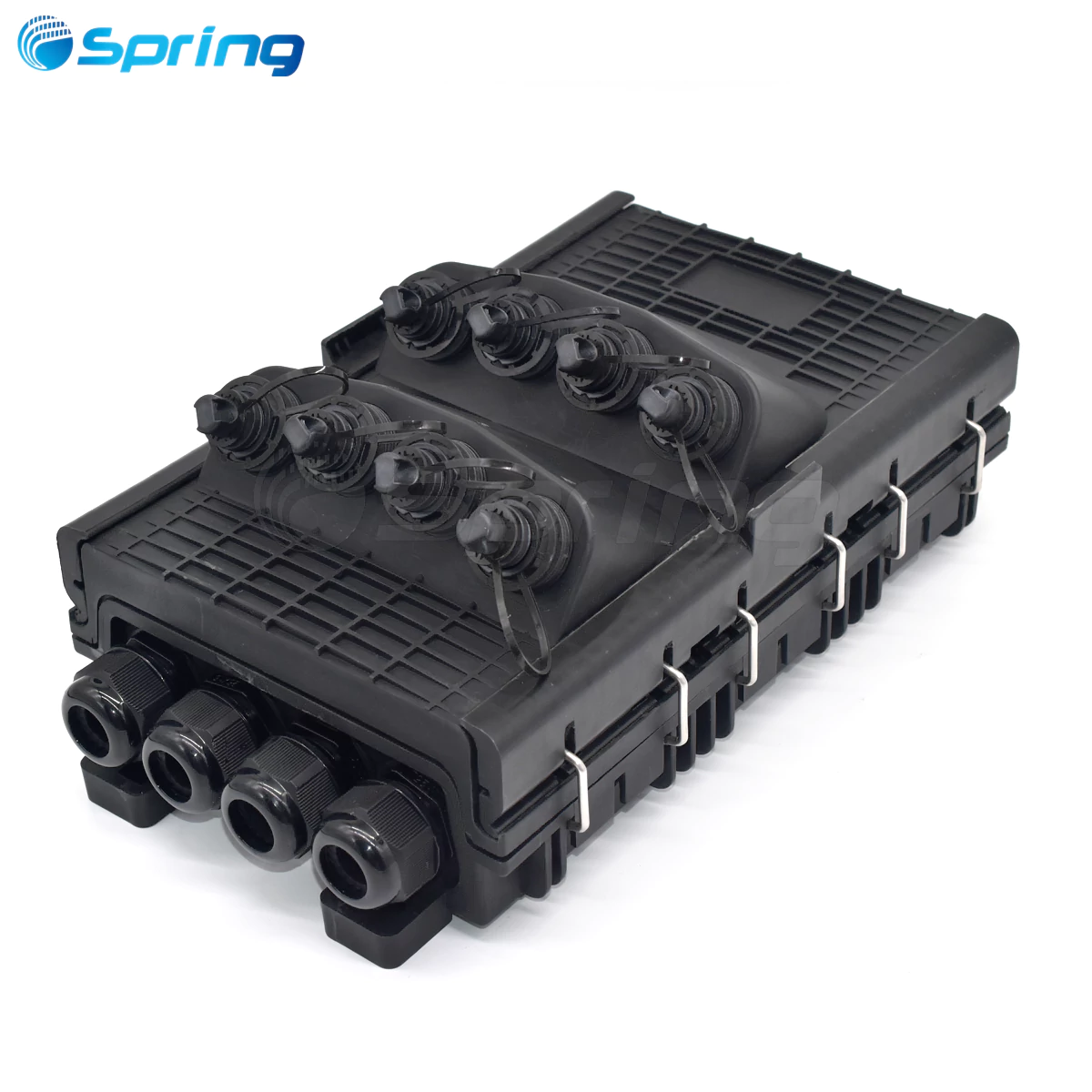
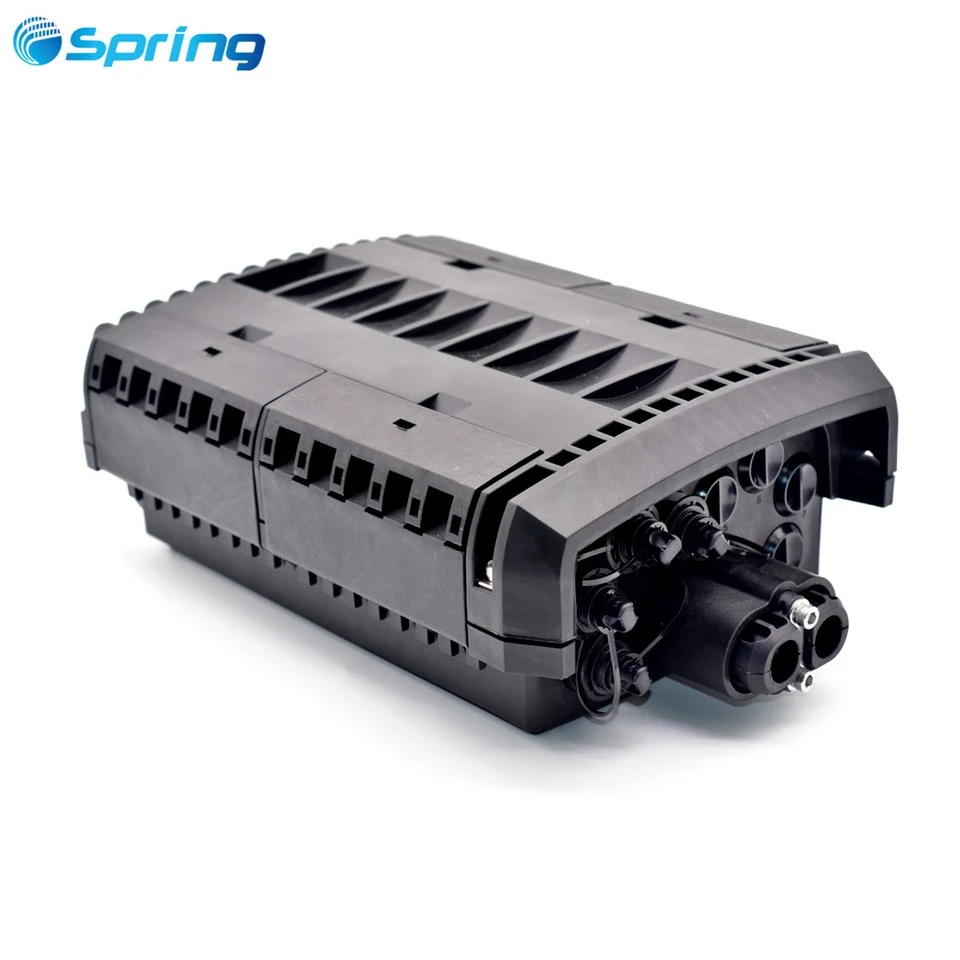
Fiber distribution boxes manage and protect termination points across floors and telecom rooms.
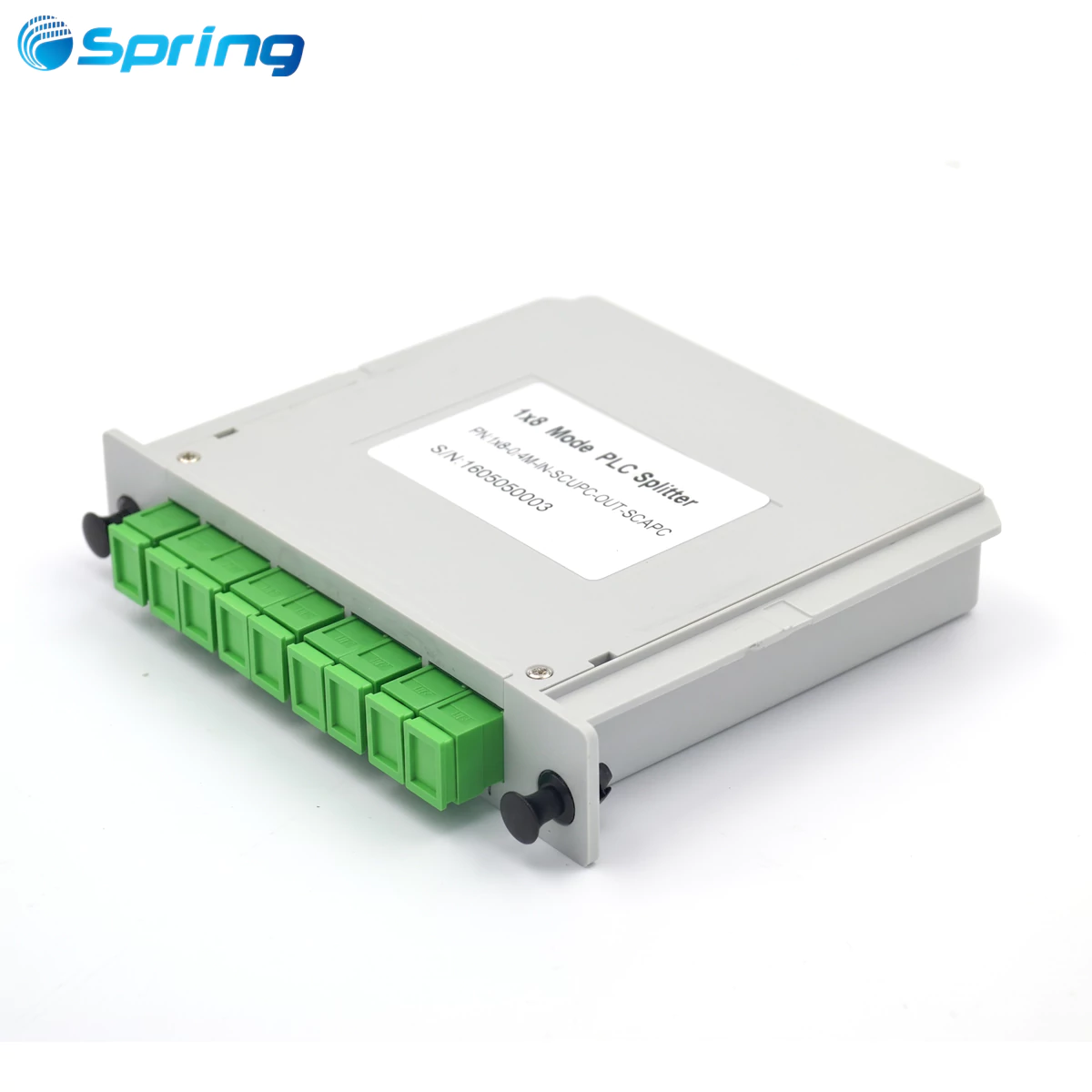
PLC splitters distribute optical signals efficiently across multiple endpoints while maintaining signal integrity.
LSZH indoor cables ensure fire safety compliance in enclosed residential environments.
Riser cables provide vertical connectivity across building floors and must meet strict mechanical and fire resistance requirements.
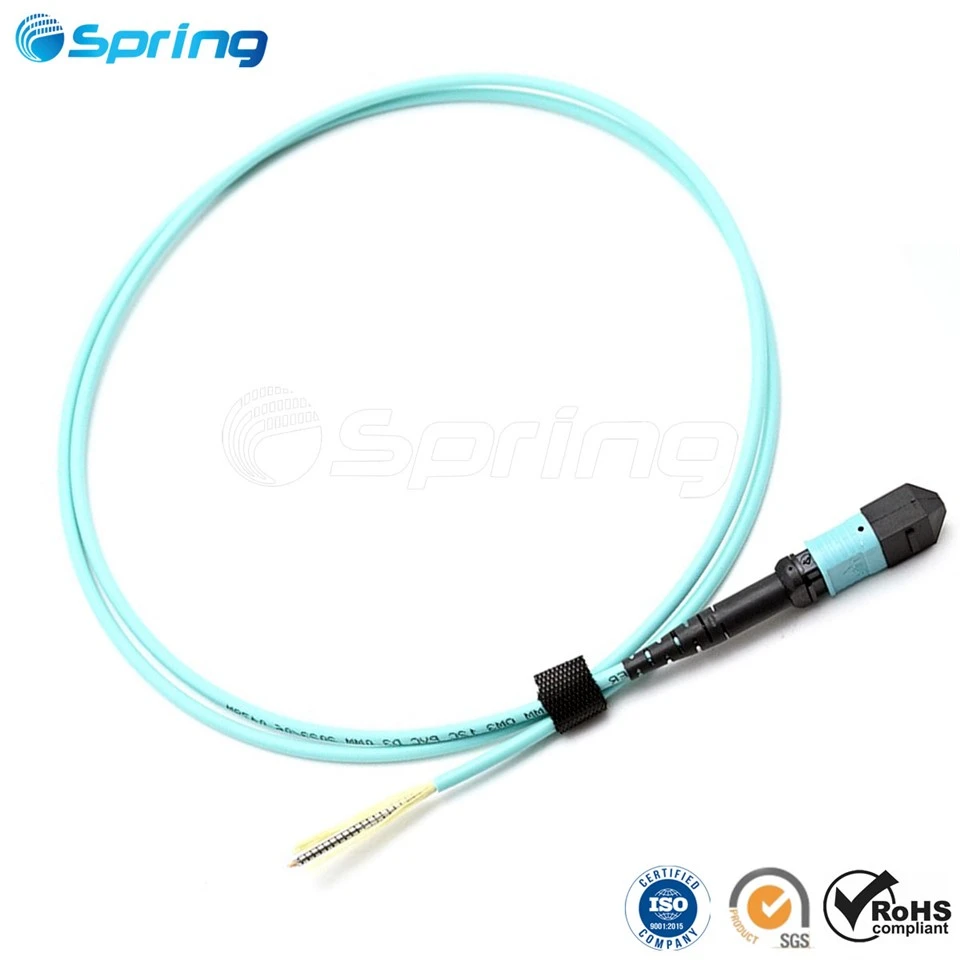
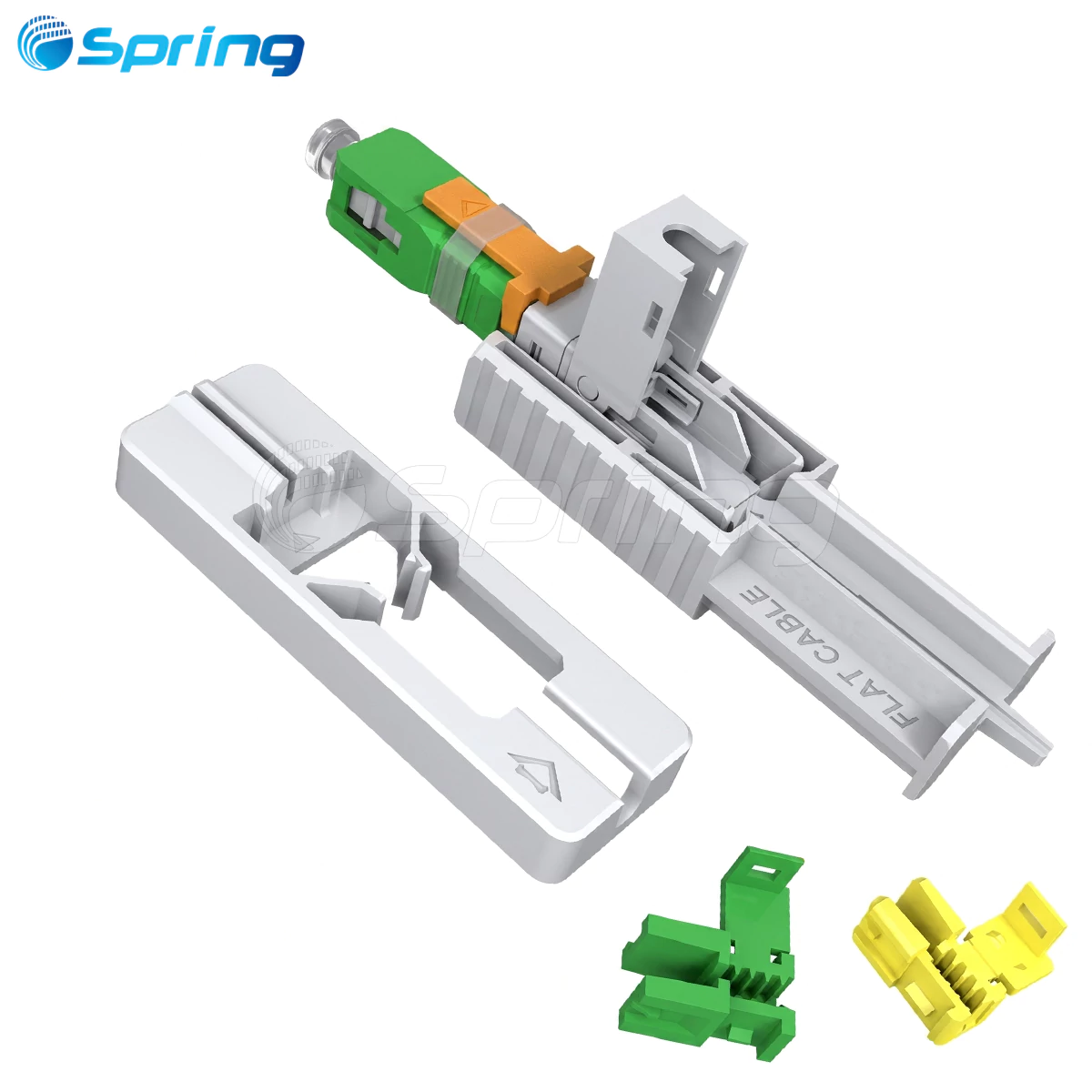
Multiport Service Terminal (MST) enable pre-terminated deployment models that significantly reduce installation time and field splicing complexity.
ODF systems provide centralized fiber management and improve long-term scalability.
Installation Challenges in MDU Environments
MDU FTTH deployment faces several engineering and operational challenges.
Building access limitations often require coordination with property management and tenants, affecting deployment timelines.
Older buildings may lack sufficient duct infrastructure, requiring alternative routing methods such as microduct or surface-mounted systems.
Multi-floor fiber routing introduces risks of attenuation, congestion, and maintenance difficulty if not properly designed.
Best practices include structured labeling systems, spare capacity planning, and strict bend radius control.
Cost Optimization Strategies
MDU FTTH deployment cost efficiency depends on engineering design decisions.
Key optimization methods include:
·Split ratio optimization based on subscriber density
·Reduced field splicing through pre-terminated systems
·Centralized network management models
·Efficient indoor routing design
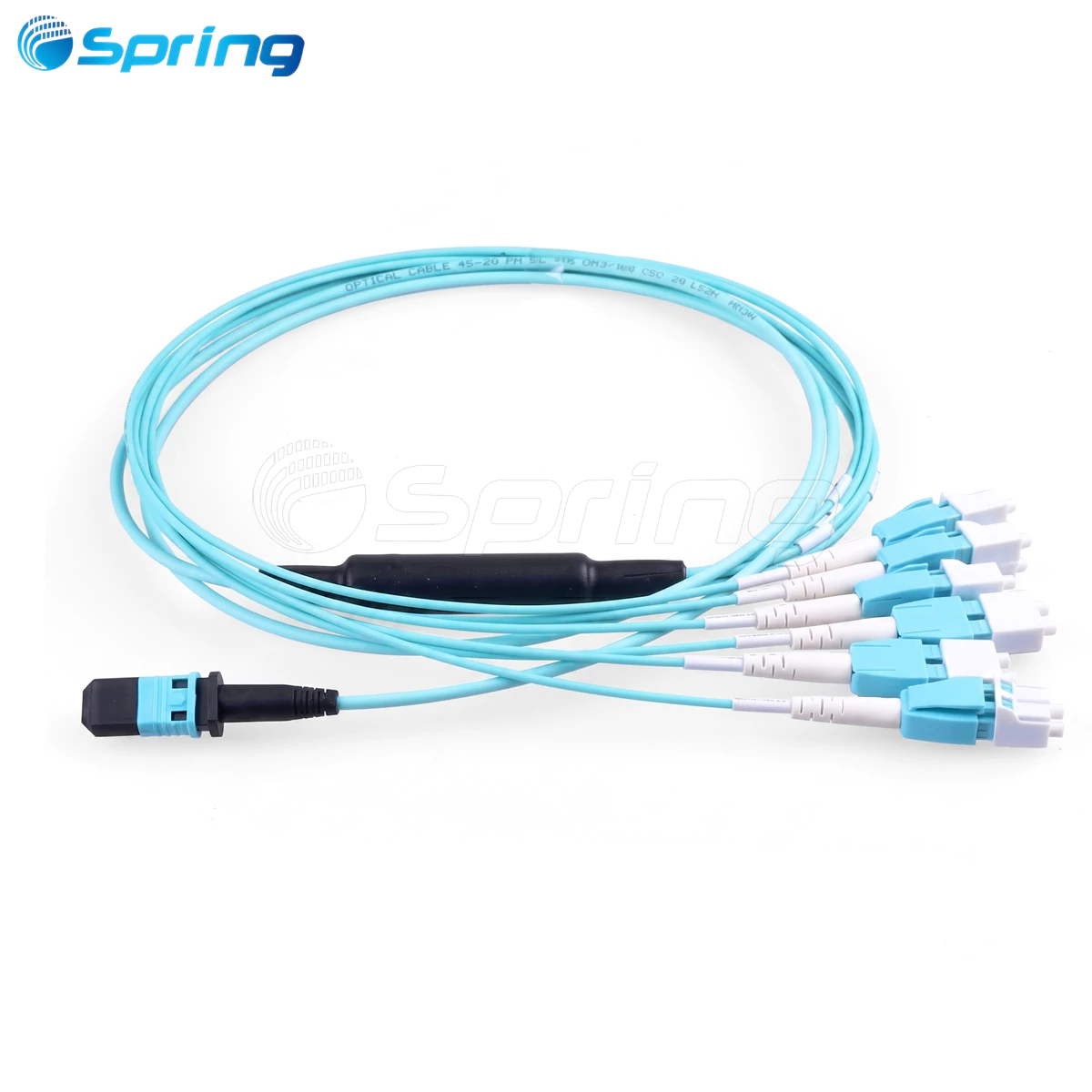
Pre-connectorized solutions significantly reduce labor dependency and accelerate deployment timelines.
Future-Proofing MDU Networks
Future MDU networks must support:
·XGS-PON migration
·WiFi 7 ecosystems
·AI cloud applications
·Smart building integration
·Ultra-high-definition media services
Fiber infrastructure is now a long-term digital foundation layer for smart urban ecosystems, requiring 10–20 year lifecycle planning.
Case Study: 28-Story MDU FTTH Deployment
A 28-story residential building with 320 apartments was deployed using a pre-terminated FTTH architecture.
Deployment Design:
·Centralized ODF architecture
·LSZH riser cabling
·1:32 PLC splitter configuration
·Floor distribution nodes
Results:
·35% reduction in installation time
·Reduced field splicing workload
·Faster subscriber activation
·Improved maintenance efficiency
·Simplified future XGS-PON upgrade path
This demonstrates the value of structured MDU FTTH engineering design in high-density environments.
Supplier Capability
MDU FTTH projects require suppliers with real engineering and manufacturing capability.
A qualified FTTH solution provider should offer:
End-to-end fiber optic manufacturing
OEM / ODM customization capability
Project-based engineering support
Compliance with CE, RoHS, ISO, IEC standards
Pre-terminated FTTH system design
High-density MDU solution experience
Companies such as Spring Optical provide integrated FTTH solutions covering design, manufacturing, and deployment support for global telecom operators.
Frequently Asked Questions
What is MDU in telecom?
MDU refers to multi-dwelling buildings where multiple users share a centralized telecom infrastructure.
What is MDU in FTTH?
It refers to fiber deployment inside multi-unit buildings where each unit receives optical connectivity.
What is the difference between MDU and SDU?
SDU refers to single-family homes, while MDU refers to multi-unit buildings requiring shared fiber distribution systems.
What is the best architecture for MDU FTTH?
PON architecture is the most widely used due to its scalability and cost efficiency.
What cables are used in MDU FTTH?
Common cables include riser cables, LSZH indoor cables, drop cables, and backbone fiber cables.
Why is XGS-PON important in MDU?
It enables 10G-class performance required for future smart building applications.