

As FTTH deployments, AI-driven data centers, and 400G/800G optical networks continue to expand worldwide, fiber connectivity requirements are becoming more demanding than ever. Modern networks no longer rely on a single universal interface. Instead, different applications require different fiber optic connector types to achieve the right balance of density, insertion loss, scalability, and long-term reliability.
From SC/APC connectors used in FTTH access networks to MPO/MTP assemblies supporting hyperscale data centers, selecting the right fiber connector directly impacts network performance, maintenance efficiency, and future upgrade capability.
This guide explains the most common fiber optic connector types, their applications, key differences, and how to choose the right connector for FTTH, telecom, enterprise, and data center environments.
What Is a Fiber Optic Connector?
A fiber optic connector is a mechanical interface used to align and connect optical fibers for signal transmission. Its primary function is to ensure precise core alignment between two fibers while minimizing insertion loss and back reflection.
Unlike permanent fusion splicing, fiber connectors allow removable and repeatable connections, making them essential for patch panels, optical distribution frames, data centers, telecom cabinets, and FTTH networks.
Technical Comparison: The 5 Most Common Connectors
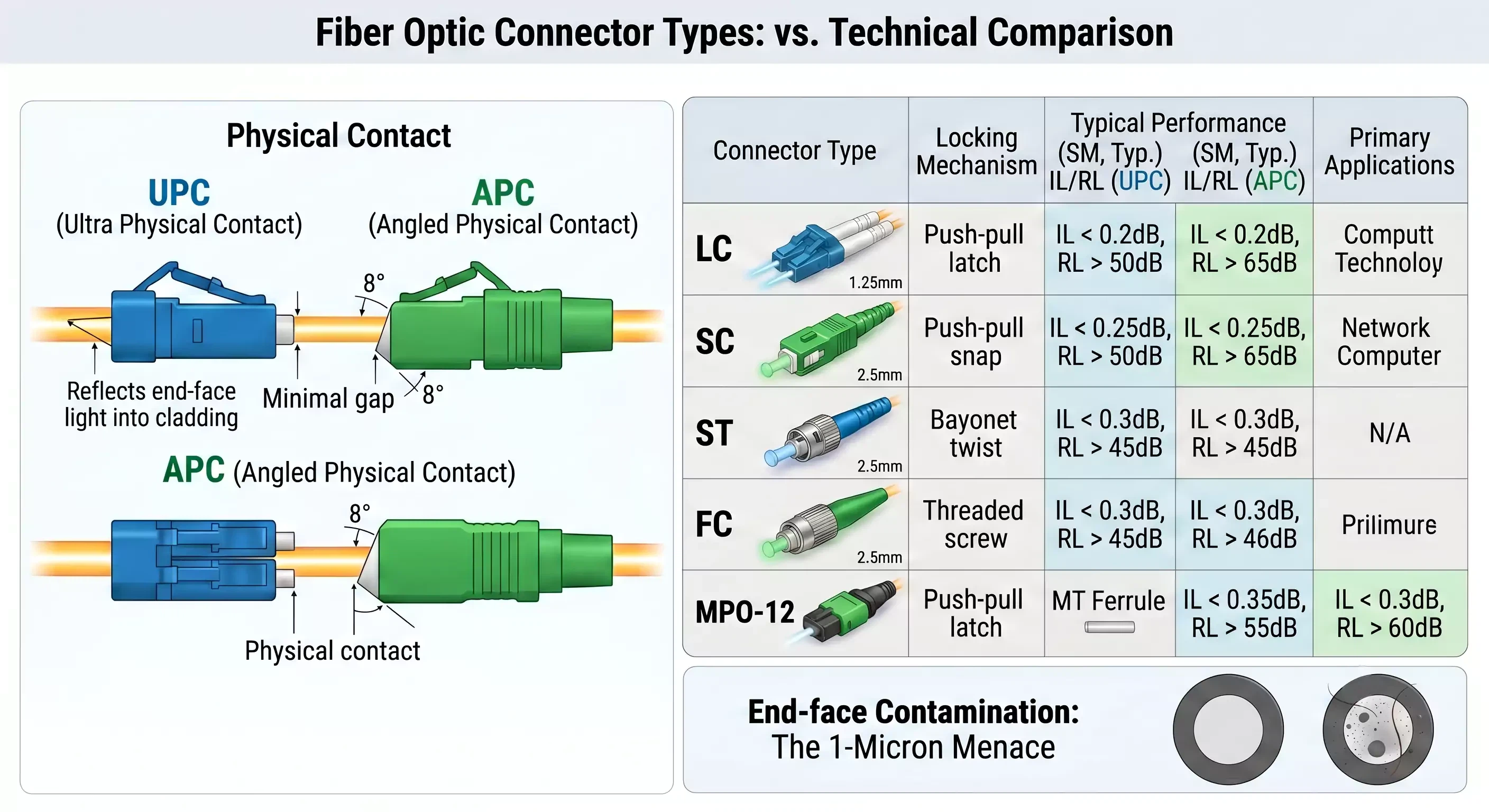
The following infographic provides a comprehensive, professional breakdown of the most common fiber optic connectors. It includes a detailed table comparing technical performance, locking mechanisms, and applications, as well as a section explaining APC vs UPC polish standards.
Technical Breakdown: Understanding the Core Connectors
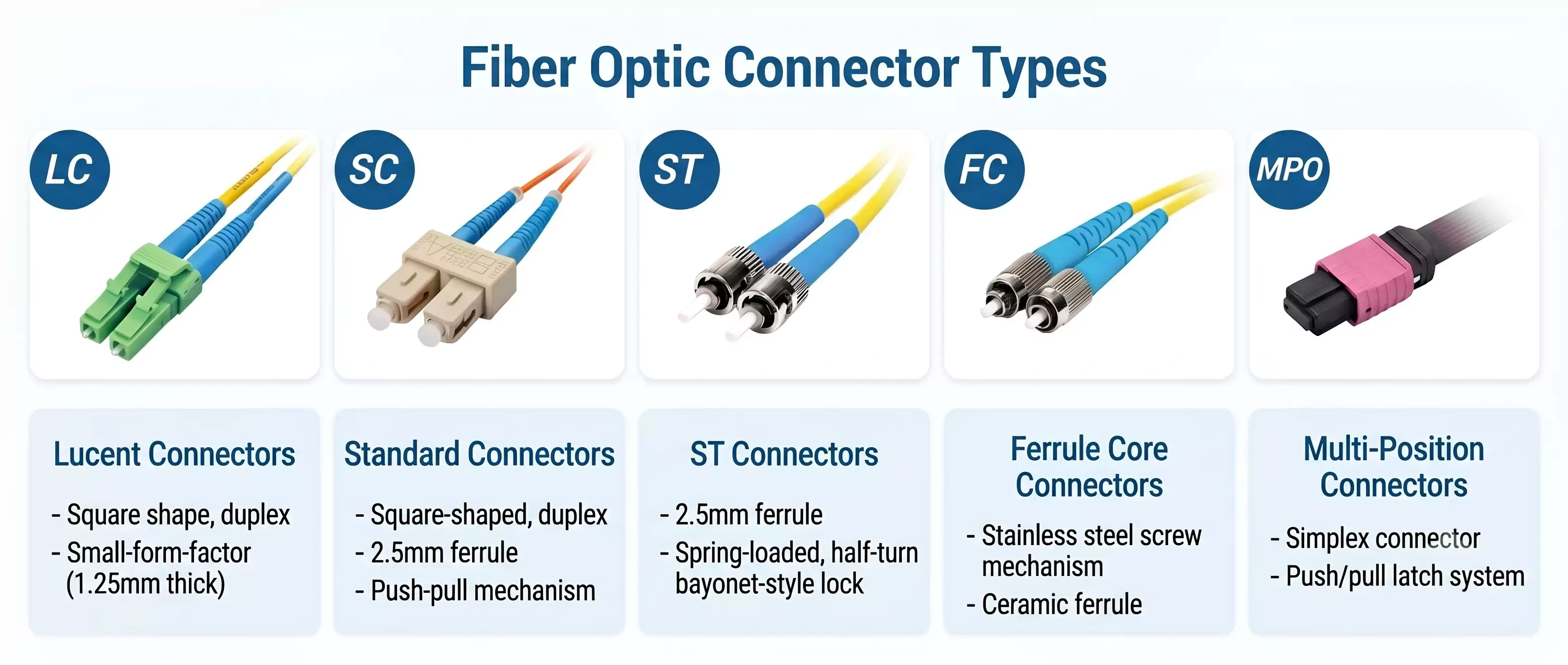
LC Connector (Lucent Connector)
The LC connector is the dominant interface in modern data centers and enterprise networks due to its Small Form Factor (SFF).
Features: 1.25mm ferrule, push-pull latching mechanism (similar to an RJ45 telephone clip), high-density design.
Advantages: Doubles the port density compared to SC, making it ideal for modern fiber switches and SFP/SFP+ transceivers.
Typical Applications: Data center backbones, enterprise LANs, high-density patch panels.
Limitations: Smaller ferrule requires more careful cleaning; the latching mechanism can be difficult to release in very tight spaces (extraction tools may be needed).
SC Connector (Subscriber Connector)
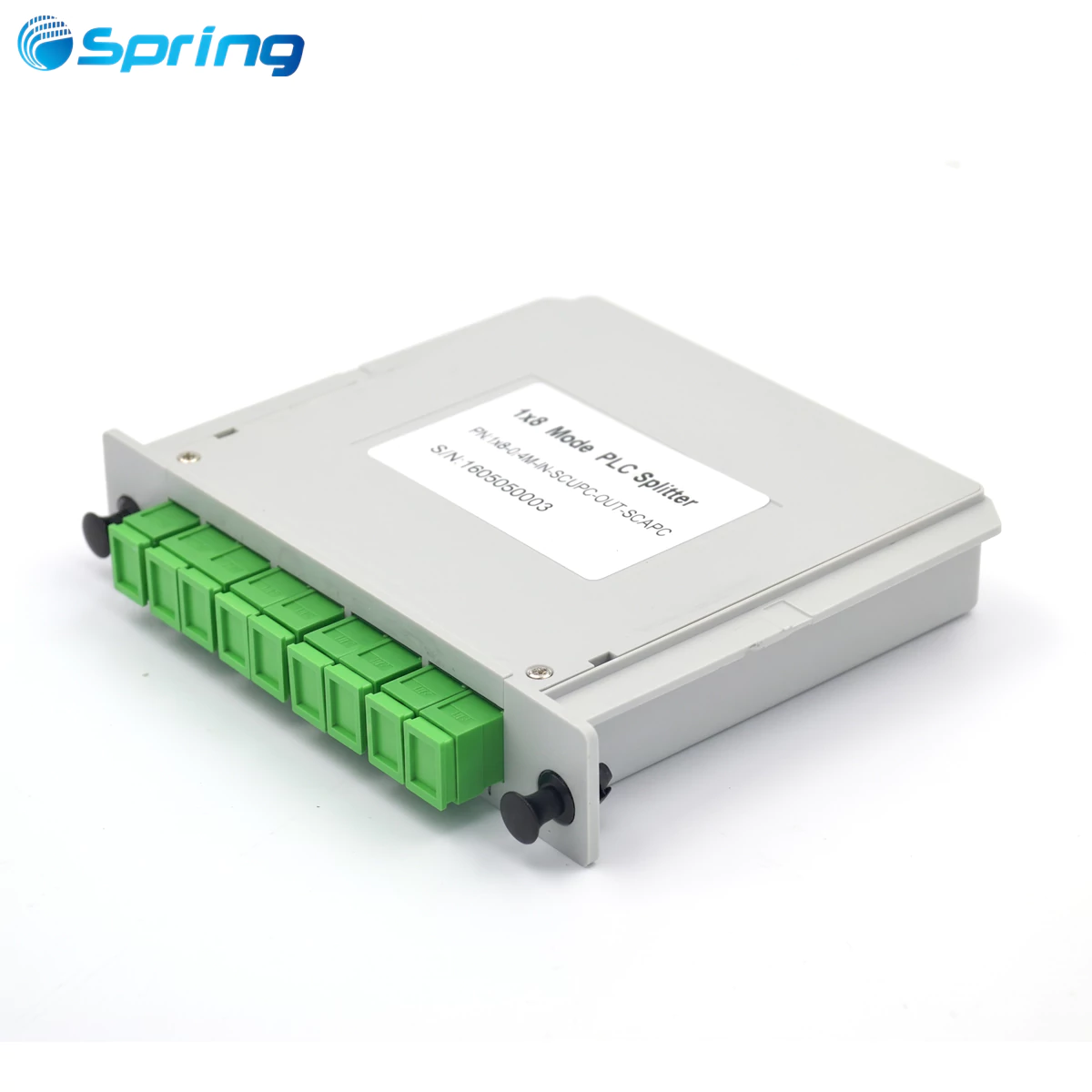
The SC connector maintains a massive market share in telecom and FTTH deployments.
Features: 2.5mm ferrule, push-pull snap-in locking mechanism (extremely durable).
Advantages: Easy to install, repeatable, and highly reliable, with excellent field termination stability.
Typical Applications: FTTH access networks (drop cables and ONTs), GPON/EPON deployments, Telecom ODN systems, CATV systems.
Limitations: Larger footprint than LC, limiting switch and patch panel port density.
MPO/MTP Connector (Multi-fiber Push-On/Pull-Off)
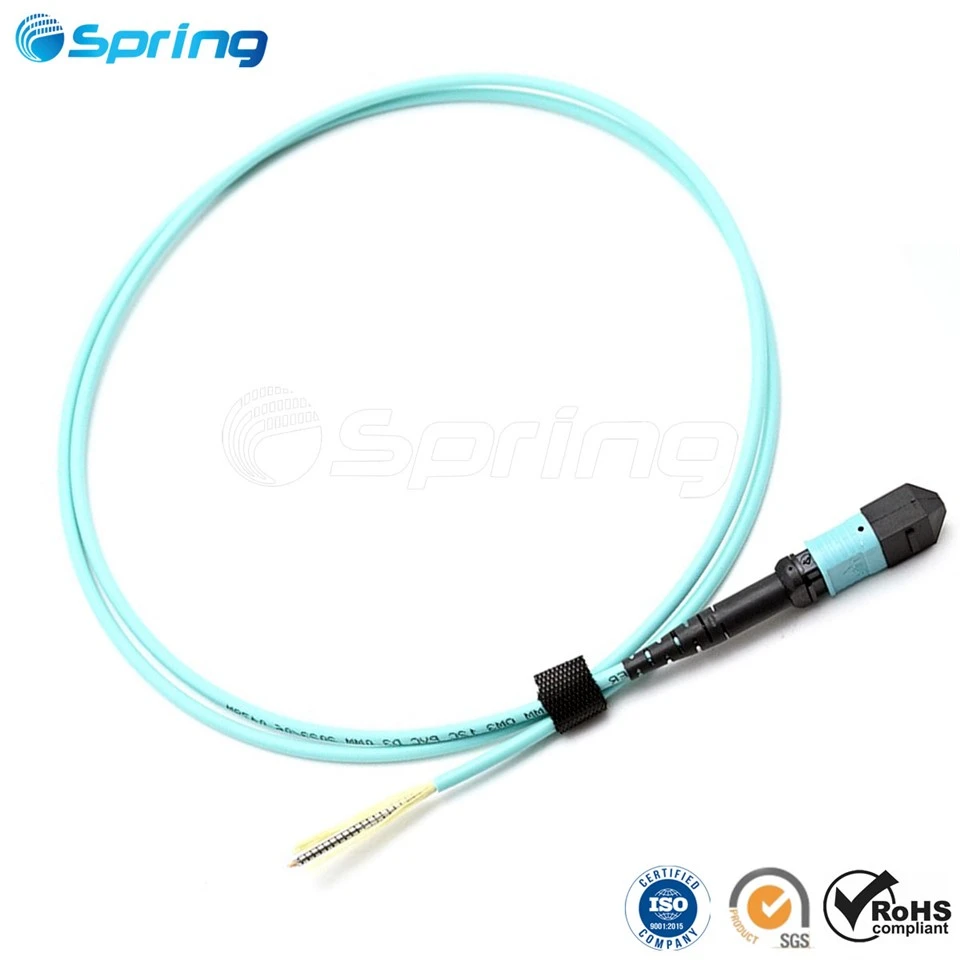
MPO/MTP is the key to achieving the high bandwidth and high-density multi-fiber connectivity that powers AI and cloud data centers.
Features: Utilizes a single, complex MT ferrule supporting multiple fibers (common 8F, 12F, 16F, 24F). MTP is a premium, trademarked version of the MPO connector with enhanced mechanical performance.
Advantages: Extremely high density, fast deployment (factory pre-terminated), supports parallel optics transmission (e.g., 100G SR4, 400G SR8).
Typical Applications: AI Clusters, Hyperscale Cloud Data Centers, Backbone布线.
Limitations: Extremely sensitive contamination (major cleaning challenge), requires complex Polarity Management, and a single connector failure impacts multiple links.
ST Connector (Straight Tip)
ST was a classic type in early enterprise networks and industrial applications.
Features: 2.5mm ferrule, Bayonet locking design (twist-lock) (similar to BNC).
Advantages: Secure locking, vibration resistant, durable.
Typical Applications: Industrial optical systems, legacy campus networks, testing and measurement.
Limitations: Not push-pull, slower to install/remove; lowest port density.
FC Connector (Ferrule Connector)
FC is the standard for telecom testing and precision applications.
Features: 2.5mm ferrule, Threaded locking mechanism (screw-on).
Advantages: Provides the most stable physical contact, excellent vibration resistance.
Typical Applications: Telecom laboratories, OTDR and Light Source test equipment, high-precision industrial systems.
Limitations: Slower to install, largest footprint.
Polarity: The Complexity of MPO/MTP Systems
When deploying MPO/MTP connectors, a critical challenge is ensuring polarity: that the transmitter (Tx) is correctly connected to the receiver (Rx). In multi-fiber systems, without careful planning, it is extremely easy to connect Tx to Tx, causing link failure.
To solve this, the industry defines three main polarity methods:
Type A (Straight Through): Uses a "Key Up" on one end and "Key Down" on the other, connecting fiber 1 to 1, 2 to 2 (a 1:1 mapping). This usually requires a hybrid patch cord at one end (e.g., Type A MPO-to-LC) to flip the Tx/Rx.
Type B (Crossover): Uses "Key Up/Key Up" on both ends, or more commonly "Key Up/Key Down" but with the internal fiber positions flipped: 1 to 12, 2 to 11 (reverse mapping). This directly flips the Tx/Rx in the MPO link, typically not requiring a hybrid patch cord.
Type C (Pair-wise Flip):Uses "Key Up/Key Down" keying, but flips fibers in pairs: 1:2, 2:1, 3:4, 4:3. This method allows the use of standard A-to-B LC patch cords at both ends of the link.
When planning data center backbone infrastructure, you must uniformly select a single polarity method (A, B, or C) and its corresponding cassettes, trunks, and patch cords for future scalability and consistency.
FAQ
LC vs SC: which is better?
LC is definitely better in high-density data centers and switch environments. SC is ideal for FTTH and general telecom access due to its durability and lower cost.
What is an APC polish?
APC (Angled Physical Contact) uses an 8-degree angle on the ferrule end face. This ensures that any reflected light is angled out of the core and into the cladding, significantly lowering back reflection (improving RL), as shown in the infographic diagram above. APC connectors have a green body.
Can I connect single mode and multimode fiber?
NO. Single mode (approx. 9µm core) and multimode (50µm/62.5µm core) have entirely different core sizes. Directly connecting them causes massive Insertion Loss (IL) and signal mismatch, leading to link failure.
Can I use a hybrid adapter to connect LC and SC?
Yes, hybrid adapters are available to connect different connector types, but you must ensure they have the same polish (UPC to UPC, APC to APC) and fiber type (SM to SM, MM to MM).
Are MPO and MTP the same?
MPO (Multi-fiber Push-On) is the industry standard interface. MTP is a trademarked, premium brand of MPO connector from US Conec. MTP connectors have improved mechanical performance (e.g., reduced wear, better ferrule alignment) and optical performance but are fully compliant and intermateable with MPO connectors.
Conclusion
The selection of the fiber optic connector directly relates to future bandwidth demands and long-term operating costs. Whether it's pursuing the ultimate density of a data center LC/MPO backbone, or emphasizing field operability and low reflection for an FTTH SC/APC link, careful technical trade-offs between performance (IL/RL), density, and reliability are crucial.
By utilizing the comprehensive performance table and direct visual comparisons provided in our infographic (detailed above), you can make an informed choice. If you encounter connectivity challenges in your FTTH, telecom, or data center projects, consulting with professional fiber connectivity specialists is recommended.