

Author: Hayden

In modern 4G LTE and 5G networks, the CPRI cable is a critical component in fronthaul infrastructure. It connects the Baseband Unit (BBU) to the Remote Radio Unit (RRU) or Remote Radio Head (RRH), ensuring high-speed digital transmission of radio signals, synchronization data, and control information.
As mobile networks become denser and more bandwidth-intensive, selecting the right CPRI cable is crucial for optimizing transmission efficiency, minimizing latency, and maintaining long-term network stability.

What Is CPRI?
CPRI (Common Public Radio Interface) is a standard that defines how digital radio frequency (RF) data is transmitted between:
Radio Equipment Control (REC) – typically the BBU
Radio Equipment (RE) – typically the RRU or RRH
Instead of sending analog RF signals over coaxial cables, CPRI converts RF signals into digital form and transmits them over high-speed links, most commonly optical fiber.
The CPRI protocol standardizes:
IQ data transmission
Control and management signaling
Timing and synchronization
Line rate definitions and framing structure
Originally developed for centralized baseband processing, CPRI allows operators to separate baseband processing from radio units, enabling flexible and scalable network architecture.
With 5G, enhanced CPRI (eCPRI) supports packet-based transport and higher bandwidth efficiency.
What Is a CPRI Cable?
A CPRI cable is a dedicated transmission medium that carries CPRI protocol data between the BBU and RRU.
In outdoor deployments, it is often referred to as an FTTA (Fiber to the Antenna) cable, as it connects ground-level equipment rooms to tower-mounted or rooftop-mounted radios.
Unlike standard indoor patch cords, CPRI cables are engineered for:
Outdoor environments
High bandwidth transmission
Ultra-low latency
Mechanical durability
Waterproof and dustproof protection
By replacing traditional coaxial feeders with fiber-based CPRI cables, telecom operators achieve lower signal loss, higher interference immunity, and longer transmission distances.
CPRI Patch Cord Solutions for Telecom Networks
Spring supplies a comprehensive portfolio of robust, low-attenuation CPRI patch cords built to meet modern telecom infrastructure demands. Different installation environments require tailored cable configurations. For outdoor base stations exposed to harsh weather, reinforced armored fiber constructions provide enhanced mechanical strength and environmental resistance. In space-constrained, high-capacity network layouts, multi-fiber interfaces such as MPO/MTP help maximize port density. When budget efficiency is a priority, waterproof outdoor assemblies equipped with DLC connectors and NSN protective boots offer a cost-effective yet reliable alternative.
All patch cords are custom-cut to the specified length, factory-terminated with connectors, and packaged according to project requirements. This approach enables immediate installation and efficient on-site deployment once the products arrive.

FTTA Armored CPRI Patch Cord (ODC–4LC)
This ODC-to-LC 4-fiber solution is engineered for demanding 5G outdoor network environments requiring high sealing performance.
·Single-mode LC interface with armored breakout structure
·IP67-rated protection against water and dust ingress
·Fully compatible with CPRI transmission standards
·Fiber attenuation ≤ 0.3 dB/km
·Excellent resistance to compression and abrasion
Designed specifically for 5G fronthaul links and FTTA outdoor applications where durability and signal integrity are critical.
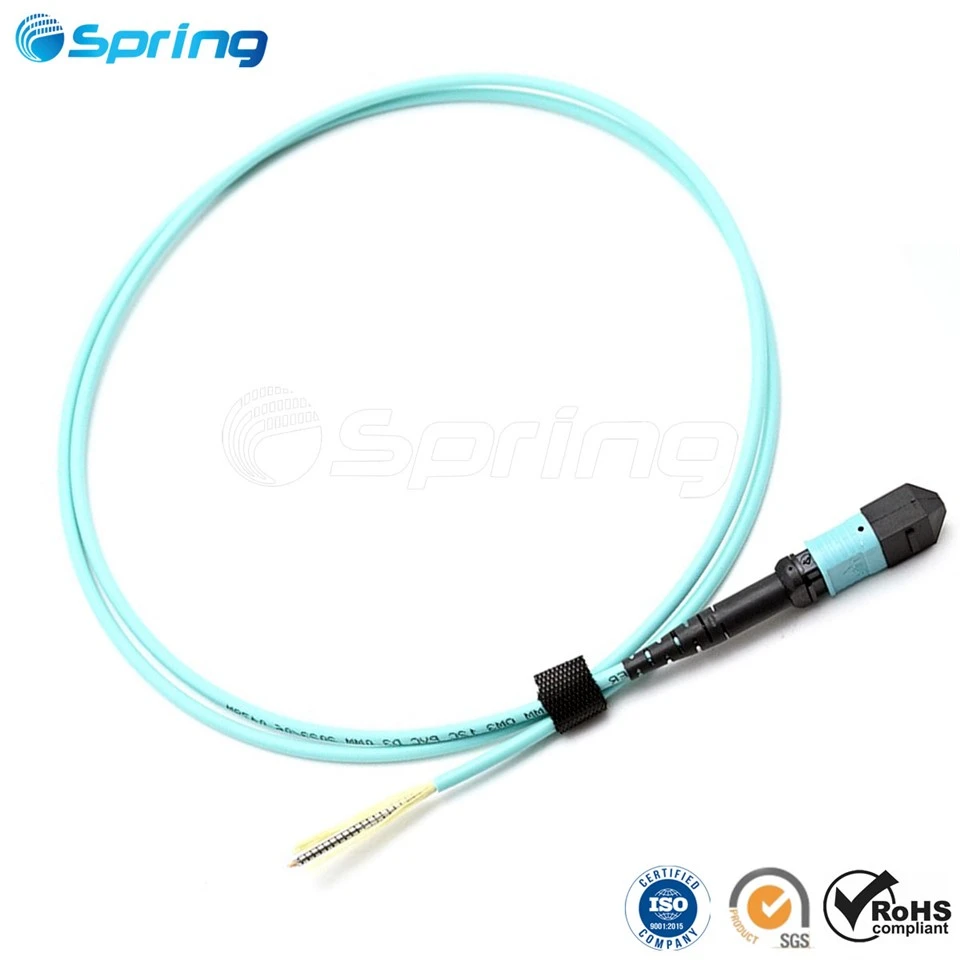
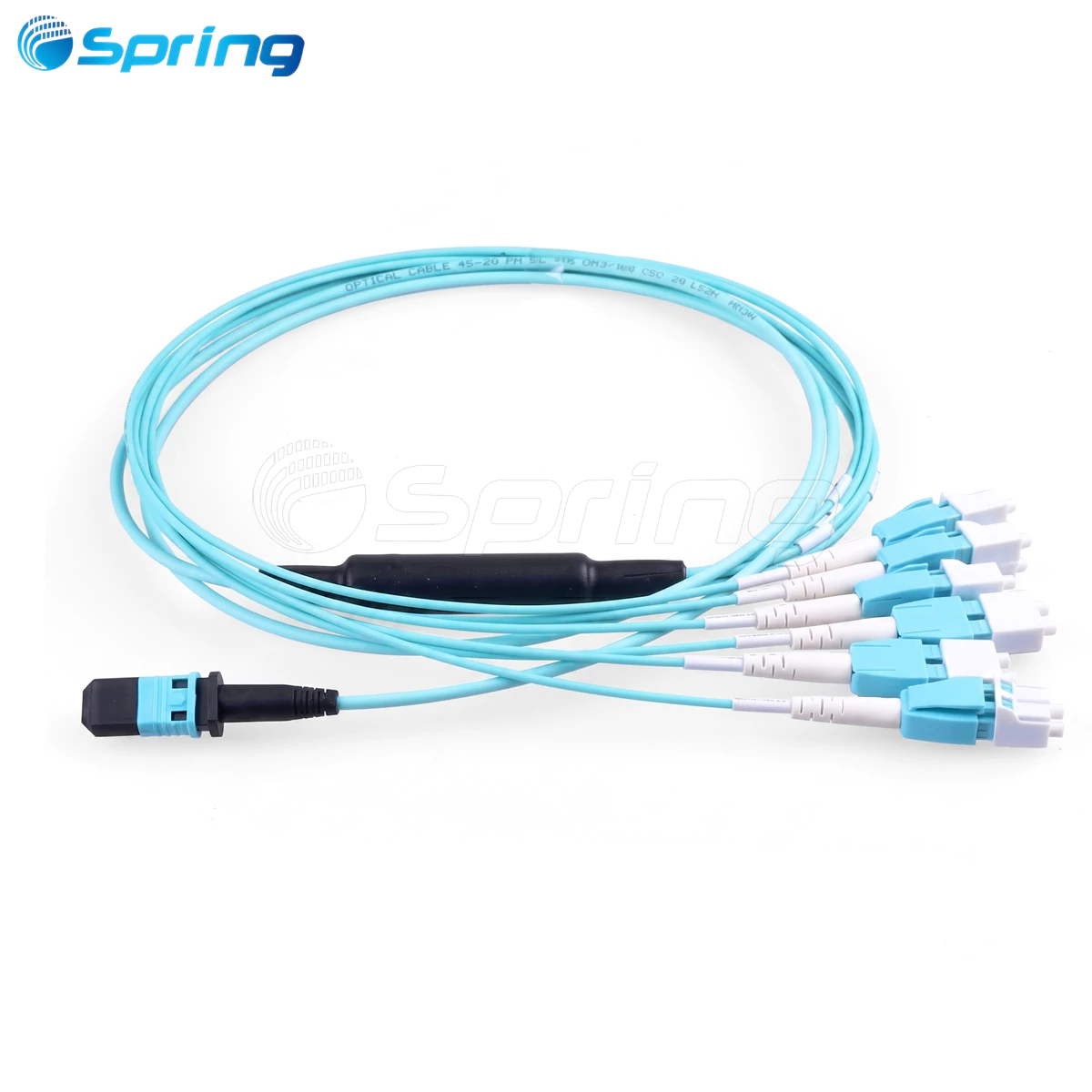
12-Core MPO Armored Patch Cable with ODVA Connector
Developed for interconnection between RRU and BBU units, this ODVA-sealed MPO assembly supports scalable, high-density installations.
·12-fiber MPO interface with LC breakout pigtails (2.0 mm, black)
·Outdoor-rated waterproof and dustproof construction
·Dynamic PIM performance ≤ –162 dBc
·Supports eCPRI protocols
·Transmission speeds up to 10 Gbps
·Connector options available: SC, LC, FC, ST
An optimal choice for large-scale 5G deployments requiring compact fiber management.


DLC-to-DLC Armored FTTA Patch Cord with Pulling Eye
This heavy-duty fiber optic assembly is designed for outdoor base station installations that demand high tensile strength and structural protection.
·7.0 mm reinforced armored outer jacket
·LSZH flame-retardant sheath for enhanced safety
·Capable of transmission distances up to 50 km
·Ultra-low latency below 1 μs
·Telecom-grade quality assurance
·Integrated pulling eye and push-pull tab for simplified outdoor routing
Well-suited for long-span FTTA infrastructure and rugged installation environments.
Outdoor Duplex LC Fiber Cable with NSN Boot
This durable duplex LC patch cord is delivered pre-terminated from the factory, enabling fast plug-and-play integration in telecom systems.
·NSN-boot compatible DLC connector design
·Ideal for dense equipment layouts in systems from Nokia and Siemens
·Supports frequency bands up to 6 GHz
·VSWR performance below 1.25
·Static PIM ≤ –166 dBc
·Built for long-term outdoor reliability
A practical and dependable solution for operators requiring stable performance in compact deployment scenarios.

Core Technical Features of CPRI Cable
1. High Data Rate Support
CPRI links support line rates up to 9.8 Gbps (CPRI v7.2), while eCPRI allows even higher throughput.
Suitable for multi-carrier aggregation, Massive MIMO antennas, and high-capacity 5G deployments.
2. Ultra-Low Latency
Fiber-based CPRI transmission delivers latency below 1 microsecond over short fronthaul distances.
Ensures strict real-time synchronization between BBUs and RRUs.
3. Strong Environmental Protection
Armored structures and reinforced outer sheaths
IP67 waterproof rating and UV-resistant jackets
Anti-corrosion materials ensure reliable operation on towers, rooftops, and harsh field conditions.
4. Flexible Connector Options
Dual LC connectors
LC uniboot connectors
DLC (Dual LC) connectors
ODVA waterproof connectors
NSN boot connectors
Most deployments use single-mode fiber (G.652 or similar), while multimode fiber is available for shorter links.
Types of CPRI Cable in Telecom Networks
Optical Fiber CPRI Cable
Most widely used in LTE and 5G
Based on single-mode fiber
Long transmission distance (up to tens of kilometers)
Immune to electromagnetic interference
Preferred for high-capacity, long-distance fronthaul
Copper CPRI Cable
Used for short indoor connections and equipment room interconnections
Lower cost but limited in bandwidth and distance
Less common in modern 5G deployments
Hybrid CPRI Cable (Power + Fiber)
Combines optical fibers for data and DC conductors for power
Reduces tower cabling complexity
Simplifies RRH installation for remote sites
Application Scenarios of CPRI Cable
1. 4G/5G Base Station Deployment
BBU in an equipment room, RRU near antennas
Fiber extends the digital interface, solving space and site planning constraints
2. C-RAN (Centralized Radio Access Network)
Centralized baseband pool serves multiple RRUs
CPRI cable provides low-latency fronthaul connectivity
Enables resource sharing, simplified maintenance, and energy efficiency
3. High-Density 5G Networks
Supports Massive MIMO and high-frequency spectrum
Stable, high-bandwidth fronthaul ensures reliable signal delivery under demanding conditions
Installation and Compatibility Considerations
Optical Module Matching
Wavelength (1310nm / 1550nm)
Fiber type (single-mode or multimode)
Transmission distance requirements
Synchronization Accuracy
Strict timing synchronization required between BBUs and RRUs
Poor-quality cables or latency variation can cause jitter
Environmental Suitability
Verify waterproof rating, UV resistance, temperature tolerance, and mechanical strength
Select correct cable structure for long-term reliability
Maximum Distance of a CPRI Cable
Depends on optical module specs, fiber attenuation, connector loss, and link budget
Multimode CPRI links: shorter distances
Single-mode fiber: up to tens of kilometers
Always confirm with optical transceiver parameters before deployment
Common Issues in CPRI Cable Deployment
Water ingress: poor sealing may degrade signal
Connector contamination: dust or oil increases insertion loss
Excessive bending: violating minimum bend radius affects signal integrity
Synchronization jitter: low-quality cables or unstable connections impact timing
Proper installation practices ensure long-term network reliability.
CPRI vs eCPRI: Key Differences
| Feature | CPRI | eCPRI |
|---|---|---|
| Transmission Type | Serial point-to-point | Packet-based (Ethernet/IP) |
| Bandwidth Efficiency | Fixed line rate | Flexible |
| Latency | Extremely low | Depends on network architecture |
| Deployment | LTE, early 5G | Advanced 5G & vRAN |
| Transport Medium | Dedicated fiber | Ethernet fiber networks |
While eCPRI adoption is growing, traditional CPRI cables remain widely used in LTE and hybrid 5G networks worldwide.
FAQ About CPRI Cable
Q: Can CPRI cable support 5G?
A: Yes, widely used in 4G LTE and early 5G deployments.
Q: Is CPRI cable single-mode or multimode?
A: Mostly single-mode, but multimode is available for short-distance links.
Q: Is CPRI cable waterproof?
A: Outdoor versions typically have IP67 protection for tower installations.
Q: What connectors are commonly used?
A: Dual LC, LC uniboot, DLC, and waterproof outdoor connectors.
Q: Is CPRI still relevant?
A: Yes. While eCPRI grows, traditional CPRI remains foundational in many networks.
The Role of CPRI Cable in Future Networks
As telecom networks evolve toward:
5G standalone (SA)
Cloud RAN (vRAN)
Centralized radio access networks
Ultra-dense small cell deployments
The need for stable, high-bandwidth fronthaul links continues to rise.
Although packet-based fronthaul solutions expand, CPRI cables remain foundational in LTE and transitional 5G networks worldwide.
Conclusion
The CPRI cable is more than a simple patch cord-it is the backbone of wireless fronthaul connectivity.
By enabling high-speed, low-latency digital transmission between BBUs and RRUs, it ensures:
Efficient base station operation
Reliable signal delivery
Accurate synchronization
Scalable 4G/5G network growth
For telecom operators, system integrators, and network planners, selecting the right CPRI cable-considering fiber type, structure, connectors, and protection level-is critical for long-term network performance and operational stability.