

Reliable cable protection is a critical factor in modern telecom networks, electrical systems, and outdoor infrastructure. As cables are increasingly deployed in harsh environments, installers and network engineers require heavy-duty sealing solutions that provide long-term protection against moisture ingress, UV exposure, severe temperature cycling, and mechanical stress.
Traditional heat-shrink tubing has been the industry standard for decades. However, its installation requires an external heat source, such as a gas torch or heat gun. This creates critical operational challenges in remote locations, confined spaces, or hazardous environments where open flames are restricted.
Silicone cold shrink tube technology provides a safer, faster, and more reliable alternative. By leveraging the natural elastic recovery properties of high-performance silicone rubber, cold shrink tubing delivers a permanent environmental seal through continuous radial pressure-eliminating the need for heat, special tools, or extensive training.
Quick Technical Snapshot
Material: 100% High-Performance Silicone Rubber
Ingress Protection: IP67 / IP68 Waterproof Rated
Operating Temperature Range: -60°C to +200°C
Standard Shrink Ratios: 3:1 and 4:1 optimization
Core Applications: Telecom cell towers, FTTH networks, outdoor power distribution, and industrial cable sealing.
What Is a Silicone Cold Shrink Tube?
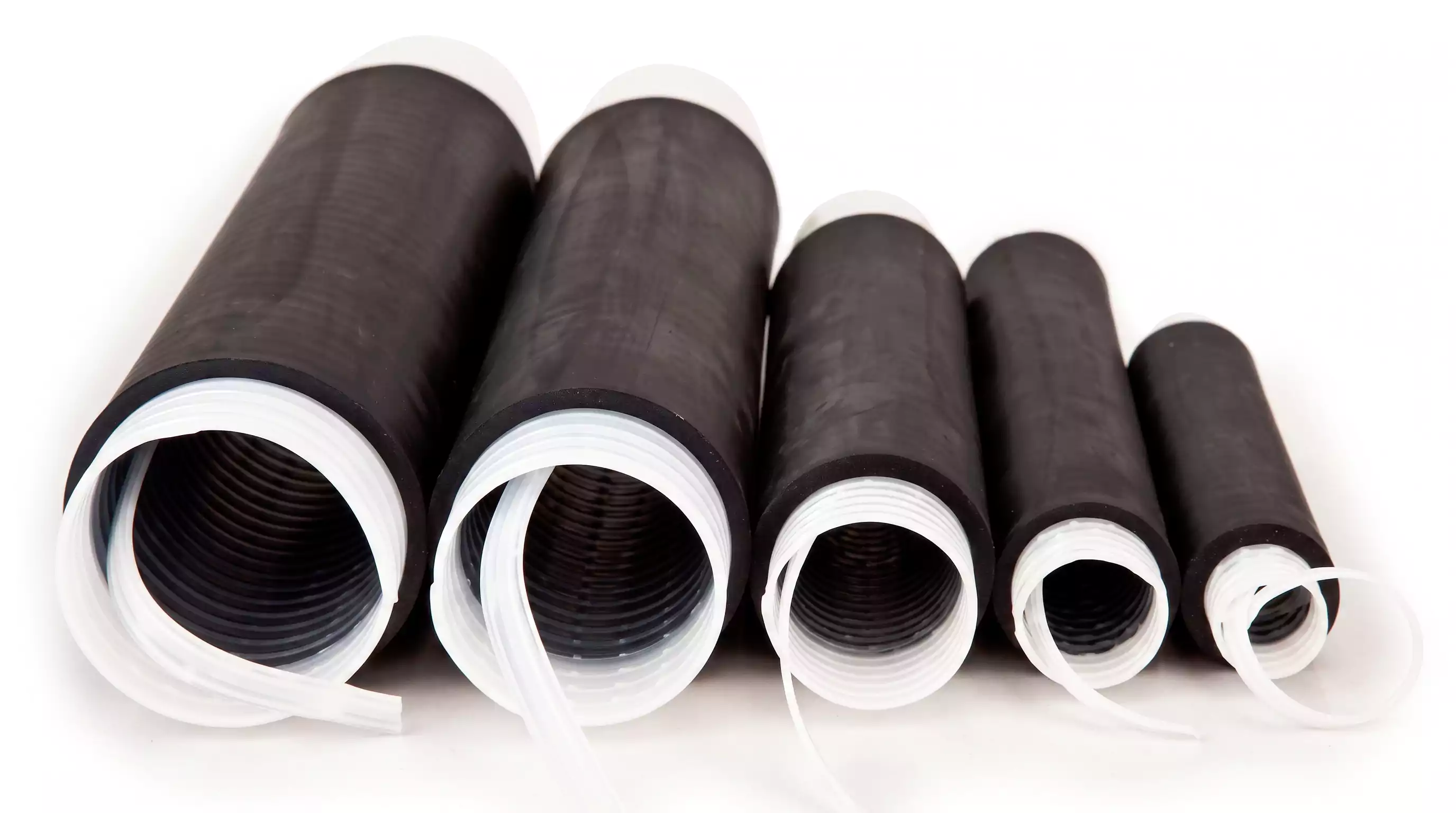
A silicone cold shrink tube is a pre-expanded, open-ended elastic sealing sleeve manufactured from high-grade silicone elastomer. It is engineered to insulate, seal, and protect electrical cables, coaxial connectors, and fiber optic joints without requiring any thermal activation.
Unlike conventional tubing, cold shrink products are supplied pre-stretched over a removable, structural plastic support core. When this spiral matrix core is unraveled and pulled out by the installer, the silicone material naturally contracts back toward its original dimensions, wrapping tightly around the cable assembly to create a permanent, watertight mechanical seal.
Installation Workflow at a Glance:
Step 1: Pre-Expansion – High-performance silicone tube is pre-stretched on a structural core during production.
Step 2: Position – Slide the open assembly smoothly over the cable joint or connector interface.
Step 3: Pull Core – Unwind and pull the trailing tab of the plastic spiral support matrix.
Step 4: Elastic Recovery – The memory-driven silicone contracts immediately to conform to the substrate.
Step 5: Permanent Seal – Continuous radial pressure creates an unyielding, watertight IP68 interface.
How Cold Shrink Technology Works
The fundamental science behind cold shrink technology relies on the elastic memory of high-elongation silicone rubber.
1. Pre-Expansion During Manufacturing
During production, the silicone tube is mechanically expanded beyond its relaxed diameter and loaded onto a flexible plastic spiral core. This structural core holds the tube in a high-tension state, storing latent mechanical energy.
2. Positioning over the Cable Assembly
The installer slides the entire assembly over the cable joint or connector interface before splicing or mating. Because it maintains a stable, wide-open inner diameter, it slips easily over bulky or irregular shapes without catching.
3. Removing the Support Core
Once aligned, the installer pulls the trailing end of the plastic spiral core. The core unwinds in a counter-clockwise direction, releasing the stored energy inside the elastomer step-by-step. The tube immediately conforms tightly to the underlying substrate.
4. Continuous Radial Pressure Generation
This is the most critical performance differentiator of cold shrink technology. Once installed, the silicone tube is never fully relaxed; it remains under slight tension, exerting a continuous radial compression force against the cable. This active, dynamic seal flexes alongside the cable, preventing air gaps, moisture tracking, and dust contamination over decades of service life.
Structure and Key Components
To understand how a cold shrink sleeve achieves its reliability, it helps to break down its structural layout:
| Component Layer | Material Spec | Operational Function |
| Outer Protection Body | 100% Elastic Silicone Rubber | Delivers dielectric insulation, hydrophobic sealing, and high-degree UV weatherproofing. |
| Inner Support Matrix | Heavy-Duty Recyclable Plastic | Maintains the expanded inner diameter during shipping, handling, and placement. |
| Deployment Mechanism | Ergonomic Integrated Pull Tab | Allows installers to manually unravel the inner core smoothly without any hand tools. |
Silicone vs. EPDM: The Definitive Material Comparison
When sourcing cold shrink products, procurement and engineering teams typically evaluate two primary elastomers: Silicone and EPDM (Ethylene Propylene Diene Monomer). While EPDM can be a cost-effective option for indoor or buried projects with moderate environmental exposure, silicone is overwhelmingly preferred for premium outdoor telecom and mission-critical infrastructure.
| Performance Factor | Silicone Cold Shrink Tube | EPDM Cold Shrink Tube |
| Elastic Recovery | Excellent (Maintains pressure indefinitely) | Good (Prone to stress relaxation over time) |
| Operating Temperature Range | -60°C to +200°C | -40°C to +130°C |
| UV & Weather Resistance | Superior (Immune to solar cracking) | Moderate (Degrades under severe, direct sunlight) |
| Ozone Resistance | Excellent | Good |
| Low-Temperature Flexibility | Maintains elasticity in extreme freeze | Hardens and becomes brittle in extreme cold |
| Sealing Pressure Stability | Constant dynamic retention | Drops over time due to compression set |
| Initial Upfront Cost | Higher | Lower |
| Long-Term TCO | Significantly Lower (Zero maintenance) | Higher (Potential replacement costs) |
Why Silicone Wins on Elastic Longevity
The chemical structure of silicone consists of a highly stable inorganic silicon-oxygen backbone, whereas EPDM relies on a carbon-carbon backbone. The silicon-oxygen bond requires much higher energy to break, giving silicone its world-class resistance to UV radiation, ozone, and extreme heat.
Furthermore, EPDM suffers from a higher compression set (the permanent deformation remaining after compressive forces are released). Over years of extreme summer heat and winter freezes, an EPDM tube can lose its gripping force, resulting in moisture ingress. Silicone maintains its continuous radial force indefinitely.
Silicone Cold Shrink vs. Heat Shrink: Total Cost of Ownership (TCO)
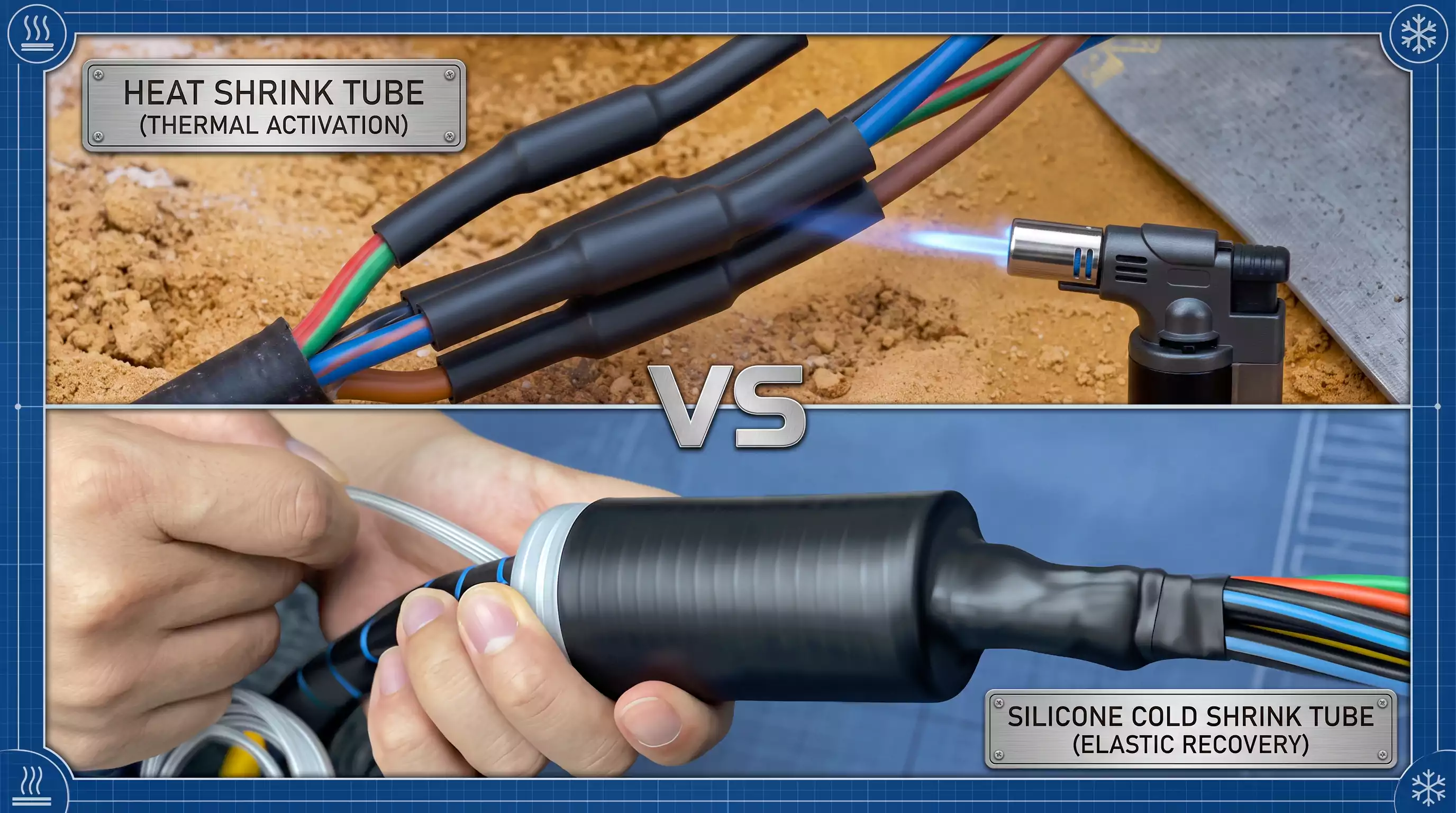
Choosing between cold shrink and traditional heat shrink tubing is a major decision for infrastructure contractors. While a heat shrink sleeve offers a lower initial purchase price, a comprehensive Total Cost of Ownership (TCO) evaluation reveals that silicone cold shrink tubing yields superior long-term financial value.
Installation Safety & Speed
Heat shrink installation requires gas torches, hot air blowers, or electrical heating equipment. This complicates field logistics, increases installation step counts, and presents serious fire hazards in confined environments like telecom vaults or petroleum facilities.
Conversely, cold shrink installation requires zero tools, can be deployed in under 60 seconds by a single technician, and presents zero fire or burn risks.
Human Error & Rework
Achieving a uniform seal with heat shrink depends heavily on operator skill. Overheating can scorch and crack the outer jacket, while underheating leaves internal adhesives unactivated, creating hidden moisture paths. Because cold shrink deployment is entirely mechanical, its compression uniformity is controlled by the factory-set elastic properties of the silicone itself, minimizing human error and costly field rework.
Key Applications in Telecom & Infrastructure

Because of its rugged durability and ease of use, silicone cold shrink tubing is heavily integrated into international telecom networks, smart grids, and green energy projects.
1. FTTH Networks: Protecting Outdoor Drop Cables
Fiber-to-the-Home deployments require thousands of outdoor connection points, including multi-port terminals, distribution boxes, and drop cable junctions. These field interfaces are subject to driving rain, high humidity, and rapid temperature shifts.
Integrating specialized FTTH solutions sealed with silicone cold shrink tubes ensures that outdoor splitters and customer drop ports remain completely watertight, reducing network downtime and preventing costly truck rolls.
2. Fiber Optic Closures: Premium Port & Entry Sealing
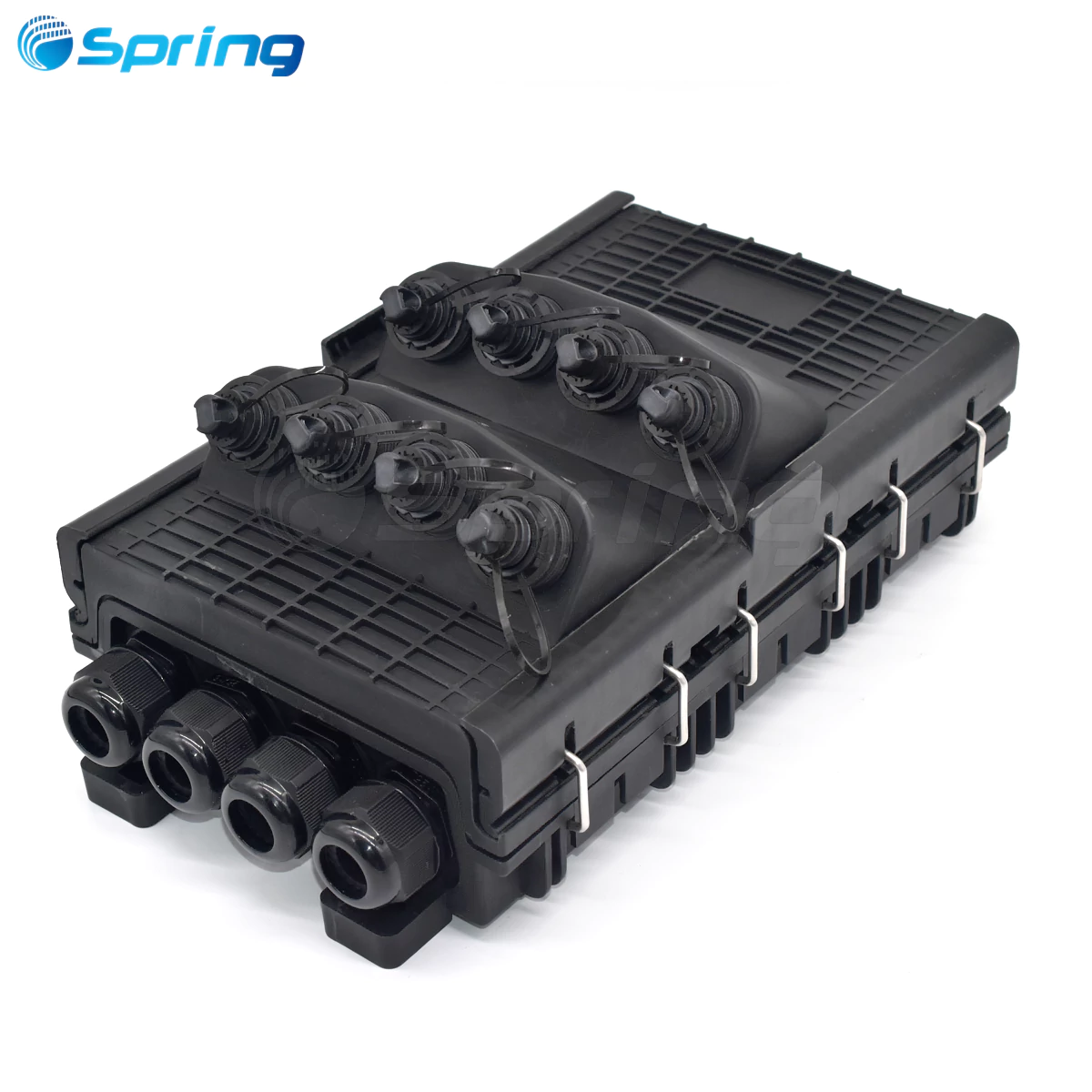
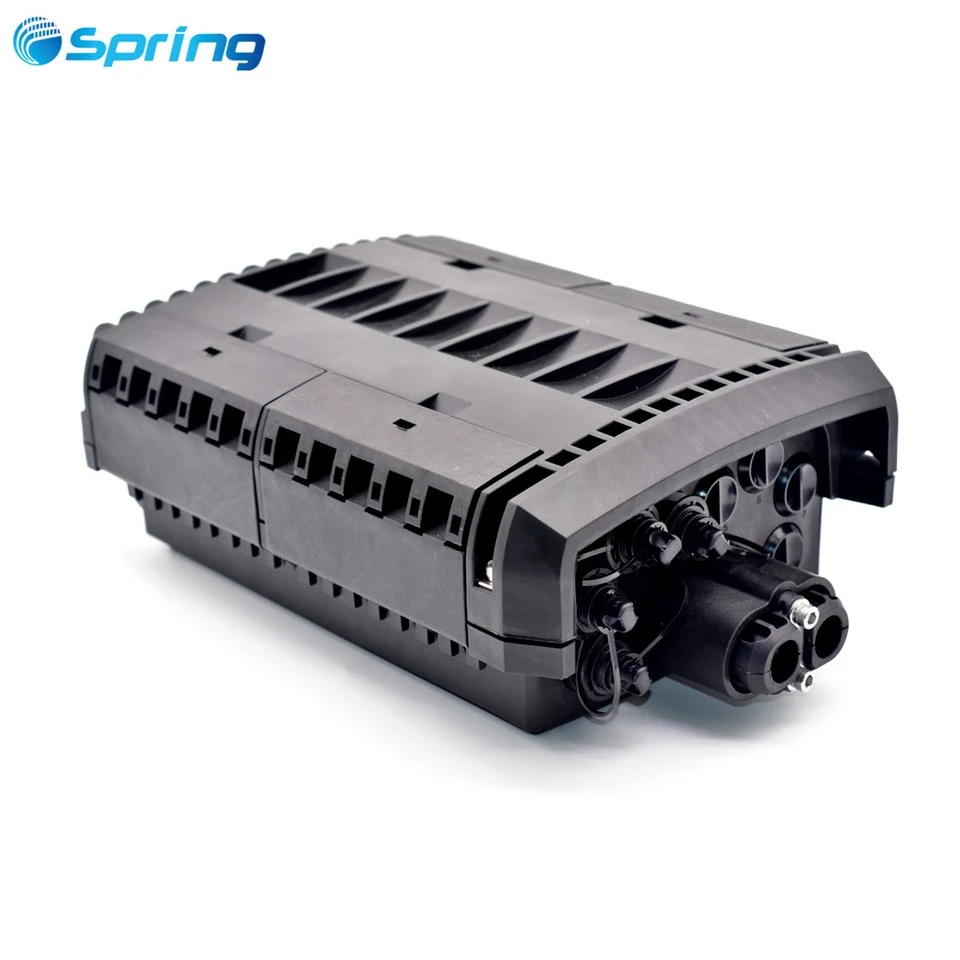
Cable entry ports are the most vulnerable entry points for moisture in any fiber deployment. When installing a heavy-duty fiber optic splice closure in aerial or underground handholes, standard tapes or heat-shrink kits can pull apart over time due to cable shifting and thermal expansion.
Silicone cold shrink sleeves grip both the closure port and the incoming fiber optic cable simultaneously, creating an unyielding IP68-rated barrier that tolerates mechanical bending and vibration.
Cross-Section Sealing Architecture:
Left Node Connection: Heavy-Duty Infrastructure Fiber Optic Splice Closure Port
Central Interlocking Seal: Active Silicone Cold Shrink Sleeve (Applies 360-degree continuous compression force across the dynamic interface)
Right Node Connection: Outgoing Telecom / Fiber Optic Cable Jacket
3. Wireless Infrastructure & Macro Cell Towers
On cell towers, coaxial connections linking Remote Radio Units (RRUs) and antennas are exposed to extreme high-altitude wind and sun. Silicone's exceptional UV resistance keeps RF connectors dry and prevents signal degradation (such as PIM - Passive Intermodulation), saving tower operators from high-risk, expensive climbing maintenance.
4. High-Voltage Power Distribution Systems
In underground utility grids, silicone cold shrink tubes serve as primary insulation sleeves for inline power cable joints and outdoor terminations up to 35kV. Its high dielectric strength ensures reliable electrical isolation while keeping moisture out of underground cable conduits.
Sizing Guide: How to Choose the Right Diameter
Selecting the correct silicone cold shrink tube sizes is critical to establishing a permanent, pressurized seal. Sourcing teams must never select a size based on approximate estimations. You must verify three geometric metrics:
Maximum Supplied Inner Diameter (As-Expanded): The internal diameter of the tube while resting on its plastic core. This must be larger than the largest component or connector profile to allow the sleeve to slide over the assembly without friction.
Minimum Fully Recovered Inner Diameter: The diameter of the tube if it were allowed to shrink completely in free air without any restriction. This must be smaller than the actual outside diameter (OD) of the cable jacket.
The 10-15% Engineering Rule: To ensure optimal sealing pressure, the cable's actual outer diameter should be at least 10% to 15% larger than the tube's minimum fully recovered diameter. This ensures the silicone remains under constant elastic tension, preventing future seal relaxation.
Step-by-Step Installation Best Practices
Follow this workflow to maximize the long-term field reliability of your silicone cold shrink application.
Phase 1: Substrate Preparation
Cleanliness is Paramount: Thoroughly wipe down the cable jacket and connector body to remove grease, dust, mud, or moisture.
Profile Smoothing: If the cable joint features sharp transitions or metallic edges, wrap a layer of high-insulation vinyl tape over the jagged points to protect the inner silicone lining from puncture.
Phase 2: Deployment
Slide and Park: Slide the pre-expanded cold shrink tube onto the cable. Park it far enough down the line to ensure it remains clean and clear of the splicing/connection work area.
Connect and Align: Complete your fiber optic splice, lock your RF connector, or complete your power termination. Slide the cold shrink tube back down, centering it perfectly over the targeted joint interface.
Unwind the Core: Locate the plastic pull tab at the end of the spiral core. Pulling counter-clockwise, slowly unwind the plastic ribbon. Let the silicone tube collapse onto the joint from one end to the other, expelling trapped air pockets as it proceeds.
Final IP68 Verification: Visually inspect the completed assembly. Verify that the silicone tube has contracted completely evenly, with no edge rolling, exposed connection points, or visible gaps.
Frequently Asked Questions (FAQ)
What is the shelf life of a pre-expanded silicone cold shrink tube?
Generally, high-quality silicone cold shrink products have a shelf life of approximately 2 to 3 years when stored in cool, dry environments. Storing them past this date may cause the plastic core to warp or the silicone to experience slight elastic fatigue, hindering full recovery during deployment.
Can cold shrink tubing be removed and reused?
No. Cold shrink tubes are single-use protection components. Once the internal core is extracted and the silicone contracts, it cannot be re-expanded back onto a core in the field. If access to the joint is required, the tube must be cut off with a knife and replaced with a new unit.
Is silicone cold shrink tubing completely chemical resistant?
Silicone offers excellent resistance to common environmental agents, including ozone, weak acids, salt water, and industrial dust. However, for applications involving heavy exposure to hydrocarbons, oils, or strong fuel solvents, EPDM or specialized chemical-grade fluorosilicone options should be evaluated.
Does cold shrink perform well under heavy mechanical vibration?
Yes. Unlike rigid adhesives or heat-activated polyolefins that can fracture under structural vibration, silicone is highly elastomeric. It acts as a dampening cushion, maintaining its continuous compression seal even on vibrating industrial motors or heavy windswept cell towers.