

In network switching, a variety of connectivity solutions are available, including optical transceivers paired with fiber optic cables, Active Optical Cables (AOC), and Direct Attach Cables (DAC). DACs can be further categorized into Active Copper Cables (ACCs), Active Electrical Cables (AECs), and passive DACs. But what exactly are these solutions, and what are the differences between them?
This article will delve into their definitions, advantages, application scenarios, and differences. Our goal is to help you select the most suitable and cost-effective connectivity scheme for your network architecture-especially in high-density AI clusters and GPU environments where AOC, DAC, ACC, and AEC solutions are frequently deployed.
Overview Quick Take:
Passive DAC: The most cost-effective, lowest-latency option, standard for short intra-rack links under 3 meters.
ACC (Active Copper Cable): Utilizes an analog Redriver chip for mild signal amplification, extending copper reach up to 4 meters.
AEC (Active Electrical Cable): Utilizes a digital Retimer chip with CDR, extending thin copper cables up to 7 meters with high signal integrity.
AOC (Active Optical Cable): Leverages multi-mode optical fiber for longer reaches (up to 100m) with complete immunity to electromagnetic interference (EMI).
1. Active Optical Cable (AOC) Overview
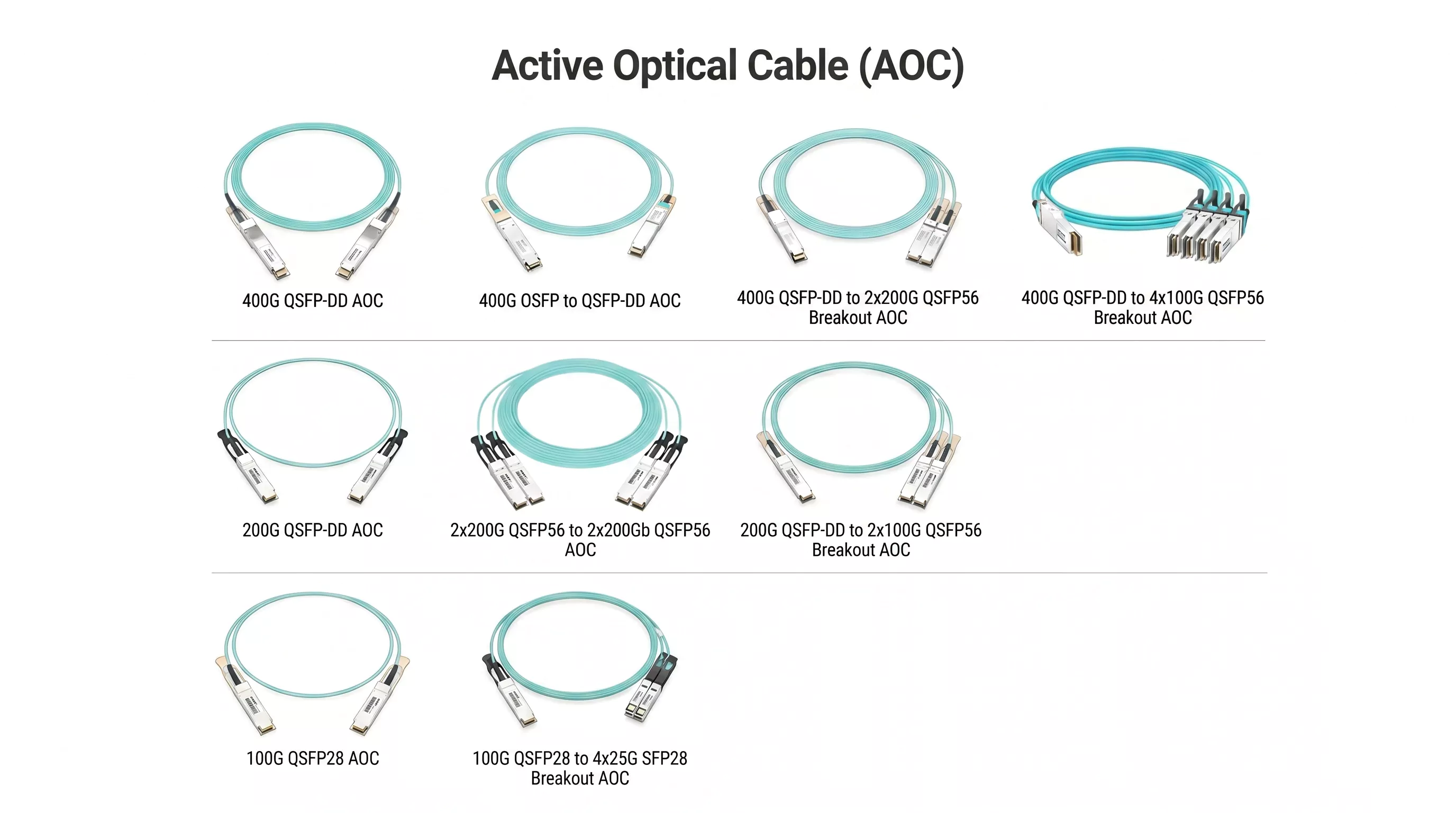
An Active Optical Cable (AOC) integrates electro-optical converters at both ends with a fixed length of optical fiber, enabling long-distance, high-speed, and low-power data transmission. By integrating the optical transceiver and optical fiber into a unified structure, AOCs enhance signal quality and reliability while effectively overcoming the transmission distance limitations and signal attenuation common in traditional copper cables.
Each AOC contains two integrated optical transceivers connected via optical fiber. Because the internal laser components are completely enclosed inside the module housing during manufacturing, the risk of optical port contamination during field deployment is minimized, improving overall reliability. Additionally, AOCs achieve an optimal balance between cost and performance by streamlining optical components and omitting Digital Diagnostics Monitoring (DDM) functionality.
Core Advantages of AOCs
AOCs offer significant benefits, including high transmission rates, long-distance reach, low power consumption, and lightweight, easy-to-install form factors. This makes them an ideal choice for data centers and High-Performance Computing (HPC) environments. Compared to bulky copper-based technologies, AOCs provide high-density connectivity in space-constrained environments, and their inherent immunity to electromagnetic interference (EMI) helps reduce packet loss and boost transmission reliability. Consequently, AOCs are particularly well-suited for cross-rack interconnect scenarios within data center clusters.
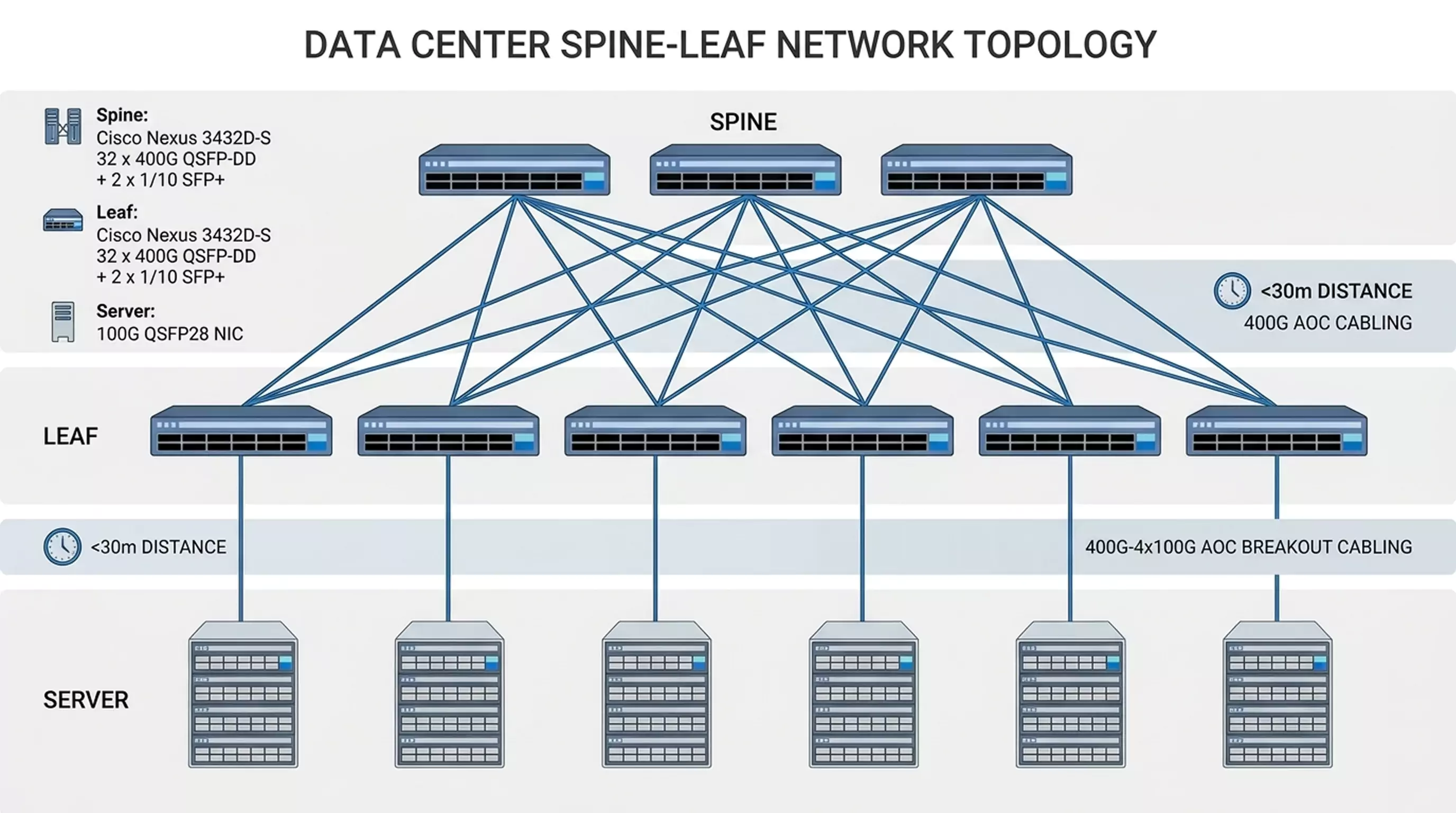
Application Example: A network architecture utilizing Cisco Nexus 3432D-S switches for both the Spine and Leaf layers, where 400G AOCs and 400G-to-4x100G breakout AOCs are deployed for device interconnection.
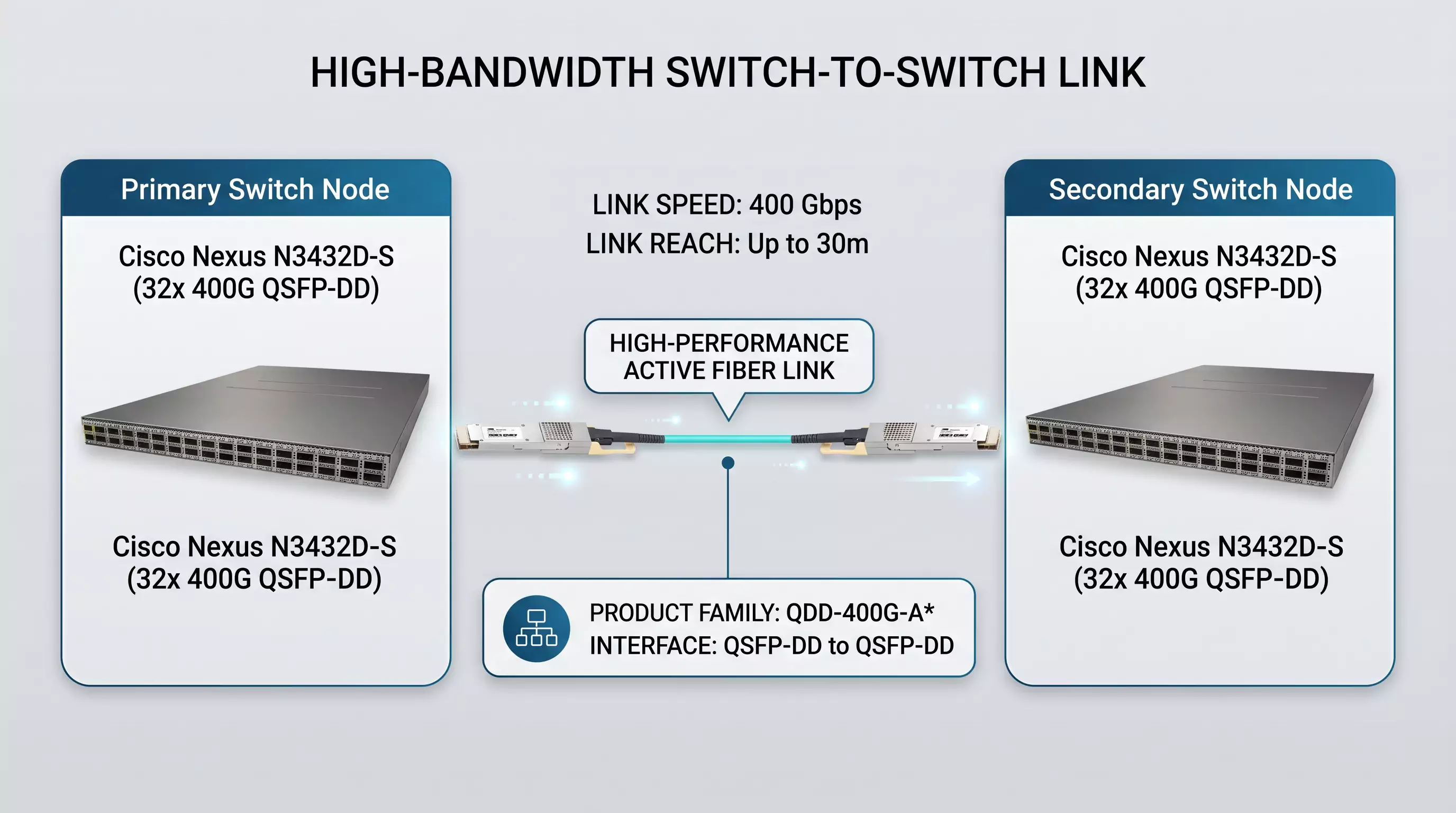
Application Example: Application of 400G QSFP-DD Active Optical Cable (AOC) in 400G Switch Interconnection
Practical Engineering Challenges of AOCs
Despite their notable benefits, AOCs introduce certain operational trade-offs. First, while their integrated design eliminates the need for port cleaning, it presents a maintenance limitation: if a single transceiver module fails, the entire cable assembly must be replaced, making it less convenient than standard pluggable transceiver-and-fiber solutions. Second, the transmission length of an AOC must be predetermined prior to factory shipping, offering no flexibility for adjustments post-delivery.
Furthermore, due to the complexity of optical signal transmission and conversion design, AOCs are generally more expensive and consume more power than DACs. Currently, as a market reality in 2026, the physical characteristics of the OSFP connector itself-being relatively large and heavy-make it prone to damage during dense installation pulls. Therefore, this form factor is less ideal for AOC manufacturing, which is why 800G OSFP-to-OSFP or breakout 800G OSFP AOC products are rarely seen from vendors or in the commercial market today.
2. Direct Attach Cable (DAC) Overview
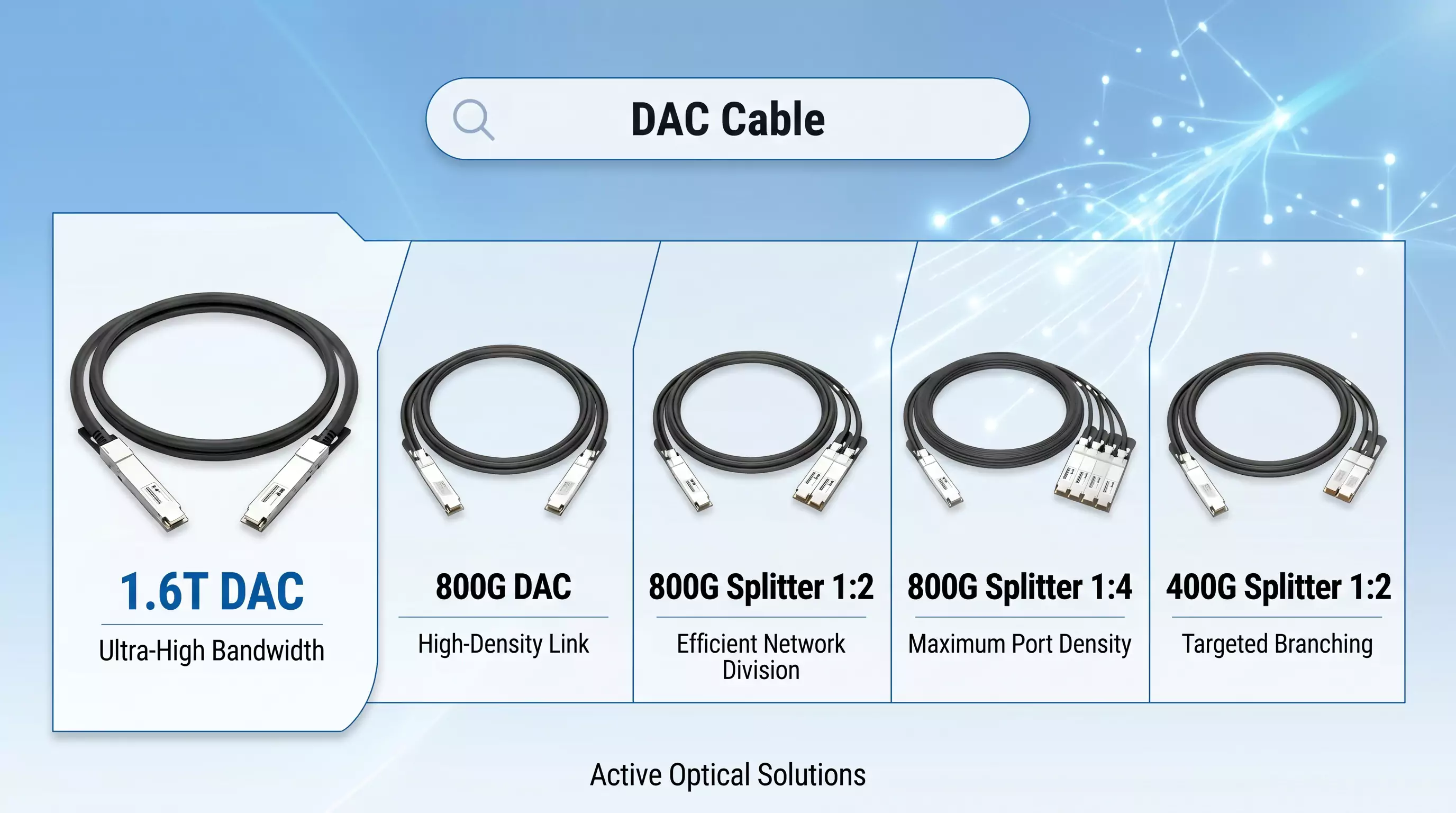
A Direct Attach Cable (DAC) is a high-speed copper cable specifically designed for short-distance connections in data centers, typically used to link network devices such as switches, servers, and storage arrays. Featuring fixed electrical connectors at both ends, DACs enable low-latency, high-performance data transmission natively. Due to their high cost-effectiveness and reliability, DACs are standard for interconnect scenarios within 7 meters.
These cables are classified into passive and active types. To push copper past its physical limits at higher data rates, Active Copper Cables (ACC) and Active Electrical Cables (AEC) incorporate signal conditioning chips to further enhance signal integrity.
Because passive DACs do not integrate electro-optical conversion modules internally, they offer a substantial cost advantage. Their ends utilize simple mechanical electrical connectors, allowing high-speed transmission while keeping costs tightly controlled. Within data centers, DACs are commonly deployed for server-to-Storage Area Network (SAN) connections, as well as short-range switch-to-router interconnections.
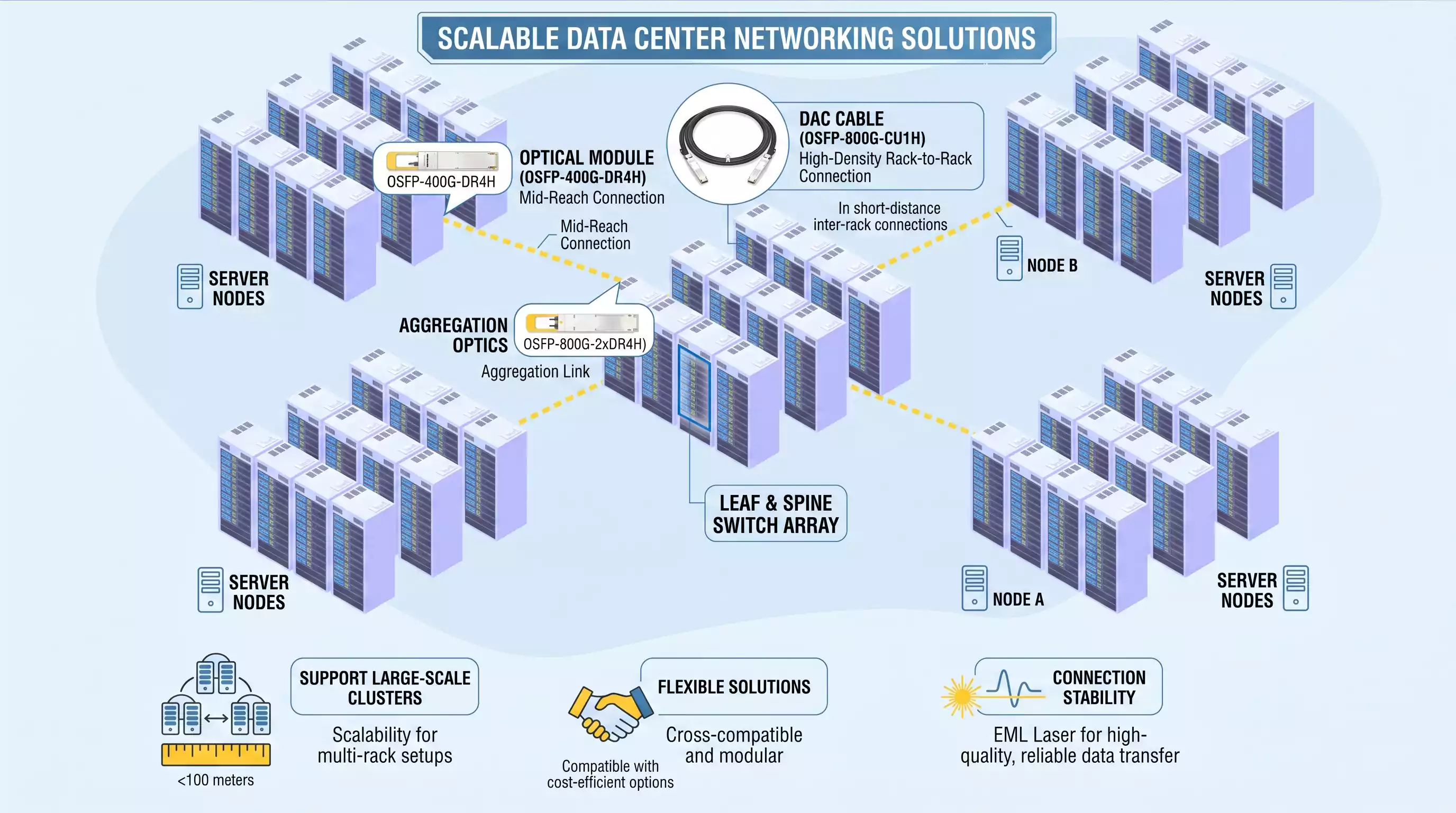
Real-World Case Study: HGX H100 Cluster Design
Engineering Evaluation: During the architectural planning of a 128-node HGX H100 cluster, evaluations showed that utilizing a combination of passive copper DACs for localized links and single-mode optical transceivers for longer reaches-instead of a uniform multi-mode transceiver configuration-reduced total interconnect procurement costs by approximately 35%.
2.1. Advantages of DACs in Large-Scale GPU Clusters
High-Speed Performance: DACs support data transfer rates up to tens of Gbps per lane, providing high bandwidth and rapid data exchange over short distances, outperforming traditional legacy copper solutions.
Cost-Efficiency: Compared to full optical transceiver solutions, DACs are significantly more economical, making them the ideal choice for short-range, high-speed interconnections.
Low Power Consumption: DACs operate at lower temperatures and consume far less power than optical alternatives, aligning with data center energy-efficiency initiatives. For example, a Quantum-2 InfiniBand switch consumes 747W when utilizing DACs, whereas the same switch consumes up to 1500W when configured with multi-mode optical transceivers.
Efficient Heat Dissipation & Stability: The physical copper structure provides excellent thermal dissipation, reducing overheating risks and improving system stability. DACs are more rugged and durable than optical transceivers, effectively mitigating common fiber-related issues like signal jitter, latency spikes, and structural failures. Because they transmit electrical signals directly without conversion overhead, they deliver critical value in large-scale GPU clusters that demand low latency and low failure rates.
Deployment & Maintenance Benefits: DACs eliminate the need for complex fiber optic infrastructure, streamlining the deployment process and reducing cabling costs. Their durability and plug-and-play simplicity further minimize maintenance complexity in high-density environments, bolstering overall network stability. Consequently, they are increasingly adopted in large-scale GPU clusters as a vital solution for scaling performance while maintaining cost efficiency.
2.2. Disadvantages of DACs
Limited Transmission Distance: Restricted by the physical properties of copper at high frequencies, the effective transmission distance of passive DACs is short (typically not exceeding 7 meters, and limiting to 2–3 meters at 800G), making them incapable of meeting long-distance connectivity needs.
Lack of Flexibility: Compared to fiber optic cables, high-speed DACs are thicker, stiffer, and have a larger bend radius, making cable management highly challenging in dense, finely routed data center environments, which can potentially impact airflow organization.
Susceptibility to EMI: Because they rely on copper conductors for transmission, DACs are more vulnerable to electromagnetic interference (EMI) and crosstalk in high-density environments crowded with electronic equipment, which may reduce signal stability and data integrity.
To overcome these limitations of passive DACs, Active Copper Cable (ACC) and Active Electrical Cable (AEC) technologies emerged, which are detailed in the following sections.
2.3. Differences Between AOC and DAC
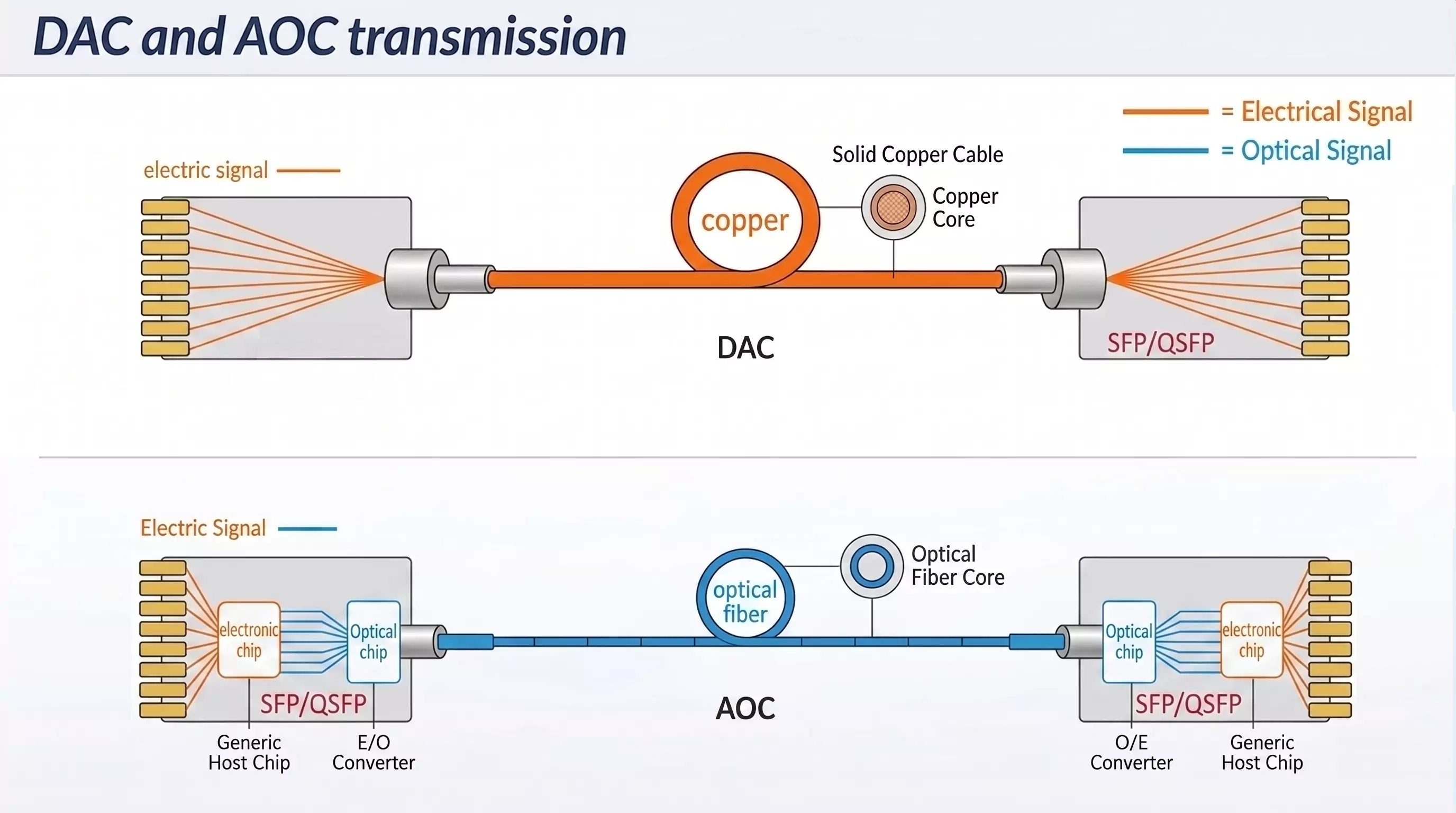
AOCs and DACs share the same form factors and electrical interfaces at their ends-such as SFP, QSFP, and OSFP standards-ensuring seamless compatibility with system components like switches and Network Interface Cards (NICs).
However, looking inside the connector reveals two entirely different architectures. An AOC integrates electro-optical conversion chips within the module, including Clock and Data Recovery (CDR) units, signal reconstruction Retimers, or Gearbox units, alongside lasers and Photodetectors (PD) to modulate electrical signals into optical signals for transmission.
In contrast, a DAC is a passive copper medium composed of high-speed differential coaxial cables (twinaxial/twinax cables) soldered directly to the module connectors. It achieves end-to-end direct electrical signal transmission via shielding layers and outer jackets, completely bypassing any signal conversion processes.
3. Analysis of Active Copper Cables: ACC vs AEC
Passive direct attach cables (passive DACs) have long been crucial in data centers due to their low power consumption and cost-efficiency-even as speeds scale up to 800G. However, as data rates increase, the effective transmission distance of passive copper has shrunk, currently limited to roughly 3 meters at 800G. The trend of channel counts increasing from 4 lanes to 8 lanes has also led to thicker cable diameters, complicating cable management and airflow within server cabinets.
While AOCs are recommended for long-reach scenarios, their high power consumption and cost make them less than ideal for mid-range links. This has driven the development of Active Copper Cables (ACCs) and Active Electrical Cables (AECs), providing a more balanced solution for medium-distance transmission.
3.1. Technical Architecture Differences: AEC vs ACC
The functional variance between an AEC and an ACC comes down to whether they use an analog or digital chipset architecture within the connector housing:
Active Copper Cables (ACC): ACCs utilize a Redriver chip architecture. They perform signal enhancement at the receiving end using Continuous-Time Linear Equalization (CTLE) technology. Essentially, an ACC functions as an analog signal amplifier.
Active Electrical Cables (AEC): AECs deploy a more sophisticated digital Retimer chip architecture. They perform signal amplification and equalization at both the transmitting and receiving ends. By integrating Clock and Data Recovery (CDR) technology to completely mitigate signal jitter, AECs deliver superior signal integrity and much cleaner data transmission quality.
While both AECs and ACCs belong to the active copper cabling family, their capabilities differ. While ACC primarily focus on analog signal amplification, AECs combine amplification with CDR technology to effectively suppress signal jitter. Backed by Retimer chips and Forward Error Correction (FEC) support, AECs achieve longer, highly reliable transmission distances (up to 5–7 meters), making them suitable for highly demanding applications.
Furthermore, unlike traditional copper cables that suffer from severe radio frequency (RF) loss due to the skin effect, AECs leverage high-frequency carrier technology to minimize transmission losses. This allows AEC to use much thinner copper wire gauges than passive DACs (e.g., using 32AWG instead of bulky 26AWG), resulting in a cable bundle that is nearly as thin and lightweight as an AOC. This significantly simplifies rack cable management and optimizes thermal airflow.
The primary trade-off is power: while passive DACs require 0W, an AEC draws a modest power budget (
≈ 6W - 12W total per cable assembly). Meanwhile, passive DACs remain highly advantageous for short-range connections (2–3 meters) because they are more affordable and require zero power, making them ideal for power-sensitive environments.
3.2. Technical Parameter Comparison Matrix
The following table contrasts the key performance, physical, and financial metrics across all four high-speed interconnect variants:
| Technical Parameter | Passive DAC | ACC (Active Copper) | AEC (Active Electrical) | AOC (Active Optical) |
| Transmission Medium | Copper (Twinaxial) | Copper (Twinaxial) | Copper (Twinaxial) | Multi-mode Optical Fiber |
| Internal Silicon | None (Passive) | Redriver (Analog EQ) | Retimer (with CDR) | Electro-Optical Engines & CDR |
| Signal Processing Mode | Native Pass-through | Analog Waveform Boosting | Digital Reshaping & Re-clocking | Electro-Optical Modulation |
| Max Reach (800G Era) | ≈ 2M - 3M | ≈ 3M - 4M | ≈ 5M - 7M | ≈ 30M - 100M |
| Physical Gauge / Weight | Thick, stiff, and heavy | Medium thickness/weight | Ultra-thin and lightweight | Thinnest and lightest footprint |
| Power Consumption | 0W | Low (≈ <2W per end) | Moderate (≈ 6W - 12W total) | High (≈ 2W - 4.5W per end) |
| EMI Resilience | Vulnerable to crosstalk | Vulnerable to high-freq EMI | High Resilience (via Retimer) | Complete Immunity |
| Relative Cost Budget | Lowest (1×) | Low-Medium (≈ 1.5× - 2×) | Balanced (≈ 2.5× - 3.5×) | Premium (≈ 4× - 5×) |
| Primary AI Network Slot | Intra-rack Server-to-ToR | High-density adjacent racks | Inter-rack switch fabrics | Cross-POD, Spine-to-Leaf backend |
4. AI Data Center Cabling FAQ
Why is passive DAC preferred over AOC in intra-rack GPU setups?
Passive DACs are favored for server-to-ToR connections inside a single rack due to their near-zero latency, absolute lowest cost, and zero power consumption. In massive clusters where network infrastructure can consume up to 30% of total cluster power, saving 5–10W per cable across thousands of nodes drastically reduces operating expenses (OPEX) and cooling overhead.
What makes AEC a better alternative than ACC for 800G AI networks?
At 800G speeds, the signal attenuation over copper is too severe for basic analog Redrivers (ACCs) to cleanly repair. AECs, via their digital Retimer chips and Clock and Data Recovery (CDR) technology, completely rebuild the digital signal while stripping out jitter. This allows AECs to achieve the longer reaches (up to 7m) and use the ultra-thin wire profiles necessary for modern high-density switch fabrics.
Can I mix OSFP and QSFP-DD form factors using these cables?
Yes. Both DACs and active cables (AEC/ACC) can be manufactured as hybrid or breakout assemblies (e.g., 800G twin-port OSFP to 2x 400G QSFP-DD). This modular flexibility is widely utilized when connecting modern 800G AI fabric switches to legacy 400G SmartNICs or acceleration servers.
5. Conclusion
No single interconnect solution is applicable to all deployment scenarios. Modern AI data centers-particularly large-scale GPU cluster network architectures-typically rely on a hybrid deployment of these four technologies:
DACs, ACCs, and AECs function as the core interconnects for horizontal scaling, used for high-speed, cost-effective short-to-medium-range interconnections within individual compute racks and between adjacent rows.
AOCs (and pluggable optics) form the primary vertical links of the network fabric, responsible for connecting separate cluster PODs, high-speed storage backplanes, or routing across different facility floors.
Understanding their underlying technical principles, pros and cons, and cost structures empowers network architects to build highly optimized, balanced interconnect networks tailored to specific distance, bandwidth, thermal, and budgetary requirements.