

Introduction

Fiber optic cables are the foundation of modern communication networks, supporting everything from residential FTTH deployments and enterprise networks to large-scale data centers and telecom backbones. However, selecting the right fiber cable structure is one of the most critical decisions engineers, contractors, and network operators must make during the design and deployment process.
Among the many types of fiber optic cables available today, tight-buffered fiber cable and loose tube fiber cable are the two industry-standard designs. While both cable types protect optical fibers and ensure reliable signal transmission, they are engineered for completely different installation environments and network requirements.
Choosing the wrong cable structure can lead to increased installation costs, intensive maintenance cycles, and catastrophic network failures.
Installing an indoor tight-buffered cable in an outdoor environment exposes the fiber to moisture degradation, UV breakdown, and extreme temperature failures.
Using a loose tube cable in a high-density indoor space dramatically escalates termination complexity and field labor costs.
The right question is not "Which fiber cable is better?" but rather: "Which fiber cable design matches my specific application, environmental stressors, and termination requirements?"
This comprehensive guide breaks down the structural differences, engineering advantages, and clear-cut deployment scenarios for both cable families to help you optimize your next network roll-out.
Understanding the Engineering: Tight Buffered vs. Loose Tube
The foundational difference between these two technologies lies in how the glass fiber is decoupled from or secured to the surrounding cable structure.

What Is Tight Buffered Fiber Cable?
A tight-buffered fiber cable features a multi-layer protective coating applied directly onto the optical fiber core.
Core and Cladding: The baseline glass structure carrying the light signal.
250μm Coating: The primary acrylate layer applied during drawing.
900μm Tight Buffer: A secondary thick thermoplastic layer (typically PVC or LSZH) extruded directly over the primary coating.
Because the protective layer adheres directly to the fiber, the entire package moves as a single, unitized structure. This design prioritizes ease of handling, tight bend radiuses, and rapid field termination.
What Is Loose Tube Fiber Cable?
A loose tube fiber cable isolates the optical fibers from the outer components. Multiple 250μm primary-coated fibers are placed loosely inside a hard, semi-rigid plastic buffer tube.
The fundamental engineering mechanism here is stress isolation. The inner diameter of the buffer tube leaves ample free space, allowing the optical fibers to float and flex independently of the outer jacket. This prevents external tensile loads, crushing forces, and thermal expansion strains from transferring directly to the delicate glass core.
Why Materials and Physics Dictate Cable Selection
When analyzing the engineering specs provided by leading manufacturers like Corning and specialized network suppliers, the choice between these cables comes down to how they handle material physics and environmental hazards.
1. Thermal Expansion and "Strain-Free" Design
An optical cable combines materials with vastly mismatched Coefficients of Thermal Expansion (CTE)-specifically silica glass and polymeric plastics. When temperatures swing aggressively, plastics expand and contract at a much faster rate than glass.
Loose Tube Advantage: Loose tube manufacturing tightly controls the fiber-to-buffer-tube length ratio. Because the fibers can drift freely, the tube can expand in intense summer heat or contract in freezing winters without putting tensile or compressive stress on the glass. This ensures a stable operating temperature range and rock-solid attenuation profiles.
Tight Buffered Risk: Because the 900μm buffer is bonded directly to the fiber, drastic thermal cycles exert direct mechanical strain on the glass, risking microbending and elevated transmission losses.
2. Moisture Defense and Environmental Stress
Moisture is highly destructive to bare silica fiber over time, accelerating micro-cracking and causing attenuation spikes.
Loose Tube Cables use two lines of defense. The inner core is stuffed with either a moisture-cushioning gel filling or advanced dry water-blocking technologies (like water-swellable tape and yarn). If the outer jacket is ever breached by shifting soil or pests, these dry components swell up instantly to halt water migration down the line.
Tight Buffered Cables are generally dry and lack integrated water-blocking features. If exposed to outdoor elements or sub-zero environments, water can seep in and crystallize along the optical fiber's surface. The ice crystals compress the fiber directly, causing severe microbending and macrobending losses, or total structural fracturing.
3. UV Stabilization (Carbon Black)
Outdoor outside-plant (OSP) networks face brutal ultraviolet exposure.
Outdoor/Loose Tube outer jackets are formulated with carbon black, an additive that provides maximum UV stabilization against mechanical degradation.
Standard Indoor Tight Buffered cables use colorful jackets (such as aqua for OM3/OM4 or yellow for OS2) for easy pathway tracking. These compounds lack carbon black and degrade rapidly under direct sunlight, rendering them strictly indoor-only unless specified with an indoor/outdoor (I/O) heavy-duty rating.
Head-to-Head Comparison: Direct Core Metrics
The table below breaks down the technical and operational differences between the two cable types based on key deployment variables.
| Technical Metric | Tight Buffered Fiber Cable | Loose Tube Fiber Cable |
| Primary Environment | Indoor (Data centers, enterprise LAN, closets) | Outdoor (OSP, aerial, direct burial, underground ducts) |
| Water Protection | None (Susceptible to moisture/crystallization) | High (Gel-filled or dry water-swellable materials) |
| Tensile Strength | Lower (Suited for short indoor structural runs) | Superior (Engineered for long-distance structural pulling) |
| Cable Diameter | Larger per individual fiber layer, but highly flexible | Exceptionally small and dense at high fiber counts |
| Termination Method | Direct connectorization (Fast, simple stripping) | Requires breakout/fan-out kits or splicing to pigtails |
| UV Resistance | Low (Requires specialized I/O jacket modifications) | High (Standardized with carbon black formulation) |
| Fiber Count Scale | Typically capped at 12–24 fibers per sub-unit | Scalable up to 144, 288, or higher high-density matrices |
What About Breakout Style Cables?
A common point of confusion for contractors is the distinction between a standard tight-buffered cable and a breakout-style cable.
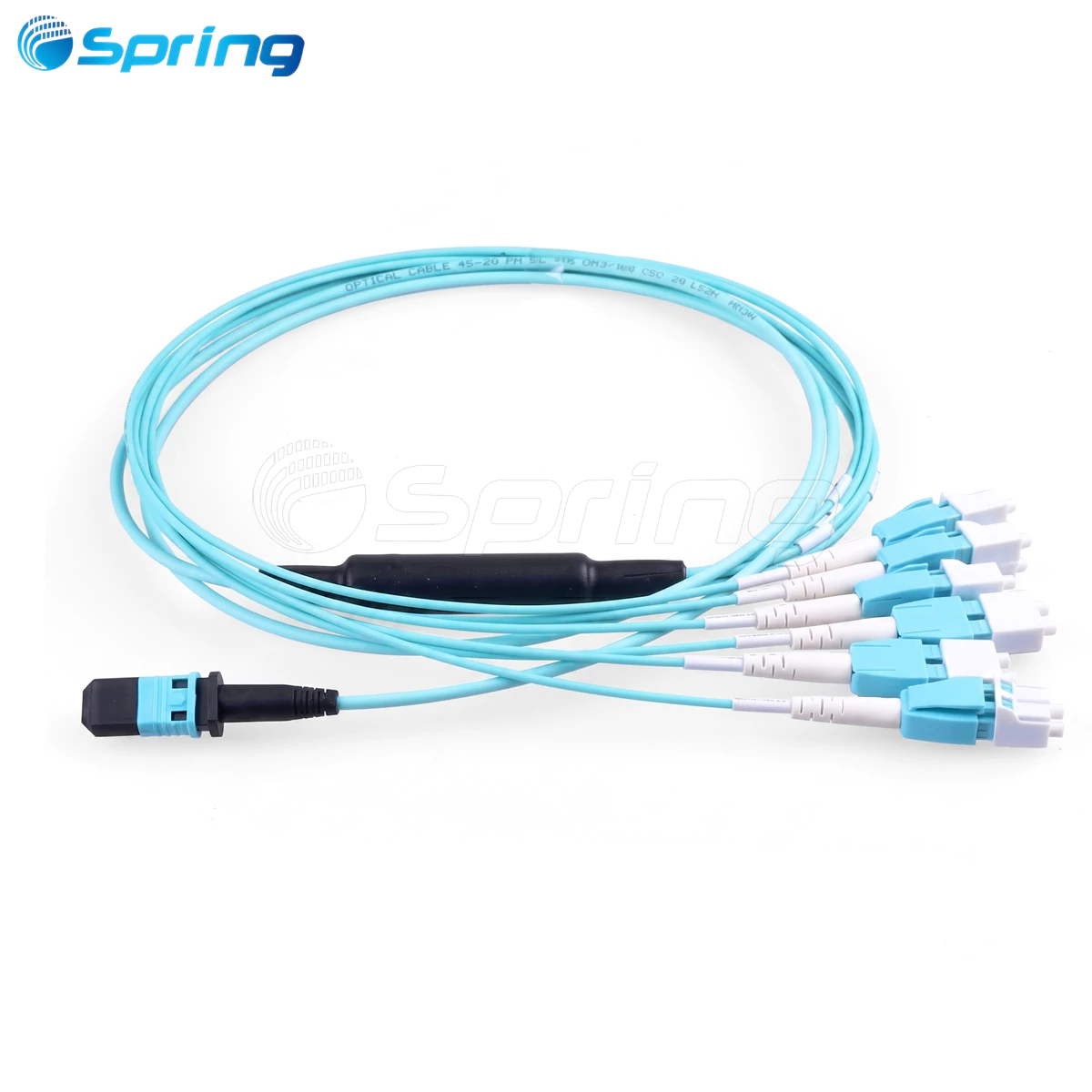
A breakout cable is a hybrid variation of a tight-buffered design. Instead of bundling multiple 900μm fibers under a single outer jacket with shared aramid yarn, a breakout cable places each individual tight-buffered fiber inside its own dedicated aramid strength member and sub-jacket, all contained within a master outer sheath.
When to use Breakout Cables: While they are significantly bulkier and more expensive than standard tight-buffered variations, breakout cables allow installers to route individual fibers directly to equipment endpoints without using patch panels or protective enclosures. Because statistics show that most optical network failures occur at the connector interface due to rough handling, the heavy-duty sub-jackets of a breakout design offer unmatched protection on the user side.
Field Installation & Termination Realities
The choice between loose tube and tight buffered designs dramatically influences field labor time, tool requirements, and overall project costs.
Terminating Tight Buffered Cables
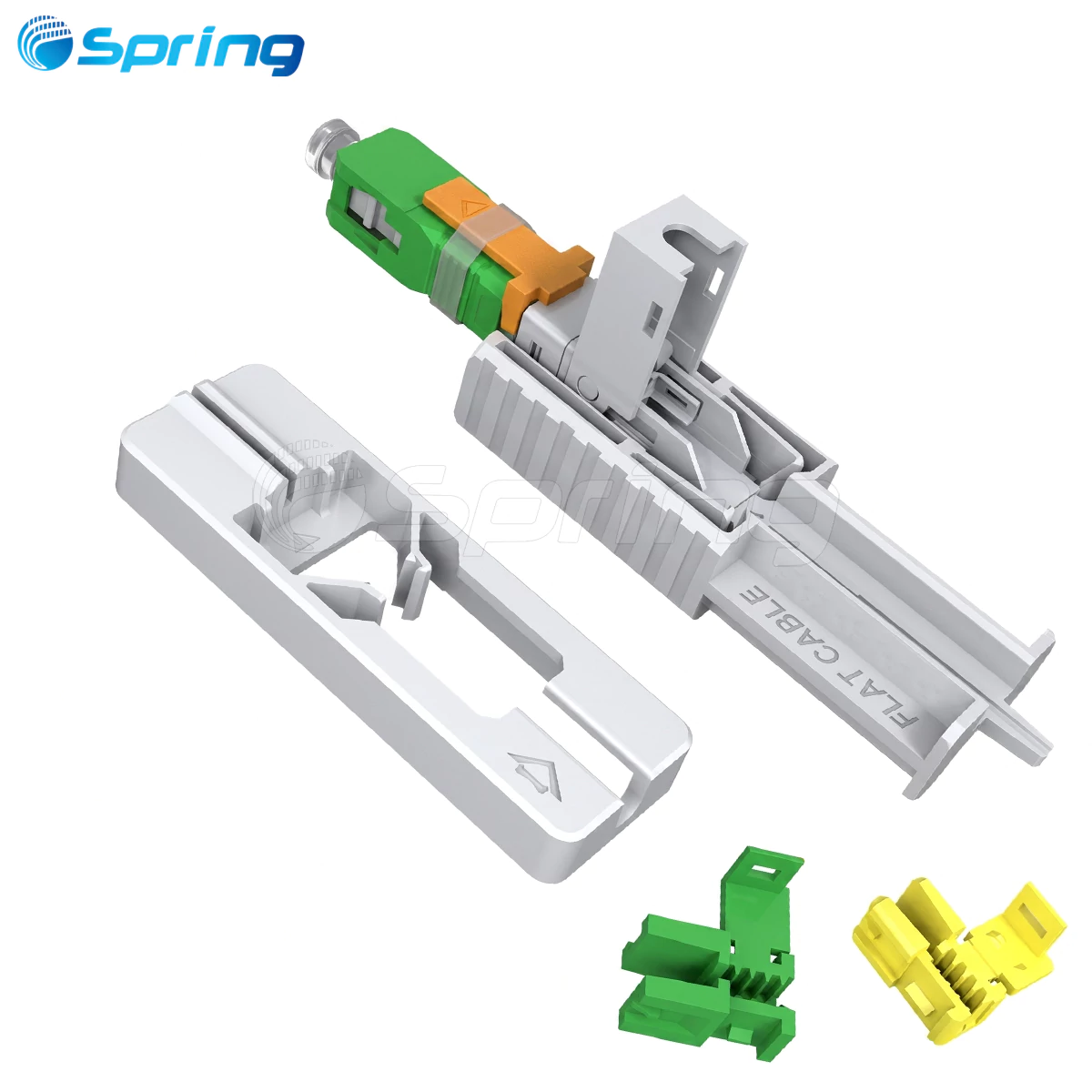
Because each fiber is isolated by its own sturdy 900μm coating, installers can use standard stripping tools to expose the bare glass cladding, cleave it, and attach field-installable connectors (such as LC or SC quick-connectors) directly. No cleaning solvents or specialized containment hardware are required. This minimizes installation time in mission-critical corporate spaces and enterprise environments.
Terminating Loose Tube Cables
Loose tube installation requires multiple steps before you can even begin terminating.
1. Jacket and Armor Removal:
Carefully score and strip back the heavy outdoor PE outer jacket and any internal corrugated steel armor layers without nicking the inner buffer tubes.
2. Buffer Tube Access:
Utilize a precision buffer tube scoring tool to open the plastic tubes, exposing the bundles of color-coded 250μm fibers.
3. De-Gel and Cleaning:
If utilizing a traditional gel-filled cable, use specialized hydronic gel-cleaning solvents and lint-free wipes to clean the messy compounds off individual fibers.
4.Fan-Out / Breakout Assembly:
Because a bare 250μm fiber is incredibly fragile, you cannot attach a standard connector directly to it. Installers must mount a fan-out kit (breakout kit), sliding individual protective 900μm sleeves over each bare fiber to give them the structural rigidity needed for connectorization or splicing into a pigtail tray.
Practical Selection Guide: Which Cable Matches Your Network?

To avoid costly deployment mistakes, use this standard architectural rubric when planning out your infrastructure routing.
Choose Tight Buffered If Your Network Involves:
Data Center Cross-Connects: Environments requiring tight bends, high-density patch panel routing, and frequent moves, adds, and changes (MACs).
Horizontal Building Distribution: Routing fiber through plenum or riser spaces, around tight drywall corners, and directly to office telecom outlets.
Intra-Building Backbones: Connecting secondary telecom closets to the main distribution frame (MDF) within the same structure.
Choose Loose Tube If Your Network Involves:
Outside Plant (OSP) & ISP Networks: Running fibers aerially via lashings to utility poles or pulling them through extensive underground duct systems.
Long-Haul & Campus Backbones: Linking separate facilities over several kilometers where the cable is subjected to soil shifts, water table ingress, and freezing temperatures.
High-Capacity Trunk Lines: Core infrastructure pathways that demand high fiber counts (48 to 288+ fibers) packed into the tightest cross-sectional diameter possible.
Frequently Asked Questions (FAQ)
What is the main difference between tight-buffered and loose-tube fiber cable?
The main difference is how the optical fiber is protected inside the cable structure. Tight-buffered fiber cables have a 900μm protective buffer directly bonded to each fiber, making them flexible and easy to terminate. Loose tube fiber cables place 250μm coated fibers inside a protective tube with extra space, allowing stress isolation and better environmental protection for outdoor applications.
Is tight-buffered fiber cable better than loose tube fiber cable?
Neither cable type is universally better. Tight-buffered fiber cables are better suited for indoor applications such as data centers, enterprise networks, and building distribution because they are easier to install and terminate. Loose tube fiber cables are better for outdoor environments because they provide superior protection against moisture, temperature changes, and mechanical stress.
Can tight-buffered fiber cable be used outdoors?
Standard indoor tight-buffered fiber cables should not be installed outdoors because they typically lack UV resistance and water-blocking protection. Long-term exposure to sunlight, moisture, and temperature fluctuations can cause jacket degradation, fiber stress, and signal loss. For outdoor applications, use outdoor-rated tight-buffered cables or loose tube fiber cables designed for OSP environments.
Why is loose tube fiber cable commonly used for outdoor and FTTH networks?
Loose tube fiber cables are widely used in FTTH feeder networks, ISP infrastructure, and outdoor backbone systems because the design isolates the fiber from external stress. The internal fiber movement space helps protect against temperature expansion, pulling tension, moisture intrusion, and environmental changes commonly found in outdoor deployments.
Which fiber cable is better for data centers: tight buffered or loose tube?
Tight-buffered fiber cable is generally preferred for data centers because it offers easier handling, smaller bend radius, and faster termination. Data center environments require frequent moves, adds, and changes (MACs), where direct connectorization and flexible cable management are important advantages.
Which fiber cable do ISPs typically use?
Most ISPs use loose tube fiber cables for outside plant (OSP) networks, including aerial installations, underground ducts, and long-distance feeder networks. Loose tube designs support higher fiber counts, better weather resistance, and longer transmission distances required for broadband infrastructure.
Why does loose tube fiber cable have better temperature performance?
Loose tube fiber cables manage temperature changes through fiber-to-tube length control. Because the optical fibers can move independently inside the buffer tube, expansion and contraction of the cable materials do not directly transfer stress to the glass fiber. This reduces microbending losses and maintains stable optical performance across wide temperature ranges.
Why are tight-buffered fiber cables easier to terminate?
Tight-buffered fiber cables are easier to terminate because each fiber has a durable 900μm coating that provides mechanical protection. Installers can directly strip the buffer, cleave the fiber, and install connectors such as LC or SC without additional fan-out assemblies or complex preparation steps.
Do loose tube fiber cables require special termination equipment?
Yes. Loose tube fiber cables usually require additional preparation before termination. Installers need to access the buffer tubes, remove gel or water-blocking materials if applicable, install fan-out kits or splice trays, and then terminate or splice the individual 250μm fibers.
What is a breakout fiber cable and how is it different from tight-buffered cable?
A breakout fiber cable is a reinforced version of tight-buffered cable where each individual fiber has its own protective sub-jacket and strength member inside a common outer jacket. Compared with standard tight-buffered cables, breakout cables provide better mechanical protection and allow direct connection to equipment without additional protective hardware.
How many fibers can a loose tube fiber cable support?
Loose tube fiber cables are designed for high fiber-count applications and can support configurations from low counts to several hundred fibers. Common designs include 24, 48, 96, 144, 288 fibers, and higher-density configurations for telecom backbone and large-scale network deployments.
What type of fiber cable is used for FTTH deployment?
FTTH networks typically use different cable structures depending on the network segment. Loose tube fiber cables are commonly used for outdoor feeder and distribution sections, while tight buffered or indoor-rated drop cables are often used inside buildings to connect fiber terminals, ONTs, and customer premises equipment.
How do I choose between tight-buffered and loose-tube fiber cable?
Choose tight-buffered fiber cable when you need easy installation, flexible routing, and simple termination in indoor environments. Choose loose tube fiber cable when the network requires outdoor durability, high fiber capacity, moisture protection, and long-distance performance. The correct choice depends on installation location, environmental conditions, and network design requirements.
Can loose tube fiber cable be used indoors?
Yes, loose tube fiber cables can technically be installed indoors, especially in large backbone systems or campus networks. However, they usually require more complex termination procedures and additional breakout components compared with tight buffered cables, making them less convenient for typical indoor installations.