

TL;DR / Key Takeaways for Network Engineers & Procurement Managers
What is OM5 Fiber? OM5 (Wideband Multimode Fiber / WBMMF) is a 50/125µm laser-optimized multimode fiber engineered to support Short Wavelength Division Multiplexing (SWDM) across the 850nm–953nm spectrum.
Core Advantage: By transmitting 4 distinct wavelengths simultaneously over a single strand, OM5 quadruples data capacity compared to traditional OM3/OM4, reducing total fiber strand counts by up to 75% in 40G/100G/400G deployments.
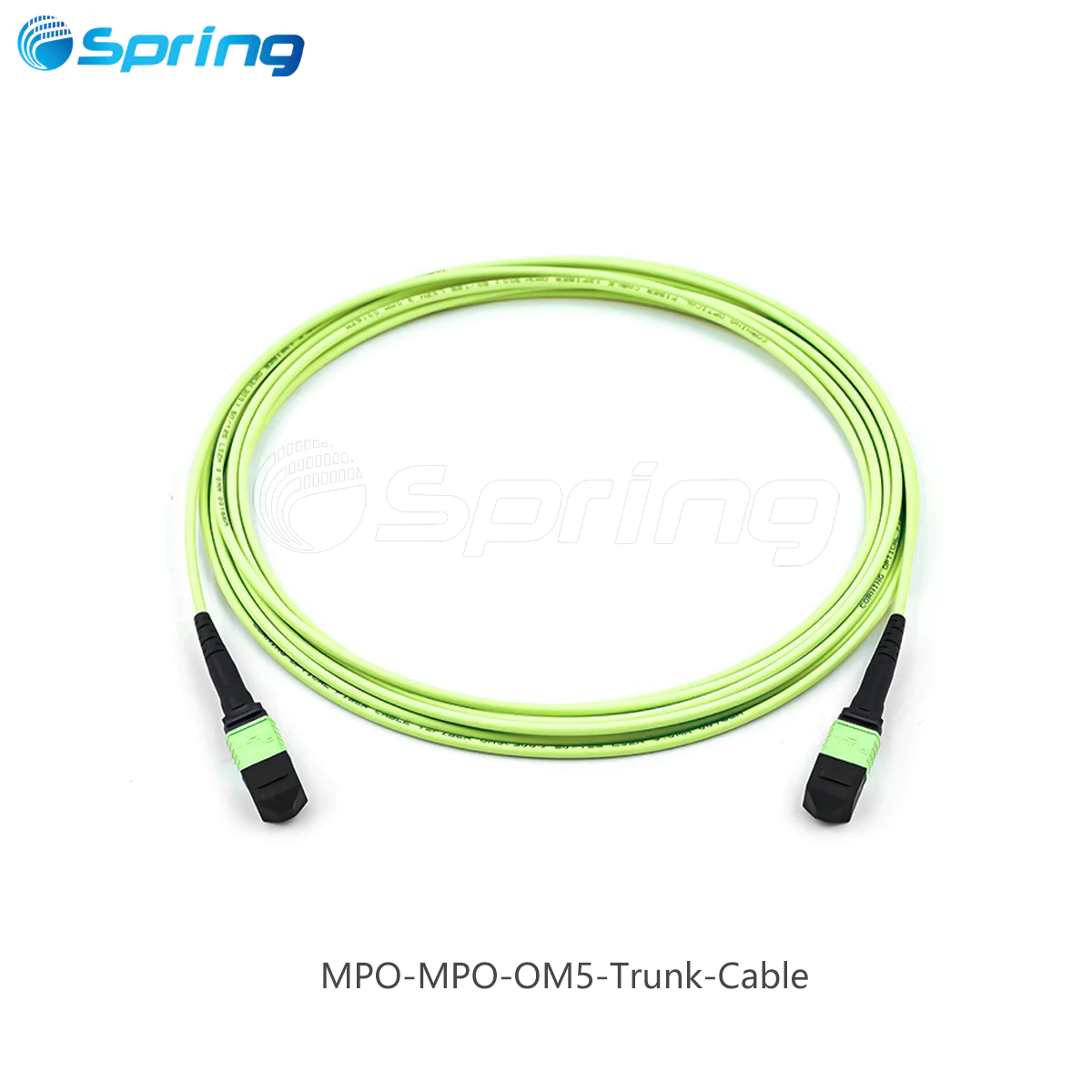
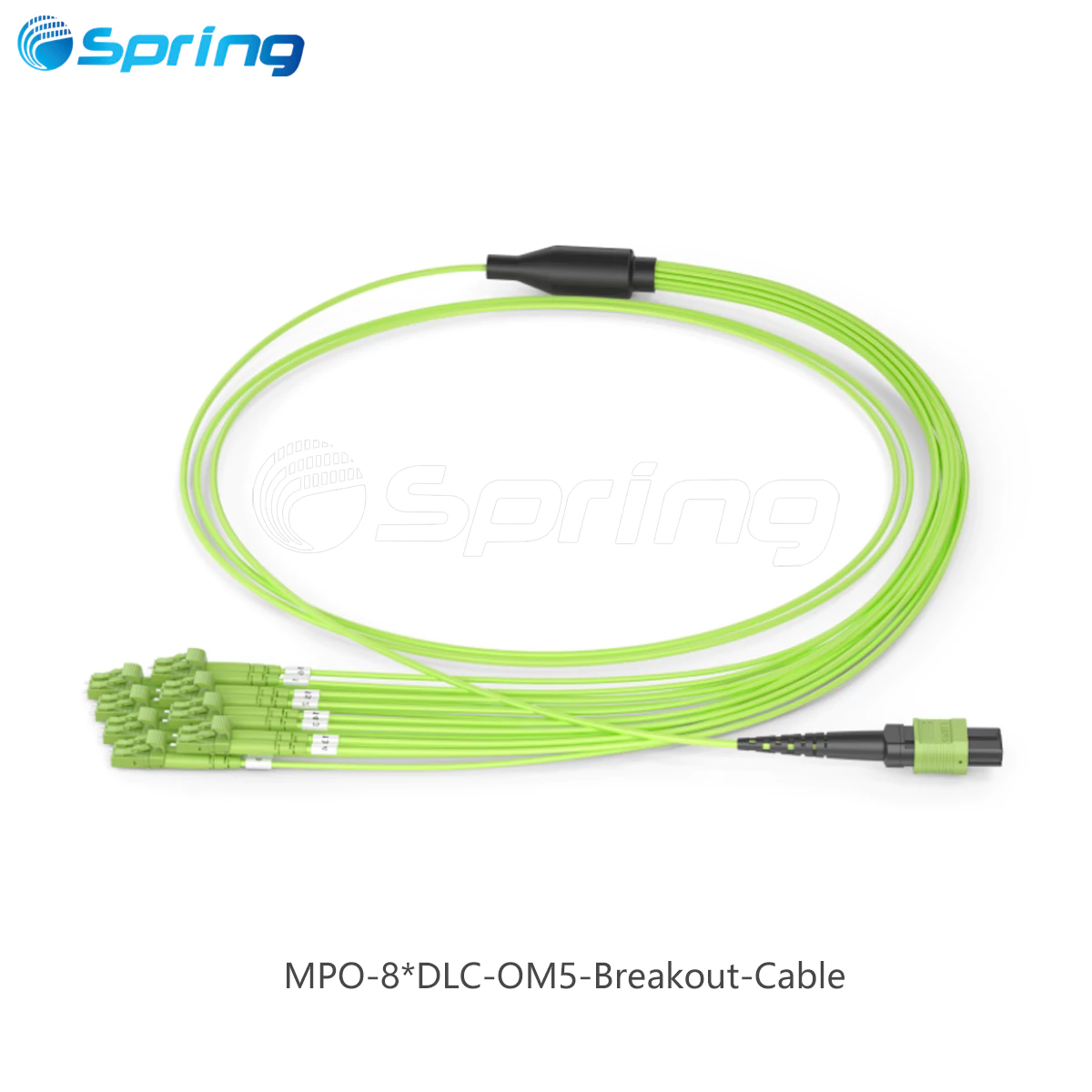
Identification: Standardized with a Lime Green outer jacket.
Backward Compatibility: 100% backward compatible with existing OM3 and OM4 50/125µm fiber cabling systems at 850nm.
Best Use Case: High-density enterprise data centers, AI computing clusters, and cloud infrastructure migrating to 100G, 200G, and 400G Ethernet over short distances (<150m).
Introduction to OM5 Multimode Fiber
Since multimode fiber (MMF) entered the telecommunications market in the 1980s, it has continuously evolved from OM1 and OM2 to OM3 and OM4. Each iteration delivered significant enhancements in effective modal bandwidth (EMB), attenuation performance, and transmission distance.
With the exponential surge in cloud computing, generative AI training clusters, high-frequency trading networks, and enterprise data centers, demand for faster data transmission speeds has reached unprecedented levels. Modern network architects require optical fiber solutions that maximize throughput while minimizing cabling complexity, rack footprint, and insertion loss.
To address these multi-wavelength demands, a new generation of wideband multimode optical fiber was introduced: OM5 Multimode Fiber. Engineered specifically for multi-wavelength short-reach optical transceivers, OM5 provides a future-proof foundation for high-speed network migrations.
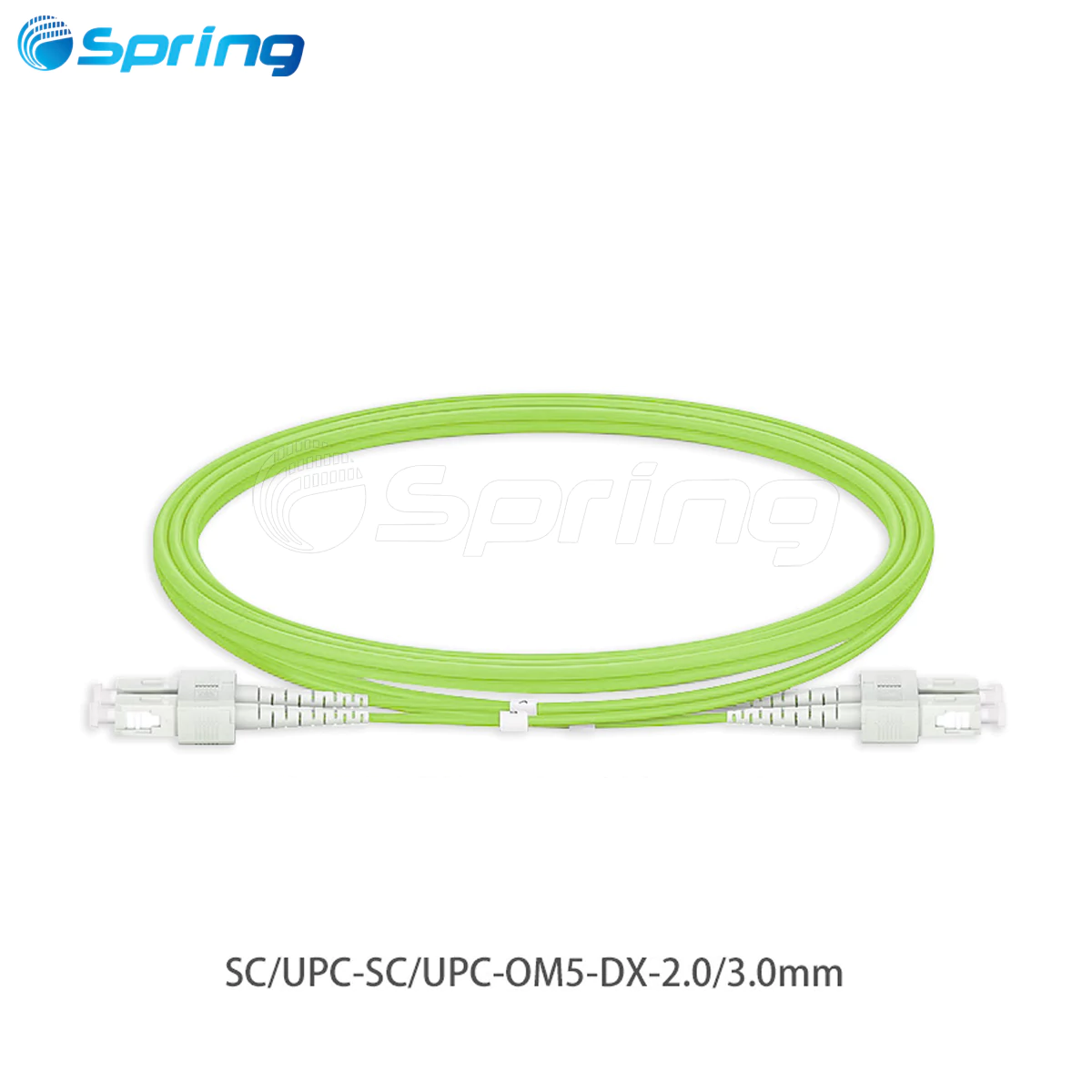
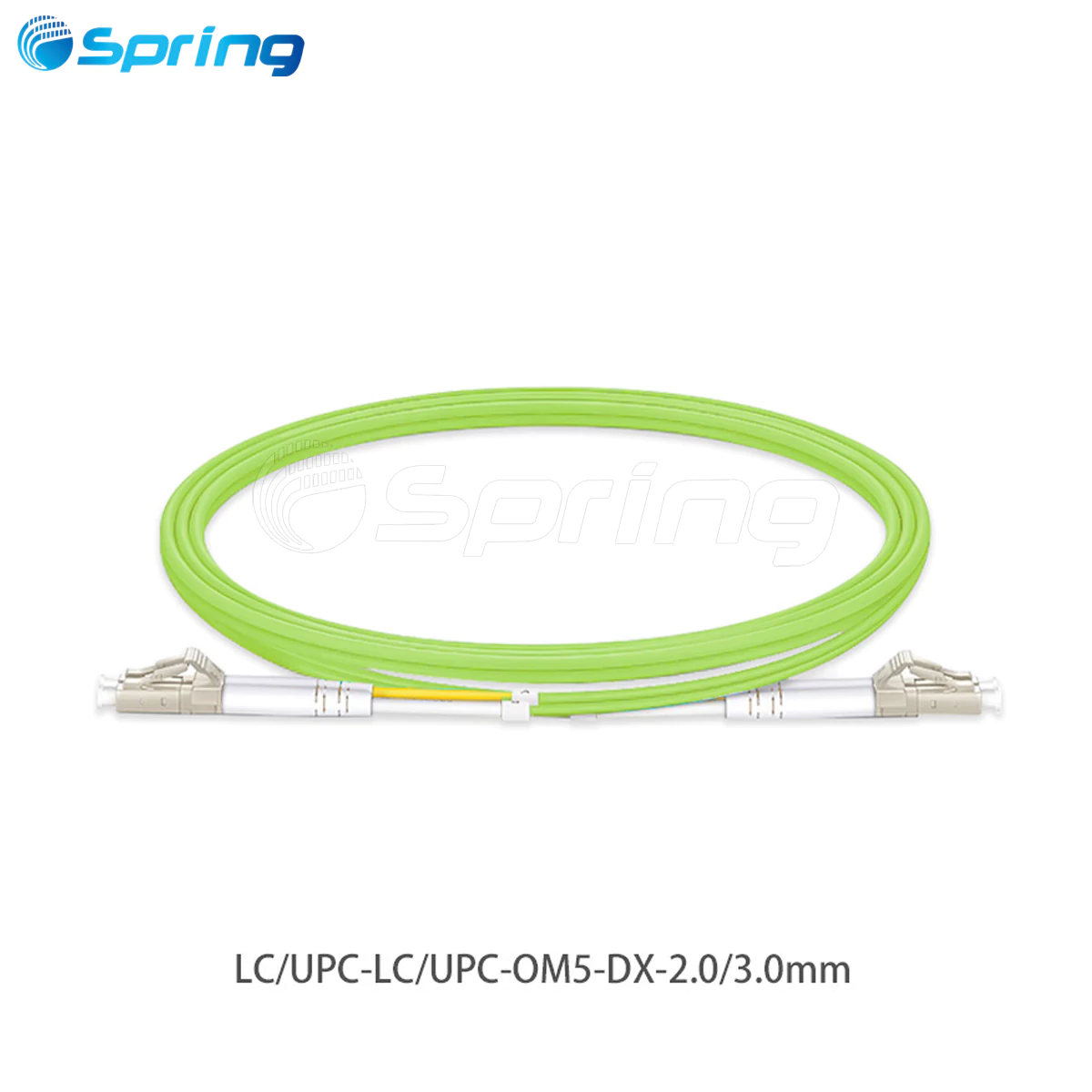
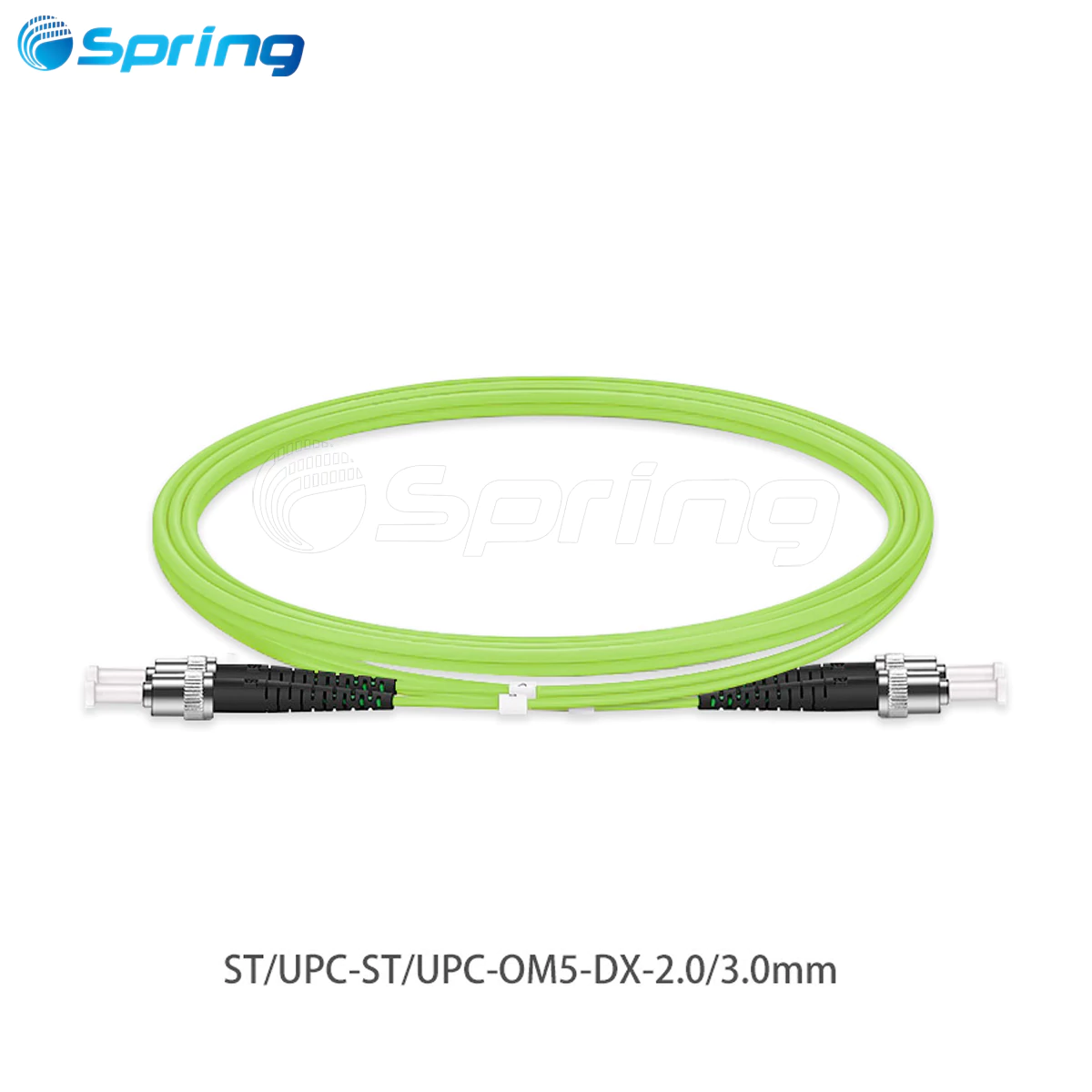
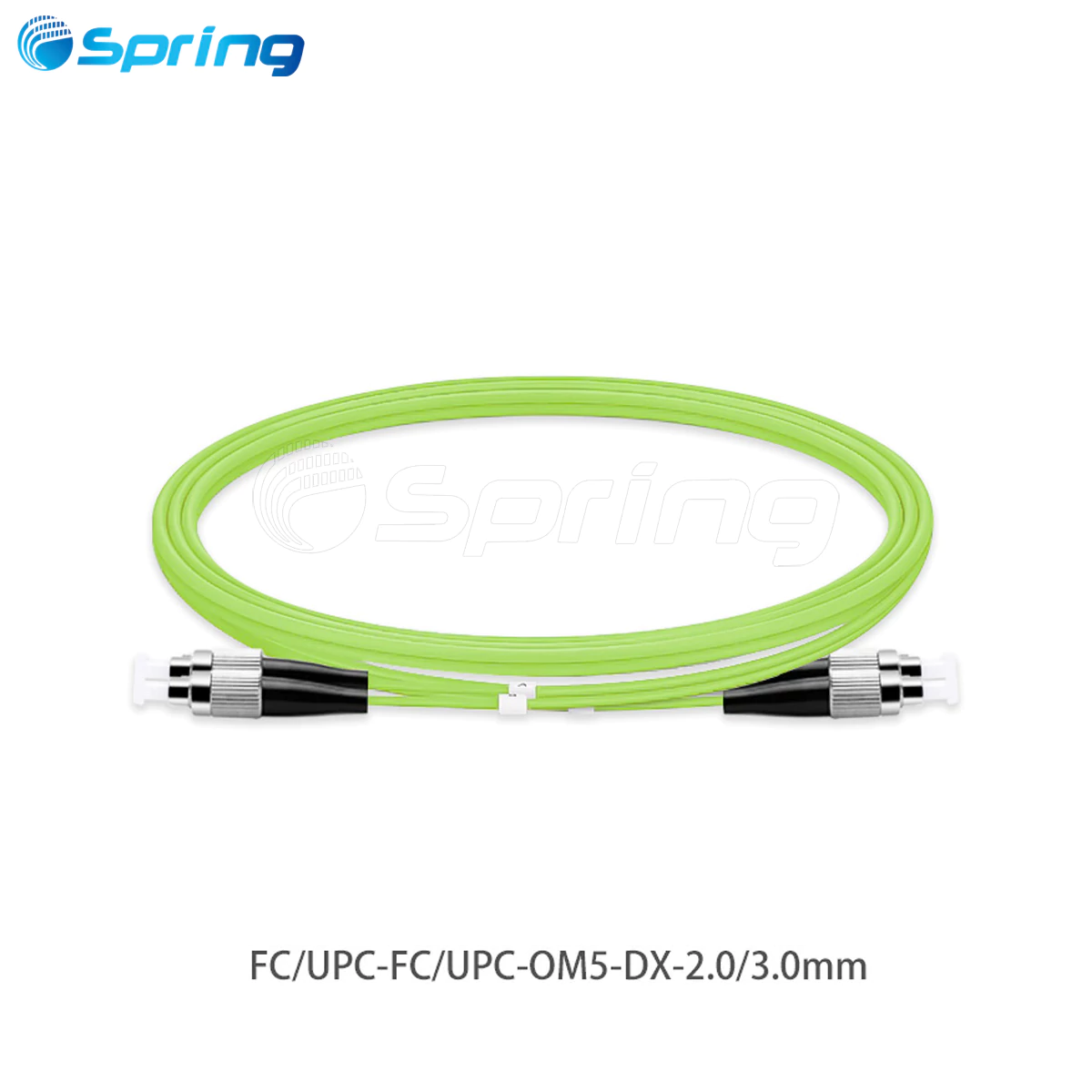
What Is OM5 Wideband Multimode Fiber (WBMMF)?
OM5 fiber, officially designated as Wideband Multimode Fiber (WBMMF), is a 50/125μm graded-index multimode fiber optimized to operate seamlessly across a broad wavelength window from 850nm to 953nm.
Whereas legacy OM3 and OM4 multimode fibers are optimized strictly for single-wavelength transmission at the 850nm channel, OM5 is manufactured with precise refractive index profile tuning. This allows it to support Short Wavelength Division Multiplexing (SWDM) and Bidirectional (BiDi) transmission, carrying multiple non-interfering optical signals over a single fiber core.
How SWDM Technology Works on OM5 Fiber
OM5 Wideband Multimode Fiber multiplexes 4 discrete wavelengths across the 850nm–953nm spectrum into a single fiber strand, quadrupling link capacity without extra cabling:
- Channel 1: 850nm Wavelength →
- Channel 2: 880nm Wavelength → Simultaneous Transmission
- Channel 3: 910nm Wavelength → (Over 1 Single Strand of OM5)
- Channel 4: 940nm Wavelength →
Standard Development Timeline
The standardization of OM5 wideband fiber progressed through key international telecommunications bodies:
2014: The TIA TR-42 committee launched the Wideband Multimode Fiber (WBMMF) standardization project to address multi-wavelength transmission requirements.
June 2015: TIA TR-42 formally approved the development draft, designating the fiber standard as TIA-492AAAE.
January 2016: Progress on WBMMF specifications was presented to the IEEE 802.3 Ethernet Working Group to align optical transceiver roadmaps.
March 2017: The International Electrotechnical Commission approved the global fiber specification draft (IEC 60793-2-10 Ed.6).
Late 2017: ISO/IEC officially released the final technical specification for OM5 fiber (IEC 60793-2-10 A1a.4b), solidifying its position in international cabling standards (ANSI/TIA-568.3-D and ISO/IEC 11801).
OM Fiber Types Comparison: OM1 to OM5
The table below outlines the core specifications, bandwidth capabilities, and governing standards across all five optical multimode (OM) fiber categories:
| Fiber Type | Core Size | Wavelength (nm) | Max Attenuation (dB/km) | Min. Effective Modal Bandwidth (EMB) | TIA Standard | IEC Standard | Release Year |
| OM1 | 62.5µm | 850 / 1300 | 3.5 / 1.5 | 200 / 500 MHz·km (OFL) | TIA-492AAAA | IEC 60793-2-10 A1b | 1989 |
| OM2 | 50µm | 850 / 1300 | 3.5 / 1.5 | 500 / 500 MHz·km (OFL) | TIA-492AAAB | IEC 60793-2-10 A1a.1b | 1998 |
| OM3 | 50µm | 850 / 1300 | 3.5 / 1.5 | 2000 MHz·km | TIA-492AAAC | IEC 60793-2-10 A1a.2b | 2002 |
| OM4 | 50µm | 850 / 1300 | 3.5 / 1.5 | 4700 MHz·km | TIA-492AAAD | IEC 60793-2-10 A1a.3b | 2009 |
| OM5 | 50µm | 850 / 953 / 1300 | 3.0 / 2.3 / 1.5 | 4700 MHz·km (850nm) / 2470 MHz·km (953nm) | TIA-492AAAE | IEC 60793-2-10 A1a.4b | 2017 |
Key Technical Advantages of OM5 Fiber
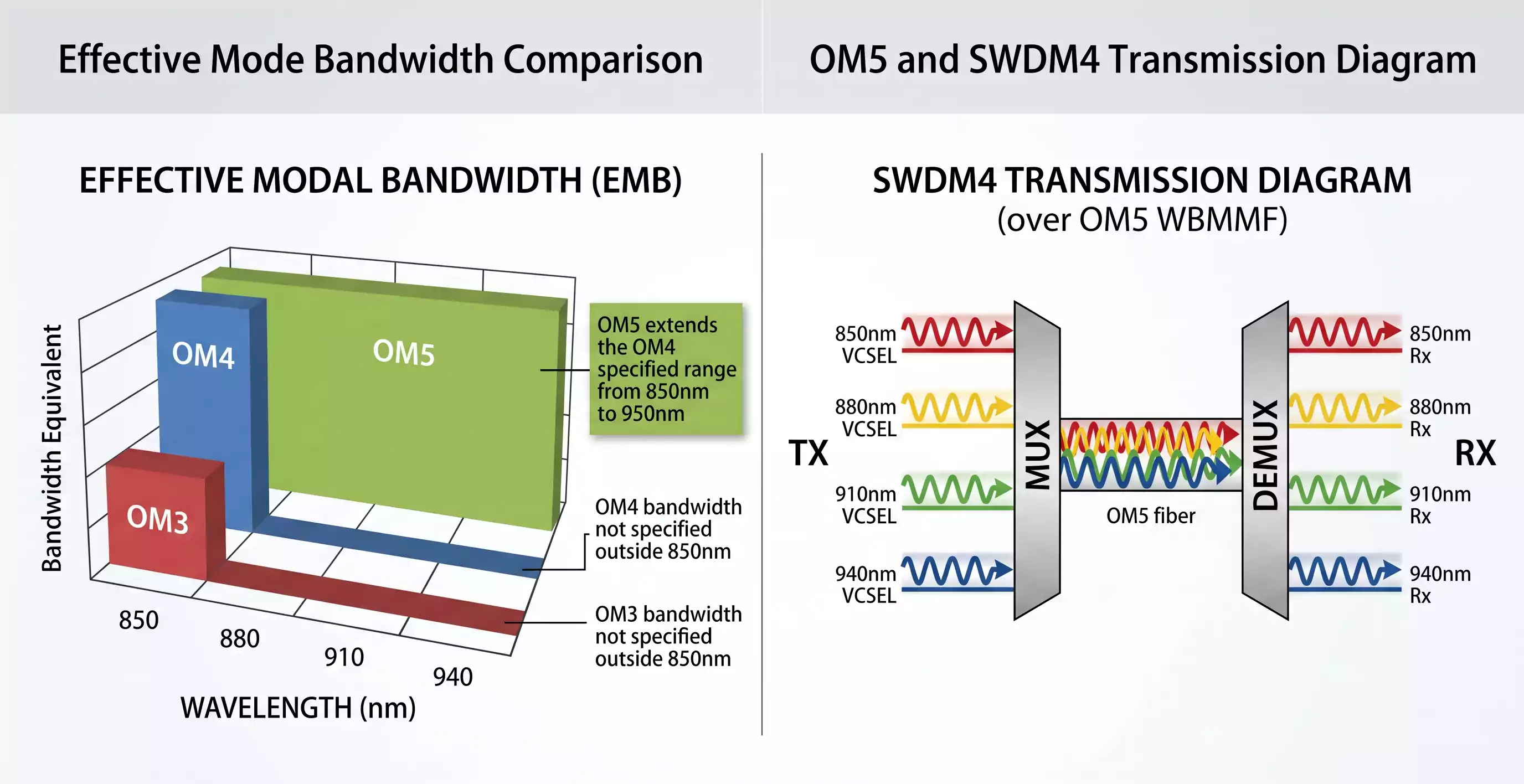
1. Extended Operating Spectrum & Multi-Wavelength Density
Traditional OM3 and OM4 fibers operate efficiently only at 850nm. When higher speeds like 40G or 100G were required on OM4, network engineers had to deploy parallel optics using 8-fiber or 12-fiber MTP/MPO trunk cables (e.g., 40GBASE-SR4: 4 fibers transmitting, 4 fibers receiving).
OM5 expands the usable spectrum from 850nm to 953nm. Using SWDM4 technology, four separate wavelengths (850nm, 880nm, 910nm, and 940nm) transmit simultaneously across a single LC duplex channel (1 fiber transmitting, 1 fiber receiving). This delivers a 75% reduction in total fiber cable density while achieving the same 40G, 100G, or 400G throughput.
2. Direct Support for Advanced BiDi and SWDM Transceivers
OM5 fiber was explicitly built to unlock the full potential of multi-wavelength transceivers:
SWDM4 Transceivers: Transmit 4 wavelengths on a single duplex fiber link over standard LC connectors.
BiDi (Bidirectional) Transceivers: Utilize dual wavelengths (e.g., 850nm/900nm) transmitting in opposite directions on the same fiber strand.
| Fiber Standard | Year | Primary Ethernet Application | Typical Connector Interface |
| OM1 | 1989 | 100BASE-FX (100 Mbps) | ST / SC |
| OM2 | 1998 | 1000BASE-SX (1 Gbps) | SC / LC |
| OM3 | 2002 | 10GBASE-SR (10 Gbps) | LC Duplex |
| OM4 | 2009 | 40G/100GBASE-SR4 (40G/100G) | MTP/MPO-12 |
| OM5 | 2017 | 40G/100G/200G/400G SWDM & BiDi | LC Duplex / MTP-8 / MTP-16 |
3. Extended Transmission Distances
Compared to OM3 and OM4, OM5 extends the operational reach of SWDM4 and BiDi optical transceivers, eliminating the need for signal repeaters or costly single-mode conversions in medium-to-large data halls.
Transmission Reach Comparison:
40G SWDM4 Reach:
OM3: 240m
OM4: 350m
OM5: 440m (+25% vs OM4)
100G SWDM4 Reach:
OM3: 75m
OM4: 100m
OM5: 150m (+50% vs OM4)
40G BiDi Reach:
OM3: 100m
OM4: 150m
OM5: 200m (+33% vs OM4)
100G BiDi Reach:
OM3: 70m
OM4: 100m
OM5: 150m (+50% vs OM4)
(Note: For specialized 100G eSWDM4 optics, OM5 fiber supports distances up to 400 meters.)
4. Lower Optical Attenuation & Tighter Physical Specs
OM5 specifications enforce strict manufacturing limits on chromatic dispersion and optical loss across the full wideband range:
| Technical Parameter | OM5 Specification Requirement | Unit |
| Max Attenuation at 850nm | ≤ 2.3 | dB/km |
| Max Attenuation at 953nm | ≤ 1.7 | dB/km |
| Max Attenuation at 1300nm | ≤ 0.7 | dB/km |
| OTDR Discontinuity (1300nm) | < 0.05 | dB |
| Zero Dispersion Wavelength (λ0) | 1297 ≤ λ0 ≤ 1328 | nm |
| Numerical Aperture | 0.200 ± 0.015 | - |
| Effective Group Index (850nm) | 1.483 | - |
| Effective Group Index (1300nm) | 1.478 | - |
Detailed Comparison: OM5 vs. OS2 Single-Mode Fiber
A common question among network planners is: "Why deploy OM5 multimode fiber when OS2 single-mode fiber (SMF) offers practically unlimited bandwidth and longer distance?"
The decision comes down to Total Cost of Ownership (TCO) over short-distance data center spans:
| Feature / Metric | OM5 Multimode Fiber (MMF) | OS2 Single-Mode Fiber (SMF) |
| Fiber Cable Material Cost | Slightly Higher | Lower |
| Transceiver Optics Cost | Significantly Lower (VCSEL optics) | Higher (DFB / FP Lasers) |
| Power Consumption | Lower (30%–50% savings per port) | Higher |
| Connector & Splicing Tolerance | Wider core (50μm) / Easier cleaning | Tight alignment (9μm) / Sensitive |
| Max Transmission Reach (100G/400G) | 150m - 400m(Short Reach) | 2km- 10km+ (Long Reach) |
Transceiver Electronics Cost: Single-mode transceivers (e.g., 100GBASE-LR4) require narrow-linewidth Fabry-Pérot or DFB lasers and ultra-precise optical alignment, making them significantly more expensive than vertical-cavity surface-emitting lasers (VCSELs) used in OM5 transceivers.
Power Efficiency: VCSEL transceivers running on OM5 consume up to 50% less power per port than LR4 single-mode equivalents. At scale across thousands of server connections, OM5 significantly reduces cooling overhead and operational expenses (OpEx).
The Verdict: For intra-rack and inter-rack connections under 150 meters, OM5 + SWDM provides the most cost-effective architecture, combining the low cable density of single-mode systems with the low transceiver costs of multimode hardware.
Enterprise Applications for OM5 Fiber
OM5 multimode cabling is ideal for environments where bandwidth demand outpaces physical pathway capacity:
High-Density Enterprise Data Centers: Reduces cable tray clutter by migrating MPO parallel links back to compact LC duplex runs.
AI & Machine Learning Compute Clusters: Delivers low-latency, high-throughput inter-switch link (ISL) connectivity between leaf and spine switches.
Cloud Infrastructure & Colocation Facilities: Provides a future-ready physical layer that supports smooth 100G to 400G network upgrades without replacing installed fiber.
Central Office & Fiber to the Antenna (FTTA): High-reliability short-reach interconnects requiring low attenuation across varying environmental temperatures.
Frequently Asked Questions (FAQ)
Can I mix OM5 with OM3 or OM4 patch cords in the same channel?
Yes. OM5 uses the same 50/125µm core diameter and is 100% backward compatible with OM3 and OM4 at the 850nm wavelength. However, if you mix OM5 with OM3 or OM4 in a multi-wavelength channel using SWDM4 (850nm–953nm), the entire link's reach and optical bandwidth will be limited to the lowest-performing fiber grade (OM3 or OM4).
Why is the OM5 fiber outer jacket color Lime Green?
The Telecommunications Industry Association (TIA) designated Lime Green (ANSI/TIA-598-D) to easily identify OM5 fiber in high-density patch panels, distinguishing it from Aqua (OM3/OM4) and Erika Violet (OM4).
Does OM5 fiber require special fiber optic connectors?
No. OM5 cabling systems use standard fiber optic connectors, including LC Duplex, SC, MTP/MPO-12, and MTP/MPO-16, manufactured with standard polishing specifications (UPC or APC).
Is OM5 fiber worth it for traditional 10G or 25G networks?
If your network operates strictly on single-wavelength 10G/25G (850nm) and has no migration path to 100G/400G SWDM, OM4 is typically sufficient. However, deploying OM5 ensures day-one readiness for future 100G/200G/400G SWDM and BiDi upgrades without requiring a complete re-cabling effort.