

Author: Lisa lisa@springoptic.com

Introduction
An MPO solution is a high-density fiber cabling system designed to support scalable, high-speed data center networks.
As data centers evolve toward 400G, 800G, and AI-driven workloads, traditional duplex fiber cabling is no longer sufficient. Network architects are facing increasing challenges, including cable congestion, limited rack space, and complex scalability.
MPO-based cabling systems solve these issues by consolidating multiple fibers into a single connector, enabling efficient, high-density, and future-ready network infrastructure.
In this guide, you'll learn how MPO solutions work, their key components, polarity methods, testing best practices, and how to choose the right configuration for your deployment.
What Is an MPO Solution?
An MPO solution refers to a complete fiber cabling architecture built around MPO (Multi-Fiber Push-On) connectors. It integrates multiple components to deliver high-density connectivity in modern data center networks.
Unlike traditional LC duplex cabling, where each connection requires two fibers, MPO solutions combine multiple fibers (typically 8, 12, 16, or 24) into a single interface. This dramatically reduces cable volume while increasing bandwidth capacity.
Typical MPO solution components include:
MPO trunk cables (backbone infrastructure)
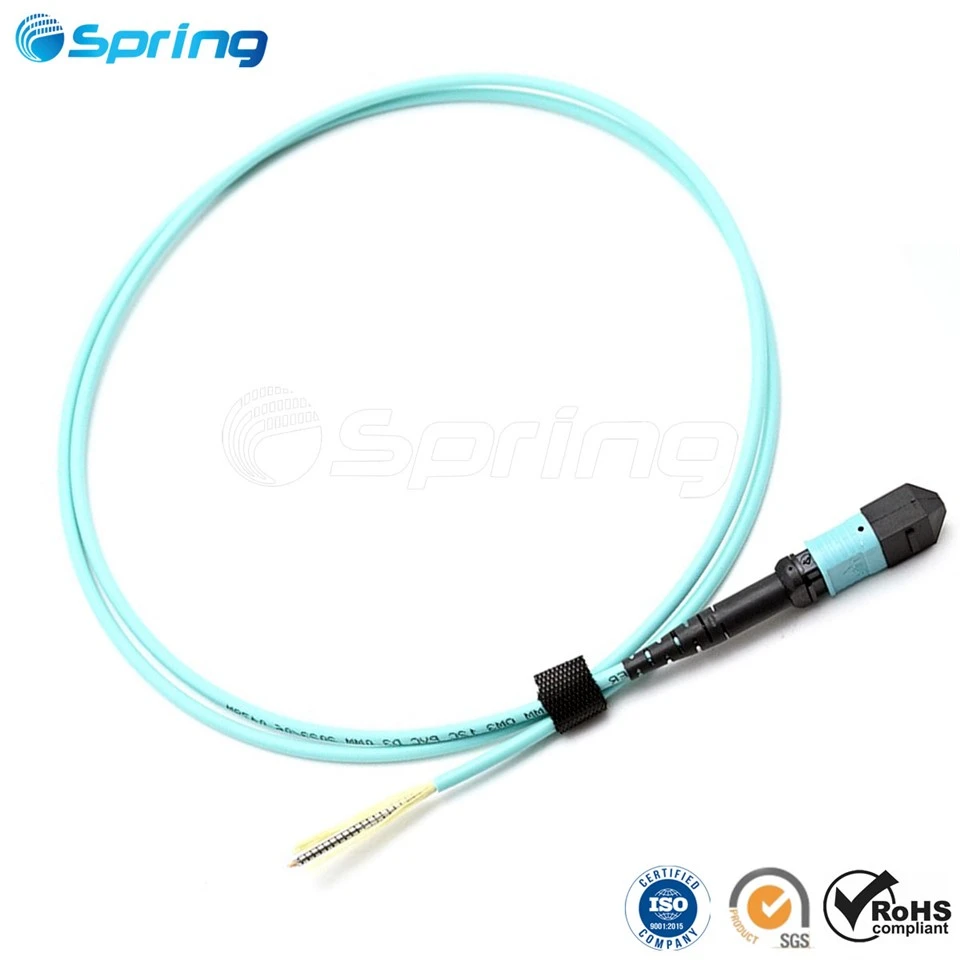
MPO patch cords (device connections)
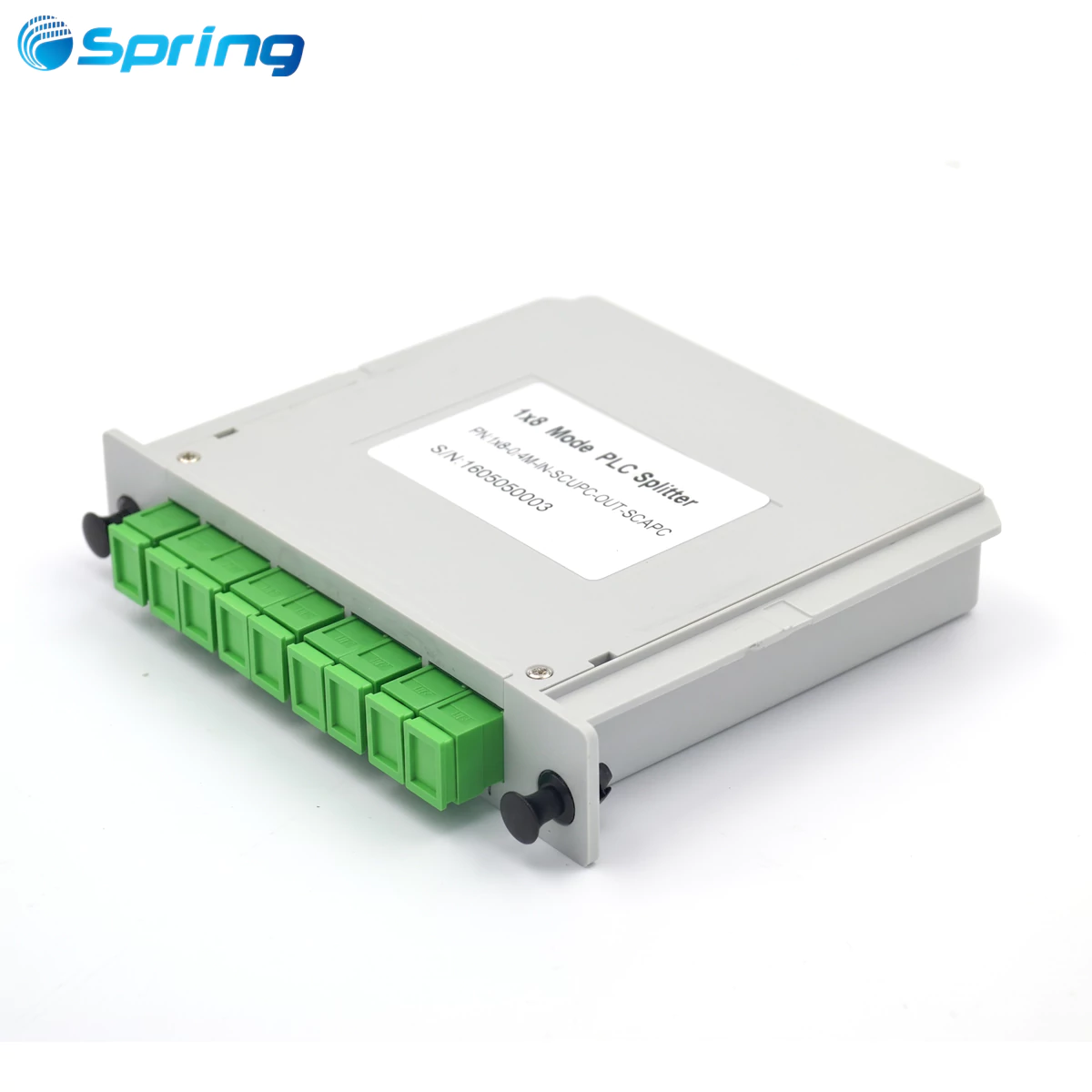
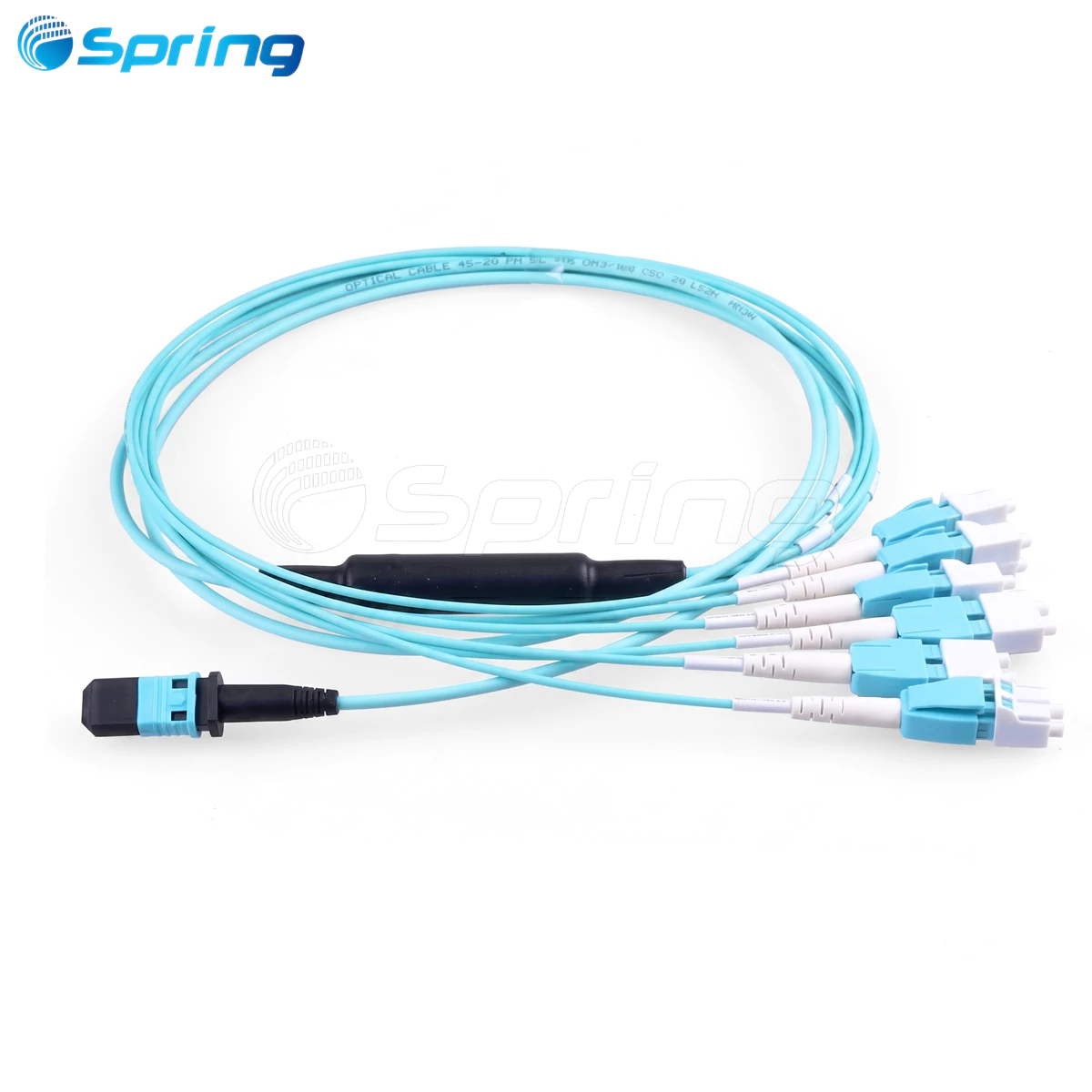
MPO cassettes or modules (MPO-to-LC conversion)
MPO connectors (multi-fiber interfaces)
Key takeaway: MPO solutions are not just cables-they are a structured system designed for scalable, high-density cabling.
Key Components of an MPO Solution
MPO Trunk Cables
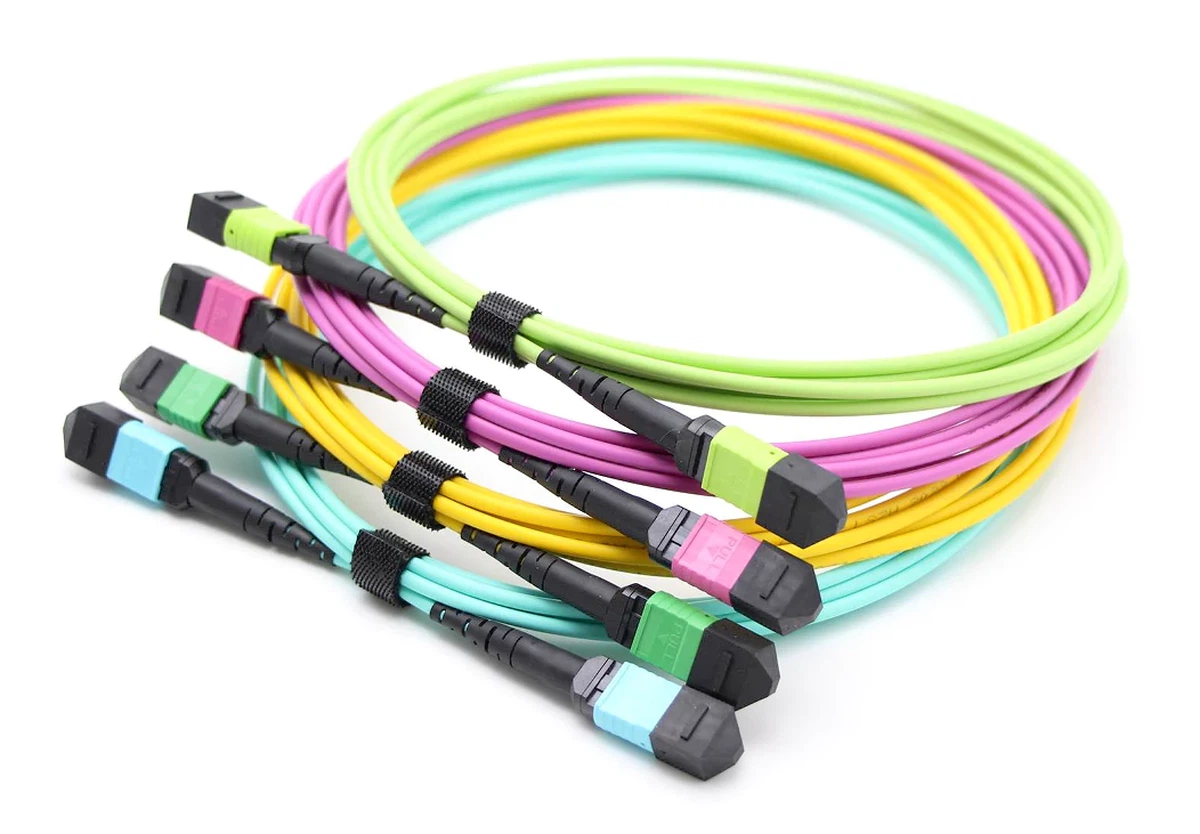
MPO trunk cables form the backbone of an MPO solution, connecting patch panels, distribution zones, or data halls.
They are typically pre-terminated in the factory and tested for insertion loss and performance consistency. Common fiber counts include 12, 24, and 144 fibers.
Practical example:
Instead of installing 48 duplex cables (96 fibers), a few MPO trunk cables can handle the same capacity with significantly less space.
Explore our MPO trunk cable solutions for high-density backbone deployment.
MPO Patch Cords
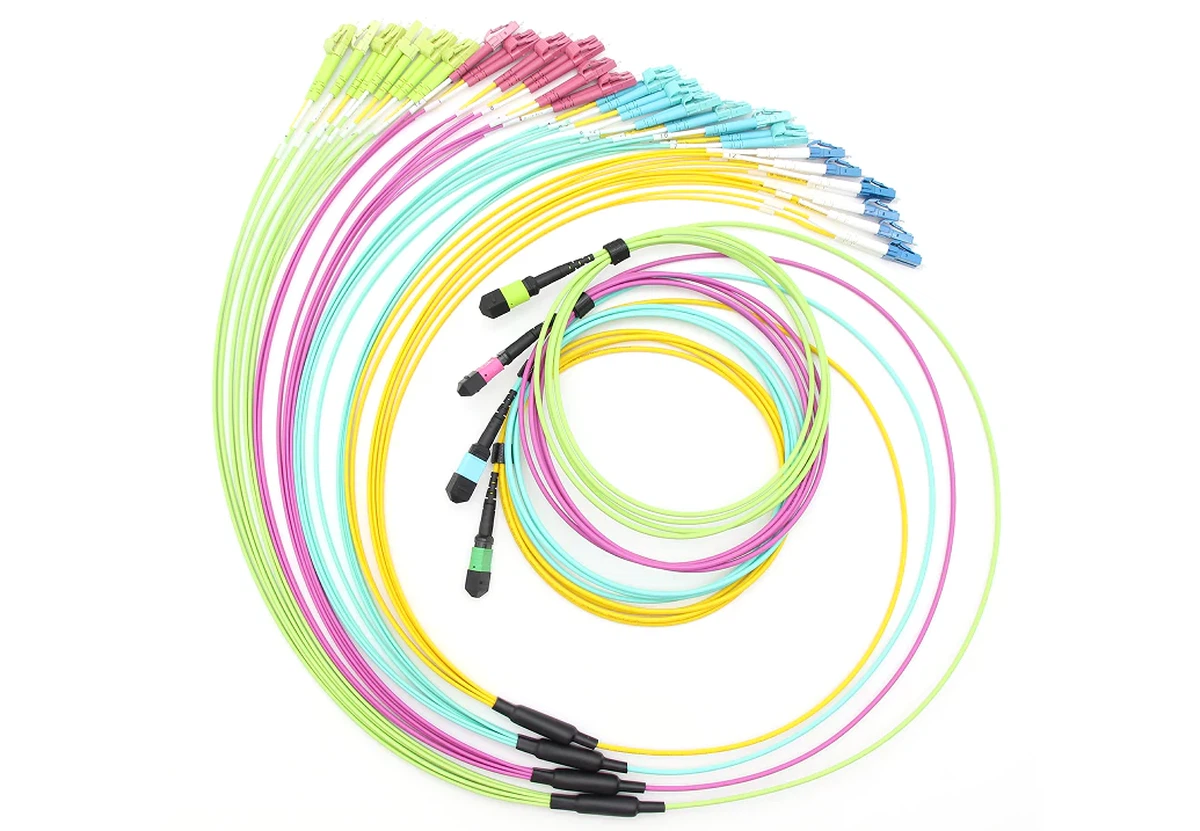
MPO patch cords connect MPO trunks to active equipment, transceivers, or modules. They provide flexibility for rack-level connections and system reconfiguration.
In breakout applications, MPO patch cords enable:
1 × 400G → 4 × 100G
1 × 100G → 4 × 25G
This flexibility is essential for optimizing port utilization in modern data centers.
MPO Cassettes & Modules
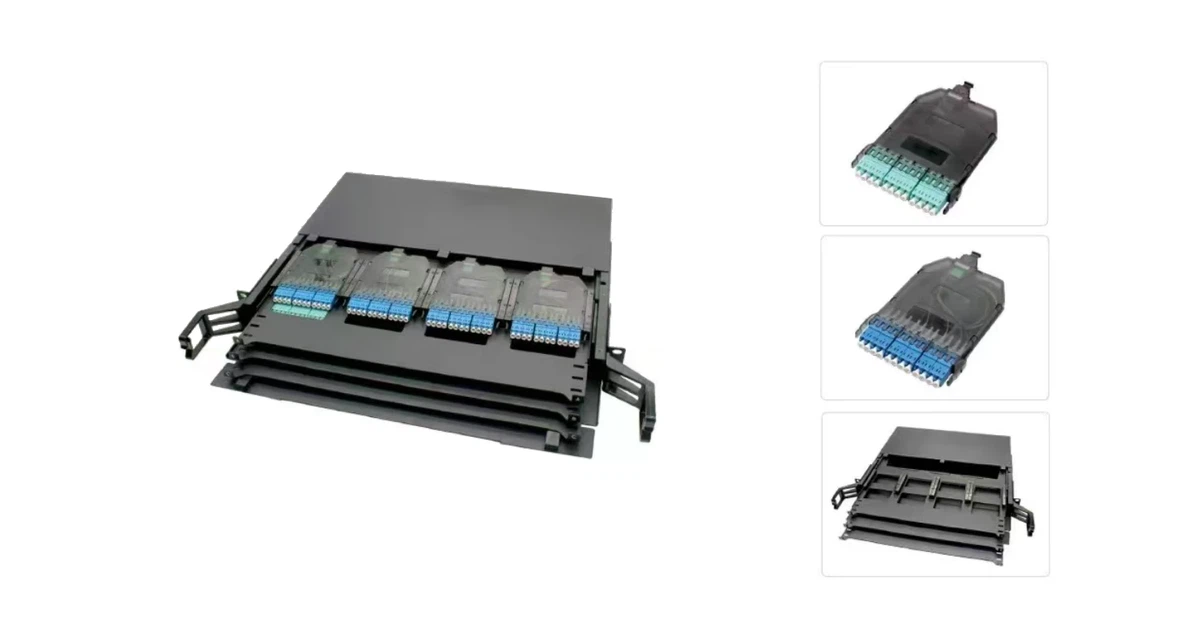
MPO cassettes act as an interface between MPO and LC connections. They are widely used in patch panels to distribute high-density MPO links into standard duplex ports.
|
MPO Input |
LC Output |
|
MPO-12 |
6 LC duplex |
|
MPO-24 |
12 LC duplex |
This allows seamless integration with legacy systems.
MPO Connectors (MPO vs MTP)
MPO is the standardized multi-fiber connector, while MTP is a high-performance version with tighter tolerances and improved alignment.
|
Feature |
MPO |
MTP |
|
Standard compliance |
Yes |
Yes |
|
Performance tolerance |
Standard |
Higher precision |
|
Brand-specific |
No |
Yes |
Key takeaway: All MTP connectors are MPO, but not all MPO connectors meet MTP performance levels.
Types of MPO Cabling Architectures
To fully understand an MPO solution, it's important to look at how it is deployed in real-world architectures.
Backbone Cabling
MPO trunk cables are used to replace traditional duplex backbone cabling.
Benefits:
Fewer cables
Faster installation
Improved airflow
Real scenario:
Connecting two 48-port panels would require 48 duplex cables-but only 4–8 MPO trunks.
Breakout Cabling
Breakout cabling allows a single high-speed port to connect to multiple lower-speed ports.
|
Input |
Output |
|
400G |
4 × 100G |
|
800G |
8 × 100G |
This is widely used in switch-to-server connectivity.
Parallel Optics (40G/100G/400G/800G)
Parallel optics transmit data across multiple fibers simultaneously.
|
Speed |
Typical MPO Type |
|
100G |
MPO-8 |
|
400G |
MPO-16 |
|
800G |
MPO-16 / higher |
MPO solutions are essential for enabling high-speed parallel optics in data centers.
MPO Polarity Explained (A, B, C Methods)
Polarity is one of the most critical-and often misunderstood-aspects of MPO systems.
What Is Polarity?
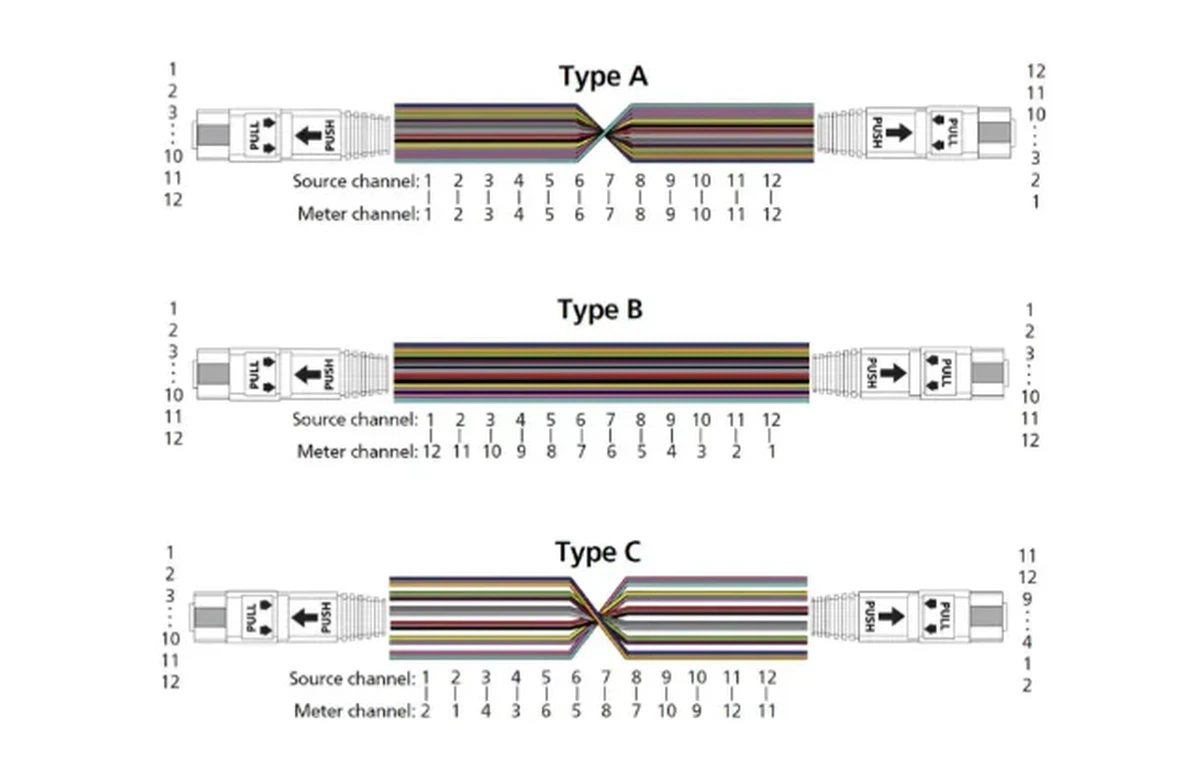
Polarity ensures that the transmitter (Tx) at one end connects correctly to the receiver (Rx) at the other end.
⚠️ In real deployments, incorrect polarity is one of the most common causes of link failure.
Method A vs B vs C (Comparison)
|
Method |
Description |
Advantages |
Use Case |
|
Method A |
Straight-through trunk |
Simple |
Small systems |
|
Method B |
Reversed trunk |
Easy management |
Most data centers |
|
Method C |
Pairwise crossover |
Alternative |
Specific designs |
How to Choose the Right Method
Best practices:
Use Method B for most modern deployments
Maintain consistency across the entire link
Avoid mixing polarity methods
According to TIA-568 standards, consistent polarity design is critical for system reliability.
MPO Connector Types and Standards
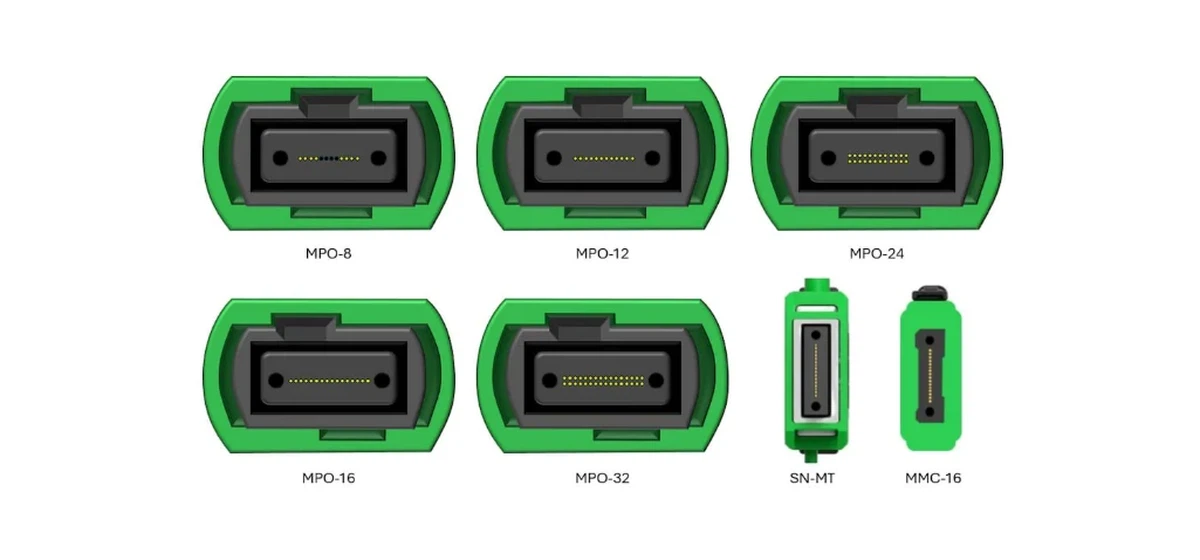
Fiber Count Selection
|
Fiber Count |
Application |
|
8F |
Parallel optics |
|
12F |
General use |
|
16F |
400G / 800G |
|
24F |
High-density backbone |
APC vs UPC
|
Type |
Feature |
Use Case |
|
UPC |
Flat end face |
Standard MM |
|
APC |
8° angle (low reflection) |
SM / high-speed |
APC connectors are preferred for high-speed applications due to better return loss.
VSFF Connectors
VSFF (Very Small Form Factor) connectors such as SN-MT and MMC provide up to 3× higher density by stacking fibers vertically.
MPO Testing and Inspection Best Practices
Proper testing is essential to ensure MPO system performance and reliability.
Why Testing Matters
Testing verifies:
Insertion loss
Polarity
Link integrity
It is also required for warranty validation in most installations.
Inspection & Cleaning
Contamination is the leading cause of fiber failure.
Best practices:
Inspect before every connection
Use MPO-specific cleaning tools
Clean both ends
OLTS Testing
Tier 1 certification testing uses Optical Loss Test Sets (OLTS).
Recommendations:
Use MPO-compatible testers
Test all fibers simultaneously
Validate polarity and loss
Common Mistakes
Skipping inspection
Using duplex testers on MPO links
Ignoring polarity verification
Avoiding these issues can significantly reduce troubleshooting time in real deployments.
Benefits of MPO Fiber Solutions
High Density
Multiple fibers in a single connector reduce cable congestion.
Scalability
Supports seamless upgrades from 10G to 400G and beyond.
Cost Efficiency
Fewer cables reduce installation time, labor, and maintenance costs.
Key takeaway: MPO solutions improve both performance and operational efficiency.
How to Choose the Right MPO Solution
Selecting the right MPO solution depends on multiple factors.
Based on Data Rate
|
Speed |
Recommendation |
|
≤25G |
LC or hybrid |
|
100G–400G |
MPO required |
|
800G+ |
MPO (16F+) |
Based on Distance
Multimode → short-distance (data centers)
Single-mode → long-distance
Based on Application
Data centers → high-density MPO
Telecom → backbone MPO
Enterprise → hybrid solutions
Get a custom MPO solution design for your 400G/800G data center project.
MPO Solutions for Modern Data Centers
With the rapid growth of AI, cloud computing, and big data, network infrastructure must support ultra-high bandwidth and low latency.
MPO solutions enable:
400G / 800G deployments
Scalable architectures
Efficient cable management
They are a key enabler of next-generation data center networks.
FAQ
Q: What is MPO solution in fiber optics?
A: An MPO solution is a high-density cabling system using multi-fiber connectors to support scalable networks.
Q: What is the difference between MPO and MTP?
A: MTP is a high-performance MPO connector with tighter tolerances.
Q: What is MPO polarity (A vs B vs C)?
A: These are methods to ensure correct Tx-to-Rx fiber mapping.
Q: How many fibers are in an MPO connector?
A: Common counts include 8, 12, 16, and 24 fibers.
Q: When should you use MPO cables?
A: For high-density, high-speed networks (100G+).
Q: How do you test MPO cables?
A: Using MPO-compatible OLTS testers to measure insertion loss and polarity.
Conclusion
MPO solutions provide a scalable, high-density, and future-ready approach to fiber optic cabling. From backbone infrastructure to 800G parallel optics, they simplify deployment while enabling next-generation performance.
Contact us today for project-based pricing and customized MPO solutions tailored to your network.