

Author: Hayden
As modern data centers evolve toward 40G, 100G, 200G, and 400G networks, selecting the right multi-fiber connector has become a critical procurement decision. Connectors like MPO and MTP form the backbone of high-density parallel optical transmission systems. For procurement managers, understanding the differences, mechanical structure, optical performance, and practical applications of these connectors is essential for cost-effective and future-proof decisions.
This guide explains the relationship between MT ferrules, MPO connectors, MTP connectors, patch cables, and multimode optical modules, and provides a clear selection framework for procurement.
1. Understanding MPO and MTP Connectors
What Is an MPO Connector?
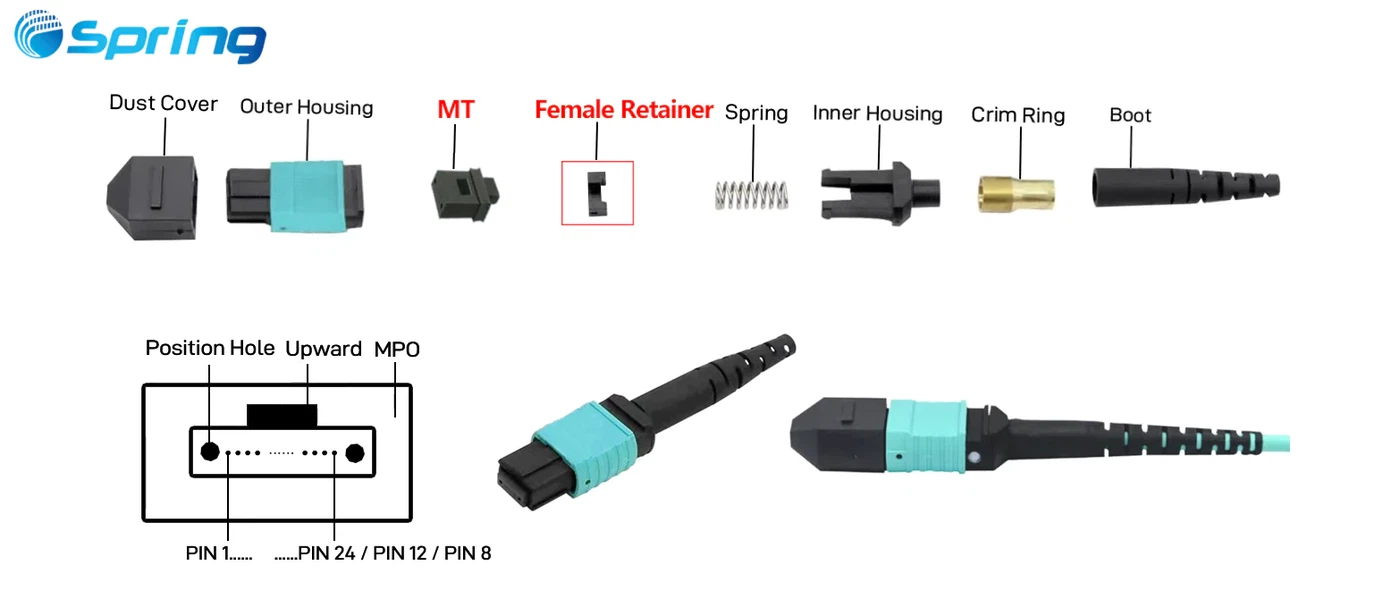
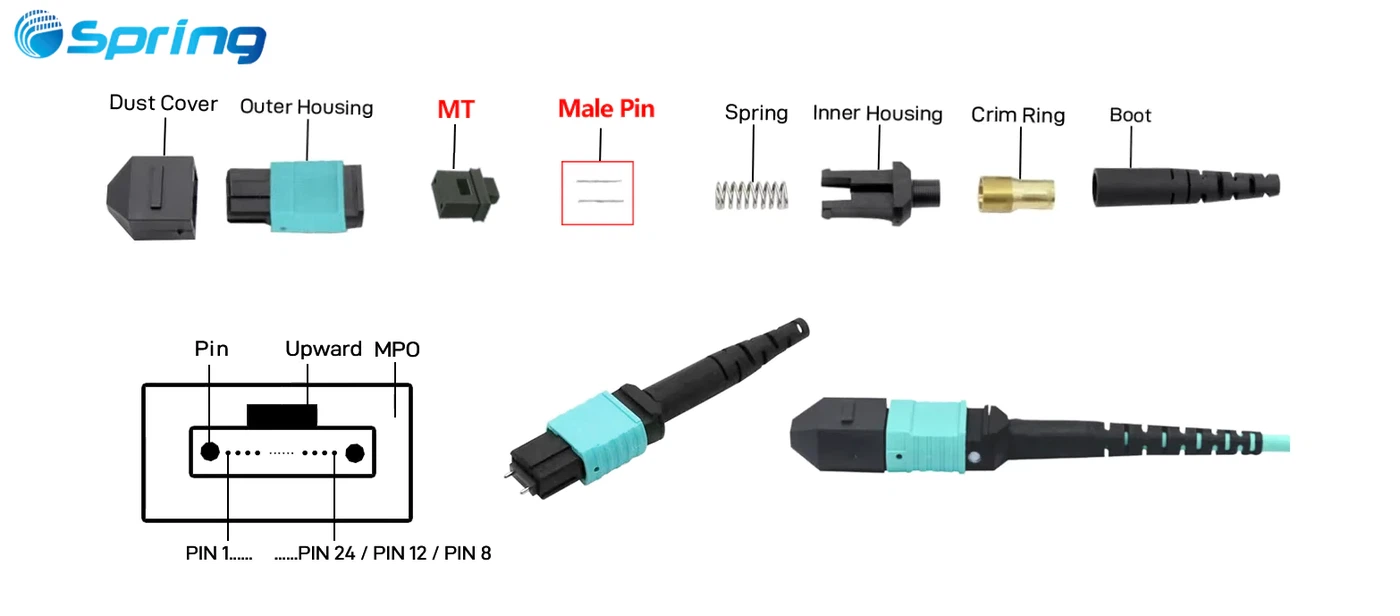
An MPO (Multi-fiber Push-On) connector is a high-density fiber optic connector capable of terminating multiple fibers in a single interface. It is widely used in hyperscale data centers and high-port-count switches.
Standards Compliance:
IEC 61754-7
TIA-604-5 (FOCIS-5)
Common Fiber Counts:
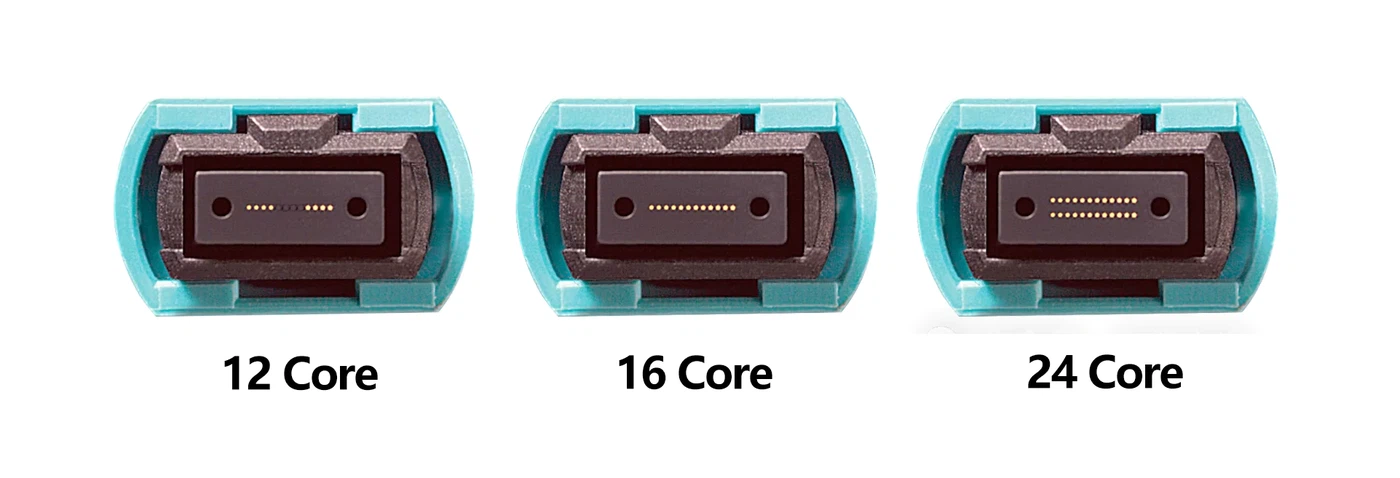
8 fiber
12 fiber (most common)
16 fiber
24 fiber
What Is an MTP Connector?
MTP is a registered trademark of US Conec and an enhanced version of MPO. Technically:
Fully compatible with MPO interfaces
Meets the same standards
Improved mechanical and optical performance
Optimized for high-speed, high-density deployments
2. The Core Component: MT Ferrule
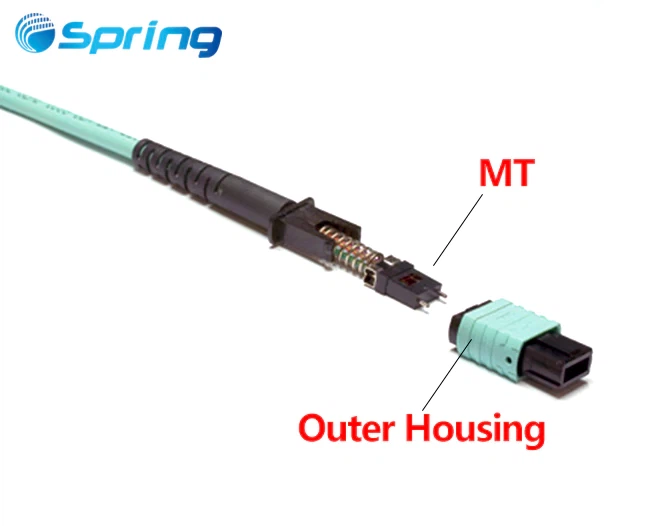
At the heart of both MPO and MTP connectors is the MT (Mechanical Transfer) ferrule, which:
Precisely aligns multiple fibers in a linear array
Controls fiber spacing and geometry
Ensures accurate optical alignment between mating connectors
Without MT ferrules, high-density parallel transmission would not be possible. Parallel multimode optical modules rely on MT-based internal alignment to maintain low insertion loss and high reliability.
3. MTP vs MPO: Structural and Performance Differences
The differences are structural and performance-based, not cosmetic.
| Feature | MTP Connector | MPO Connector |
|---|---|---|
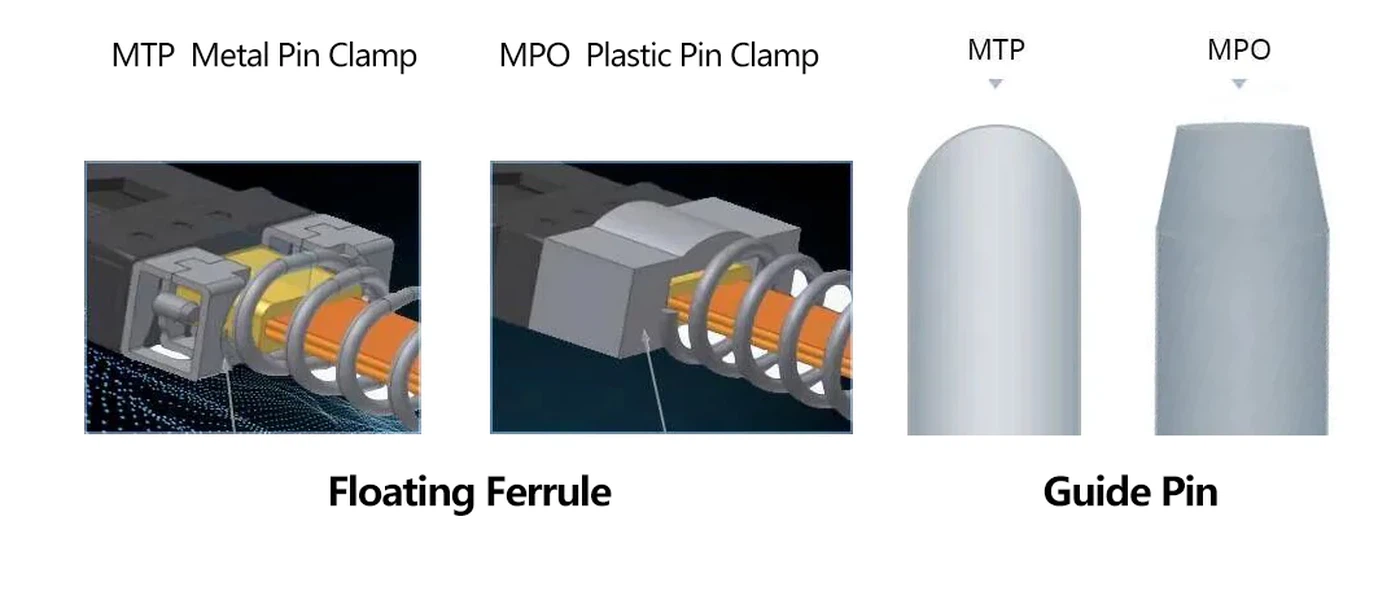
| Pin Clamp | Metal pin clamp, higher retention, oval spring reduces ribbon stress | Plastic pin clamp, lower durability under repeated mating |
| Floating Ferrule | Maintains stable contact under load, reliable with active optical modules | No floating ferrule, sensitive to mechanical stress |
| Guide Pins | Stainless steel oval pins, tight tolerance, reduces debris | Chamfered cylindrical pins, lower alignment precision |
| Housing | Removable, allows rework, repolishing, and polarity changes | Non-removable, limited field flexibility |
| Insertion Loss | Low, stable, ideal for 100G+ parallel optics | Higher insertion loss, especially under high-speed/high-density conditions |
| Reliability | High durability, collision-free insertion, long-term stability | Standard design, less tolerant to repeated mating |
4. Signal Flow in Data Centers
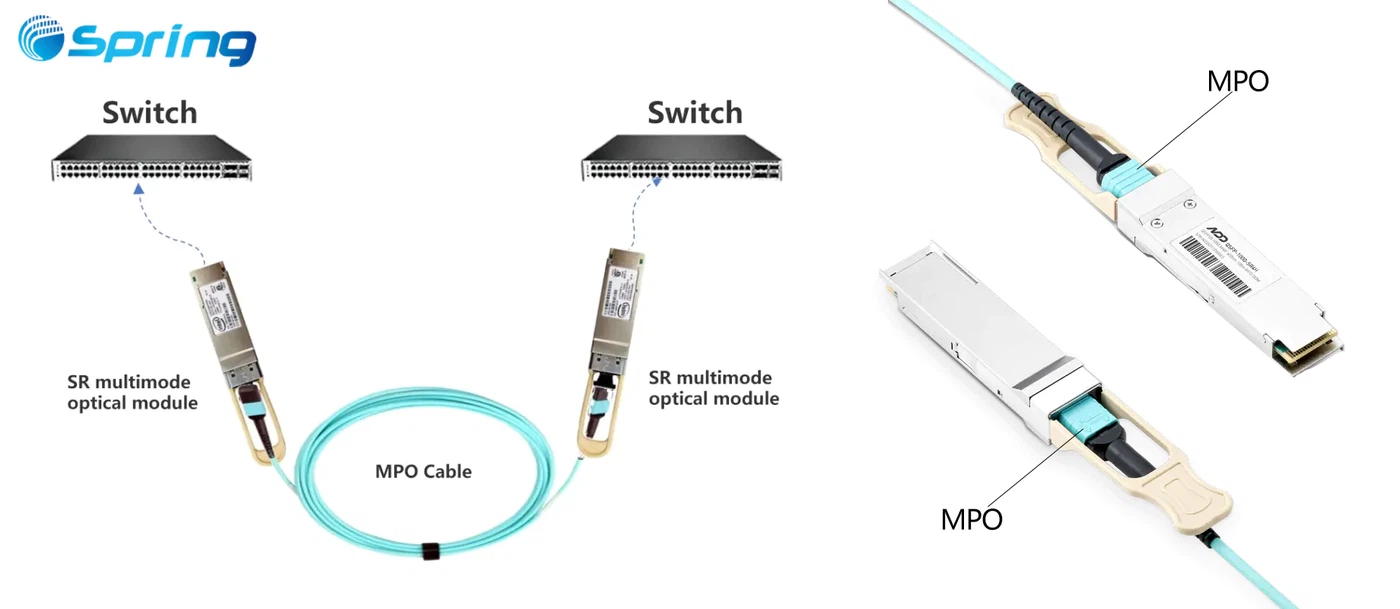
To understand how MT, MPO, MTP, and optical modules work together, consider the signal path:
Switch → Optical Module → MPO Interface → MPO Patch Cable → MPO Interface → Optical Module → Switch
Switches transmit electrical signals
Optical modules convert them to optical signals
MPO connectors and MT ferrules ensure high-density fiber alignment
MPO patch cables connect modules and switches
This forms the backbone of 40G / 100G / 200G / 400G parallel optical transmission.
5. Parallel Fiber Architecture (Ribbon Fiber Structure)
Parallel optical modules use ribbon fiber arrays with MT ferrules.
Common Configurations:
12 fiber MT → 40G SR4 / 100G SR4
16 fiber MT → 200G SR8 / 400G SR8
24 fiber MT → higher density applications
Fibers are aligned in a precise linear array, enabling simultaneous multi-channel transmission.
6. Male and Female MPO Connectors
MPO connectors come in male and female versions:
| Type | Description |
|---|---|
| Male MPO | Contains guide pins |
| Female MPO | No guide pins |
Proper mating requires one male and one female connector, ensuring MT ferrule alignment and minimal optical loss.
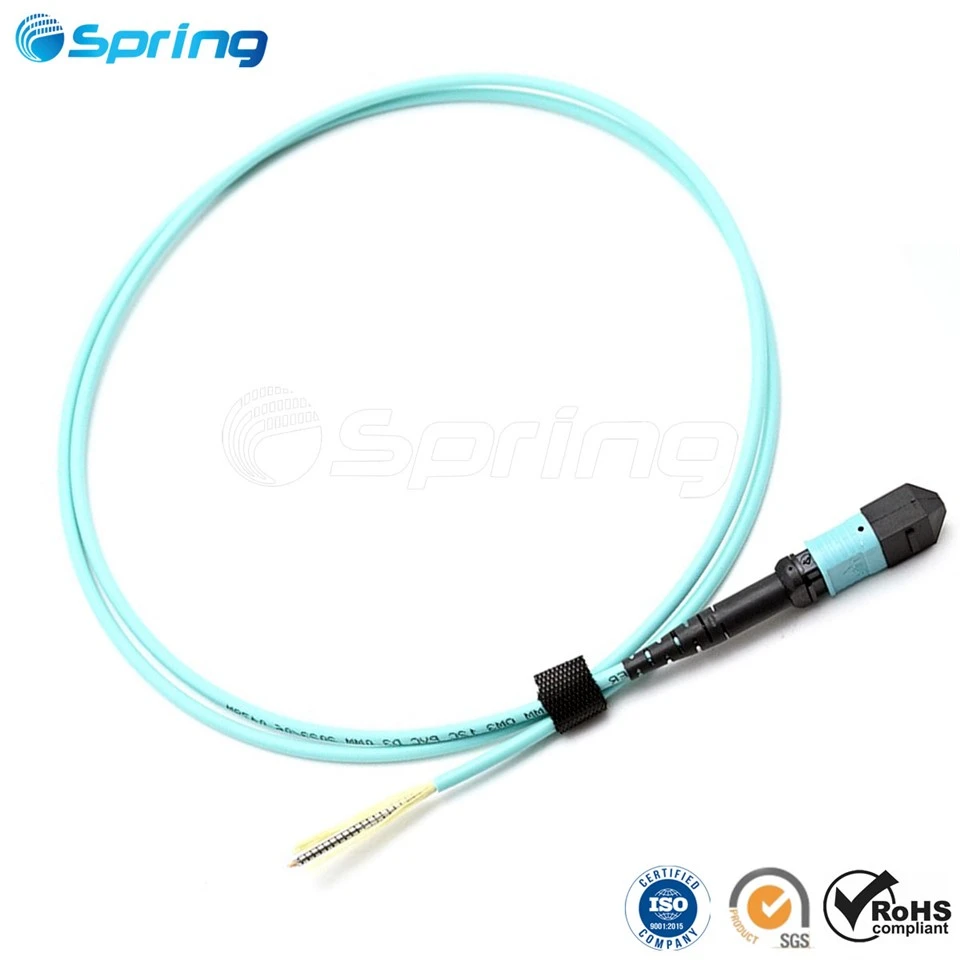
7. MPO Patch Cable Types and Applications
| Cable Type | Typical Use Cases |
|---|---|
| MPO-MPO | Data center backbone, cabinet interconnect, pre-terminated trunk systems, high-speed module connections |
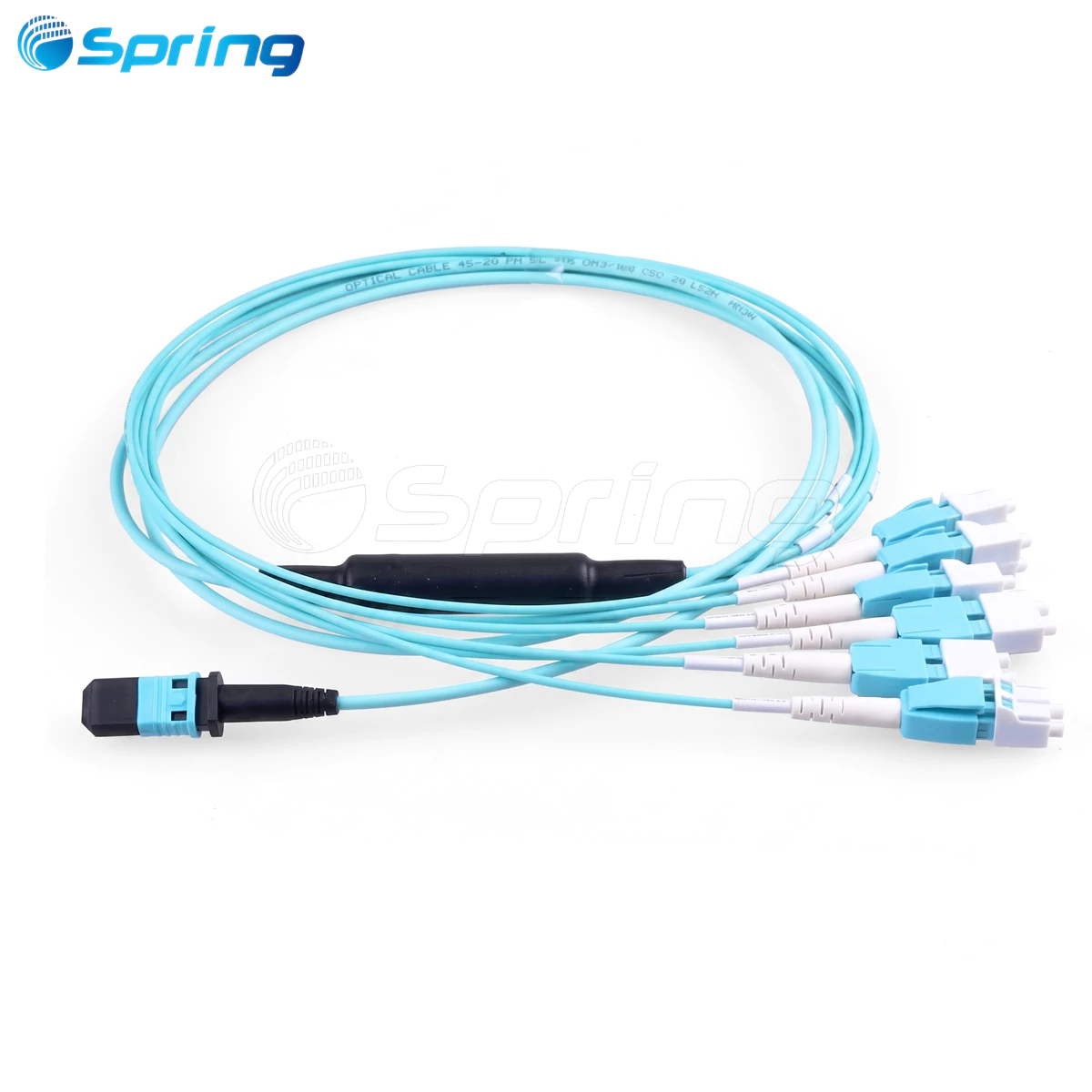
| MPO-LC | Breakout applications: 40G SR4 → 4×10G LC, 100G SR4 → 4×25G LC, migration architectures |
| MPO-SC | Telecom/FTTH: MPO trunk → ODF, central office, FTTH equipment rooms |
| MPO-FC | Legacy FC equipment, backbone transmission, test environments; threaded locking for high stability |
8. Procurement-Focused Selection Guide
| Selection Criteria | MTP Connector | MPO Connector |
|---|---|---|
| Network Speed / Performance | Ideal for 40G / 100G / 200G / 400G; low insertion loss, high reliability | Suitable for ≤10G or some high-speed parallel optics; higher insertion loss risk |
| Density Requirements | High-density, hyperscale data centers | Low-density or cost-sensitive deployments |
| Maintenance & Flexibility | Removable housing, supports field polarity changes | Limited flexibility, non-removable housing |
| Long-Term Scalability | Supports upgrades to higher-speed modules | May require replacement for future upgrades |
| Reliability & Durability | Superior mechanical design, high MT ferrule protection | Standard design, lower tolerance for repeated mating |
| Cost Consideration | Higher upfront cost, lower long-term risk | Lower initial cost, potential higher maintenance cost |
Procurement Summary
Choose MTP for high-speed, high-density, long-term deployments, where performance and reliability are critical.
Choose MPO for budget-sensitive or low-density deployments, or legacy 10G environments.
Hybrid Approach: MPO for trunk cabling, MTP for high-speed switch interconnections ensures cost-effective yet future-proof design.
9. Key Takeaways
MT ferrule = precision alignment core of parallel optics
MPO = standardized multi-fiber connector built around MT
MTP = enhanced MPO for high-speed, high-density applications
Parallel optical modules rely on MT ferrules internally
MPO patch cables link optical modules and switches
Together, they form a complete high-density fiber transmission ecosystem for modern data centers
As data center bandwidth demands continue to grow, enhanced connectors like MTP are increasingly the mainstream choice for scalable, high-performance fiber connectivity.