

Introduction
With the continuous advancement of optical communication technology and the rapid growth of data center networks, the cabling used in structured cabling systems has become increasingly diversified. MPO pre-terminated fiber optic cable (Multi-fiber Push On), as an advanced cabling solution integrating high-density and multi-fiber connectivity, has developed more refined classifications to meet the requirements of different application scenarios.
From basic inter-rack connections to complex 400G/800G/1.6T parallel optics deployment, understanding these detailed classifications is essential for building a reliable and scalable network infrastructure. Today, we will provide a detailed explanation of the various classifications of MPO pre-terminated fiber optic cables.
Classification by Cable Structure
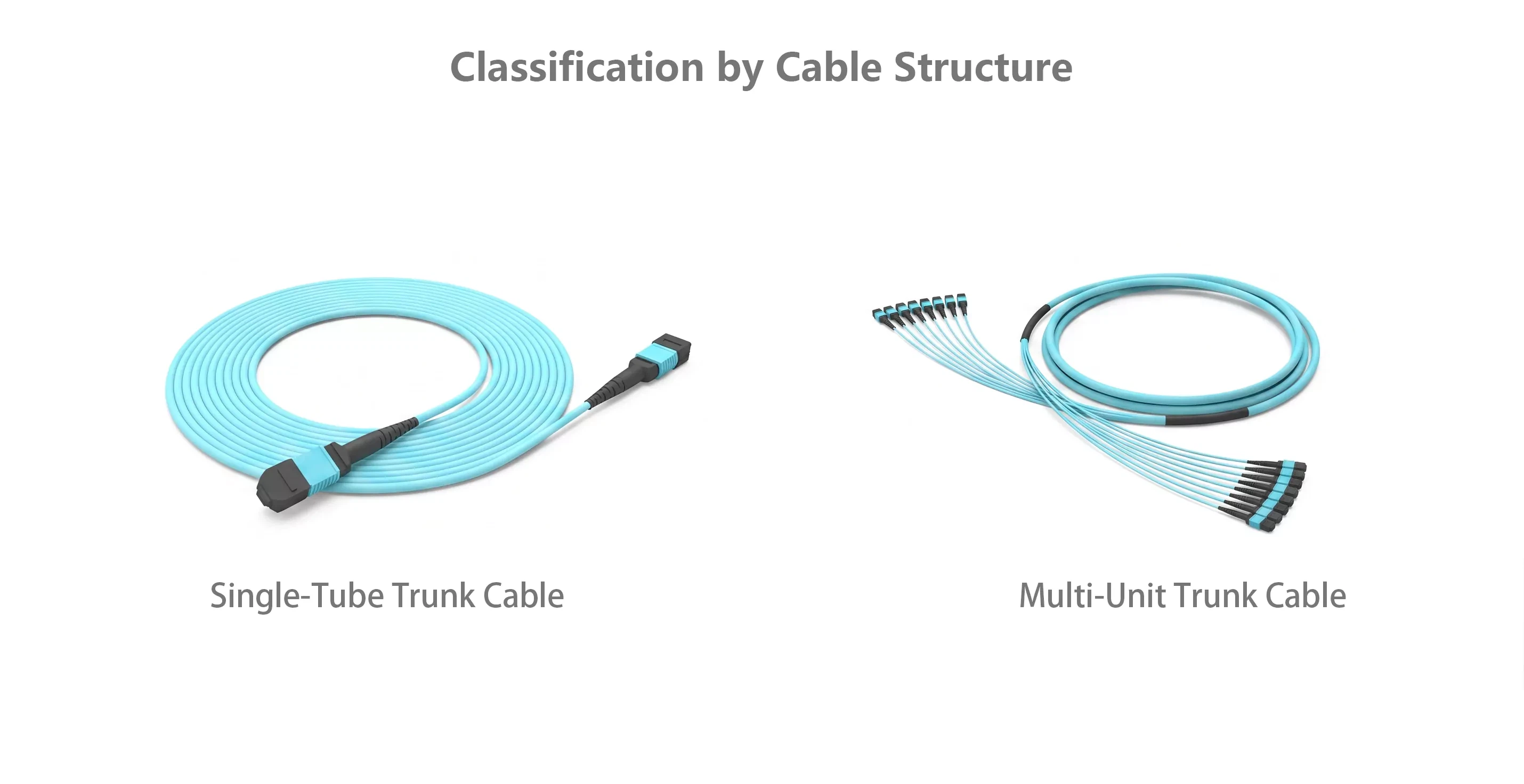
According to cable structure, MPO pre-terminated cables can be divided into two primary categories:
Single-tube trunk cables
Multi-unit trunk cables
Single-Tube Trunk Cable
As the name suggests, the internal design adopts a single, robust fiber tube to accommodate multiple optical fibers. All fibers are concentrated within one protective tube and terminated with MPO connectors, enabling compact design, easy management, and high fiber density.
Multi-Unit Trunk Cable
Multi-unit trunk cables consist of multiple independent fiber units (such as individual 12-fiber or 24-fiber subunits) combined into one larger cable assembly. These units are integrated and secured through a specific structural design. The advantage lies in their flexibility and scalability; independent fiber units can be flexibly combined or expanded according to actual deployment requirements.
Classification by Fiber Count
MPO pre-terminated fiber optic cables are available in various fiber counts to satisfy network deployments of different scales.
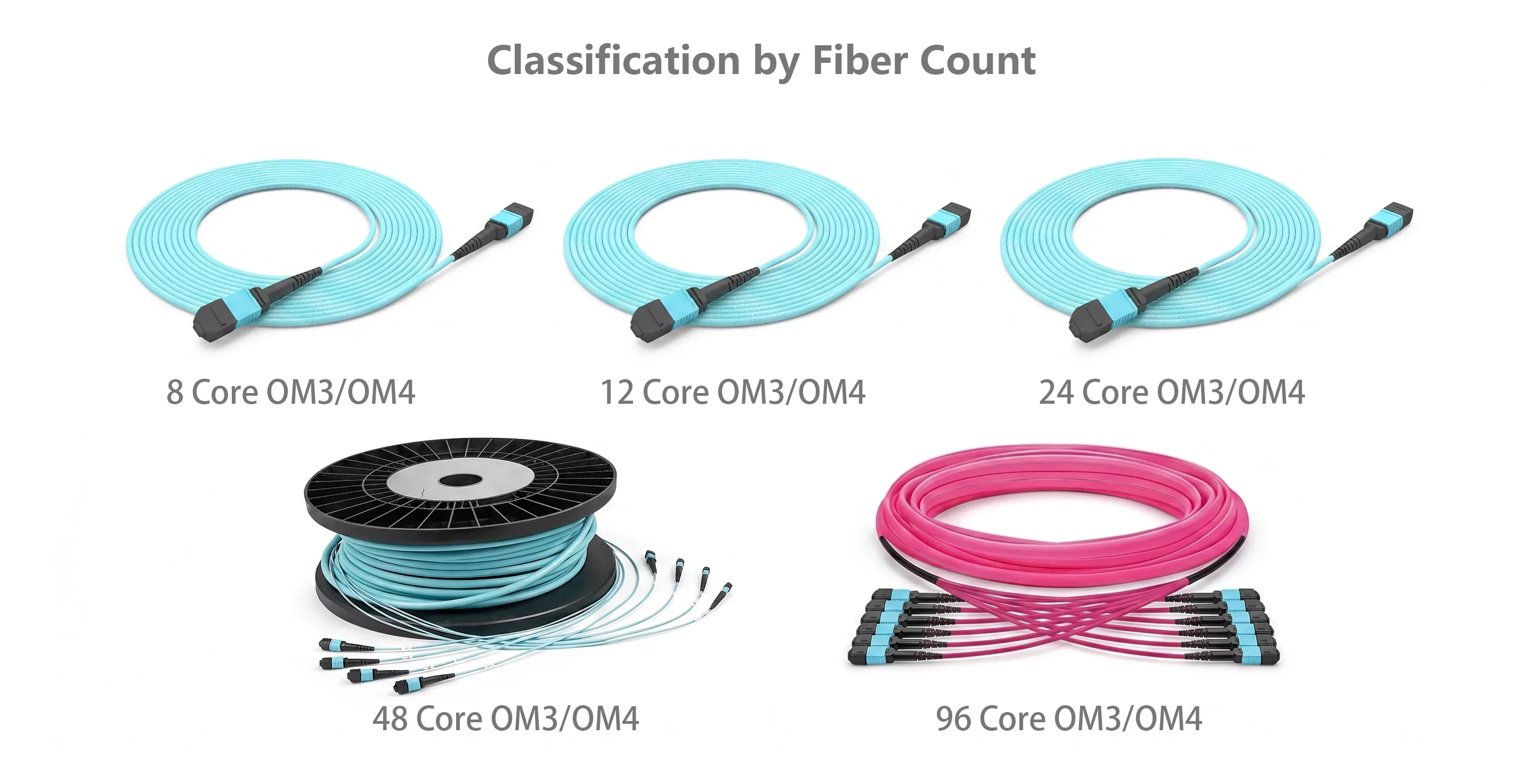
Common single-tube configurations (ideal for standard connections) include:
·8 fibers
·12 fibers
·24 fibers
Multi-unit cables can be customized according to project requirements with different unit quantities and fiber counts per unit, often supporting very high-density requirements such as:
·48 fibers
·96 fibers
·144 fibers
·288 fibers and above
Classification by Fiber Type
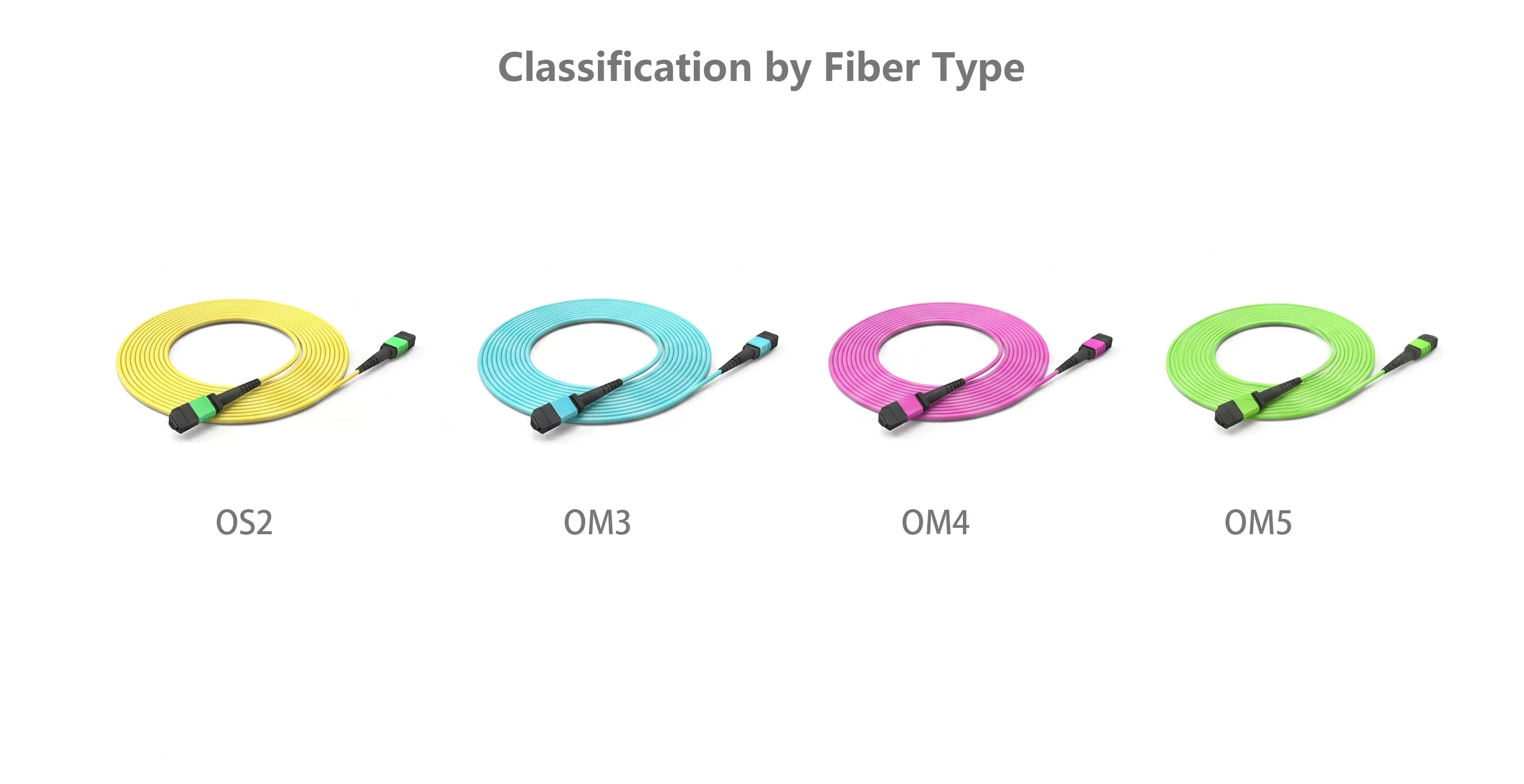
MPO pre-terminated fiber optic cables utilize different glass types based on transmission distance and bandwidth requirements:
Single Mode Fiber (e.g., OS2): Suitable for long-distance transmission applications, providing low attenuation over many kilometers.
Multimode Fiber (e.g., OM3, OM4, and OM5): Ideal for short-distance, high-bandwidth transmission scenarios, particularly within data centers (reaching up to 400 meters at 40GbE/100GbE).
Classification by Connector Type
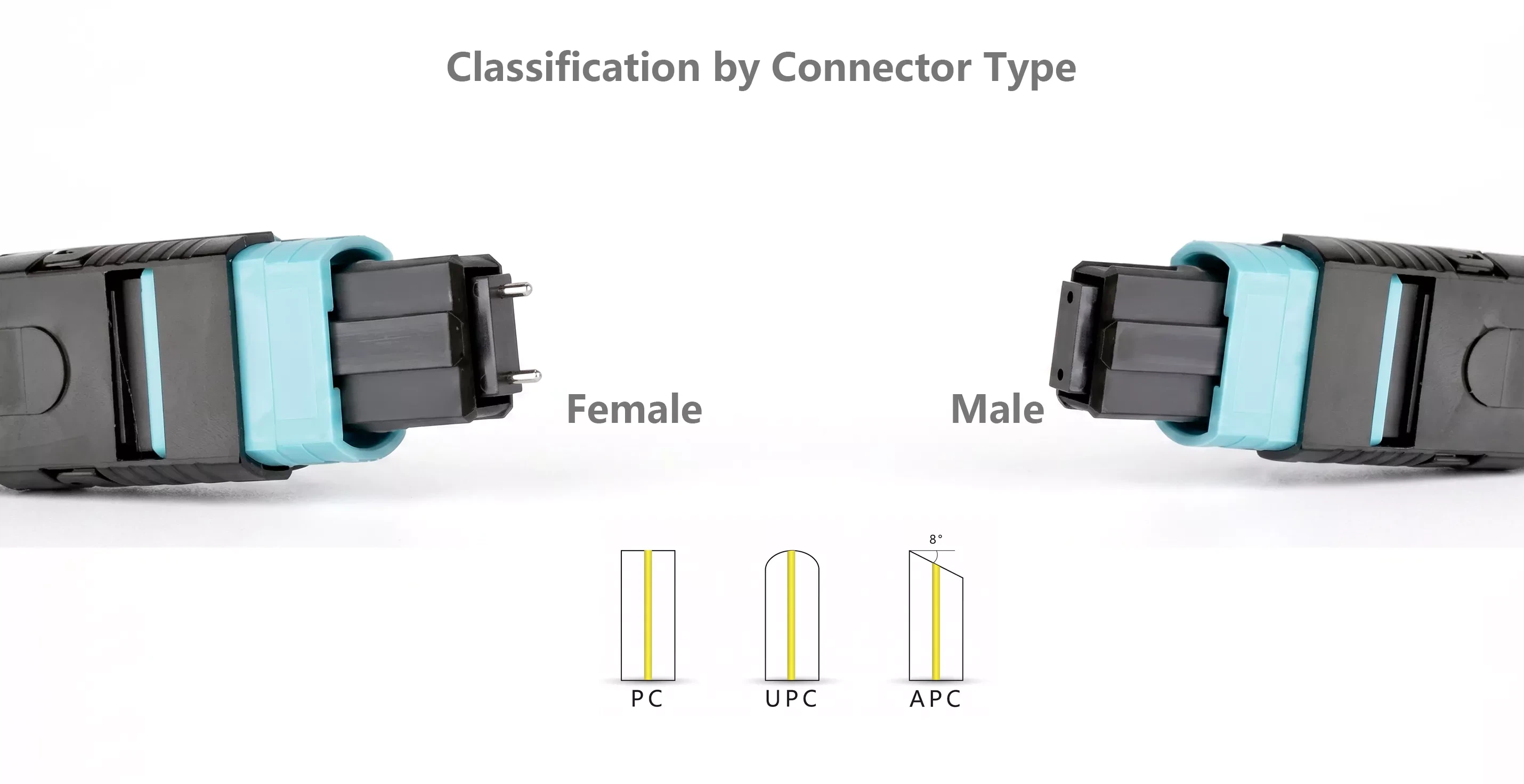
MPO connectors have precise gender and polishing classifications:
Gender: Connectors are available as Male connectors (with pins) and Female connectors (without pins). Correct mating always requires one male and one female connector.
Polishing Types
The shape of the connector ferrule face is critical for minimizing back reflection (Optical Return Loss):
APC (Angled Physical Contact): The ferrule is polished at an 8-degree angle, causing reflected light to escape into the cladding. Essential for Single Mode systems.
UPC (Ultra Physical Contact): An extended, high-quality non-angled polish, used widely in Multimode and some Single Mode applications where lower back reflection than standard PC is acceptable.
PC (Physical Contact): The basic flat polish.
Visualizing Polish Types and Connector Structure
Classification by Cable Type

MPO pre-terminated fiber optic cables are generally divided into two basic functional categories:
MPO Breakout Cables: Short cables used to connect equipment (e.g., servers, switches) to patch panels or other parts of the network.
MPO Trunk Cables: High-density backbone cables that provide direct fiber connections between different racks, zones, or equipment rooms within data centers.
Classification by Fiber Arrangement
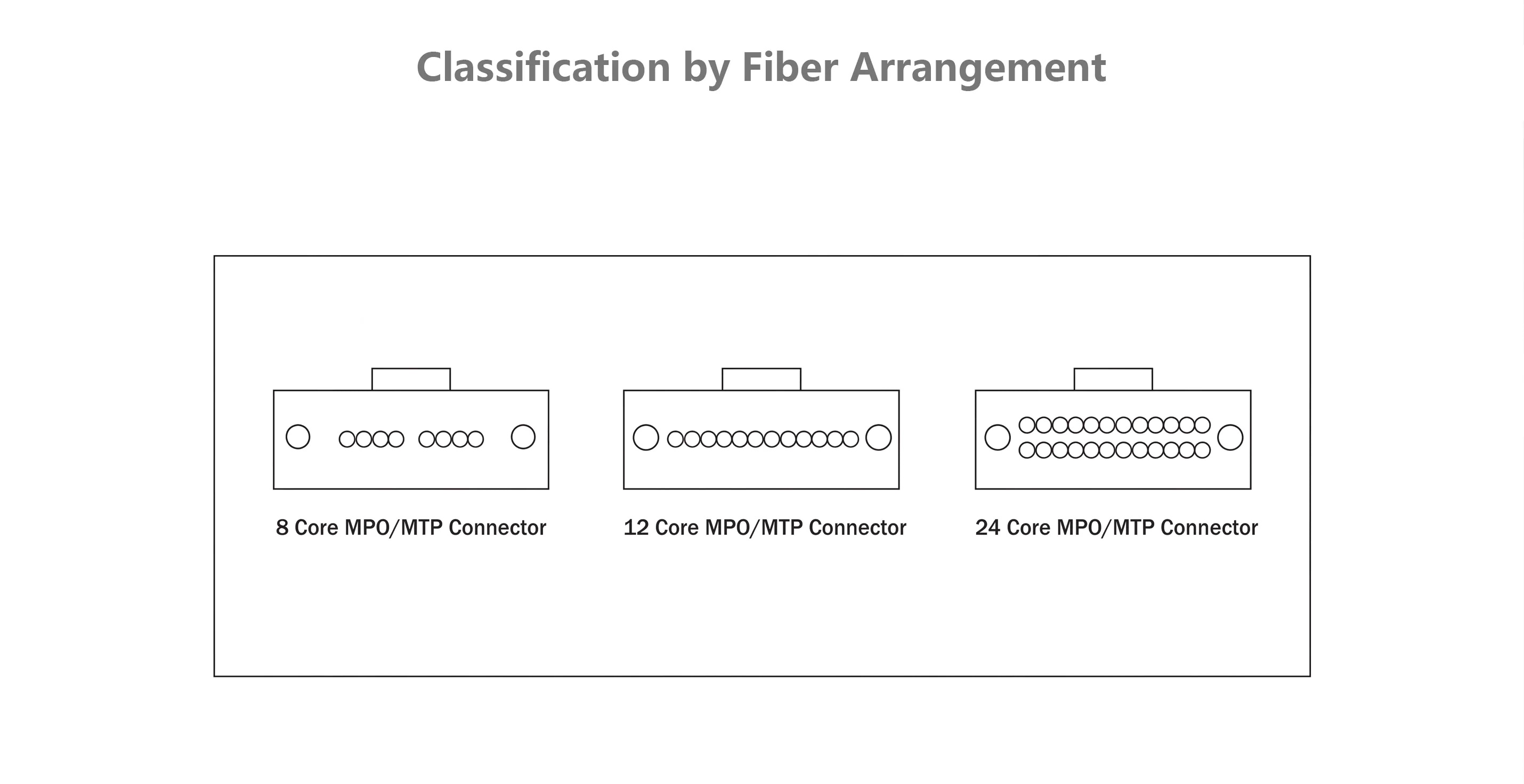
To meet the connection requirements of different active devices and high-speed optical modules, MPO cables utilize multiple internal fiber arrangement methods:
Straight arrangement (1-to-1): Standard mapping.
12-fiber 8+4 arrangement: Specifically designed for parallel optics application like 40GbE SR4 and 100GbE SR4. In this 12-core MPO connector, only the outer 8 fibers (4 Tx, 4 Rx) are active, leaving the center 4 unused.
24-fiber dual-row arrangement: Used for very high-speed links like 100G SR10 or to aggregate multiple 10G links into a single connector.
32-fiber dual-row arrangement: Emerging standard for ultra-high-density 400G and 800G applications.
Classification by Polarity
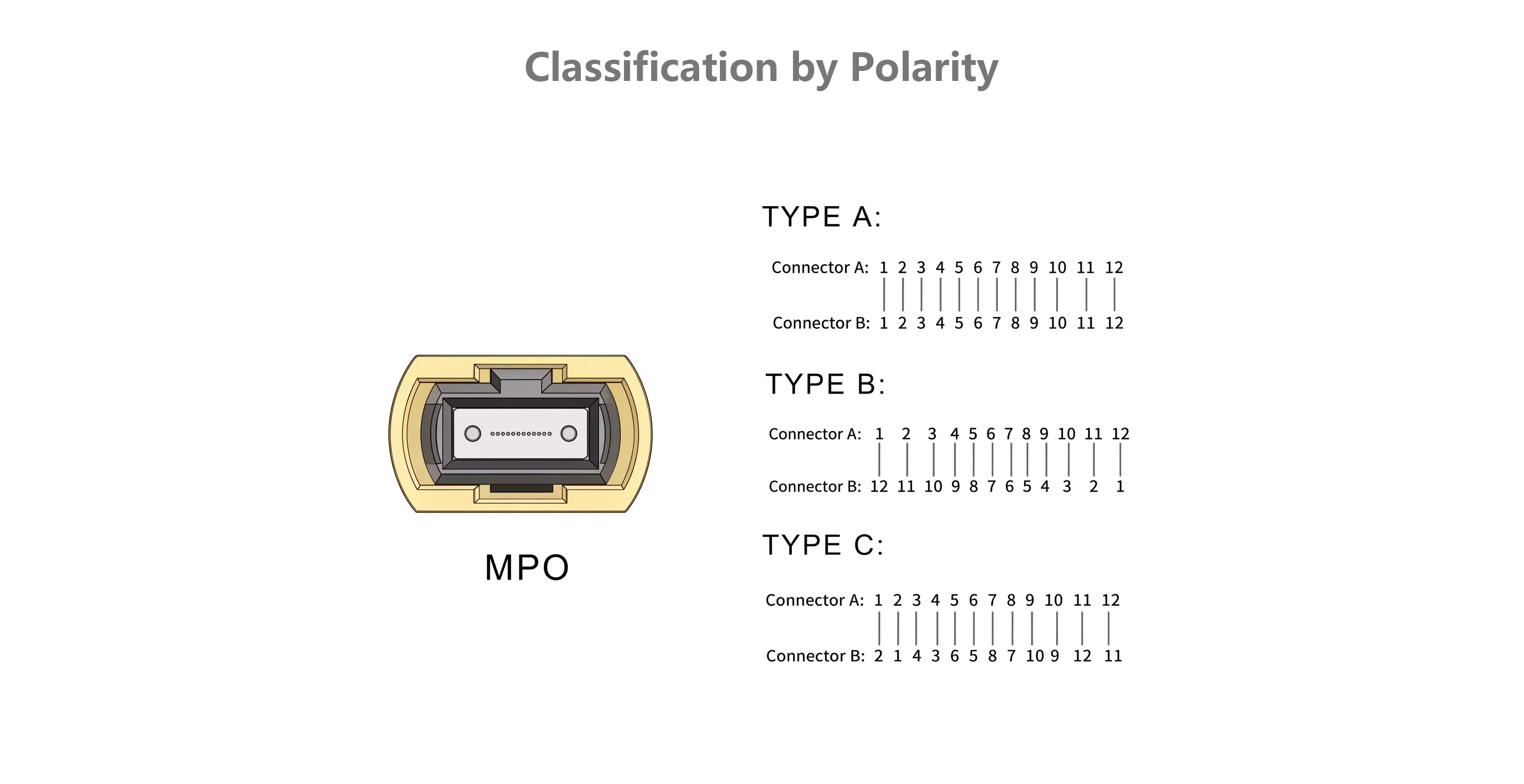
Maintaining correct polarity-ensuring the transmit (Tx) on one end connects to the receive (Rx) on the other-is critical. MPO pre-terminated fiber optic cables comply with TIA-568 standards with three main polarity types:
Polarity A (Straight-through)
In Polarity A MPO cables, the fiber positions at both ends are identical (Fiber 1 connects to Fiber 1, Fiber 12 to Fiber 12). This simplifies connectivity and reduces mapping errors.
Polarity B (Inverted/Rollover)
In Polarity B MPO cables, the fiber positions are reversed (Fiber 1 connects to Fiber 12, Fiber 12 to Fiber 1). This is often used in systems that deploy redundant optical links.
Polarity C (Flipped Pairs)
In Polarity C MPO cables, fibers are flipped in pairs throughout the length of the cable (Fiber 1 connects to Fiber 2, Fiber 2 to Fiber 1). It provides flexibility for specific complex network topologies.
Conceptual Polarity Mapping
Classification by Connector Loss Grade
According to insertion loss (IL) performance, MPO pre-terminated fiber optic cables are classified by their budget-friendly standard options vs. high-performance low-loss alternatives:
Single mode standard loss: Typical insertion loss controlled within ≤0.70 dB.
Single mode low loss: Max insertion loss can be as low as ~0.35 dB. Essential for long-distance and critical high-speed links.
Multimode standard loss: Typical insertion loss controlled within ≤0.50 dB.
Multimode low loss: Insertion loss can be 0.1 dB or even lower. Ideal for high-performance data centers and high-speed Ethernet (40G/100G/400G) with tight loss budgets.
Classification by Connector Housing Color
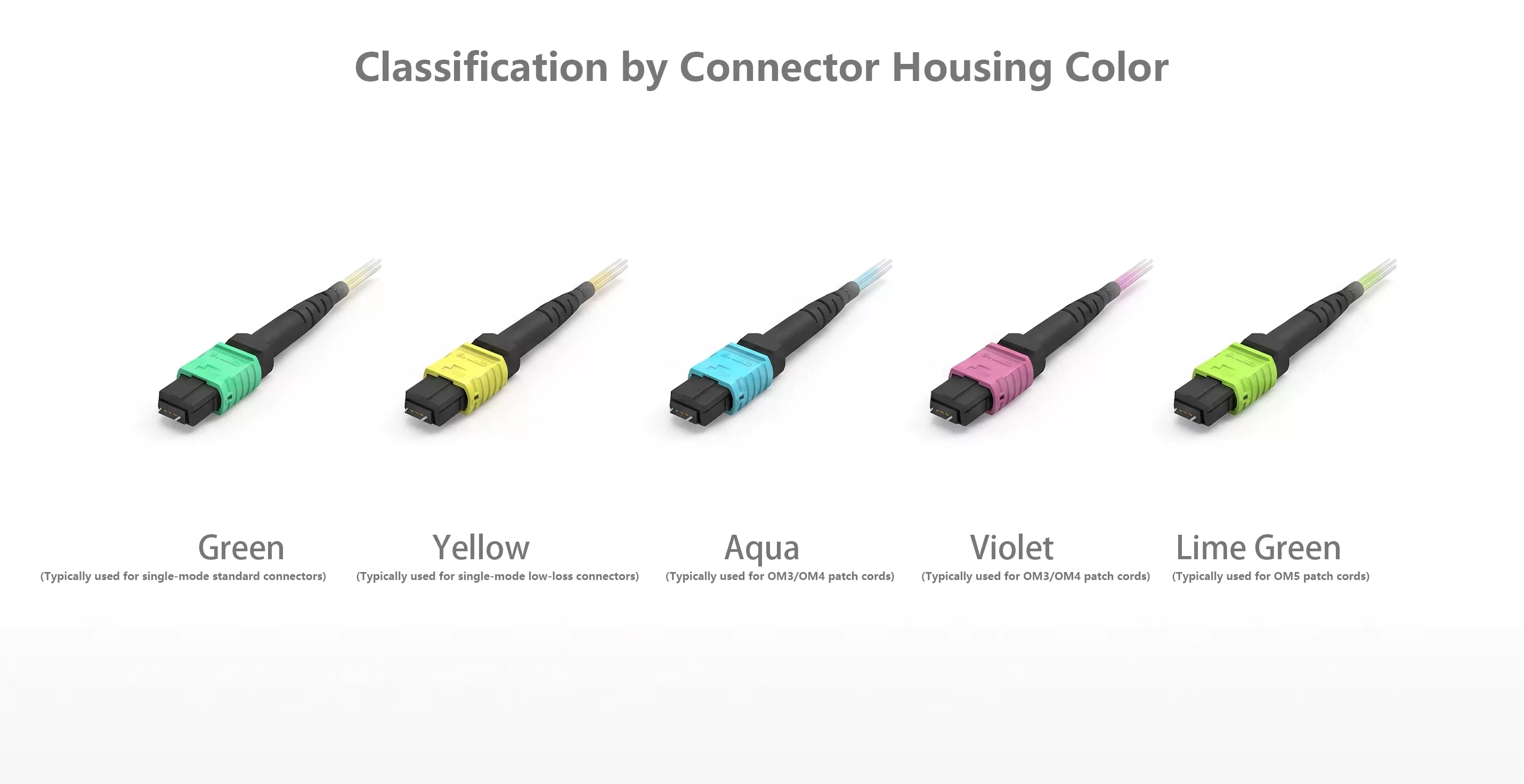
MPO connectors are color-coded according to the standard YD/T1272.5 Fiber Optic Connectors Part 5: MPO Type to quickly identify fiber type and loss grade:
Green: Single Mode Standard Loss (APC)
Yellow: Single Mode Low Loss (APC or UPC)
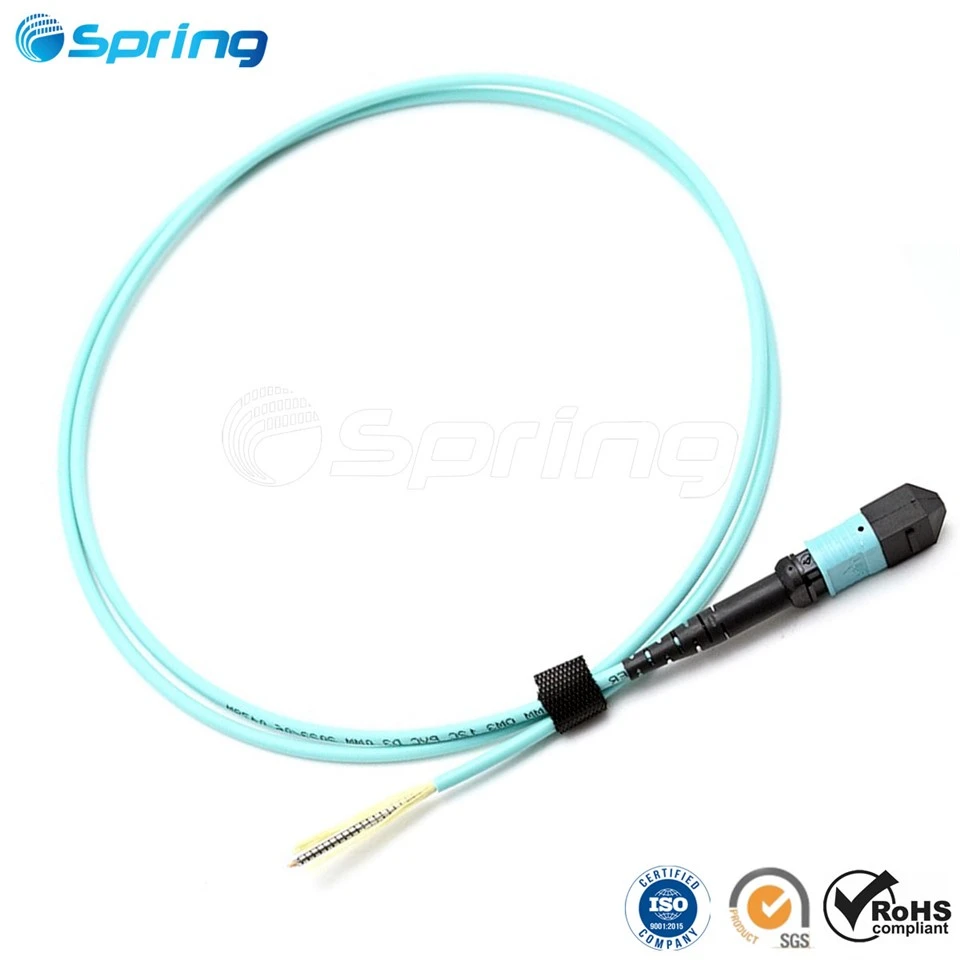
Aqua: OM3 Multimode
Purple/Violet: OM4 Multimode
Lime Green: OM5 Multimode
Visual Color Coding Guide
Classification by Branch Length and Alignment Method
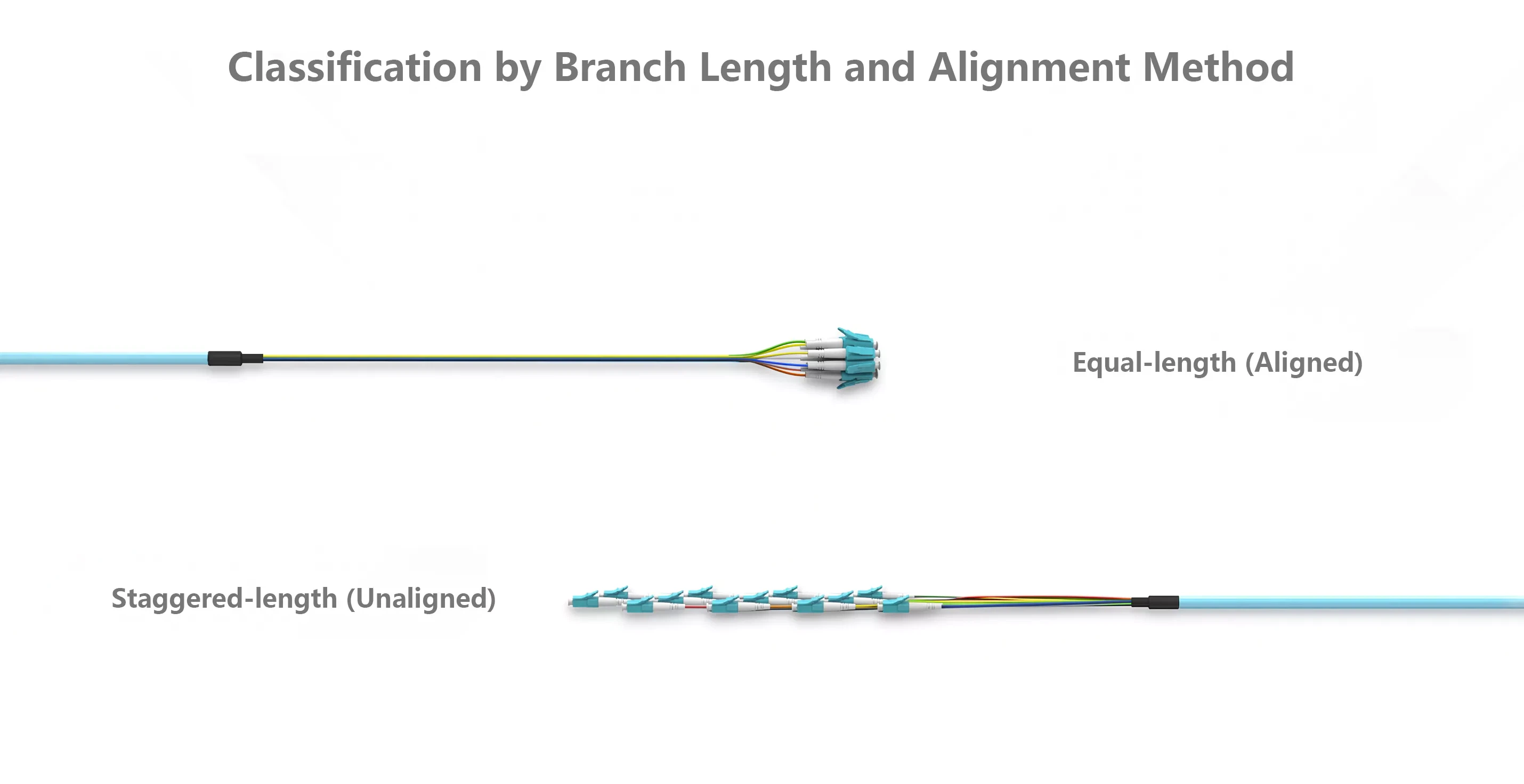
For cables transitioning from MPO to individual connectors (like LC), branch length and alignment options vary:
Equal-length (Aligned): All branch legs have identical lengths, facilitating neat alignment during installation.
Staggered-length (Unaligned): Branch legs have intentionally different lengths following a proportional design. This provides greater flexibility and routing convenience when connecting to equipment located at different staggered depths within a rack.
Classification by Pulling Structure
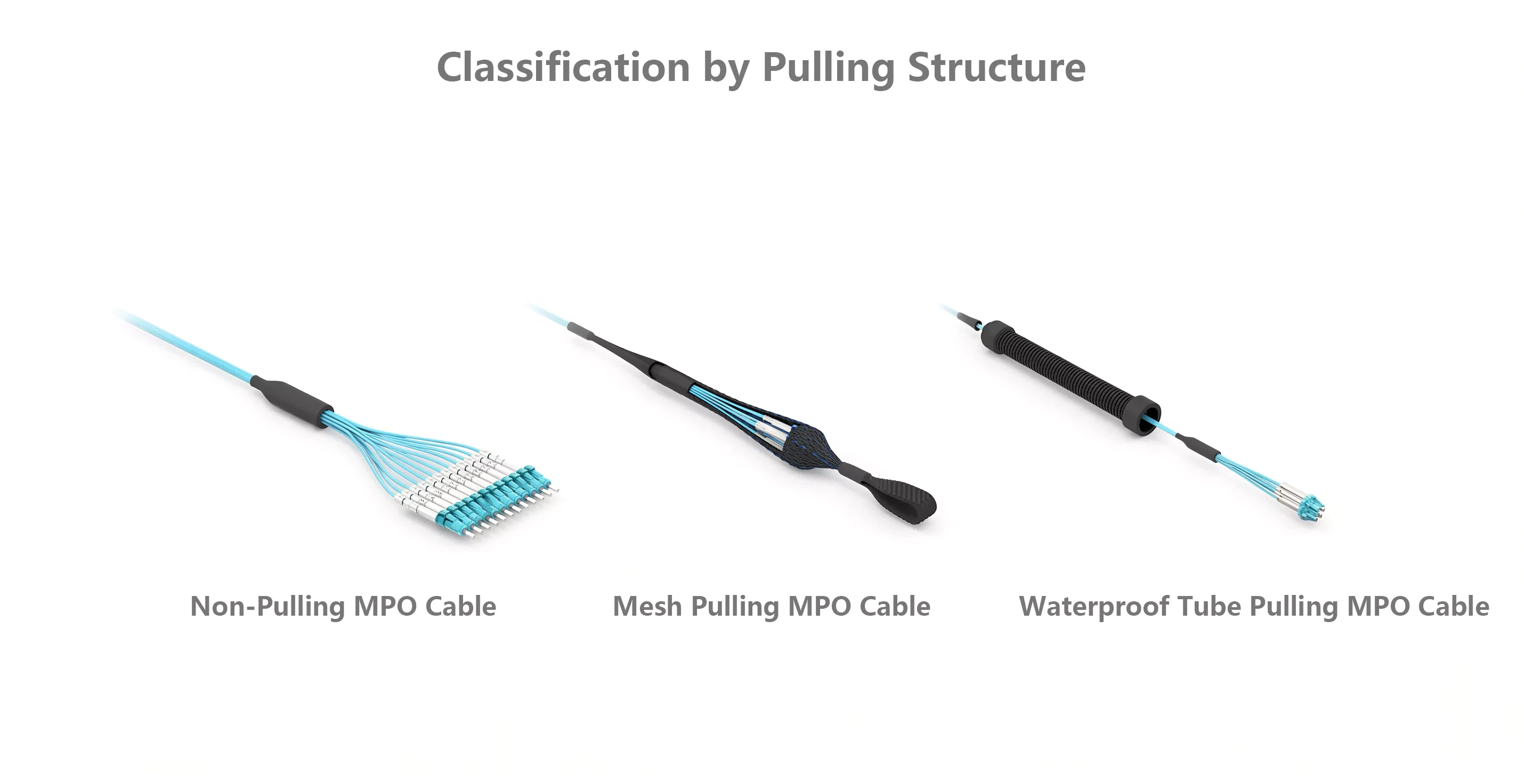
To protect the pre-terminated connectors during installation, different pulling structures are available:
Non-Pulling MPO Cable
Does not include additional pulling structures. Reliance is solely on the cable's inherent strength and flexibility. Suitable for short-distance, low-tension installations (e.g., within a cabinet).
Mesh Pulling MPO Cable
Wrapped with an external, high-strength mesh sleeve that provides additional tensile strength and abrasion resistance. During installation, the mesh structure distributes pulling force evenly, protecting the cable and connectors in long-distance or complex route deployments.
Waterproof Tube Pulling MPO Cable
Uses an external, rigid waterproof tube structure to provide both robust waterproof protection and pulling support. Ideal for demanding environments like outdoor or humid installations.
MPO Pre-Terminated Fiber Optic Cables FAQ
What are the main polarity types for MPO pre-terminated cables?
There are three main polarity types defined by TIA-568 standards: Polarity A (Straight-through, 1-to-1 mapping), Polarity B (Inverted/Rollover, 1-to-12 mapping), and Polarity C (Flipped Pairs, 1-to-2 mapping). Correct polarity selection is critical to ensure the transmit (Tx) on one end connects to the receive (Rx) on the other.
What is the difference between MPO Male and Female connectors?
The fundamental difference is the presence of alignment pins. MPO Male connectors have two precise alignment pins, while MPO Female connectors have corresponding holes to receive them. A correct MPO connection always requires mating one male connector (with pins) to one female connector (without pins).
What is the 8-fiber MPO arrangement specifically used for?
The 12-fiber MPO "8+4 arrangement" uses only the outer 8 fibers (4 to transmit and 4 to receive) while leaving the center 4 fibers unused. This configuration is specifically designed to support parallel optics applications, most commonly for 40GbE SR4 and 100GbE SR4 optical modules.
How much lower is the insertion loss on Low Loss MPO cables compared to Standard Loss?
Low Loss MPO cables offer significantly better performance. For Multimode, Low Loss IL is typically 0.1 dB or even lower, compared to ≤0.50 dB for standard. For Single Mode, Low Loss IL can be as low as approximately 0.35 dB, compared to ≤0.70 dB for standard. Low loss is critical for high-speed networks (40G/100G/400G) with tight loss budgets.
What does a purple or violet MPO connector housing indicate?
According to the standardized color coding (such as YD/T1272.5), a purple or violet connector housing indicates that the internal fibers are OM4 Multimode. This helps installers quickly distinguish OM4 from OM3 (which is Aqua) or OM5 (which is Lime Green).
When should I choose an MPO cable with a mesh pulling structure?
You should choose an MPO cable with a mesh pulling structure for long-distance installations, deployments in complex environments, or when pulling through conduit. The external mesh sleeve provides additional tensile strength and abrasion resistance, distributing the pulling force evenly to protect the pre-terminated connectors from damage.
Conclusion
In the 400G to 1.6T era, structured cabling has evolved from basic connectivity infrastructure into a core competitive advantage for data centers. MPO pre-terminated cables, with their diverse classifications, provide the necessary tools to address every conceivable networking challenge.
Spring Optical supports customers in building future-ready network infrastructures through ultra-high-density designs compliant with international standards such as TIA-568.3-D and ISO/IEC 11801-1, combined with intelligent management and green technology innovation. In the future, Spring Optical will continue focusing on optical-electrical integration and open ecosystem development, providing reliable and efficient connectivity solutions for global digital infrastructure.