

Introduction to Fiber Optic Connectors
Fiber optic connectors are critical components in modern telecommunication networks, ensuring reliable connections with minimal signal loss. Among various connector types, LC and SC connectors have become the dominant choices for networking applications. This guide provides an in-depth comparison of LC and SC connectors, exploring their technical specifications, performance, and best-use scenarios to help networking professionals make informed decisions.
Understanding SC Fiber Connectors
What is an SC Connector?
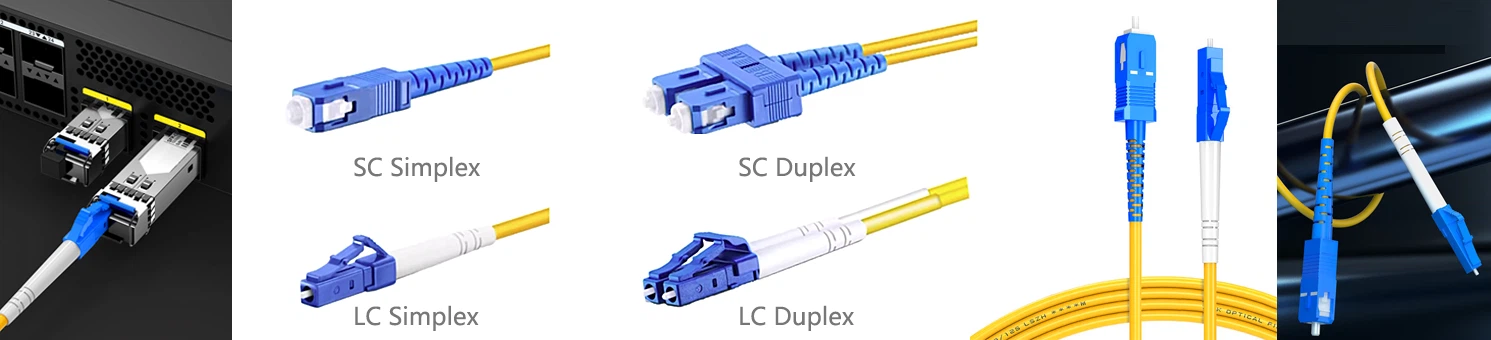
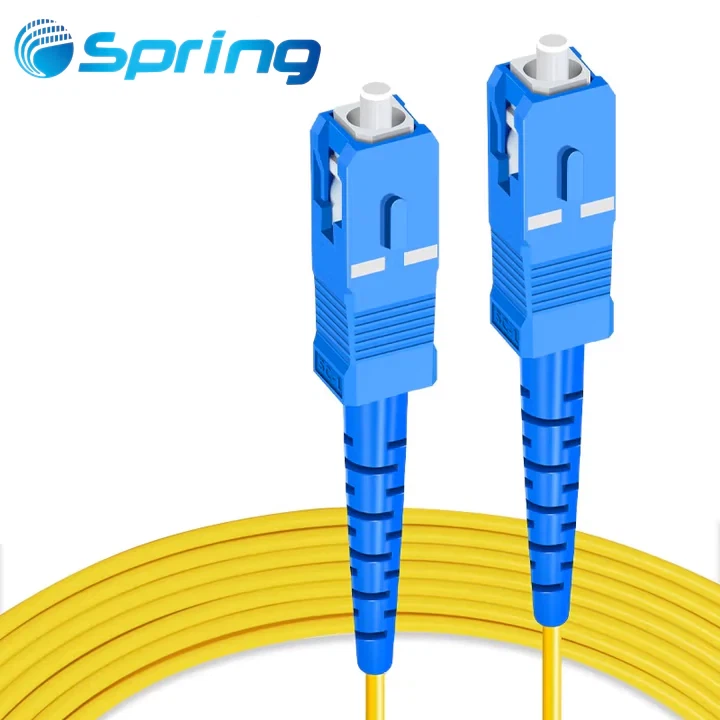
The SC connector (Subscriber Connector or Standard Connector) features a square design and utilizes a 2.5mm ceramic ferrule. Known as the "square connector," the SC connector uses a push-pull coupling mechanism, providing secure connections without the need for rotational movement.
Key Features of SC Connectors
Form Factor: Square shape, measuring 25×9.8mm
Ferrule Size: 2.5mm ceramic ferrule for precise fiber alignment
Coupling Mechanism: Push-pull locking mechanism for easy operation
Cost: Cost-effective manufacturing with widespread availability
Insertion Loss: ≤0.3 dB typical
Return Loss: UPC ≥ 50 dB, APC ≥ 60 dB
Durability: ≥500 mating cycles
Understanding LC Fiber Connectors
What is an LC Connector?
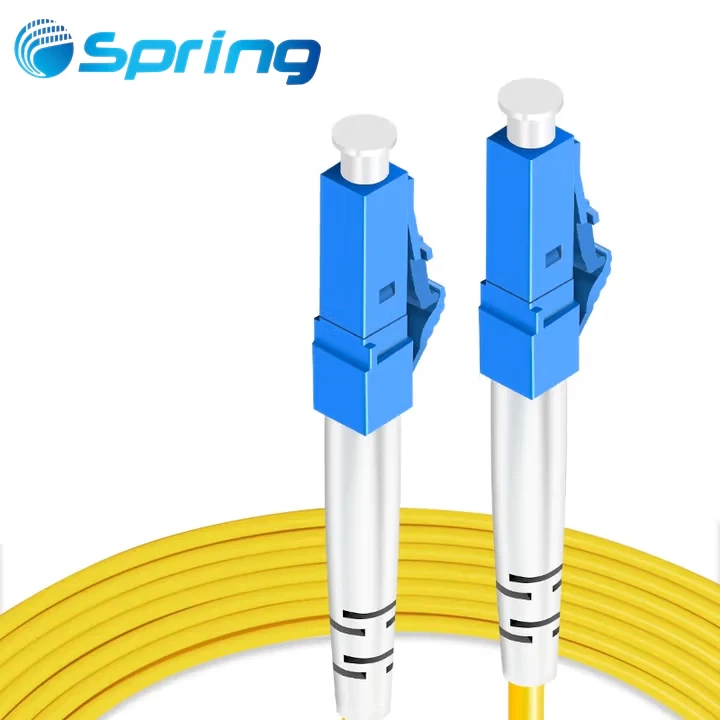
The LC connector (Lucent Connector) was developed by Lucent Technologies (now part of Nokia) to address the size limitations of previous connectors. Featuring a 1.25mm ceramic ferrule, the LC connector has a compact form factor and uses an RJ-45 style latch mechanism for secure engagement.
Key Features of LC Connectors
Form Factor: Compact rectangular design, approximately half the size of SC connectors
Ferrule Size: 1.25mm ceramic ferrule ideal for high-density applications
Coupling Mechanism: Positive latch mechanism with an audible click confirmation
Insertion Loss: ≤0.2 dB typical
Return Loss: UPC ≥ 50 dB, APC ≥ 60 dB
Port Density: Higher port density capability, ideal for data centers and high-speed networks
Durability: ≥500 mating cycles
LC vs SC Fiber Connectors: Detailed Technical Comparison
Physical Dimensions and Design
| Parameter | SC Connector | LC Connector |
|---|---|---|
| Ferrule Size | 2.5mm | 1.25mm |
| Physical Size | 25×9.8mm | ~50% smaller than SC |
| Coupling Mechanism | Push-pull | Latch-based |
| Port Density | 24 ports/1U | 48 ports/1U |
Performance Specifications
| Performance Metric | SC Connector | LC Connector |
|---|---|---|
| Insertion Loss | ≤0.3 dB typical | ≤0.2 dB typical |
| Return Loss | UPC ≥ 50 dB, APC ≥ 60 dB | UPC ≥ 50 dB, APC ≥ 60 dB |
| Durability | ≥500 mating cycles | ≥500 mating cycles |
| Standards Compliance | IEC 61754-4 | IEC 61754-20 |
Application Scenarios for SC and LC Connector
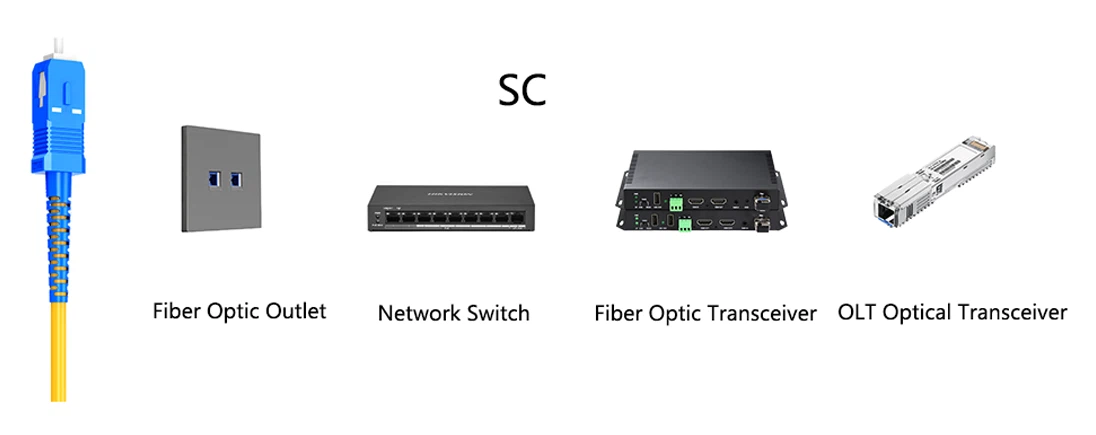
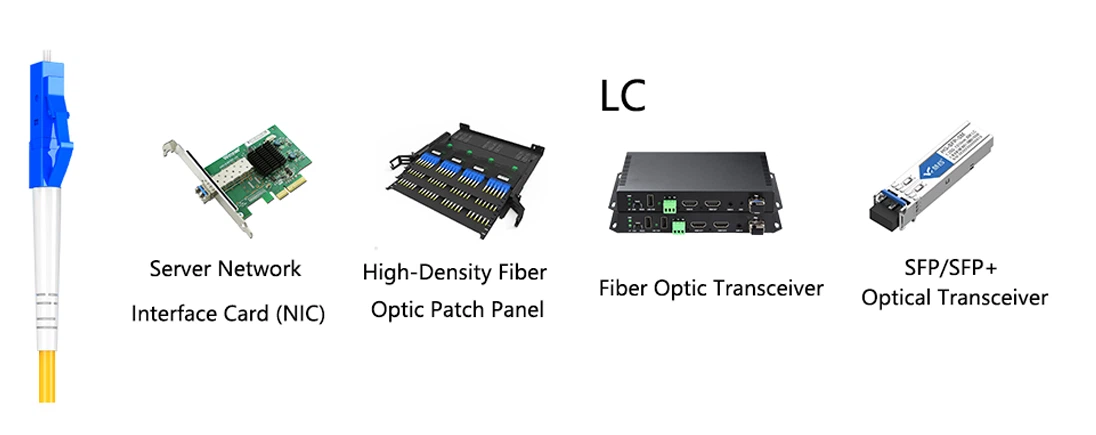
Ideal Use Cases for SC Connectors
SC connectors excel in the following environments:
Enterprise Networking: Suitable for router and switch interconnections.
LAN and SAN: Perfect for Local Area Networks (LAN) and Storage Area Networks (SAN).
FTTH: Commonly used in Fiber-to-the-Home (FTTH) connections and Optical Network Terminals (ONT).
Industrial Applications: Ideal for environments with temperature and vibration fluctuations, requiring robust physical protection.
Optimal Applications for LC Connectors
LC connectors are preferred for:
Data Centers: Excellent for high-density patch panels and server interconnections.
Telecommunications: Used extensively in central office equipment and cellular base stations.
High-Speed Networks: Suitable for 10G/40G/100G Ethernet.
Fiber-to-the-Desktop (FTTD): Optimal for workspace connectivity where space efficiency is critical.
Performance and Reliability Analysis
Insertion Loss Characteristics
The LC connector provides slightly better insertion loss performance (≤0.2 dB compared to ≤0.3 dB for SC connectors). This difference is particularly significant in high-speed, long-distance transmission systems, such as 10G/40G Ethernet, where even small variations in insertion loss can impact signal integrity.
Return Loss Performance
Both LC and SC connectors deliver excellent return loss performance, ensuring minimal signal reflection. This characteristic is crucial for high-speed data communications and RF video transmission systems.
Environmental Durability
Mating Cycle Performance: Both LC and SC connectors withstand ≥500 mating cycles, with industrial-grade SC connectors capable of exceeding 1000 cycles in demanding environments.
Environmental Considerations: LC connectors generally perform better in high-vibration environments, while SC connectors offer superior physical protection in industrial settings.
Cost Considerations and Total Cost of Ownership
Initial Investment
SC Connectors: SC connectors typically have a lower initial cost due to simpler manufacturing processes and established production infrastructure.
LC Connectors: LC connectors often command a 10-20% price premium because of the precision required for smaller components and more complex latch mechanisms.
Total Cost of Ownership (TCO)
LC Connectors provide better long-term value in high-density applications:
Space Efficiency: LC connectors enable double the port density of SC connectors, reducing the need for additional rack space.
Maintenance: LC connectors are often more reliable in environments that require frequent reconfiguration, such as data centers.
Selection Guidelines: Choosing Between LC and SC
When to Choose SC Connectors
Budget-Constrained Projects: SC connectors are a more cost-effective choice for budget-limited projects.
Industrial Environments: For applications requiring robust physical protection in harsh environments.
Existing SC Infrastructure: When maintaining consistency with existing SC-based systems.
When to Choose LC Connectors
High-Density Applications: LC connectors are ideal for data centers and high-density patch panels.
Future-Proof Installations: Perfect for networks that need to support high-speed transmission and future expansion.
High-Speed Networks: For 10G/40G/100G Ethernet applications and Fiber-to-the-Desktop (FTTD) deployments.
Future Trends and Industry Direction
Miniaturization
With the rise of high-speed networks and space constraints in data centers, LC connectors are gaining market share due to their smaller size and superior port density.
Performance Demands
As network speeds increase, the demand for connectors with low insertion loss and high return loss performance will continue to grow. LC connectors, with their superior insertion loss specifications, are poised to meet these demands in future high-speed networks.
Cost Convergence
Manufacturing improvements are reducing price differences between LC and SC connectors, making LC connectors increasingly cost-effective for high-density applications.
Conclusion
Both LC and SC connectors offer reliable and high-performance solutions for fiber optic networks. Choosing between them depends on the specific requirements of the network:
Choose LC connectors for data centers, high-density applications, and installations where space efficiency and performance are essential.
Choose SC connectors for budget-conscious projects, industrial environments, and applications where robustness and existing infrastructure compatibility are critical.
As networking speeds continue to increase and space becomes a premium, LC connectors are expected to dominate future installations. However, SC connectors will remain relevant for certain applications where their physical advantages align with specific project needs.
FAQ (Frequently Asked Questions)
Q1: What is the difference between LC and SC connectors in terms of cost?
A1: SC connectors are generally more cost-effective due to simpler manufacturing processes, while LC connectors typically cost 10-20% more due to their smaller size and complex latch mechanisms.
Q2: Which fiber connector is more suitable for 100G Ethernet?
A2: LC connectors are preferred for high-speed networks like 100G Ethernet due to their lower insertion loss and high port density capabilities.
Q3: Can SC connectors be used in data centers?
A3: Yes, SC connectors can be used in data centers, but LC connectors are often preferred due to their higher port density and space efficiency in high-density environments.