

For structured cabling systems and network deployments, fiber optic patch cords and Ethernet cables are two essential types of cables. Both belong to the field of weak-current systems, and yet they differ significantly in transmission medium, application scenarios, and structural design. Plus, the word "patch cord" often appears, but sometimes its meaning is not exactly clear. This article makes frequent reference to patches and strings; however, many people do not know what they mean. We provide a detailed explanation of the relationships and differences between them here, but you'll make better choices by being able to recognize them in your network architecture.
What is a Fiber Optic Patch Cord?

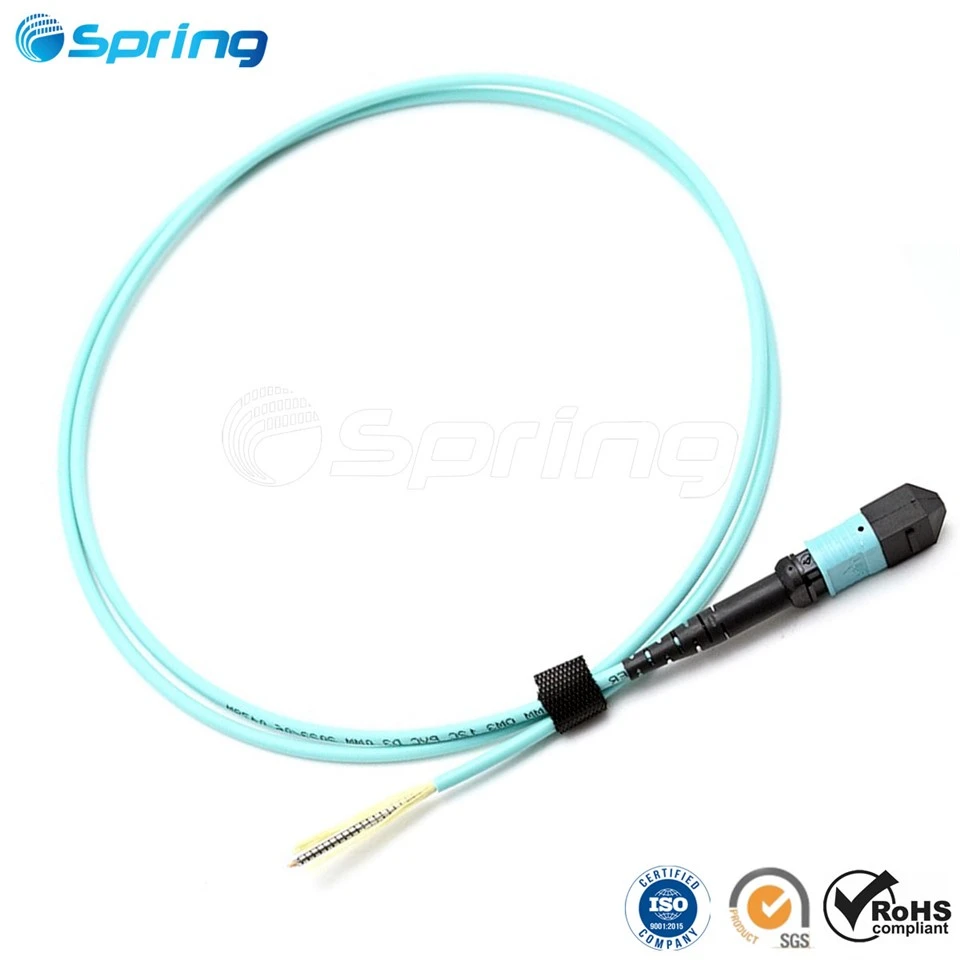
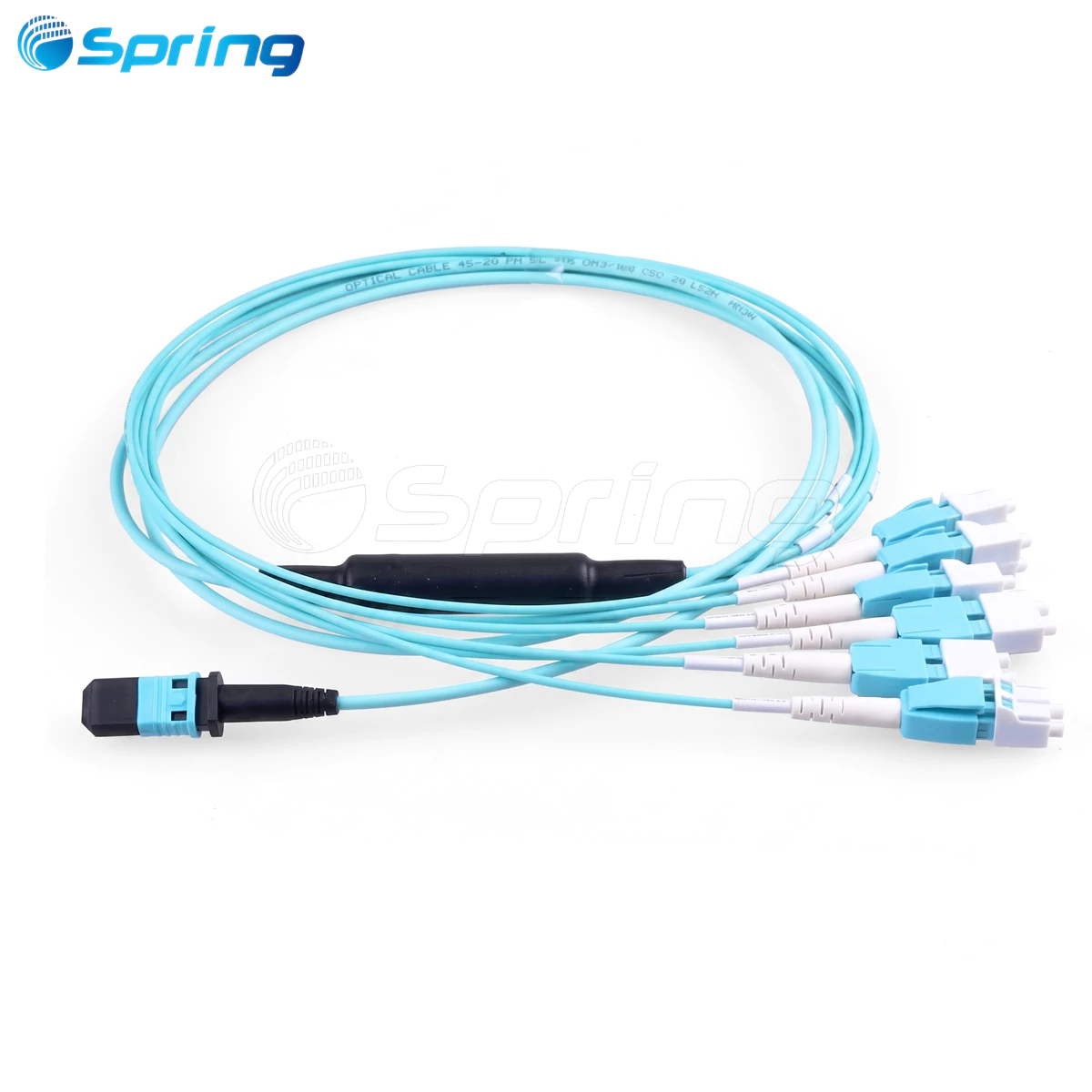
A fiber optic patch cord, also called a fiber jumper, is a brief fiber optic cable with connectors installed at either end. It connects networking hardware, including transceivers, optical switches, and termination panels, to fiber optic lines. Patch cords come in various lengths and connector types depending on the application.
Features of fiber optic patch cords include:
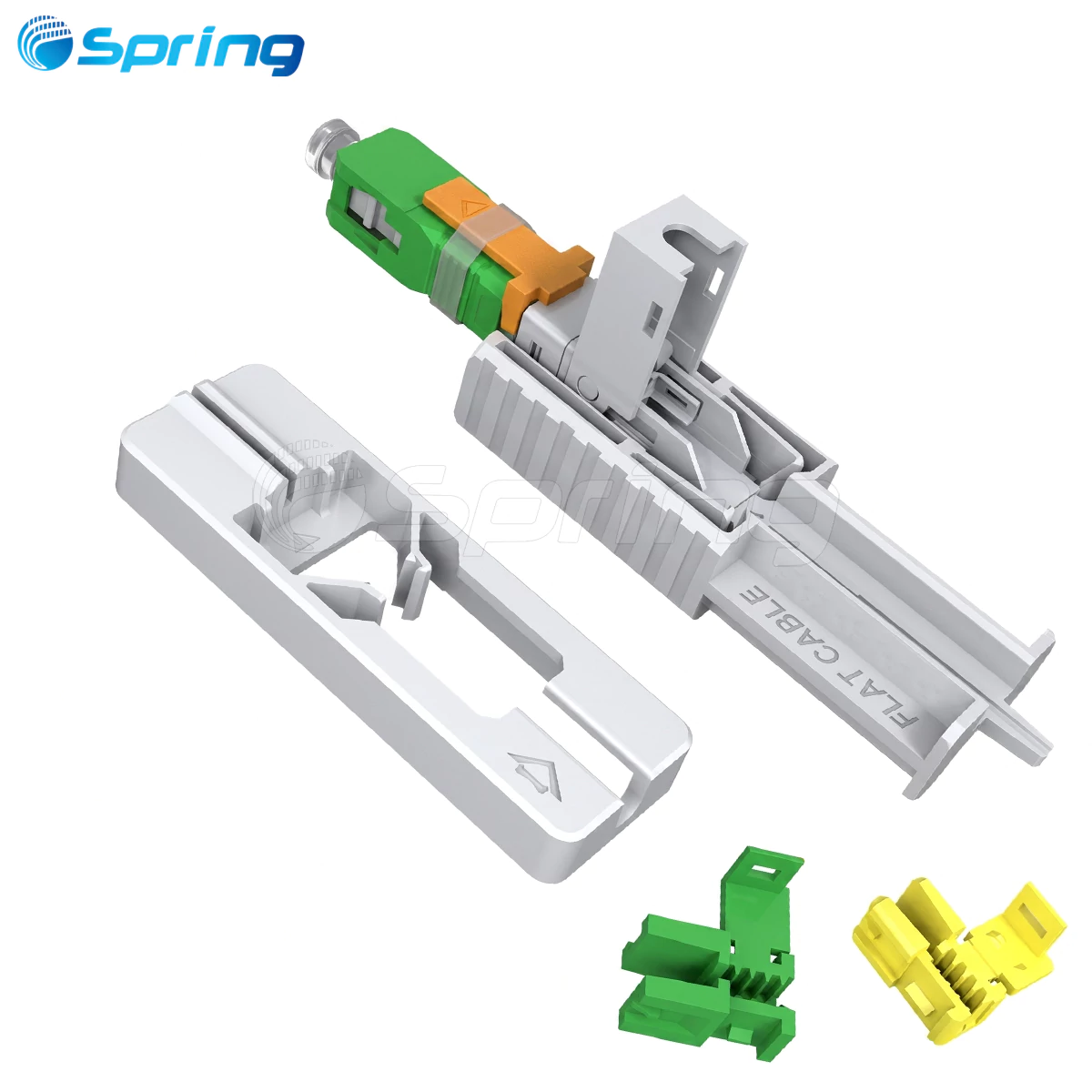
Various connector types: SC, LC, FC, ST, MPO, and MTP connectors are commonly used.
Core structure: The center core is made of ultra-pure glass fiber, surrounded by cladding, buffer layers, and outer jackets for protection.
High-speed transmission: Supports data rates from 1 Gbps to 400 Gbps and beyond.
Low signal loss: Offers extremely low attenuation and minimal dispersion.
Application scenarios: Widely used in data centers, enterprise networks, FTTx projects (such as FTTH and FTTR), CATV networks, and telecom rooms.
Fiber optic patch cords are categorized based on:
Fiber types: Single-mode (OS2) or multi-mode (OM1, OM2, OM3, OM4, OM5).
Polarity and structure: Simplex (single fiber) or duplex (dual fibers).
What is Ethernet Cable?
An Ethernet cable (also referred to as a network cable) is a twisted-pair copper cable that transmits electrical signals between devices connected on a network, such as computers, switches, or routers, using LANS.
Ethernet cables come in several different categories:
Cat5e (Category 5 Enhanced): Supports speeds up to 1 Gbps at 100MHz bandwidth.
Cat6 / Cat6A: Supports 10Gbps speeds with improved shielding and 250MHz–500MHz bandwidth.
Cat7: Provides enhanced shielding and supports up to 10 Gbps at 600 MHz.
Depending on shielding levels, Ethernet cables are further divided into:
UTP (Unshielded Twisted Pair): Common in general office networks.
STP (Shielded Twisted Pair): Used in environments with strong electromagnetic interference.
Ethernet cables have a maximum effective transmission distance of about 100 meters and are the mainstream choice for LAN cabling.

What is the Difference Between Patch Cords and Ethernet Cables?
The main difference between Fiber Optic Patch Cords (fiber jumpers) and Ethernet cables lies in their transmission medium, performance, and applications. Fiber jumpers use optical fibers to transmit light signals with high bandwidth, low loss, and strong EMI resistance, mainly for short-distance connections. Ethernet cables use copper wires to transmit electrical signals, suitable for cost-effective LAN cabling up to 100 meters.
|
Item |
Patch Cords (Fiber Jumper) |
Ethernet Cable |
|
Transmission Medium |
Optical Fiber (Glass) |
Copper Twisted Pair |
|
Data Transmission |
Light Signals |
Electrical Signals |
|
Bandwidth Capacity |
Very High (up to several Terabits) |
Limited (up to 10 Gbps) |
|
EMI Resistance |
Immune to Electromagnetic Interference |
Susceptible (better with STP cables) |
|
Applications |
Data Centers, Telecom Networks, FTTx, High-Speed Backbones |
LANs, Office Networks, Small Business Networking |
|
Cost |
Higher |
Lower |
Frequently Asked Questions (FAQ)
Q1: Is a patch cord the same as a fiber optic patch cord?
A: No. Patch cords are a general term; both copper patch cords (used for electrical transmission) and fiber optics (used to transmit light) belong to it. But it includes both fiber optic patch cords (for optical transmission) and copper patch cords (for electrical transmission).
Q2: Is a fiber patch cord a good substitute for an Ethernet cable?
A: No. Fiber optic patch cords and Ethernet cables need different kinds of ports, and no single medium is suitable as the common denominator. Fiber patch cords must employ transceivers (SFP modules, for example) to interface with networking devices.
Q3: How do you decide between a fiber jumper and a network cable?
A: Choose a fiber jumper when:
You require higher bandwidth (10G, 40G, 100 G+).
You need immunity to electromagnetic interference.
Choose a network cable when:
Your application is within 100 meters.
Cost-effectiveness is of high priority.
Heavy EMI has relatively little effect on the environment.
Q4: Is there a kind of patch cord that supports copper as well as fiber?
A: Yes. Some hybrid fiber-copper patch cords combine both technologies and are usually used for remote powering solutions such as fiber-to-the-antenna (FTTA) applications.

Spring Optical Communication is one of the largest and best fiber optic patch cords manufacturers and suppliers with rich experience. Welcome to buy our high quality products or wholesale our customized fiber optic patch cords in stock with our factory. Also, free sample is also available if necessary.