

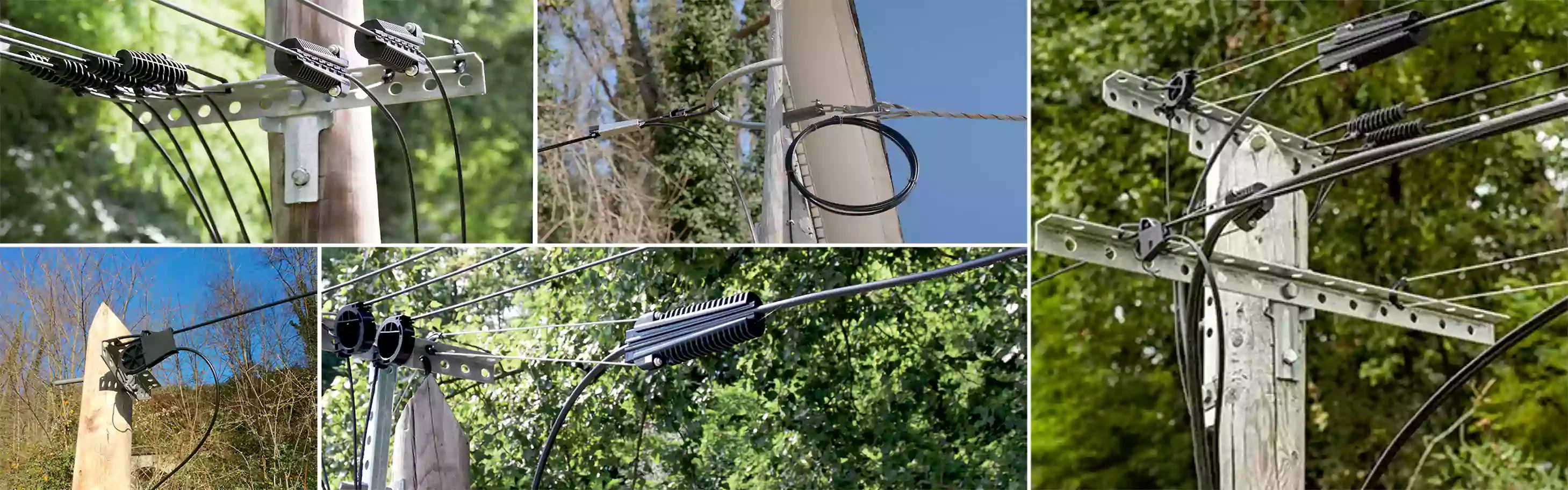
What Is a Cable Tension Clamp in Fiber Optic Networks?
In aerial fiber optic networks, cable stability is just as important as signal performance. Improper cable support can lead to sagging, excessive tension, jacket damage, or even network interruptions-especially in outdoor environments exposed to wind, temperature changes, and long-span mechanical loads.
This is where cable tension clamps play a critical role.
A cable tension clamp is a mechanical hardware component used to secure, anchor, and stabilize fiber optic cables during aerial deployment. It maintains proper cable tension, prevents cable movement, and protects the optical cable from mechanical stress caused by wind, vibration, and environmental load.
In short:
A cable tension clamp ensures that aerial fiber optic cables remain securely fixed and mechanically stable throughout long-term outdoor operation.
These clamps are widely used in:
FTTH aerial deployment
ADSS cable installation
Pole-to-house fiber routing
Rural broadband networks
Overhead telecom infrastructure
From short-span FTTH drop cable installations to long-distance ADSS backbone deployment, selecting the correct fiber optic tension clamp directly affects network reliability, installation safety, maintenance costs, and cable lifespan.
This guide explains:
Types of cable tension clamps
Installation methods
Engineering selection criteria
Outdoor durability considerations
Common installation mistakes
FTTH and ADSS deployment recommendations
Why Cable Tension Clamps Are Important in Fiber Networks
Outdoor fiber optic cables constantly face mechanical stress, environmental exposure, and long-term tension loads. Without proper cable anchoring, aerial fiber networks may suffer from sagging, cable movement, instability, or premature failure.
Cable tension clamps are essential because they maintain structural stability while protecting the fiber cable throughout its operational lifespan.
Mechanical Support
The primary function of a cable tension clamp is to provide reliable mechanical support for aerial fiber optic cables.
In FTTH and ADSS aerial deployment, cables are exposed to:
Wind load
Cable self-weight
Pole-to-pole tensile force
Vibration and galloping
Thermal expansion and contraction
A properly selected tension clamp distributes these forces evenly and prevents localized stress concentration.
Engineering Recommendation
For spans below 50 meters, lightweight FTTH drop clamps are usually sufficient.
For spans between 50–100 meters, anchor clamps are generally preferred.
For long-span ADSS deployment above 100 meters, preformed dead-end clamps provide better vibration resistance and higher mechanical holding strength.
Real Deployment Scenario
In rural broadband projects with long aerial spans and strong seasonal winds, insufficient cable anchoring often causes excessive cable movement and long-term sagging.
Using high-strength ADSS tension clamps significantly improves span stability and reduces maintenance frequency.
Common Mistake
A common installation mistake is selecting a clamp only based on cable diameter while ignoring span length and wind load requirements.
Cable Protection
In addition to mechanical support, tension clamps protect fiber optic cables from physical damage caused by excessive pressure or unstable tension.
Improper anchoring may lead to:
Jacket deformation
Fiber microbending
Messenger wire strain
Signal attenuation
Premature cable aging
Modern fiber optic tension clamps often use:
Wedge-based gripping systems
Helical preformed rods
Anti-slip designs
Stress-distribution structures
These features help secure the cable without damaging the outer sheath.
Best Practice
For ADSS aerial cable installation, clamps should distribute tension evenly across the cable surface rather than concentrating force on a single point.
This significantly reduces long-term fiber stress.
Outdoor Deployment Advice
In coastal or high-UV regions, low-grade plastic clamps may crack or deform over time.
Stainless steel or aluminum alloy hardware is generally recommended for harsh outdoor environments.
Maintaining Proper Cable Tension
Maintaining proper cable tension is critical for aerial fiber network reliability.
If Cable Tension Is Too Low
Excessive sag may occur
Cable movement increases
Ground clearance may become unsafe
If Cable Tension Is Too High
Fiber stress increases
Cable lifespan decreases
Installation damage may occur
Cable tension clamps help maintain the correct balance between flexibility and mechanical stability.
Key Engineering Factors
| Factor | Why It Matters |
|---|---|
| Cable diameter | Determines clamp compatibility |
| Span length | Affects tensile load |
| Wind conditions | Impacts cable movement |
| Installation angle | Changes force direction |
| Cable structure | FTTH vs ADSS requirements |
| Outdoor environment | Influences material selection |
Quick Recommendation
For high-wind environments or mountainous deployment areas, high-grip preformed dead-end clamps are usually the most reliable solution.
Preventing Cable Sag
Cable sag is one of the most common issues in aerial fiber deployment.
Excessive cable sag may result in:
Reduced ground clearance
Increased cable vibration
Mechanical instability
Safety risks
Higher maintenance costs
Main Causes of Cable Sag
Incorrect clamp spacing
Improper tension adjustment
Wrong clamp selection
Excessive span length
Weather-related mechanical stress
Practical Recommendation
For long-span aerial deployment, regular tension inspection is recommended after seasonal temperature changes, especially in regions with large summer-to-winter temperature variation.
Important Conclusion
Proper tension clamp selection is one of the most effective ways to reduce long-term cable sagging problems in aerial fiber networks.
Main Types of Cable Tension Clamps
Different aerial fiber deployments require different clamp structures depending on cable type, tensile load, span length, and environmental conditions.
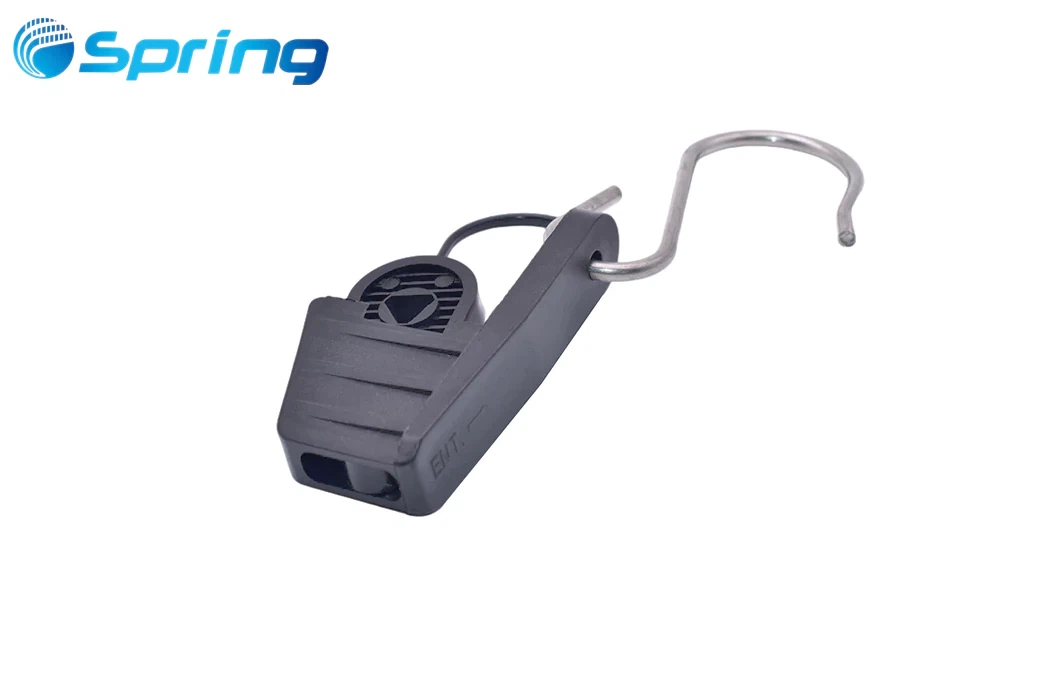
S Hook Tension Clamp
S hook tension clamps are widely used in FTTH aerial drop cable deployment.
Best For
Short-span FTTH installation
Pole-to-house routing
Residential fiber access
Typical Cable Range
2–8 mm drop cables
Advantages
Fast installation
Lightweight structure
Good compatibility with drive hooks and brackets
Not Recommended For
Long-span ADSS deployment
Heavy mechanical load environments
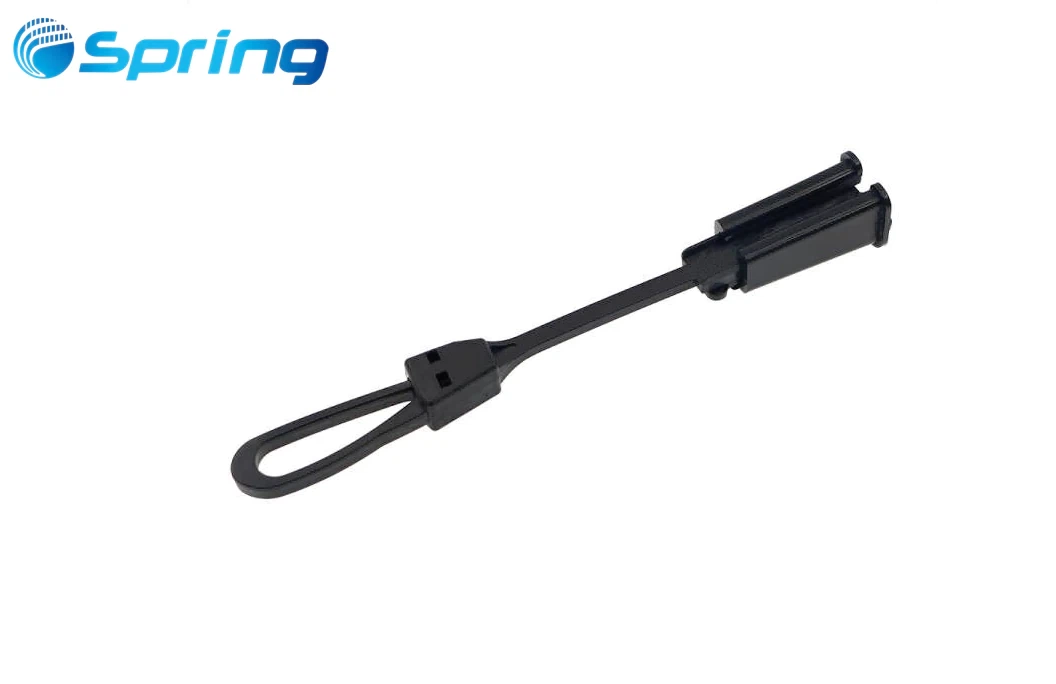
Plastic Drop Wire Clamp
Plastic drop wire clamps are mainly designed for lightweight FTTH drop cable installation.
Best For
Residential FTTH access
Short aerial spans
Low mechanical load environments
Advantages
Cost-effective
Lightweight
Easy installation
Important Limitation
Plastic clamps are generally not suitable for long-span aerial deployment or high-tension ADSS applications.
Outdoor Recommendation
Only UV-resistant thermoplastic clamps should be used outdoors.
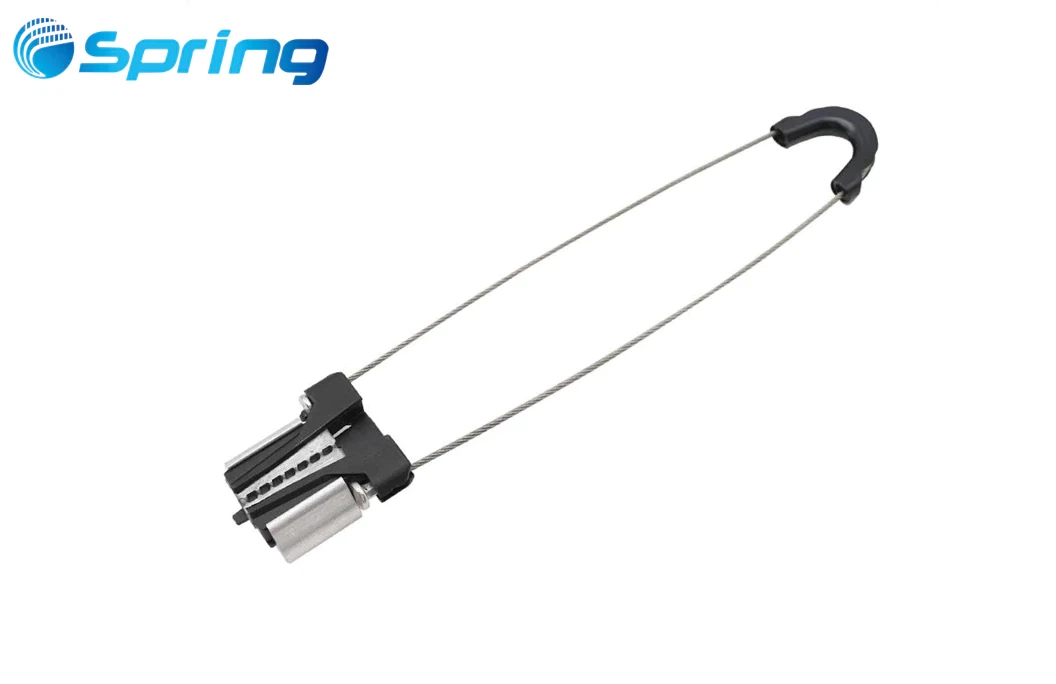
Anchor Clamp
Anchor clamps secure aerial fiber cables under tensile load.
Common Applications
FTTH aerial deployment
Pole dead-end installation
Intermediate anchor points
Selection Factors
Anchor clamps are typically selected based on:
Cable diameter
Span length
Messenger wire structure
Tensile load requirement
Best Practice
For medium-span aerial deployment, anchor clamps usually provide a good balance between installation simplicity and mechanical performance.
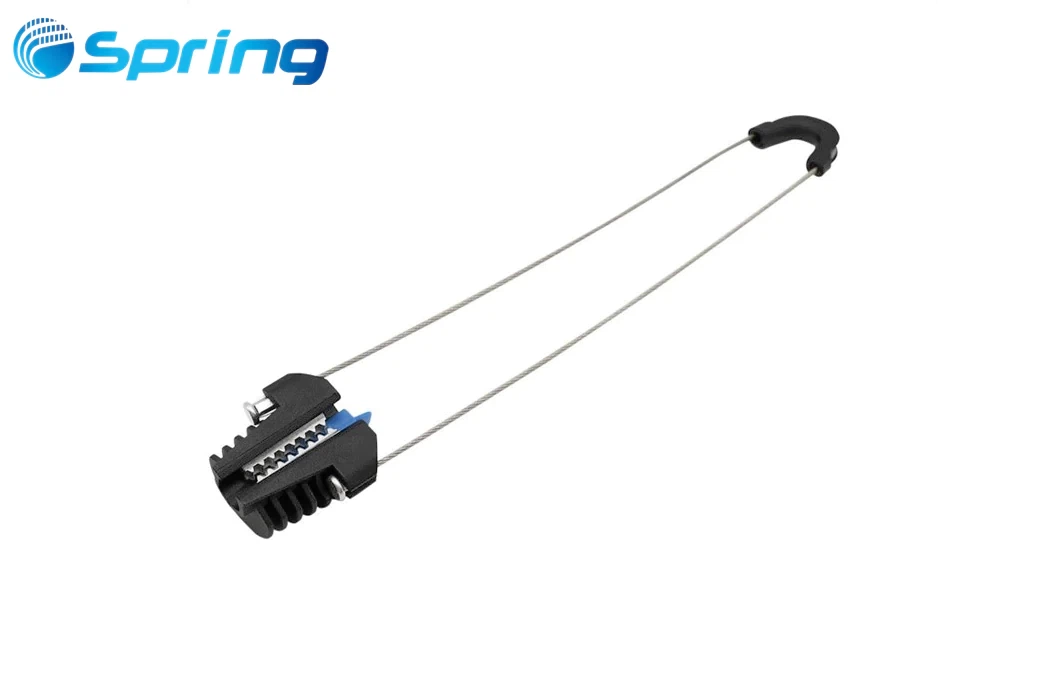
Figure 8 Cable Tension Clamp
Figure 8 tension clamps are specifically designed for figure-8 aerial cables.
Best For
Medium-span aerial routing
Access networks
Outdoor telecom infrastructure
Key Feature
Most figure-8 clamps use wedge-based gripping structures that reduce localized cable stress.
Important Consideration
Clamp compatibility must match both the messenger wire and cable diameter.
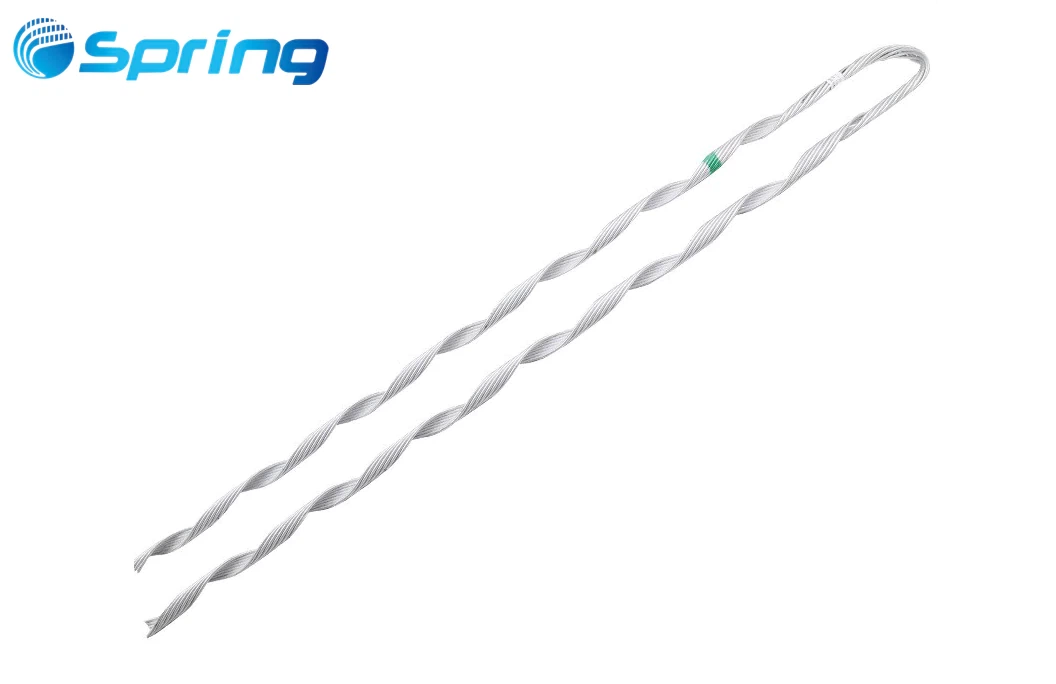
Preformed Dead End Clamp
Preformed dead-end clamps use helical steel rods to distribute tension evenly along the cable surface.
Best For
Long-span ADSS deployment
High-wind regions
Backbone fiber routes
Advantages
High grip strength
Excellent vibration resistance
Reduced cable damage
Long outdoor lifespan
Engineering Recommendation
For long-span aerial fiber deployment above 100 meters, preformed dead-end clamps are generally the most reliable option.
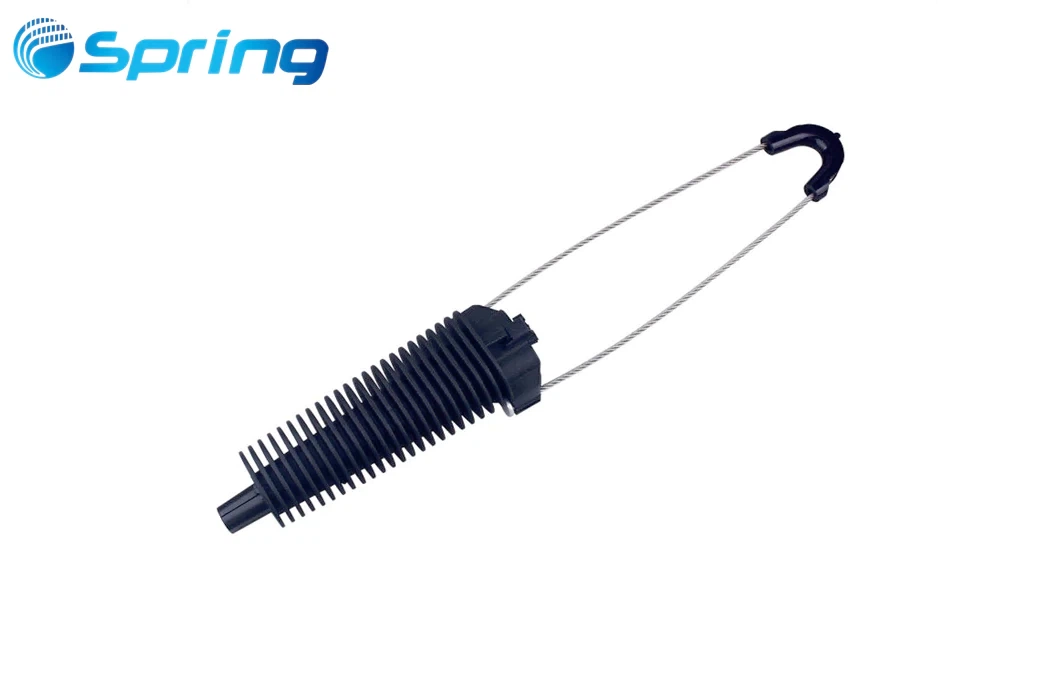
ADSS Tension Clamp
ADSS tension clamps are specifically designed for all-dielectric self-supporting cables.
Key Features
High tensile capacity
UV resistance
Corrosion resistance
Long-span support
Common Applications
Utility pole networks
Highway communication systems
Telecom backbone deployment
Outdoor Recommendation
For coastal deployment, stainless steel hardware with high corrosion resistance is strongly recommended.
Where Are Cable Tension Clamps Used?
Cable tension clamps are widely used in overhead fiber optic infrastructure where cables require stable anchoring and long-term mechanical reliability.
Different deployment environments require different clamp structures, materials, and holding capacities.
FTTH Drop Cable Networks
In FTTH aerial deployment, cable tension clamps secure drop cables between utility poles and residential buildings.
Typical Installation Conditions
Short spans
Lightweight drop cables
Pole-to-house routing
Wall-mounted cable paths
S-hook tension clamps and FTTH drop wire clamps are commonly used because they are compact, lightweight, and cost-effective.
Typical Applications
Residential FTTH access
Apartment broadband deployment
Last-mile fiber connections
Recommended Clamp Types
| Deployment Scenario | Recommended Clamp |
|---|---|
| Short-span FTTH | Plastic drop wire clamp |
| Pole-to-house routing | S-hook tension clamp |
| Medium-span aerial drop | Anchor clamp |
Common Mistake
Using indoor-rated hardware outdoors may result in UV cracking and reduced clamp lifespan.
ADSS Aerial Cable Deployment
ADSS cable installations involve significantly higher mechanical loads compared with standard FTTH drop cable deployment.
Typical ADSS Deployment Conditions
Long spans
High tensile force
Large cable diameters
Strong wind exposure
Utility pole backbone routing
Recommended Clamp Types
For medium and long-span ADSS networks:
ADSS tension clamps
Preformed dead-end clamps
Heavy-duty suspension clamps
are generally recommended.
Engineering Recommendation
For spans above 100 meters, preformed dead-end clamps are typically preferred because they provide:
Better grip strength
Lower cable stress
Improved vibration resistance
Longer outdoor lifespan
Coastal Deployment Advice
In coastal environments, salt spray corrosion resistance becomes extremely important.
Stainless steel hardware with high salt spray test performance is usually recommended.
Pole-to-House Installations
Pole-to-house routing is one of the most common FTTH aerial installation methods.
Installation Requirements
Secure anchoring
Compact installation
Fast deployment
Outdoor weather resistance
Best Clamp Choices
S-type drop wire clamps and anchor clamps are commonly used because they support both flat and round FTTH drop cables.
Practical Installation Advice
Avoid excessive cable bending near wall entry points.
Maintaining proper bend radius helps prevent long-term attenuation problems.
Rural Broadband Projects
Rural broadband projects often require long-distance aerial deployment across difficult outdoor environments.
Common Deployment Challenges
Long spans between poles
Mountainous terrain
Strong seasonal wind
Difficult maintenance access
Recommended Solution
For rural FTTH backbone deployment, heavy-duty ADSS tension clamps and preformed dead-end clamps are usually the most reliable solution.
Why It Matters
In remote areas, maintenance costs are significantly higher.
Using higher-quality outdoor fiber hardware during initial installation helps reduce future service interruptions and repair costs.
Cable Tension Clamp vs Suspension Clamp
Cable tension clamps and suspension clamps are both essential components in aerial fiber deployment, but they serve completely different functions.
| Feature | Tension Clamp | Suspension Clamp |
|---|---|---|
| Primary Function | Anchors cable under tension | Supports cable along the route |
| Installation Position | Dead-end poles | Intermediate poles |
| Load Direction | Longitudinal tension | Vertical support |
| Typical Application | Pole termination | Straight-line routing |
| Common Cable Types | FTTH, ADSS | ADSS, aerial fiber cable |
Simple Explanation
A tension clamp resists pulling force and secures the cable at anchor points.
A suspension clamp supports cable weight between poles without carrying high longitudinal tension.
Important Engineering Conclusion
In most aerial fiber networks, tension clamps and suspension clamps are used together rather than as alternatives.
Common Installation Mistake
Using a suspension clamp where a tension clamp is required may lead to cable instability and excessive movement during strong wind conditions.
Tension Clamp vs Dead End Clamp
These terms are often confused in fiber optic deployment projects.
Key Difference
A dead-end clamp is a type of tension clamp specifically designed for terminating cables at the end of a span.
Not all tension clamps are dead-end clamps.
Simple Comparison
| Feature | Tension Clamp | Dead End Clamp |
|---|---|---|
| General Purpose | Cable anchoring | Cable termination |
| Span Application | Multiple scenarios | End-point anchoring |
| Typical Structure | Wedge or anchor type | Preformed/helical type |
| Common Use | FTTH and ADSS | Long-span ADSS |
Practical Recommendation
For long-span ADSS backbone deployment, preformed dead-end clamps are usually preferred because they provide better load distribution and vibration resistance.
How to Choose the Right Cable Tension Clamp
Selecting the correct cable tension clamp is critical for ensuring long-term network stability and minimizing maintenance costs.
The wrong clamp may cause:
Cable slipping
Excessive sagging
Jacket damage
Mechanical instability
Reduced cable lifespan
Cable Diameter
Clamp size must match the cable diameter precisely.
If the Clamp Is Too Loose
Cable slipping may occur
Sagging risk increases
If the Clamp Is Too Tight
Cable deformation may occur
Fiber stress may increase
Best Practice
Always verify the manufacturer's supported cable range before installation.
Span Length
Span length directly affects tensile load and clamp selection.
General Recommendation
| Span Length | Recommended Clamp |
|---|---|
| Below 50 m | FTTH drop clamp |
| 50–100 m | Anchor clamp |
| Above 100 m | Preformed dead-end clamp |
Important Conclusion
Long-span aerial deployment requires higher holding strength and improved vibration resistance.
Maximum Tensile Load
Different aerial environments create different mechanical loads.
Key Selection Factors
Working tension
Maximum load
Wind exposure
Safety factor
Industry Practice
Professional telecom tension clamps are often tested to withstand 90–95% of cable breaking strength.
Installation Environment
Outdoor conditions significantly affect hardware lifespan.
Environmental Factors
UV radiation
Coastal salt exposure
Snow and ice
High humidity
Strong wind
Engineering Recommendation
For coastal deployment, stainless steel hardware is generally preferred.
For high-altitude cold environments, low-grade plastic clamps should be avoided.
UV and Corrosion Resistance
Outdoor fiber hardware must withstand long-term environmental exposure.
Recommended Testing
Reliable cable tension clamps should pass:
UV aging testing
Salt spray testing
Tensile testing
Typical Outdoor Lifespan
High-quality outdoor tension clamps can typically last 10–20 years depending on environmental conditions.
Pole Hardware Compatibility
Clamp compatibility with pole hardware is often overlooked during project planning.
Compatible Accessories
J hooks
Pole brackets
Drive hooks
Stainless steel banding
Why It Matters
Proper compatibility simplifies installation and improves long-term structural reliability.
How to Install a Cable Tension Clamp
Correct installation is essential for maintaining cable reliability and reducing maintenance issues.
Required Tools
Typical installation tools include:
Cable cutter
Tensioning tool
Wrench set
Safety equipment
Pole mounting hardware
Installation Steps
Step 1 - Verify Compatibility
Confirm cable diameter, span requirement, and clamp type before installation.
Step 2 - Prepare Anchor Hardware
Install the pole bracket, hook, or anchor point securely.
Step 3 - Insert the Cable Correctly
Ensure the cable is positioned properly inside the clamp without twisting.
Step 4 - Apply Proper Tension
Use appropriate tension according to project requirements.
Step 5 - Secure the Clamp
Tighten or lock the clamp firmly.
Step 6 - Inspect Cable Alignment
Verify cable sag, alignment, and overall installation stability.
Common Installation Mistakes
Using the Wrong Clamp Size
This may result in:
Cable slipping
Poor grip strength
Mechanical instability
Overtightening the Cable
Excessive tension may damage the fiber cable and reduce service life.
Ignoring Span Limitations
Using lightweight clamps on long spans often causes sagging or clamp failure.
Using Indoor Hardware Outdoors
Indoor materials may crack under UV exposure and harsh weather conditions.
Materials Used in Cable Tension Clamps
Material selection directly affects outdoor durability, mechanical strength, and corrosion resistance.
Stainless Steel
Advantages
Excellent corrosion resistance
High tensile strength
Long outdoor lifespan
Best For
Coastal environments
High humidity regions
Industrial outdoor deployment
Aluminum Alloy
Advantages
Lightweight structure
Good mechanical performance
Corrosion resistance
Best For
Medium-span aerial deployment
Telecom backbone routing
UV Resistant Thermoplastic
Advantages
Lightweight
Cost-effective
Weather resistant
Best For
Short-span FTTH drop cable installation
Limitation
Generally not recommended for heavy mechanical load applications.
Testing Standards and Quality Control
Reliable cable tension clamps should undergo strict mechanical and environmental testing before deployment.
Tensile Testing
Tensile testing verifies whether the clamp can withstand mechanical load without slipping or damaging the cable.
Industry Practice
Professional telecom clamps are commonly tested to withstand 90–95% of cable breaking strength.
Salt Spray Testing
Salt spray testing evaluates corrosion resistance in coastal and high-humidity environments.
Why It Matters
Poor corrosion resistance may significantly reduce outdoor hardware lifespan.
UV Aging Test
UV aging tests simulate long-term sunlight exposure to evaluate material stability.
Recommended Application
This test is especially important for:
FTTH aerial deployment
ADSS outdoor installation
High-UV regions
Outdoor Durability
High-quality cable tension clamps should maintain stable performance under:
Rain
Snow
Wind
UV exposure
Temperature fluctuation
Important Conclusion
Long-term outdoor durability significantly reduces maintenance costs and network downtime.
Common Problems and Troubleshooting
Even properly installed aerial fiber networks may experience issues over time.
Understanding common problems helps improve long-term network reliability.
Cable Slipping
Possible Causes
Incorrect clamp size
Insufficient tension
Worn gripping components
Recommended Solution
Verify cable compatibility
Replace damaged hardware
Re-adjust installation tension
Improper Clamp Size
Using the wrong clamp size may cause:
Cable deformation
Poor holding strength
Fiber stress
Mechanical instability
Best Practice
Always follow manufacturer specifications carefully.
Corrosion Issues
Corrosion commonly occurs in:
Coastal regions
High-humidity environments
Industrial outdoor areas
Recommended Solution
Use stainless steel or high-corrosion-resistant hardware for harsh outdoor environments.
Cable Sagging
Cable sagging is usually caused by:
Excessive span length
Improper tension adjustment
Weak anchor support
Environmental stress
Practical Recommendation
Periodic inspection after seasonal weather changes helps prevent long-term sagging problems.
FAQ
What is the difference between a tension clamp and a suspension clamp?
A tension clamp anchors the cable under pulling force, while a suspension clamp supports cable weight between poles without carrying high longitudinal tension.
What is the difference between a tension clamp and a dead-end clamp?
A dead-end clamp is a specific type of tension clamp designed for cable termination at the end of a span.
Which tension clamp is best for FTTH drop cable?
S-hook clamps, anchor clamps, and plastic drop wire clamps are commonly used depending on cable structure and span length.
Which clamp is best for long-span ADSS deployment?
Preformed dead-end clamps are generally preferred for long-span ADSS aerial networks because they provide better load distribution and vibration resistance.
How do I choose the correct clamp size?
Clamp size should match the cable diameter, tensile load requirement, and span length.
Can cable tension clamps be reused?
Some metal clamps may be reusable if undamaged, but many wedge-type and preformed clamps are designed for one-time installation.
How long do outdoor tension clamps last?
High-quality outdoor tension clamps typically last 10–20 years depending on installation conditions and material quality.
Are plastic clamps suitable for outdoor use?
UV-resistant plastic clamps are suitable for lightweight FTTH deployment, but metal clamps are generally preferred for high-load environments.
What causes cable sagging in aerial fiber networks?
Cable sagging is usually caused by improper tension, excessive span length, incorrect clamp selection, or environmental stress.
How to Choose a Reliable Cable Tension Clamp Manufacturer
Selecting a reliable supplier is just as important as selecting the correct clamp type.
Poor manufacturing quality may lead to:
Mechanical failure
Shortened outdoor lifespan
Corrosion problems
Cable instability
Increased maintenance costs
Important Supplier Evaluation Factors
Tensile test capability
Salt spray test reports
UV aging verification
Material traceability
OEM customization capability
Production consistency
Important Conclusion
For long-term outdoor telecom deployment, engineering quality is more important than choosing the lowest-cost hardware.
Conclusion
Cable tension clamps play a critical role in maintaining the stability, safety, and long-term reliability of aerial fiber optic networks.
Whether used in FTTH drop cable deployment or long-span ADSS backbone systems, proper clamp selection directly affects:
Cable protection
Mechanical stability
Installation safety
Maintenance efficiency
Outdoor lifespan
When selecting a fiber optic tension clamp, engineers and installers should carefully evaluate:
Cable diameter
Span length
Tensile load
Environmental conditions
Corrosion resistance
Pole hardware compatibility
For harsh outdoor environments and long-span deployment, high-quality tested hardware is essential for reducing maintenance costs and improving long-term network reliability.
Need help selecting the right cable tension clamp for your FTTH or ADSS project?
Spring Optical provides:
ADSS tension clamps
Anchor clamps
Preformed dead-end clamps
OEM and custom fiber hardware solutions
Contact our engineering team for product recommendations, technical support, samples, and deployment guidance.