

Author: Cathy sales@springoptic.com
Introduction
As the US Digital Economy continues to evolve and grow towards 2026, high-speed internet service is a must for residential, business and mobile users alike. Thus, it is imperative that the planners, integrators, and service providers (ISP) in the telecommunications industry engage in strategic decision-making through the identification of broadband solutions and wireless network deployments.
Contrary to popular opinion, the terms Broadband and Wireless Networks refer to two completely different technologies, purposes, and infrastructure requirements. In our guide, we will examine these differences, the types of products necessary to establish broadband and wireless networks, FTTA's importance in the establishment of a wireless network, the enhanced efficiencies derived from using MST Boxes and Pre-Connectorized drop cables (available from Spring Optical and other providers), in addition to using a databased approach through the Federal Communications Commission (FCC) Broadband Data Collection Reports.
For more information regarding the fundamentals of FTTH (Fiber To The Home), please refer to our guide regarding FTTH Solution.

US Broadband Solutions Explained
1. Definition of Broadband Solutions
Broadband solutions provide high-bandwidth internet access to secured business or residential locations via wired, or fixed-wireless technologies. Broadband solutions focus primarily on implementing a generally reliable connectivity pathway between the service providers Core Network and the end-user's location.
Examples of common broadband solution technologies within the United States include Fibre Optics, Coaxial Cable, Digital Subscriber Line (DSL), or Fiber Optic based broadband. This combination of technologies establishes the basis for the national broadband infrastructure, providing users with access to a wired broadband service.
2. Broadband Accessibility
According to the FCC's most recent Broadband Data Collection Updates, based on June 2025 data, 95% of all households and small businesses in the United States have access to any one or more types of wired broadband at speeds of 100/20 Mbps or greater.
While urban communities generally have broadband service available to over 95% of their residents, rural areas continue to lag significantly behind-with many underserved areas having approximately 70-80% broadband coverage. These disparities are largely due to:
Well-established infrastructure combined with large distribution networks
Greater reliability and faster upload/download speeds due to the use of fiber and coaxial lines
Providing more bandwidth to support bandwidth-hungry applications such as 4K video streaming, telehealth, and the hybrid workplace
Challenges in providing service to rural areas include:
Poor economics for providing cable service because installation costs are extremely high and difficult for smaller ISPs
Long lead times from planning to build-out-ISPs must ascertain that enough customers exist before they can start construction
Extremely high capital investment needed to roll out fiber networks (in some instances, millions of dollars)
To address these issues, ISP must develop products that are affordable, high-performing, and allow for future growth.
3. Key Product Types for Broadband Deployment in the U.S.A.
To be effective, broadband networks utilize multiple layers or components:
1. Fiber Optic and Cabling Systems
Backbone & access fiber that connects providers to communities and/or commercial locations
Indoor fiber that supports last-mile connections to residential and enterprise users
2.ODN and Connectivity
Optical Distribution Frame (ODF) and Fiber Distribution Box (FDB) are used to distribute signals
Splicing closure keeps branching secure and offers environmental protection
PLC splitters divide the same signal into multiple parts for different users
3. Fiber Patch Cables and Pre-Terminated Components
Single-mode and multimode patch cords provide flexible connectivity options
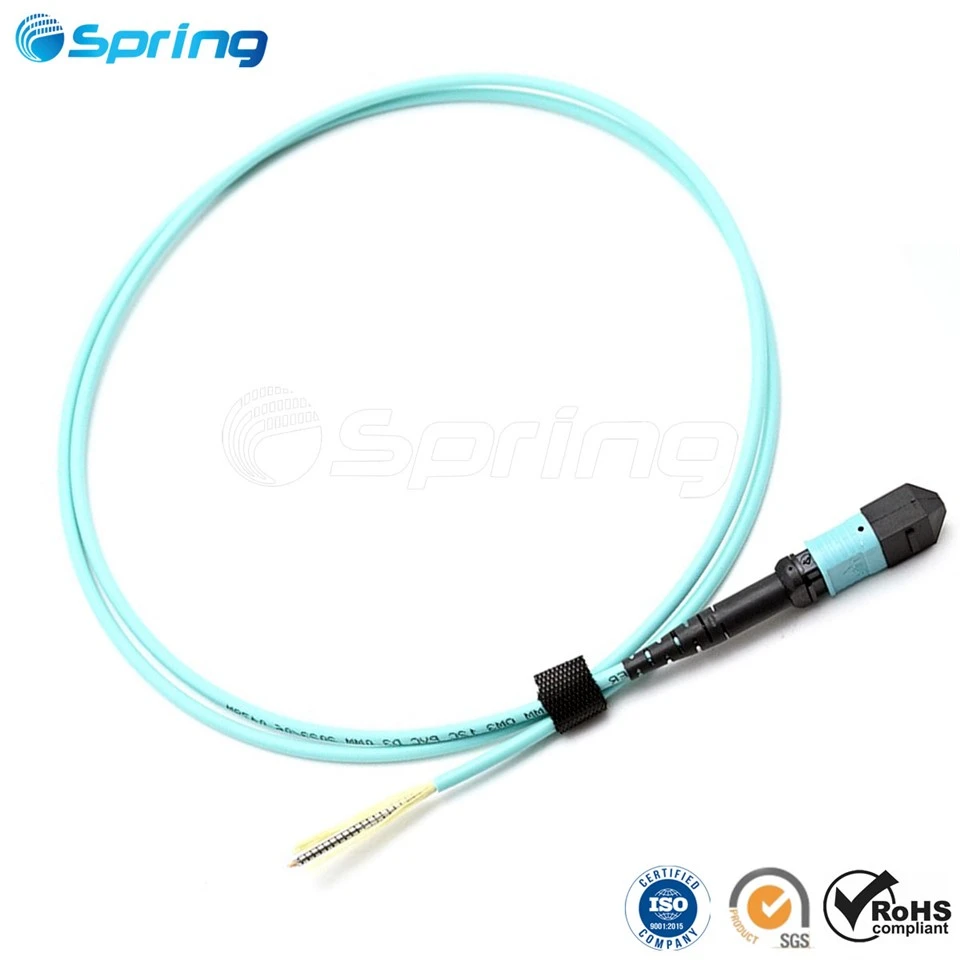
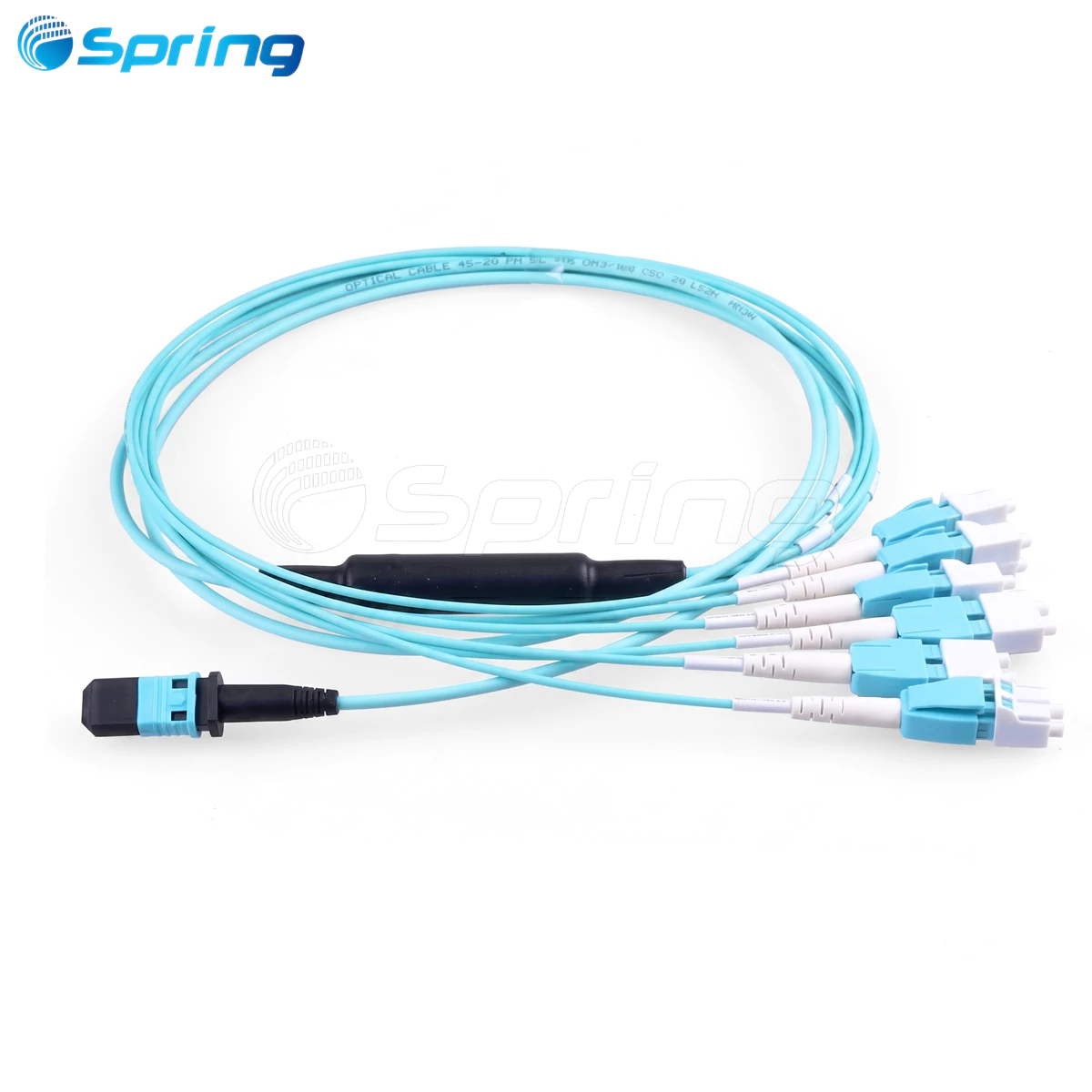
Pre-connectorized drop cables allow for quick installation and can feature SC or LC connectors
4. Multi-port Service Terminal (MST)
MST simplify and make available fiber connections to many customers in both FTTX and FTTB systems
They work seamlessly with pre-connectorized cables, increasing installation speed and ease of maintenance
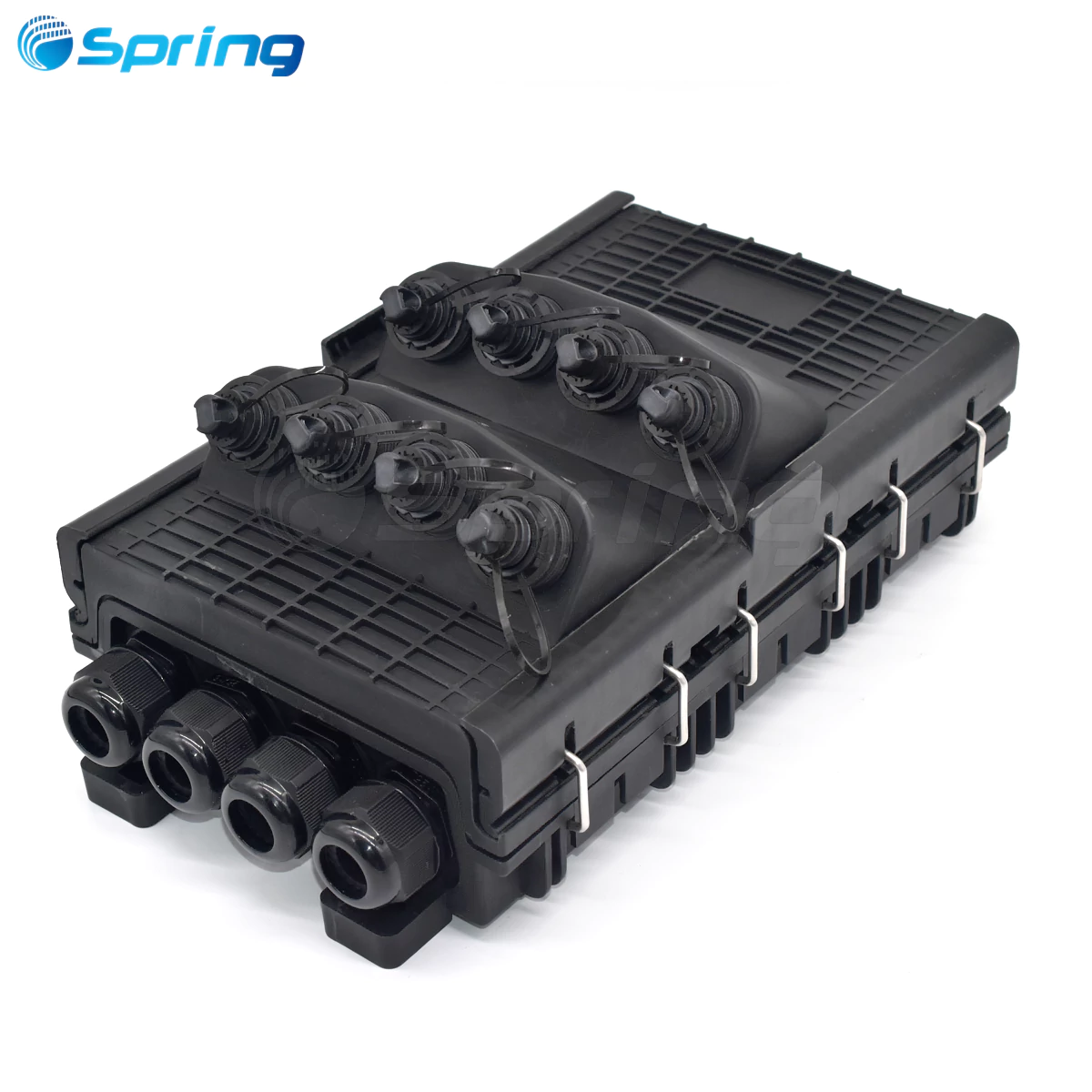
An example of an MST illustrated in the fiber-optic network:
IP68 MST Box: Fiber Distribution Outdoor Weatherproofing Solutions for Fiber to the Antenna
4. Solutions for Broadband (from A Neutral Perspective)
Spring Optical provides a complete range of compliant fiber products and accessory components for service providers, including:
FTTH cables
ODF/FDB
Multiport Service Terminal MST

ISP should also evaluate other vendors (e.g., Corning, CommScope) to ensure scalable, future-proof networks. Additionally, ISP should refer to the FCC's Broadband Data Collection Page to measure deployment success and performance.
Wireless Network Deployment in the U.S.A.
Understanding the Definition of Wireless Network Deployment
A wireless network transmits data via Radio Frequencies (RF), enabling access to Mobile Internet Services without physical cables.
Current applications of wireless technology in the U.S. include:
4G LTE and 5G Cellular Networks
Macro, Micro, and Small Cell Sites
Wi-Fi 6/6E for Businesses and Public Spaces
Benefits and Drawbacks of Wireless Technology
Benefits:
Quick Installation and Scaling
Provides Service to Rural and Mobile Users
Ability to Upgrade Without Major Digging / Excavation
Drawbacks:
Performance Depends on the Number of Sites
Signal Problems Due to Urban Density or Rough Terrain
Lack of Bandwidth in Low Coverage Areas
FTTA can help solve these issues by providing a fiber backbone for wireless technology.
What is FTTA?
FTTA connects fiber optics directly to base station antennas and/or remote radio units (RRU/AAU) for effective wireless transmission.
Key points:
It is a wired backhaul solution supporting wireless access
Designed for increased bandwidth requirements of 4G and 5G networks
Differences Between Wireless Networks and FTTA
Wireless Networks transmit data through the air
FTTA provides a low-loss backhaul between base stations and wireless devices
Wireless uses 4G/5G/Wi-Fi, while FTTA uses single-mode fiber cables, pre-terminated fiber cables, and fiber optic modules
Summary: Wireless networks connect users to base stations, whereas FTTA connects base stations to antennas, minimizing signal loss.
Two FTTA configurations:

Advantages: lighter, less signal loss, simpler maintenance
FTTA's Importance to 4G and 5G
High Frequency Capabilities: 5G uses mmWave signals requiring low-loss fiber-optic cables
Deployment Efficiency: Pre-terminated drop cables reduce installation time
Cost Savings: FTTA materials have longer useful lives, reducing OPEX
Core FTTA Products:
FTTA Cables
Pre-Terminated Jumpers
IP67 Connectors
Fiber Management Boxes
MST boxes
Role of FTTA in Wireless Networks
FTTA components enable deployment of macro cell and small cell solutions, providing speed and cost-efficiency for external and tower-level networks.
Summary of Broadband vs. Wireless Networks
Broadband:
Fixed high-speed connections (fiber cables, ODF/FDB, pre-connectorized drops, MSTs)
Advantage: Reliability, high-speed data transmission
Disadvantage: Slow rural deployment, high CAPEX
Wireless:
Mobile end-user access
FTTA facilitates wireless solutions (FTTA fiber, connectors, MST boxes)
Advantage: Rapid deployment, scalability
Disadvantage: Interference, signal density issues
Conclusion: Broadband connects to locations; wireless delivers to users. FTTA, MST boxes, and pre-connectorized drop cables enhance performance for both networks.
Additional Recommendations for U.S. Operators and System Integrators
Adopt hybrid deployment strategies based on demographics and geographic gaps
Invest in FTTH and FTTA backhaul fiber-optic networks
Use pre-terminated and MST drops to reduce deployment costs
Example: Midwest deployment using pre-terminated drops cut installation time by up to 40%
Explore vendors like Spring Optical while complying with FCC regulations
Market Trends and Case Studies
Urban areas: ~95% broadband coverage
Rural areas: ~70-80% coverage
FTTA adoption: Driven by Massive MIMO for 5G networks
Case Study:
A Midwest ISP deployed over 500 homes quickly using MST products and pre-connectorized cables, achieving less than 40% of previous deployment time.
FAQ
Q: What is the difference between FTTH and FTTA?
A: FTTH provides fiber connections to homes, FTTA provides fiber connections to antennas for wireless backhaul.
Q: How does an MST box help broadband deployment?
A: MST boxes centralize connections, minimize splicing, and allow quick multi-user access.
Q: Can pre-connectorized drop cables decrease installation time?
A: Yes, they allow plug-and-play setup, saving labor costs and speeding deployment.
Q: What is the latest broadband coverage percentage in the U.S.?
A: FCC 2025 data: 95% of households have 100/20 Mbps access; rural areas 70-80%.
Q: How is FTTA used to support 5G technology?
A: FTTA provides low-loss fiber backhaul to connect with high-frequency radio transmissions needed for 5G.