

Author: Alisa alisa@springoptic.com
Introduction
When you think about what gives you the reliability of a fiber network, the Fiber Optic Distribution Box (FDB) is the unsung hero. In today's fast-paced digital world, fiber optic communication because of its high speed, large capacity and strong immunity to interference is the backbone of networks today. The Fiber Optic Distribution Box plays a critical role in the aggregation, branching and protection of fiber optics, particularly in FTTH (fiber-to-the-home), LANs and MANs. Contrasted to a Terminal Box (FOTB) which will be oriented on the user side, the distribution box will take on that role of aggregation and cross-connection at the level of the building or street, and therefore will be that focal area of the fiber management systems. This article will discuss the functions, types and applications of fiber distribution boxes, bringing an insight into their importance in modern optical networks.
What is a Fiber Optic Distribution Box?
A Fiber Optic Distribution Box is a device that serves to terminate, aggregate and distribute optical fibers. It provides a safe, organized environment for the cable ends and facilitate cross connections, so that the optical fibers and connectors are safe from dust and mechanical and environmental influences. In FTTH networks, the distribution box is placed at the entrance of buildings, in the telecom rooms located in the basements of buildings and in street cabinets and the Terminal Box (FOTB) is used in user premises in connecting the drop cable to the ONT or router. The FDB provides the service of splitting and cross connecting and management of fiber enabling the network to be scalable, maintainable and reliable.

Key Features and Benefits
The majority of FDBs are made from either high strength plastics (ABS/ PC) or aluminum alloy, they have internal splice trays, storage for fiber, adapters and fixatives. The prime advantages are these:
Aggregation & Distribution - Manage effectively the fibers from several feeder cables, where the fibers are routed to drop cables.
Protection - Protects fibers and connectors against mechanical damage, dirt and moisture.
Cross Connection and Port Management - Required for costs due to network expansion maintenance and fault finding efficiency.
Durability - Housing suitable for either indoor or outdoor environments with impact resistance.
Versatility - Can be wall mounted, rack or cabinet installations. The various features of the FDB, highlight it further as a central hub of importance in fiber networks ensuring stability of signal, operational reliability and scalability.
Types of Fiber Optic Distribution Boxes
Fiber Distribution Boxes come in multiple designs to accommodate different installation environments and capacity requirements:


| Type | Installation Method | Features | Typical Capacity |
|---|---|---|---|
| Wall-Mount Type | Wall-mounted | Compact, ideal for small indoor or building-level distribution | 2–32 cores |
| Rack-Mount Type | Rack-mounted | Suitable for data centers and telecom rooms | 12–288 cores |
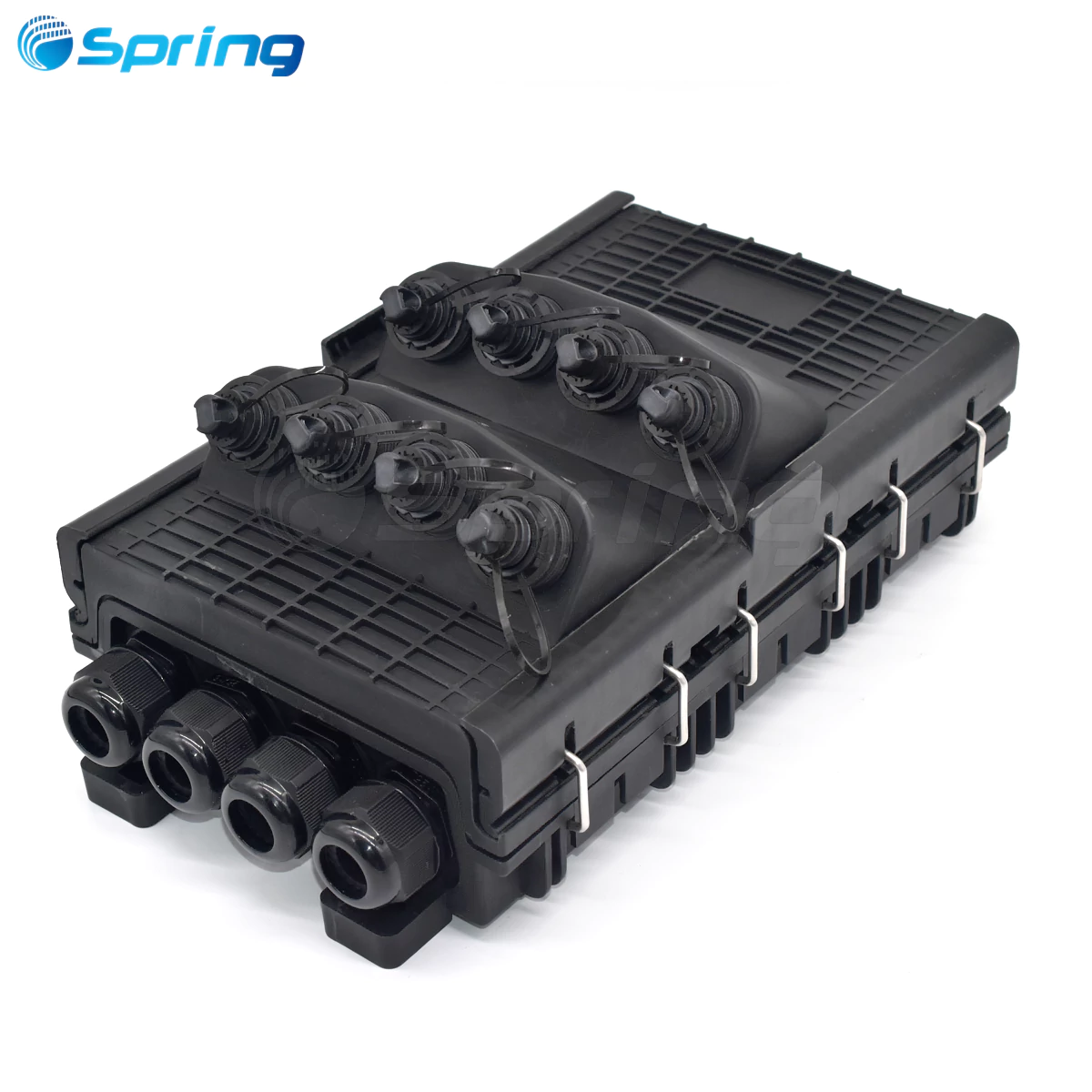
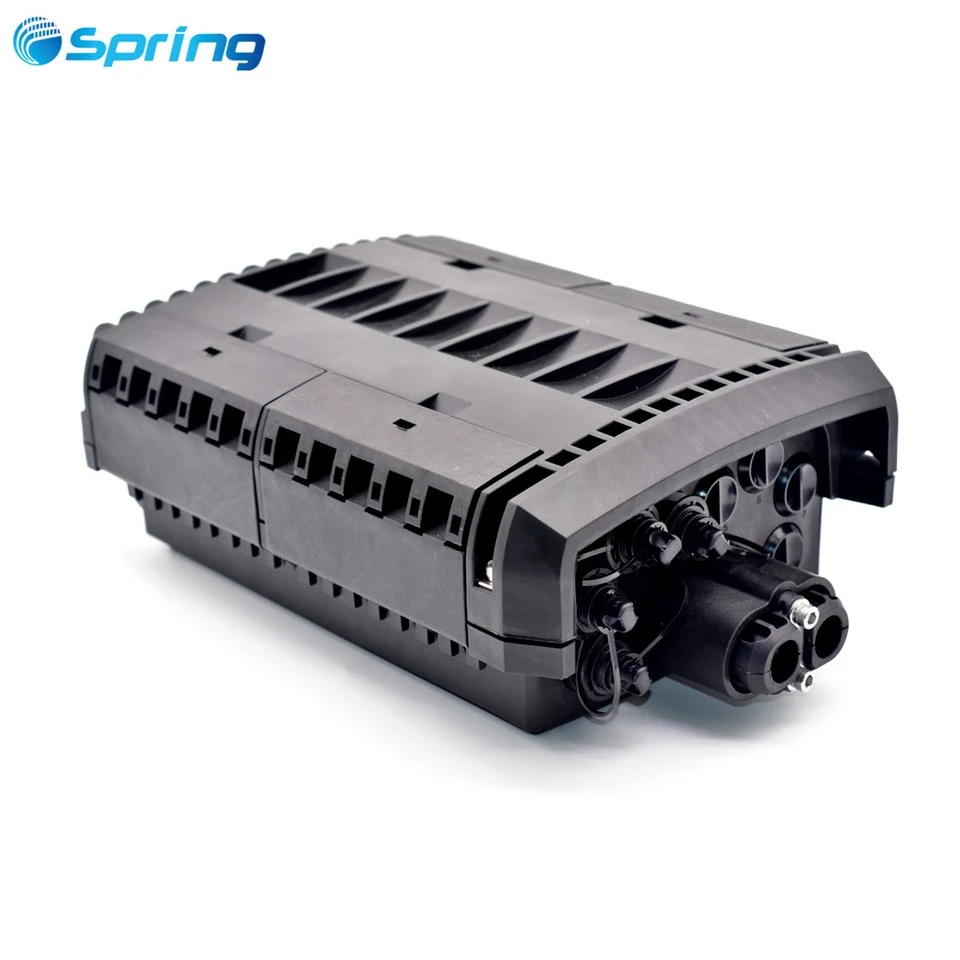
| Outdoor Waterproof Type | Wall or pole-mounted | IP65–IP68 rated, UV-resistant, weatherproof | 48–576 cores |
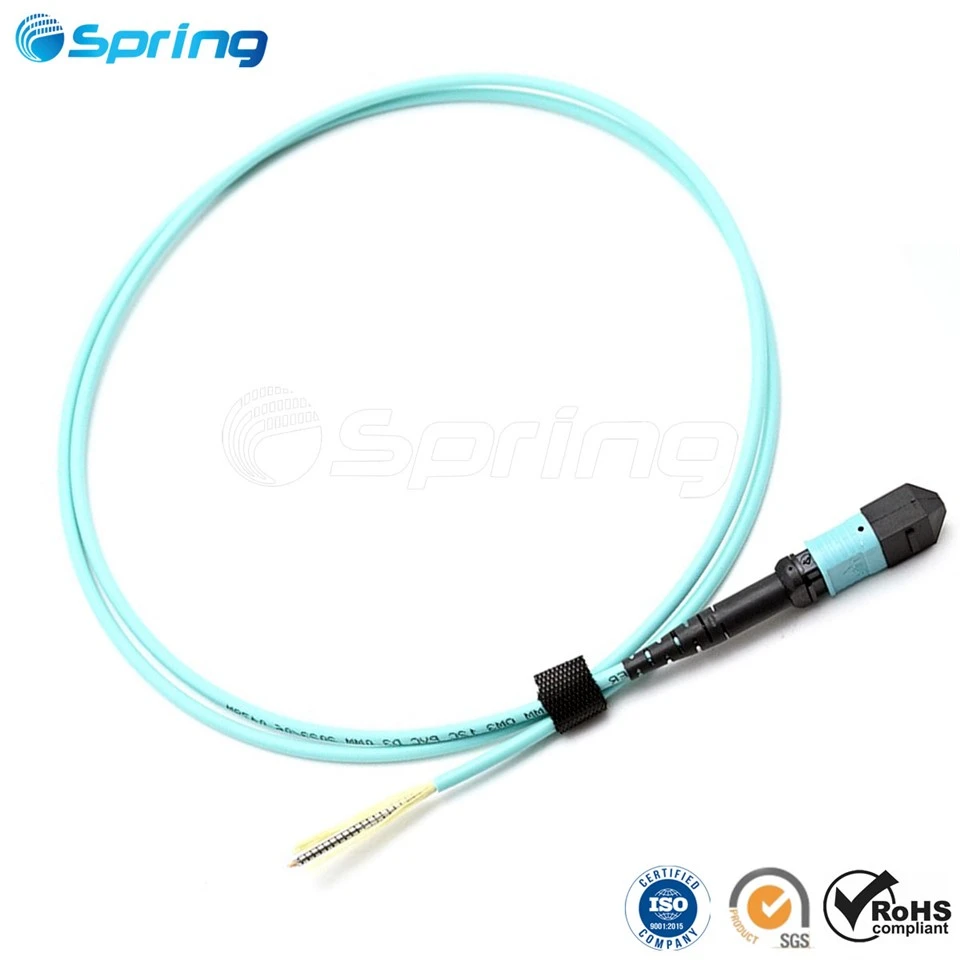
| Pre-Connectorized Type | Plug & Play | Factory-installed adapters and pigtails for fast deployment | 12–144 cores |
Note: Distribution Box capacities are generally larger than Terminal Boxes, especially for outdoor aggregation points.
Key Functions of a Fiber Distribution Box
Fiber Aggregation and Branching
FDBs aggregate fibres from the various feeder cables and branch the fibers out to multiple drop cables or users. This function allows for the effective branching out of the network.
Port Assignment and Cross-Connection
Adapters and jumpers in the FDB allow orderly cross-connections whereby network extension, fault finding and maintenance can be more effectively implemented.
Protection Features
Good quality FDBs are dustproof, rainproof, moisture-proof and UV resistant (usually IP65 to IP68 rated), allowing reliable functioning in both outdoor and indoor environments.
Fiber Storage and Management
The FDB provides adequate slack management as well as internal layout management to obviate the effects of bends, micro bends and signal loss.
The FDB acts as the main terminal of fibre aggregation that enables the network to maintain its stability and performance over the longterm.
Applications of Fiber Optic Distribution Boxes

FTTH Deployments
In FTTH networks, the FDB connects feeder cables to multiple drop cables that extend to Terminal Boxes (FOTBs) at the user interface. It protects splices and connectors and allows excess fiber storage, thus permitting high speed broadband distribution. An example is a residential building where the distribution box splits the feeder signal into dozens of units, while the connection to the ONT or the router is terminated at the FOTB.
LAN / MAN Applications
For enterprise and for metropolitan networks, the FDB provides for centralized fiber aggregation and distribution, supporting high density cabling, cross connections, and plans for growth of networks in the future.
Outdoor / Field Applications
Outdoor FDBs are installed in street cabinets, wall-mounted enclosures or pole-mounted boxes allowing for primary aggregation of fiber. This simplifies maintenance and cuts down on extra closures, as well as providing for easy cross connection for multiple subscribers.
Fiber Optic Distribution Box: Correct Range Selection
The correct selection is crucial for compatibility and proper operation of the network. The following factors should feature in the correct selection:
The type of cable and the count of fibers: Ensure the box proceeds with connections of singlemode or multimode fibers and the fibre count required.
The capacity of the ports: Ensure that the FDB has adequate ports for present or future use.
The sizes of entry cables: Check that sufficient diameters and routing are provided by the box for entry cables.
The connector interfaces: The box will have adapters for SC LC ST FC MPO etc. and should provide the appropriate connectors.
The housing material: Indoor need have abs/pc and external need have aluminium alloy.
The environment of use: Internal boxes will require less space and outdoor boxes need a protection grade of IP65 or above this will bring guarantees when used. Correct selection will bring the benefits of longer term reliability easier maintenance and return on investment.
Conclusion: The Future of Fiber Networks is Empowered
The Fiber Optic Distribution Box is a core component of fiber optic networks. It is essential for aggregation, branching, and cross-connections while maintaining a stable signal and operationally reliable. Today, as fiber optic technology progresses, the newest FDBs continue to develop in design, form, capacity and protection in order to assist operators toward improved, smarter networks that are more robust.
At Spring Optical, we design and manufacture a complete range of Fiber Optic Distribution Boxes, including IP68 protections, pre-connectorized options, and customizable capacities, that are destined to answer the global FTTH and data center demand.