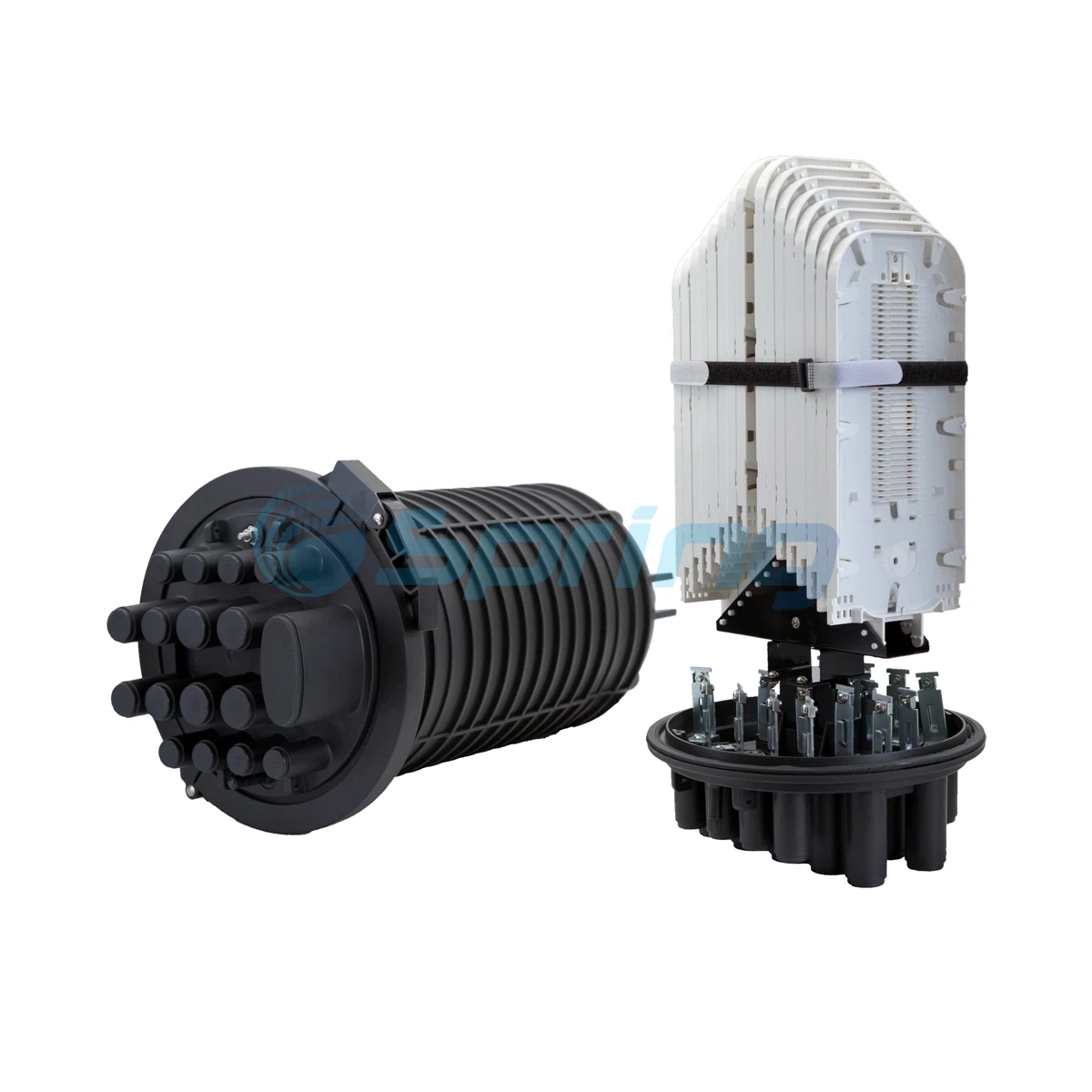


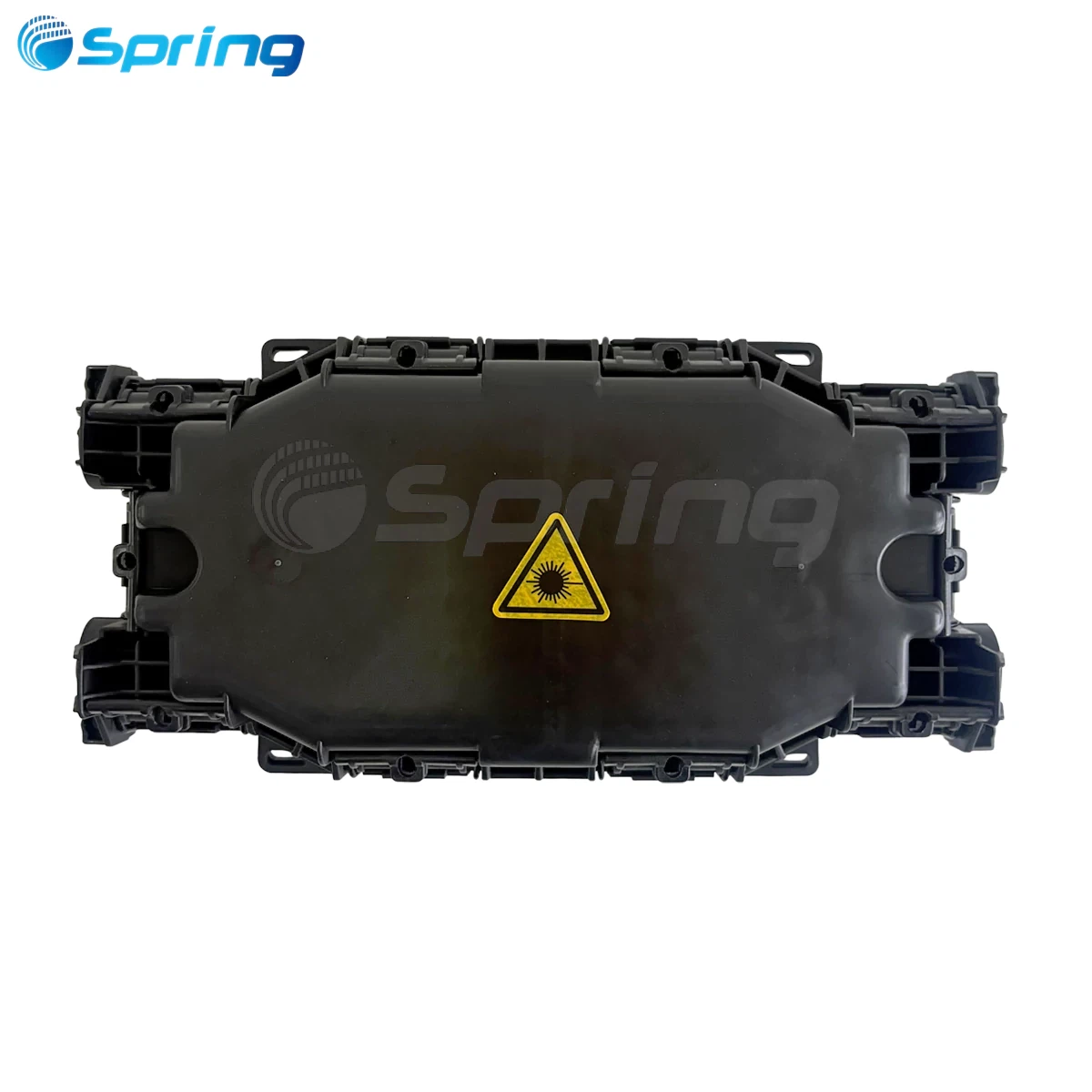
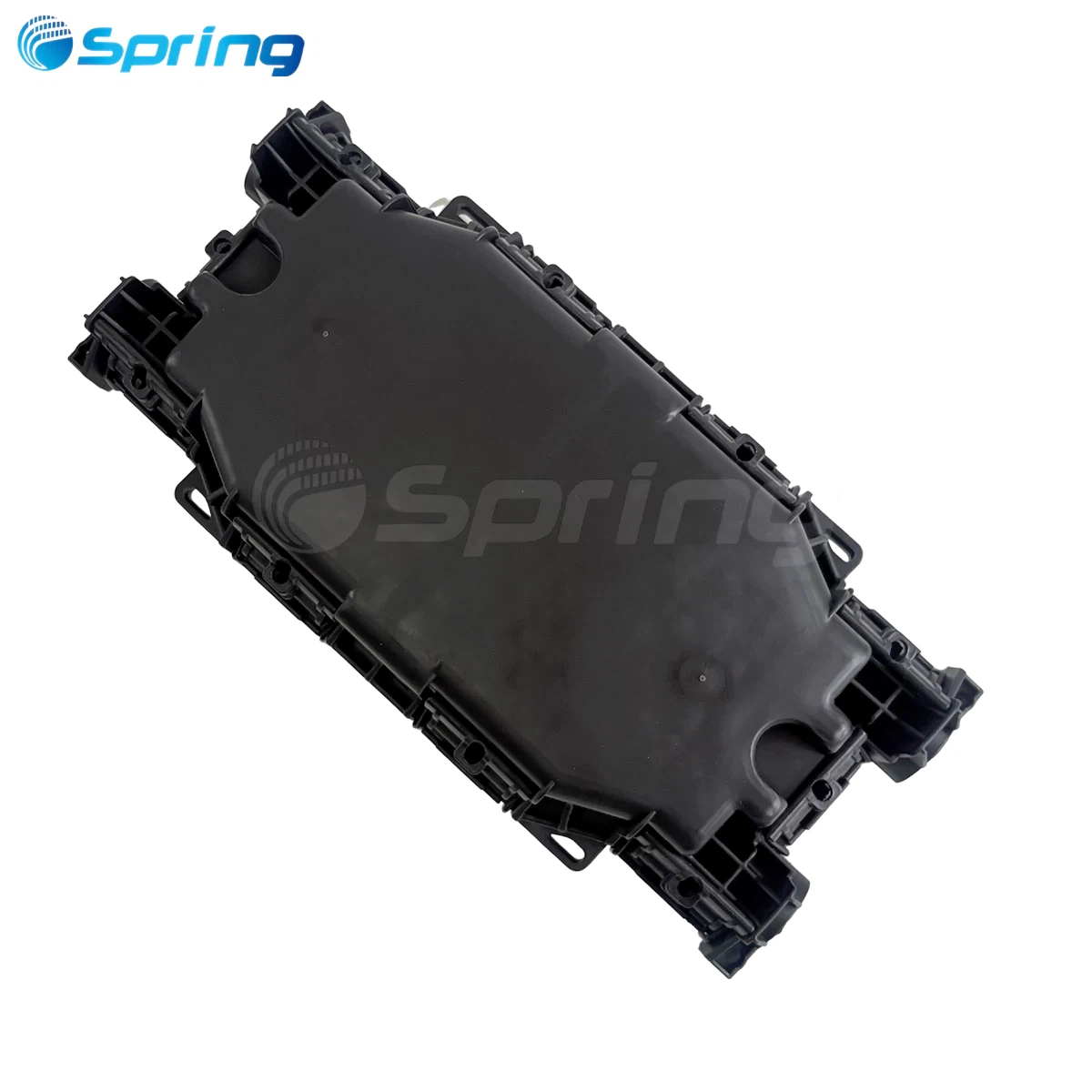
Spring Optical Communication is one of the largest and best fiber optic splice closure optical horizontal type manufacturers and suppliers with rich experience. Welcome to buy our high quality products or wholesale our customized fiber optic splice closure optical horizontal type in stock with our factory. Also, free sample is also available if necessary.
Product Overview

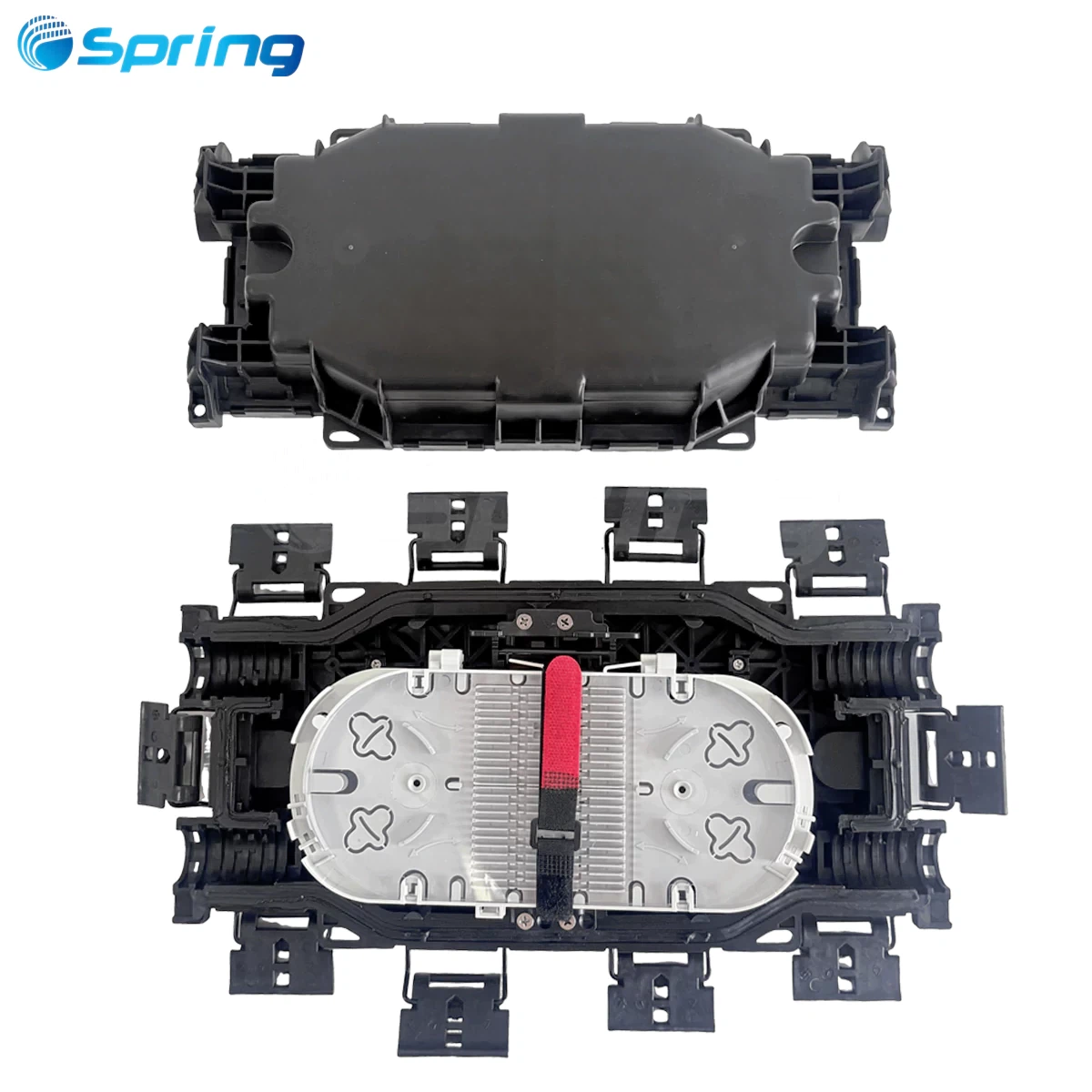
The fiber optic splice closure optical horizontal type SP-GJS-H020 from Spring Optical delivers robust protection for fiber optic cable joints in demanding outdoor environments. Designed specifically for aerial, underground, wall-mounting, duct-mounting and handhole-mounting applications, this horizontal fiber optic splice closure supports reliable splicing across FTTx and ODN networks.With compact outside dimensions of 370 mm × 178 mm × 106 mm and a weight of 1900–2300 g (excluding outer box), the unit offers practical handling for field crews. It features four inlet/outlet ports (two on each side) that accept fiber cables up to φ20 mm diameter. Capacity reaches 12–96 cores for bunchy fiber and 72–288 cores for ribbon fiber, making it suitable for medium-density distribution segments.Engineers and network planners value the fiber optic splice closure optical horizontal type for its straightforward installation and long-term mechanical stability. The enclosure maintains fiber integrity under temperature swings from -45°C to +65°C. All components focus on practical deployment: secure cable fixation, organized splice trays and effective sealing to protect against moisture and dust ingress.This horizontal fiber optic splice closure integrates seamlessly into existing cable routes without requiring specialized adapters or connectors, as it is a pure splice solution.
Key Features
·Four inlet/outlet ports (two per side) on the fiber optic splice closure optical horizontal type for flexible cable entry configurations.
·High-capacity splice trays supporting 12–96 bunchy cores or 72–288 ribbon cores.
·Compact 370 mm × 178 mm × 106 mm footprint with lightweight 1900–2300 g construction for easy field handling.
·Wide operating temperature range of -45°C to +65°C, proven across aerial and underground deployments.
·Integrated cable fixation and strength-member anchoring for mechanical reliability.
·Organized fiber routing trays with heat-shrink protection sleeves and figure-8 coiling options.
·Durable horizontal fiber optic splice closure design optimized for multiple mounting methods
Applications of the Fiber Optic Splice Closure Optical Horizontal Type
The fiber optic splice closure optical horizontal type serves as a core component in outdoor fiber networks. Typical uses include mid-span splicing in feeder and distribution cable runs, transition points between aerial and underground segments, and handhole or duct expansions.
Telecom operators and ISPs deploy this horizontal fiber optic splice closure in FTTH last-mile projects, campus backbones and metropolitan ODN rings. Its four-port layout and wide temperature tolerance make it ideal for both new builds and network upgrades where reliable, maintenance-free joints are essential.
Typical Network Architecture Using Fiber Optic Splice Closure Optical Horizontal Type
In a standard FTTx architecture, the fiber optic splice closure optical horizontal type SP-GJS-H020 is installed at cable joint locations. The incoming feeder cable enters one pair of ports while the outgoing distribution cables exit the opposite pair.
Fiber routing description (text equivalent of product diagram): Cables enter sealed ports with strength members anchored inside the enclosure. Fibers are stripped, routed through protective grooves into the first splice tray, and protected with heat-shrink sleeves. Excess fiber length (typically 1–2 m) is coiled in a figure-8 pattern within the dedicated storage space to maintain minimum bend radius and allow future re-splicing. Subsequent trays stack vertically with fixed straps. The cover closes with integrated buckles, completing a sealed joint.
This layout supports cascade splicing and branch configurations common in ODN designs.
Product Advantages
The fiber optic splice closure optical horizontal type offers excellent scalability for growing fiber counts up to 96 cores without changing enclosures. High-density tray organization reduces installation time while preserving bend-radius integrity.
Field engineers benefit from the simple four-step cable fixation process and quick tray access. Long-term reliability stems from proven mechanical anchoring and temperature-stable materials, minimizing attenuation increase over years of service. The horizontal fiber optic splice closure design also lowers total ownership cost through reduced maintenance visits.
FAQ
What is the maximum fiber capacity of the fiber optic splice closure optical horizontal type SP-GJS-H020?
Bunchy fiber: 12–96 cores; ribbon fiber: 72–288 cores.
Which mounting methods does the horizontal fiber optic splice closure support?
Aerial, underground, wall-mounting, duct-mounting and handhole-mounting.
What tools are required for installation?
Pipe cutter, crossing/paralleling screwdriver, wrench, band tape, electrical cutter and stripper.
How is excess fiber managed inside the enclosure?
Stripped fibers are routed along protection grooves, protected with heat-shrink sleeves, then coiled in figure-8 direction within the dedicated storage space.
What temperature range can the fiber optic splice closure optical horizontal type withstand?
-45°C to +65°C continuous operation.
Is the SP-GJS-H020 suitable for ribbon fiber splicing?
Yes, with dedicated tray capacity up to 288 ribbon cores.
Manufacturer Introduction
Spring Optical is an established manufacturer specializing in fiber optic connectivity solutions. Its dedicated production lines focus on splice closures, termination boxes and ODN components. With proven experience supplying global telecom operators and ISPs, Spring Optical maintains strict quality controls for every fiber optic splice closure optical horizontal type unit.
Packing and Transportation
The SP-GJS-H020 fiber optic splice closure optical horizontal type ships in a protective outer carton designed to prevent mechanical damage. Internal foam or corrugated inserts secure the enclosure and accessories during handling. Store the product in dry conditions within the specified operating temperature range of -45°C to +65°C. For international transport, follow standard telecom equipment guidelines to avoid excessive shock or stacking pressure. Each unit includes the installation manual and necessary fixing straps.
For detailed drawings, test reports or custom configuration support, contact our technical team directly. We welcome discussions on integrating the SP-GJS-H020 fiber optic splice closure optical horizontal type into your next ODN deployment.
Horizontal Fiber Optic Splice Closure Installation Process

1. In the optical cable opening of the end of the 50mm to keep the strengthening of the reinforcement bar.
2. Will need to be fused to disconnect the cable from the middle
3. Install and lock the cable in the cable sheath and attach the cable to the cable.
4. With electrical tape to the optical cable hoop protruding part of the tight.
5. Select the outer diameter of the cable slightly larger than the sealing clip ring to cut off. Place the end part of the rubber strip in the middle of the two sealing ring and use the finger to put the glue on the cable. To maintain the natural state of the adhesive tape or a slight force, in order to make the wrapped layers of adhesive layers of clothing, no obvious gap
6. The cable has been installed on the sealing ring into the connection box and cable port, will continue into the additional support slot box, coiled cable stripping, stored into the connection box before the space in the tower.
7. Cable coil stripping, stored into the connection box before the space in the tower
8. On the first disc groove along the fiber protection groove after hot melt pipe Around. In case of need, the remaining length can be as shown in Figure ten Word direction coil.
9. To bind the connecting plate on the connecting plate holder with a fixed strap (which is face up) with a continuous disk.
10. Close the upper and lower cover in proper order with the box body fastening buckle.
Hot Tags: fiber optic splice closure optical horizontal type
Technical Specifications
The table below summarizes all key parameters of the fiber optic splice closure optical horizontal type SP-GJS-H020.
| Parameter | Specification |
|---|---|
| Outside dimension (L×W×H) | 370 mm × 178 mm × 106 mm |
| Weight (excluding outer box) | 1900–2300 g |
| Number of inlet/outlet ports | 4 (2 pieces on each side) |
| Fiber cable diameter | φ20 mm |
| Capacity – Bunchy fiber | 12–96 cores |
| Capacity – Ribbon fiber | 72–288 cores |
| Operating temperature | -45°C to +65°C |
| Mounting methods | Aerial, underground, wall-mounting, duct-mounting, handhole-mounting |
| Connector type | Not applicable (splice-only enclosure) |
| Fiber type | Single-mode or multi-mode (splice trays accommodate both) |
| Cable jacket type | Compatible with standard loose-tube or ribbon cables |