

Author: Cathy sales@springoptic.com
Introduction: Fiber Splicing in FTTH Networks
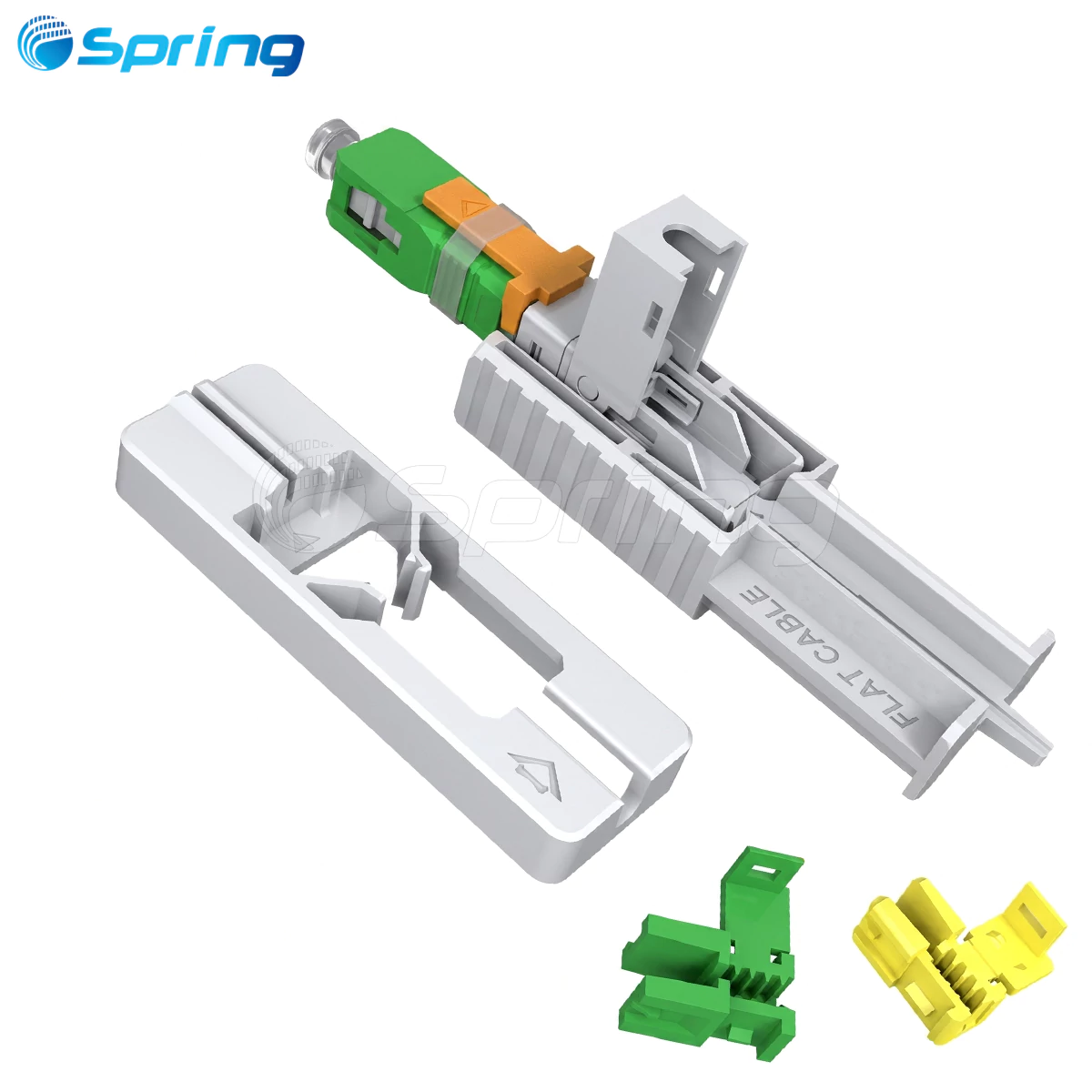
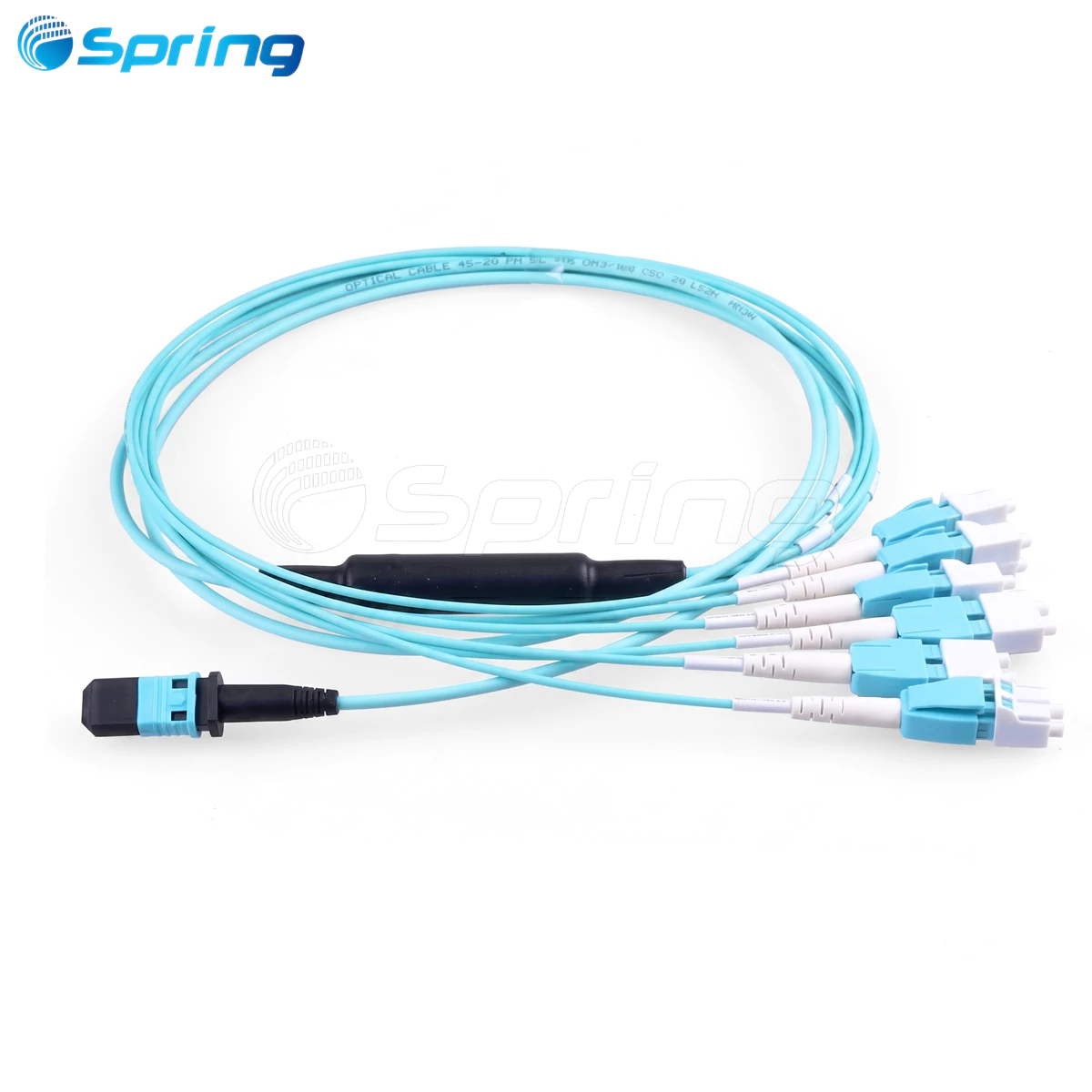
The splicing of fibers will occur in many situations when constructing an FTTH network. Although new technologies such as Quick ODN and pre-terminated architectures minimize the need for field splices, access networks do still have applications where splicing is necessary.
As a result, as FTTH network planners, we now have to answer the question of:
"When I have to splice, should I use mechanical splicing, or should I use fusion splicing?"
This article compares mechanical splicing and fusion splicing based on actual deployment within the FTTH environment, taking into account optical performance, long-term performance, cost structure, and operational implications.
Mechanical Splicing for FTTH Fiber Connections

Mechanical splicing joins two optical fibres through the following methods:
· Using precisely aligned mechanical fixtures
· A gel that matches the refractive index of silica glass fibers
· Without any heat-based fusion process
The two fibre ends are aligned accurately, and their glass ends are held together mechanically with the aid of a mechanical splice unit.
Mechanical splicing usually requires minimal equipment, has a lower capital and installation cost, and allows for rapid installation of individual fibre connections. Mechanical splicing is typically used when the speed of the splice is more critical than long-term optical performance.
Fusion Splicing in FTTH Networks
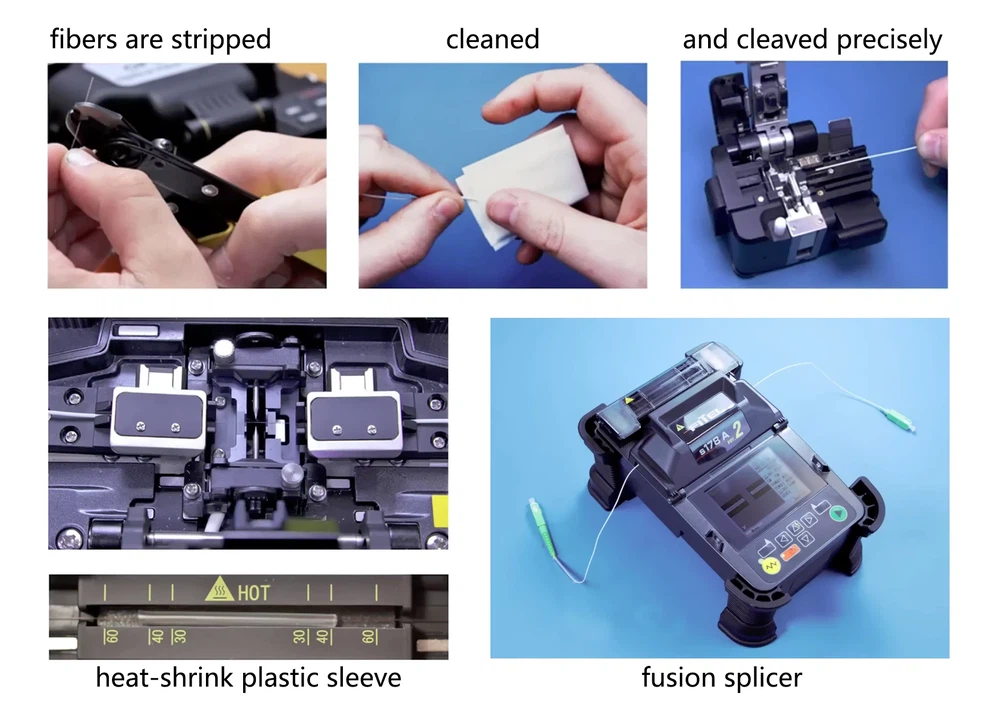
Fusion splicing is a method of joining two optical fibres through:
· Creating an electric arc to soften and fuse the glass
· Permanently fusing glass fibres together
· Using equipment specifically designed for fusion splicing
Fusion splicing provides the highest-quality fibre splicing method commonly used in access networks. It offers very low insertion loss, excellent long-term stability, and requires a higher technician skill level along with proper fusion splicing equipment.
Fusion splicing is the predominant method for the construction of permanent FTTH systems.
Optical Performance Comparison: Mechanical vs Fusion Splicing in FTTH

Insertion Loss: Mechanical splicing has a higher insertion loss (more loss) compared to fusion splicing.
Return Loss: The average return loss for mechanical splicing is worse than that of fusion splicing.
Long-Term Stability: Fusion splicing provides greater long-term stability, as mechanical splice joints must remain mechanically secured within a protected environment.
Environmental Resistance: Mechanical spliced fibers have limited environmental resistance, while fusion spliced fibers have high environmental resistance.
Long-term stability is extremely important when deploying FTTH, and fusion spliced fibers consistently perform better than mechanical spliced fibers.
Installation Speed and Complexity of Fiber Splicing
Mechanical splices are faster to install than fusion splices and require a lower skill threshold. They are useful for temporary restoration.
Fusion splicing takes longer per splice and requires setup and calibration of the fusion splicer. However, fusion splicing produces more consistent results than mechanical splicing at scale. Therefore, speed alone is rarely the deciding factor in large FTTH deployments.
Fiber Splicing Tools and Equipment
Mechanical splicing requires a mechanical splice kit and basic fiber preparation tools.
Fusion splicing requires a fusion splicer, a high-precision cleaver, and a power source, along with routine maintenance.
The availability of tools and technician training in a region is a significant factor influencing which splicing method is used.
Environmental Sensitivity of Fiber Splicing
Mechanical splice joints are more susceptible to temperature variation, moisture ingress, and mechanical vibration.
Fusion spliced fibers create a continuous glass joint, making them substantially more durable in outdoor environments such as aerial lines, street cabinets, and access points.
Cost Considerations for FTTH Fiber Splicing
The initial investment for mechanical splicing equipment is lower than for fusion splicing; however, consumable costs per splice are higher, and long-term failure risk is greater.
Fusion splicing involves higher upfront costs, but as splice volume increases, the cost per splice decreases, along with maintenance and rework expenses.
When designing FTTH networks, the total cost of ownership-including operating expenses over the network lifetime-must be considered. Initial installation cost alone does not reflect long-term network economics.
Typical Applications of Fiber Splicing in FTTH
Mechanical splicing is most commonly used for emergency restoration, temporary connections, and low-volume repair work. It is generally not considered a suitable long-term solution for FTTH access networks.
Fusion splicing is preferred for backbone fibers, permanent access infrastructure, and outdoor deployments, where long-term reliability is required.
Impact of Quick ODN Architectures

The introduction of Quick ODN changes how FTTH designers approach splicing:
· Reduces the total number of splices required
· Moves fiber connection work into controlled factory environments
· Reduces dependence on field splicing skills
Most remaining splicing occurs at aggregation and backbone points, where fusion splicing is typically preferred.
As a result, modern FTTH designs increasingly combine pre-terminated access devices, Mini FATs, MST terminals for last-mile distribution, and fusion splicing only where absolutely required.
Common Myths About Fiber Splicing in FTTH
"Mechanical splicing is cheaper" – not when total network lifecycle cost is considered.
"Fusion splicing is required 100% of the time" – not when pre-terminated devices are used.
"The more fiber splices, the more flexible the network" – additional splices also introduce additional failure points.
Splicing decisions must be evaluated within the context of overall FTTH network design.
A Rational FTTH Strategy
A practical FTTH deployment strategy typically combines:
· Pre-terminated Quick ODNs for access and drop segments
· Fusion splicing for backhaul and unavoidable joints
· Mechanical splicing for temporary or emergency connections
This hybrid approach balances deployment speed, optical quality, and long-term cost control.
Fiber Splicing Challenges in Emerging FTTH Markets
In regions such as Africa, Latin America, and parts of the Middle East, skilled fusion splicers may be limited, environmental conditions can be challenging, and follow-up site visits are costly.
In these cases, reducing the total number of splices through Quick ODN-based architectures is often more effective than focusing solely on splice type selection.
Frequently Asked Questions
Q: Is mechanical splicing acceptable for FTTH access?
A: Yes, but only in limited or temporary situations.
Q: Does fusion splicing create zero loss?
A: No, but it produces the lowest and most stable loss.
Q: Can Quick ODN eliminate splicing entirely?
A: No, but it significantly reduces the number of required splices.
Q: What is the most cost-effective long-term solution?
A: Fusion splicing combined with pre-terminated access devices.
Q: Is splicing technician skill still important?
A: Yes, although Quick ODN architectures reduce dependence on field splicing skills.