

Author: Hayden Sun, Fiber Optic Solutions Expert, Spring Optical Hayden@springoptic.com
For Internet Service Providers (ISPs) and network operators, the Fiber-to-the-Home (FTTH) race is a race for reliability. While backbone and distribution networks get the most attention during planning, the success of the entire architecture rests on the most fragile link: the fiber optic drop cable.
If this "last mile" bridge fails due to poor material selection, environmental stress, or improper installation, the high-speed signal never reaches the subscriber, leading to customer churn and expensive maintenance truck rolls.
This article serves as a technical procurement manual and practical guide for purchasing managers, FTTH field engineers, and distributors. It moves beyond basic definitions to provide deep-seated technical comparisons and strategic selection matrices, ensuring your last-mile connectivity is built for the long term.
What is a Fiber Optic Drop Cable? (The "Last Mile" Bridge)
A fiber optic drop cable is the final segment of the Optical Distribution Network (ODN). It creates the critical link between the distribution cable terminal (such as a Fiber Access Terminal or FAT box) and the subscriber's premises (connecting to an Optical Network Unit or ONU).
Unlike high-fiber-count backbone cables, FTTH drop cables are characterized by low fiber counts (typically 1 to 4 fibers), smaller diameters, flexibility, and lightweight designs that facilitate easy routing into and within buildings.
The Role of Drop Cables in Modern ODN Architecture
The drop cable is the "face" of your network to the end-user. Its quality directly dictates the attenuation loss experienced at the terminal and the overall reliability of the service. In modern, high-density ODN architectures, the drop cable must be resilient enough to handle tight bends during installation while maintaining signal integrity for decades.
Core Components and Materials: What's Inside?
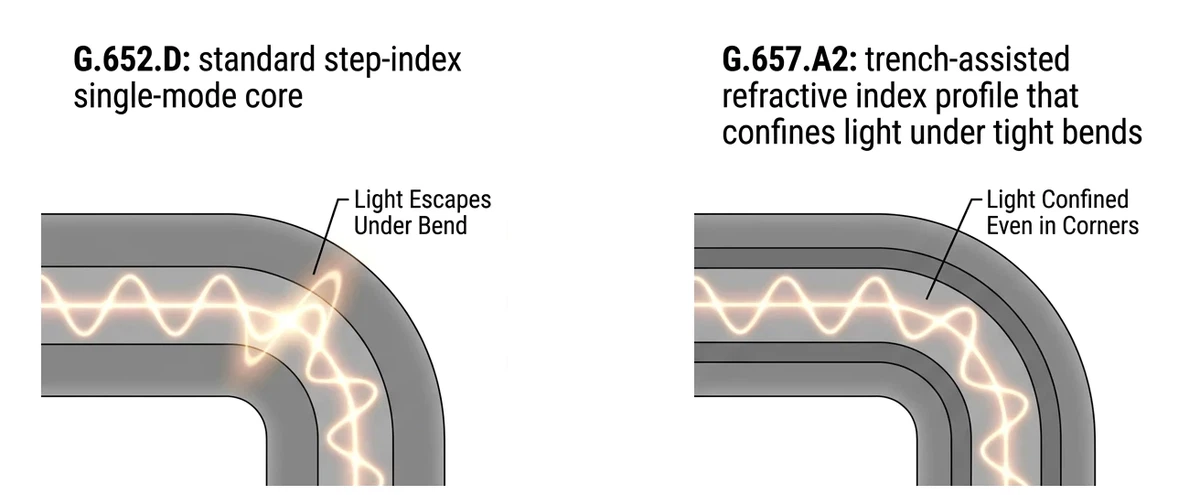
Understanding the material science behind a drop cable is crucial for assessing product longevity and performance differences. High-quality cables result from a strategic combination of three core components.
Optical Fiber: Why G.657.A2 is the Industry Standard
While backbone networks often utilize G.652.D fiber, FTTH introduction scenarios require a different standard. G.657.A2 bend-insensitive fiber is the industry standard for drop cables. It features a significantly smaller minimum bend radius compared to legacy fibers, allowing it to navigate sharp indoor corners or tight Optical Network Terminal (ONT) enclosures without experiencing significant attenuation loss.
Practical Advice:
In the introduction section, do not cut costs by using G.652.D fiber. G.652.D's lack of bend resilience will lead to immediate attenuation loss issues in indoor corners, dramatically increasing maintenance OPEX and customer complaints.
Strength Members: FRP vs. Steel Wire (Pros & Cons)
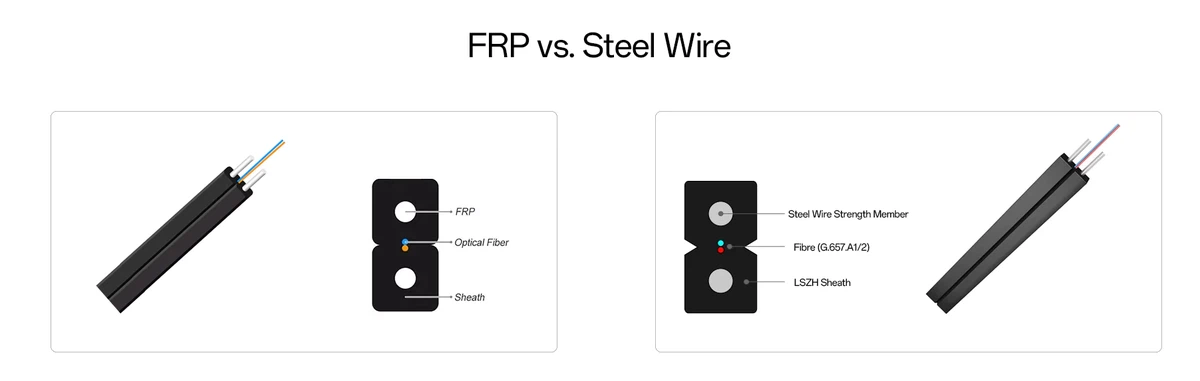
The strength member provides tensile strength to protect the fiber core from pulling force or crushing pressure during installation and operation.
Steel Wire:
Low cost, high tensile strength. Ideal for self-supporting aerial installations over long spans. Drawback: Conductive (must consider grounding/lightning protection).
Fiber Reinforced Plastic (FRP):
Dielectric (non-conductive), lightweight, and anti-crush. Provides superior lightning protection and is ideal for indoor/MDU environments and complicated electro-magnetic aerial environments. Drawback: Slightly higher cost than steel.
Practical Advice:
In lightning-prone regions, prioritize FRP-strengthened drop cables for aerial deployments.
Outer Jacket: LSZH vs. PE for Indoor/Outdoor Safety
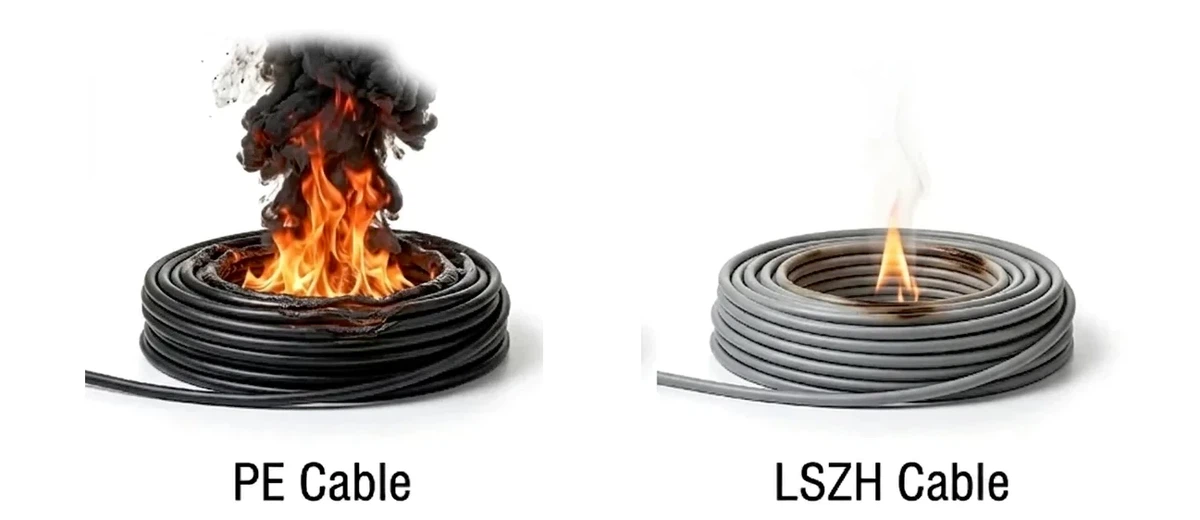
The outer jacket material provides the first line of defense against the environment.
Low Smoke Zero Halogen (LSZH):
Mandatory for indoor use. It is flame-retardant and emits low smoke without halogen gases when exposed to high heat. High-quality LSZH formulations must also include UV resistant additives for facade (along the wall) mounted installations.
Polyethylene (PE):
Ideal for outdoor aerial or duct environments. It is highly waterproof and UV resistant.
Common Mistake:
Never route a standard PE-jacketed cable indoors. PE represents a severe fire hazard and violates indoor fire safety regulations.
Main Types of Fiber Drop Cables and Their Use Cases
Selecting the correct cable shape and structure is a critical engineering decision based on the specific installation scenario.
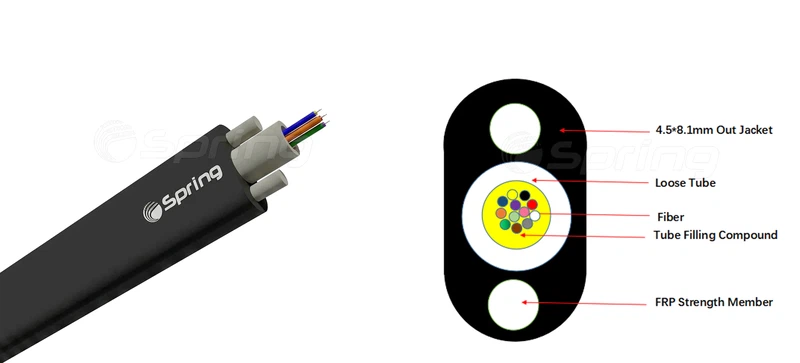
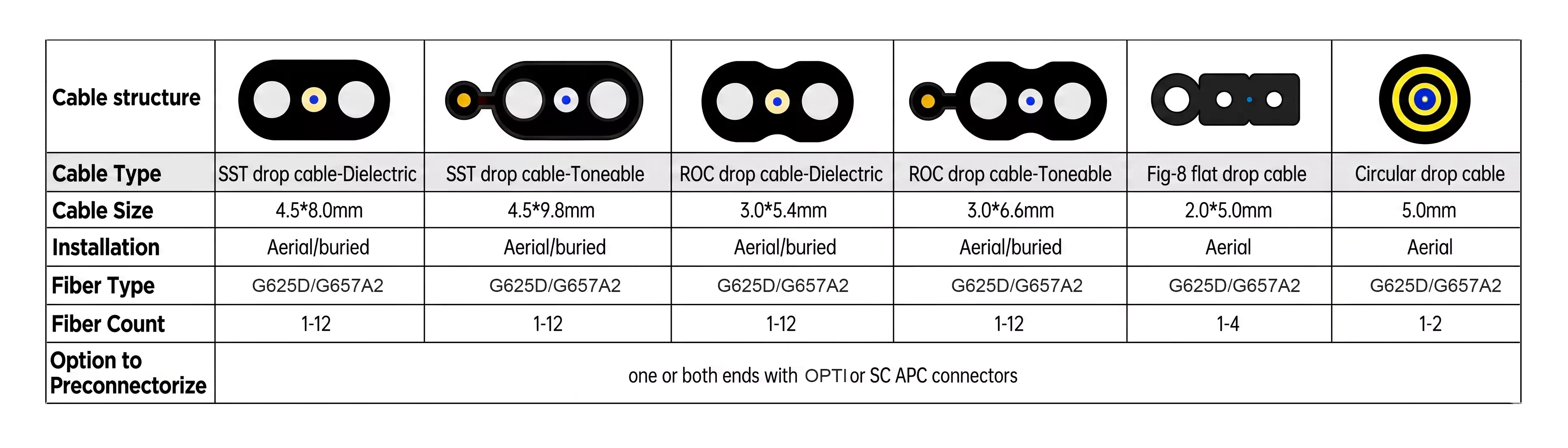
Flat Drop Cable: The Go-To for Aerial Installations
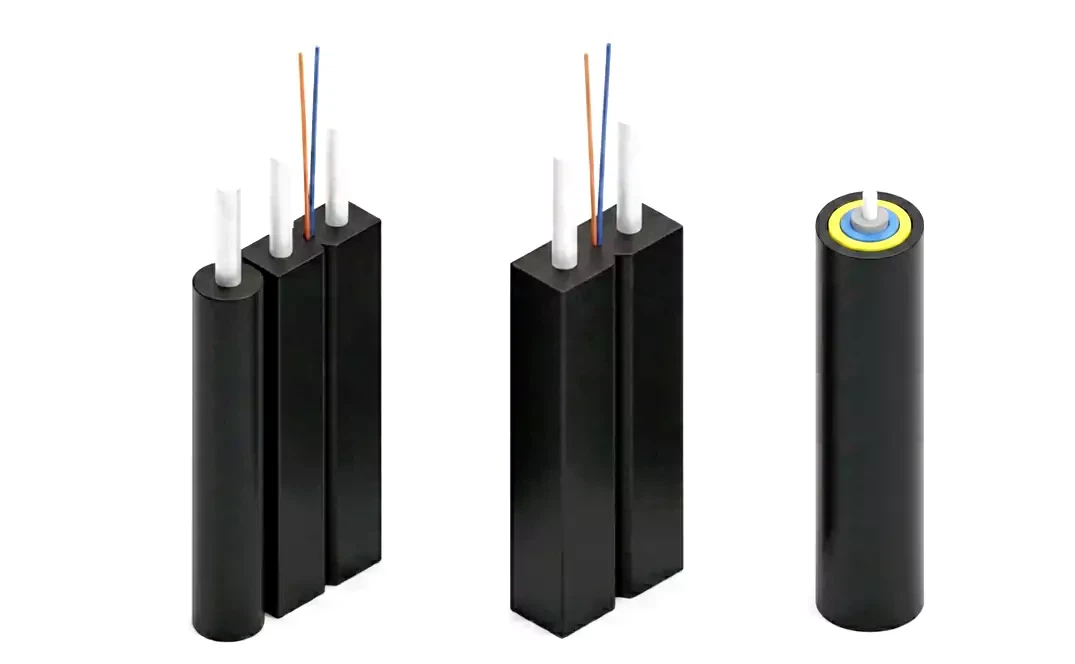
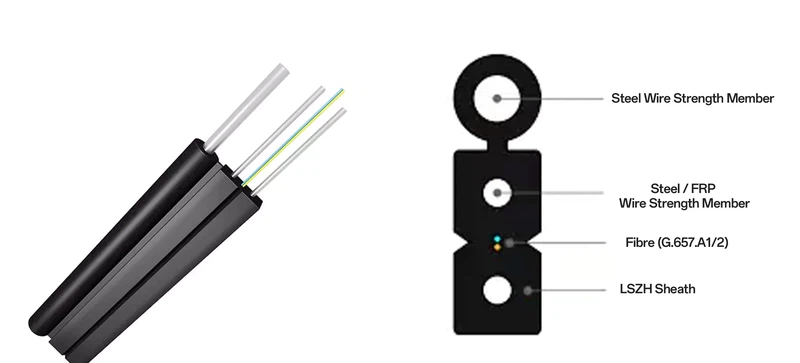
Characterized by its "figure-8" divisible cross-section, the flat drop cable is the most common and cost-effective type. Its structure typically includes central fiber(s), two parallel strength members, and a separable messenger wire. It is perfect for routing along facade walls from a FAT box or for short-span aerial runs.
Self-Supporting (Figure-8): Solving Long-Span Challenges
This is an enhanced version of the Flat Drop Cable, featuring an attached steel or high-strength messenger wire. It is specifically designed for pole-to-pole or pole-to-house deployments where long-span aerial capability is required to withstand wind and ice loading.
FAQ: What is the maximum span for a self-supporting flat drop cable?
Max span depends heavily on the messenger wire diameter and material (steel vs. FRP) and local climate loading (wind/ice zones). Generally, standard steel-messengered figure-8 cables are designed for spans up to 50 meters (164 ft) in standard conditions, with specialized designs exceeding 80 meters. Always consult the manufacturer's specification sheet for span tables.
Round Drop Cable: Ideal for Duct and Underground Routing
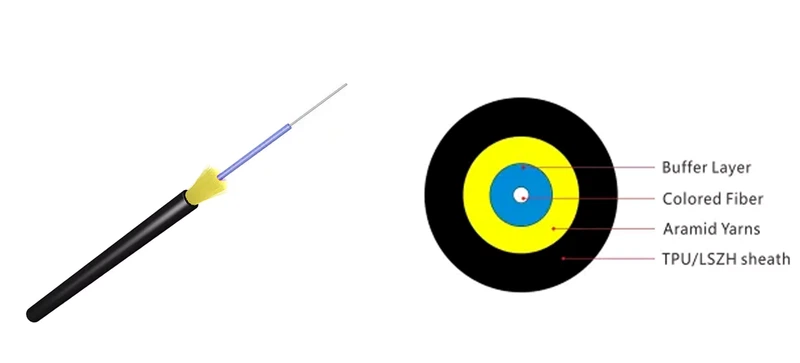
Featuring a thicker jacket and often incorporating aramid yarn for strength, round drop cables provide superior crush resistance and waterproof performance. They are the ideal choice when routing introduction lines through ducts or underground from a handhole or manhole to the building.
Practical Advice:
When transitioning from underground handholes to buildings, you must use Round Drop Cables within a protective duct.
Toneable Drop Cable: Easy Locating for Buried Lines
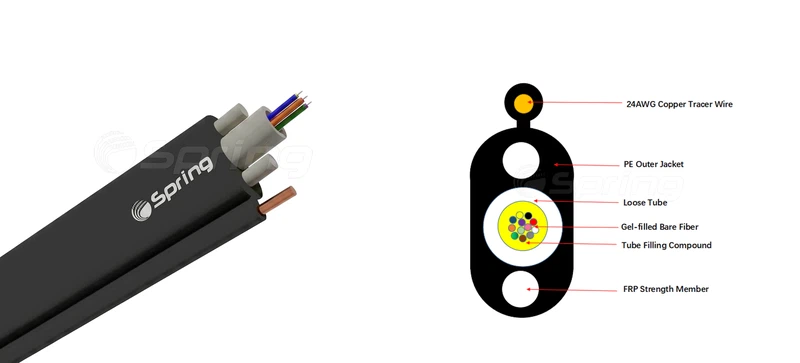
Specifically engineered for direct buried applications, the toneable drop cable includes an integrated, insulated metallic tracer wire. This allows field technicians to easily locate and trace the buried optical cable with non-destructive metal detection tools, preventing accidental damage during future construction.
Example:
In the US market, direct buried introduction cables typically require toneable capability to comply with local utility locating regulations.
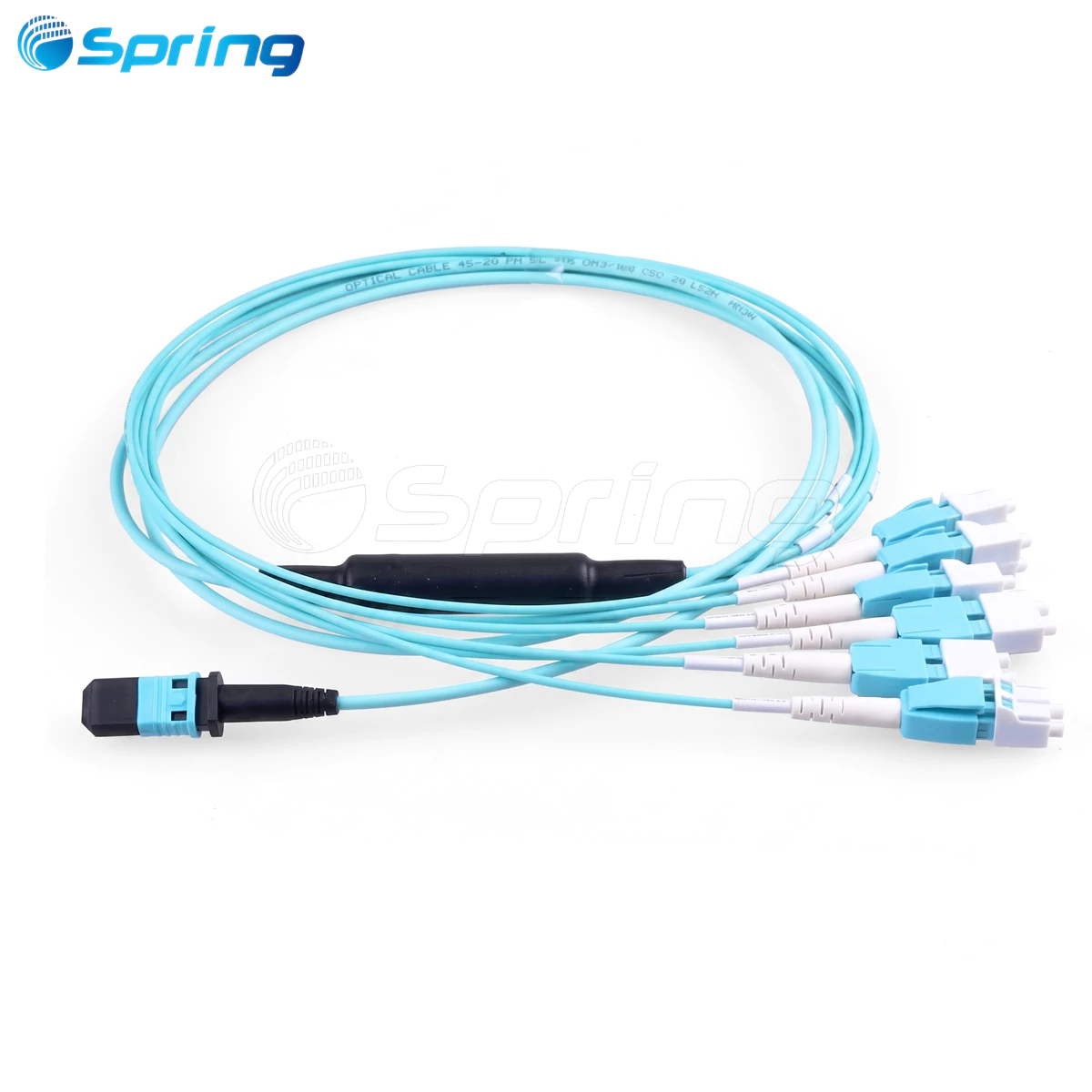
Pre-Connectorized Drop Cable: Faster FTTH Deployment
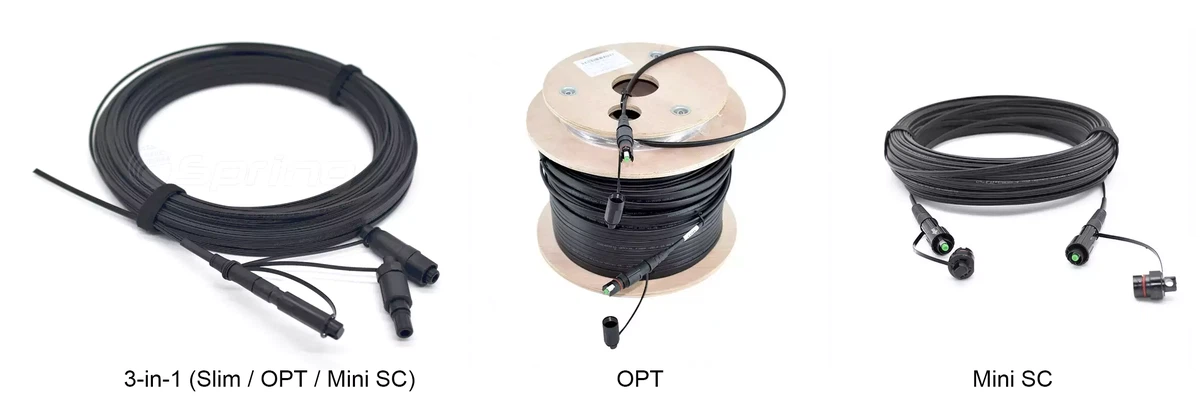
As FTTH networks continue to expand, many operators are moving toward Pre-Connectorized Drop Cable solutions to reduce field installation time and improve connection consistency.
A pre-connectorized drop cable is factory-terminated with connectors such as:
SC/APC, SC/UPC, LC
Hardened connectors for outdoor networks
Unlike traditional field-terminated cables, the connector is assembled and tested in the factory before shipment, allowing technicians to deploy the cable using a simple plug-and-play method in the field.
Key Benefits of Pre-Connectorized Drop Cable
Faster Installation
No on-site polishing or fusion splicing is required, significantly reducing labor time.
Lower Skill Requirement
Field technicians can install the cable without advanced fiber termination experience.
More Consistent Performance
Factory termination ensures stable insertion loss and return loss.
Reduced Installation Errors
Minimizes contamination and poor field termination problems.
Typical Applications
Pre-connectorized drop cables are widely used in:
FTTH rapid deployment projects
Multi-dwelling unit (MDU) buildings
Rural broadband rollout
Temporary emergency restoration
Plug-and-play access networks
Practical Advice
For large-scale subscriber activation projects, pre-connectorized drop cables can reduce installation time by more than 50%, helping operators lower deployment OPEX while improving service activation speed.
Technical Comparison: Tight-Buffered (900μm) vs. Loose-Tube (250μm)
This section addresses a technical pain point often overlooked during procurement, showcasing the hidden risks in different cable internal structures. The "buffer" type has a profound impact on field workability and long-term network stability.
| Technical Parameter | Tight-Buffered (900μm) Drop Cable | Loose-Tube (250μm) Drop Cable |
|---|---|---|
| Fiber Protection | Hard plastic coating provides immediate protection; better anti-crush. | Flexible tube with gel/aramid yarn provides protection; better decoupling from stress. |
| Termination Ease | Harder to strip down to 125μm cladding without the right tools. | Easier to strip the tube to access the standard 250μm fiber. |
| Retraction Risk | Low. The buffer grips the fiber tightly. Ideal for aerial spans. | High. Fiber can "retract" (move back and forth) inside the tube under environmental stress. |
| Best Connectivity | Mechanical Splicing / Custom Connectors. | Field Fast Connectors / Fusion Splicing. |
Common Mistake (Retraction Risk):
For long aerial spans, temperature swings cause the outer cable jacket to expand and contract differently than the fiber itself. In a Loose-Tube design, this can lead to the 250μm fiber "retracting" into the FAT box by 2-3 cm, pulling out of the connector and causing intermittent disconnections or complete service failure.
FAQ: How do I prevent fiber retraction in loose-tube long-run installations?
When installing Loose-Tube drop cables, engineers must ensure proper cable clamping at the FAT box entry and leave adequate fiber slack loop inside the FAT tray to accommodate temperature-induced fiber movement.
How to Select the Right Drop Cable: A Decision Matrix
Choosing by Environment: Rural Aerial vs. Urban High-Rise
Rural Aerial (Pole-to-House):
Prioritize Figure-8 Self-Supporting Drop Cable with PE outer jacket and Steel strength member (FRP messenger if lightning is a concern). Use G657A2 fiber.
Urban Duct/Underground (Handhole-to-Building):
Use Round Drop Cable with PE jacket. Use G657A2 fiber.
MDU/Urban High-Rise (Facade/Indoor):
Flat Drop Cable with UV resistant LSZH jacket. Use G657A2 fiber.
FAQ: Can I use outdoor PE drop cable indoors?
No. Standard outdoor PE-jacketed cables do not comply with indoor fire safety regulations. Always use LSZH (Low Smoke Zero Halogen) jacketed cables for indoor routing. If a facade cable must enter a building, use an outdoor/indoor rated cable that meets flame-retardant standards.
Choosing by Connection Method: Fast Connectors vs. Fusion Splicing
Field Fast Connectors:
Prioritize Loose-Tube (250μm) based drop cables for easier stripping and tool compatibility. Use G657A2 fiber for fast connector performance stability.
Fusion Splicing:
Either 900μm tight-buffered or 250μm loose-tube can be used, provided the splicing machine has the correct fiber holders.
Conversion Call-to-Action:
Need specific fiber counts and span specifications for your next FTTH deployment? [Request a Quick Quote]
Related Products:
Check out our [Multiport Service Terminal] and [Fiber Optic Distribution Box] pages for last-mile connection accessories.
Impact on OPEX: Why Low-Quality Cables Cost More in the Long Run
ISP procurement must consider the Total Cost of Ownership (TCO), not just the initial material cost.
Low-Quality Jackets (Poor UV/Water Resistance):
A cheap PE/LSZH jacket lacking proper UV stabilization will crack within 3-5 years under direct sunlight, leading to water ingress (water logging) or UV damage to the fiber cladding. The entire introduction run must then be replaced, resulting in massive truck roll OPEX.
Incorrect Fiber Type (Bend Radius Issues):
Cutting costs by using G652D fiber in introduction sections leads to terminal user attenuation loss complaints. Engineering teams are forced to revisit the site to re-route or replace the cable.
Practical Advice:
Procurement decisions should favor suppliers that provide verified G657A2 certification and UV/Water resistance test reports for their jacket materials. A sustainable network lasts 20+ years; low-quality drop cables won't last 5.
Installation Tips to Minimize Signal Loss
Even with the best materials, poor installation can ruin last-mile performance.
Respect Bend Radius:
G657A2 is bend-insensitive, not bend-proof. Always follow the manufacturer's minimum bend radius during installation, especially inside ONU enclosures.
Use Drip Loops:
When routing outdoor drop cable indoors to an ONU, you must use drip loops. A drip loop is a simple downward loop in the cable just before the entry point, preventing rainwater from flowing along the cable and into the ONU.
Clean Connectors:
Before plugging any connector (factory pre-terminated or field installed) into the FAT box or ONU, always clean the connector end-face with a specialized fiber cleaning tool. Contamination is the number one cause of network attenuation loss.
Conclusion
FTTH success depends on last-mile resilience. Effective fiber optic drop cable procurement requires a synthesis of material science, internal structure awareness (retraction risks), and scenario-matched product selection. By prioritizing G657A2 fiber, matching strength members and jacket materials to the environment, and accounting for OPEX impact during purchasing decisions, operators can build networks that deliver reliable high-speed service for decades.
Contact our technical sales team for expert guidance.