

When we think of the internet, we often imagine wireless signals floating through the air. However, the true infrastructure of global data is thousands of miles of incredibly thin, submerged glass. Without fiber optic technology, our modern digital world would operate at 1990s speeds.
Optical fiber is fundamentally a waveguide, utilizing plastic or silica glass to transmit data as light pulses via Total Internal Reflection (TIR). While speed is its most famous attribute, B2B sectors value fiber for its massive bandwidth capacity, low signal attenuation, and total immunity to electromagnetic interference.
Below is a quick reference guide comparing the recommended fiber types across major sectors.
Quick Reference: Common Fiber Optic Applications and Types
| Application Area | Primary Benefit | Recommended Fiber Type |
|---|---|---|
| Long-Haul Telecom/Submarine | Maximum distance, lowest signal loss | Single-mode (for very long distances without repeaters) |
| Local Area Networks (LAN)/Data Centers | High bandwidth over short runs | Multimode (Om3/Om4/Om5 for cost-effective speed) |
| Industrial Automation | Total resistance to EMI/RFI interference | Multimode (Ruggedized) or Plastic Optical Fiber (POF) |
| Medical Diagnostics | Flexibility, non-toxic, transmits light/images | Specialized silica or Multimode bundles |
| Structural/Oil & Gas Sensing | Continuous strain/temperature sensing along entire length | Specific sensing-grade Single-mode fiber |
Here are 12 critical applications of optical fiber that are shaping modern infrastructure and industry.
1. Telecommunications and Internet Backbone (The Digital Vena Cava)
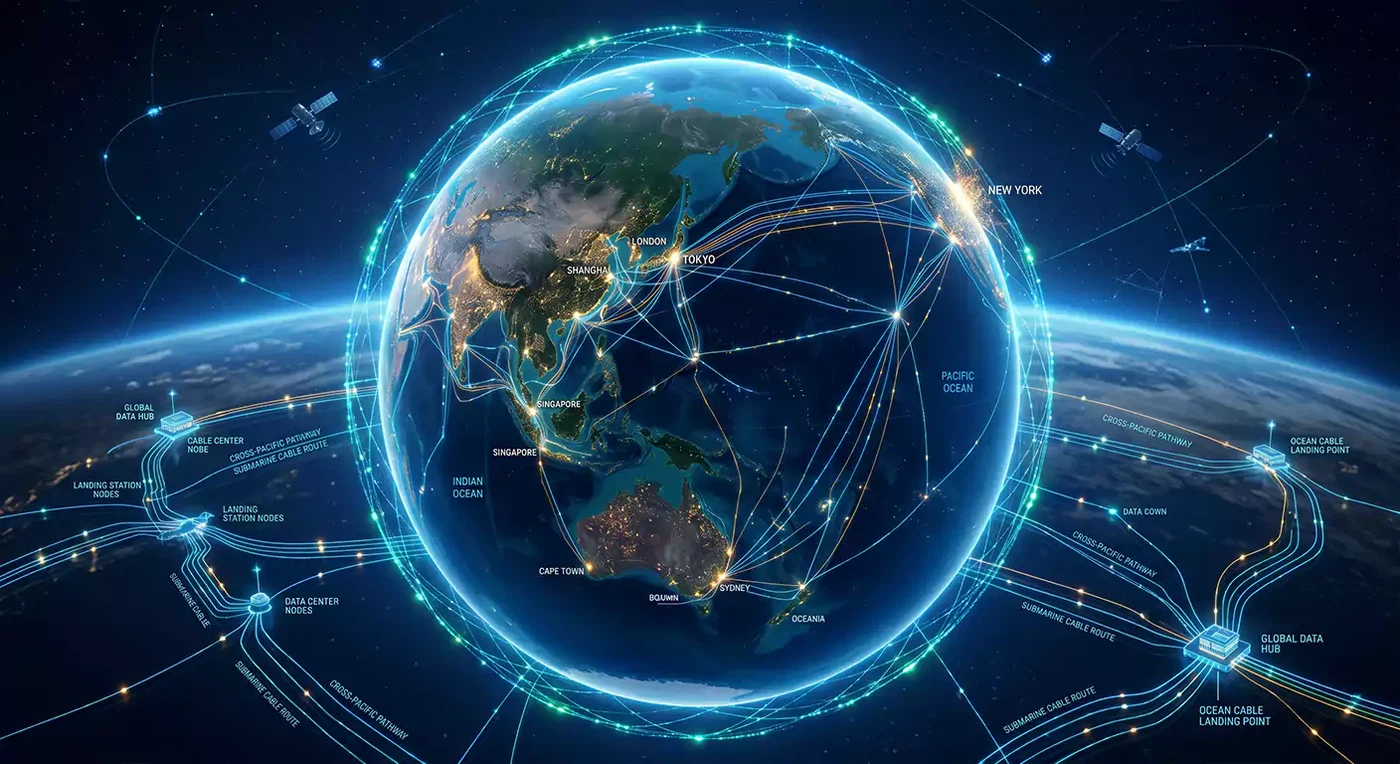
The telecommunications sector is the single largest consumer of fiber optic cables, forming the essential physical foundation of the global internet.
FTTH (Fiber to the Home) and Broadband Internet
For decades, the "last mile" of internet connectivity relied on aging copper telephone lines. FTTH, utilizing Passive Optical Network (PON) technology, brings fiber directly to residential premises. This is the only infrastructure capable of reliably supporting high-bandwidth demands such as 4K video streaming, high-definition remote conferencing, and multi-gigabit home internet connections without suffering from copper's distance-related slowdowns.
Transoceanic Submarine Cables: Connecting Continents
Over 99% of international data is transmitted across continents via submerged submarine cables, not satellites. These cables utilize ultra-pure Single-mode glass fibers to transmit terabits of information thousands of miles with minimal signal degradation.
Supporting 5G Rollout: Fiber as the Backhaul
There is no effective 5G rollout without a massive density of optical fiber. While 5G is wireless at the user end, the vast network of "small cells" requires a deep fiber backhaul to transport the massive amounts of low-latency data back to the core network.
2. Healthcare and Medical Technology (Precision and Safety)
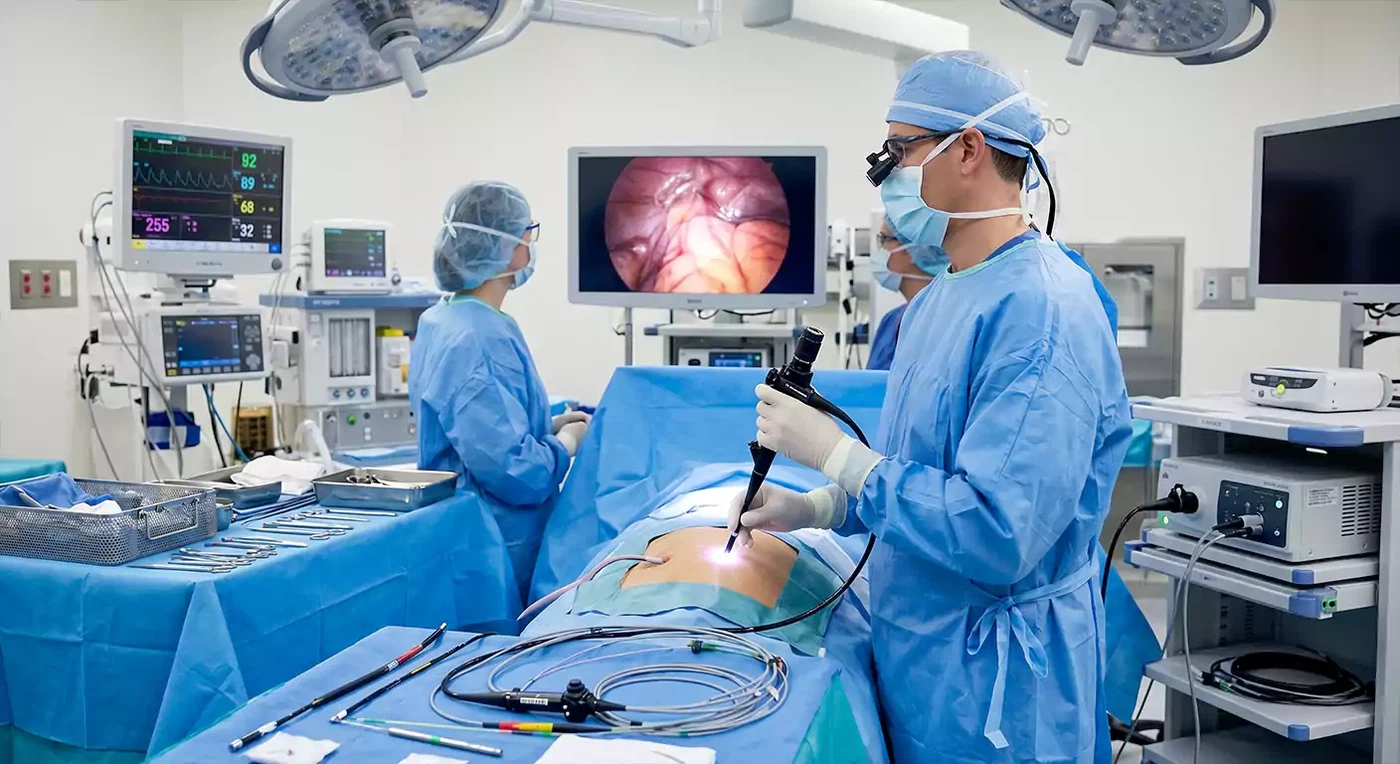
In medicine, fiber optics are not used for data transmission but for light delivery and visualization, prioritize patient safety, device flexibility, and imaging precision.
Minimally Invasive Surgery: Endoscopy and Laparoscopy
Fiber optic bundles are the core component of endoscopes, laparoscopes, and bronchoscopes. They are flexible, extremely small in diameter, and inert (biocompatible). This technology allows surgeons to illuminate dark internal cavities and transmit high-resolution, real-time images back to monitors, facilitating complex surgeries through tiny incisions with minimal patient downtime.
Laser Treatments and Diagnostics
Optical fibers act as precise delivery systems for medical lasers. These systems transport high-power laser energy for sensitive procedures, such as laser eye surgery (LASIK), kidney stone fragmentation (lithotripsy), and specific dermatology treatments, ensuring the energy is delivered exactly to the target tissue without damaging surrounding areas.
3. Industrial Automation and Internet of Things (IIoT)
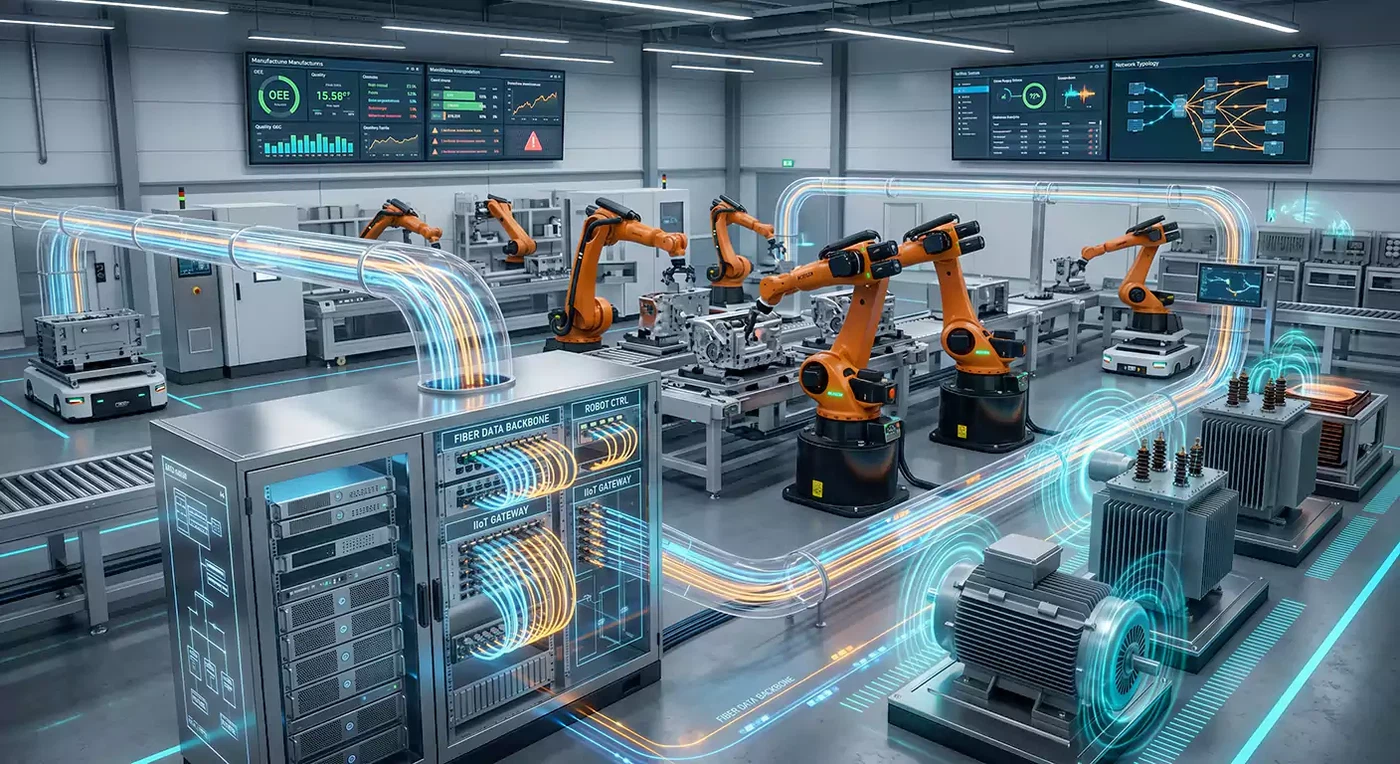
The physical environment of a modern factory is the ultimate testing ground for connectivity, where optical fiber often succeeds where traditional copper fails.
Factory Floor Communication and Robotics Control
Industrial environments are saturated with heavy motors, welders, and variable frequency drives (VFDs) that generate massive amounts of Electromagnetic Interference (EMI) and Radio Frequency Interference (RFI). This noise can corrupt data on copper cables. Optical fiber, being glass, is totally immune to EMI/RFI. Furthermore, it provides total galvanic isolation, preventing ground loops and protecting sensitive robotic control systems from catastrophic electrical surges.
Internal Link Suggestion: Link here to a product page for Ruggedized/Armored Fiber Cables.
4. Military and Aerospace Applications (Security and Reliability)
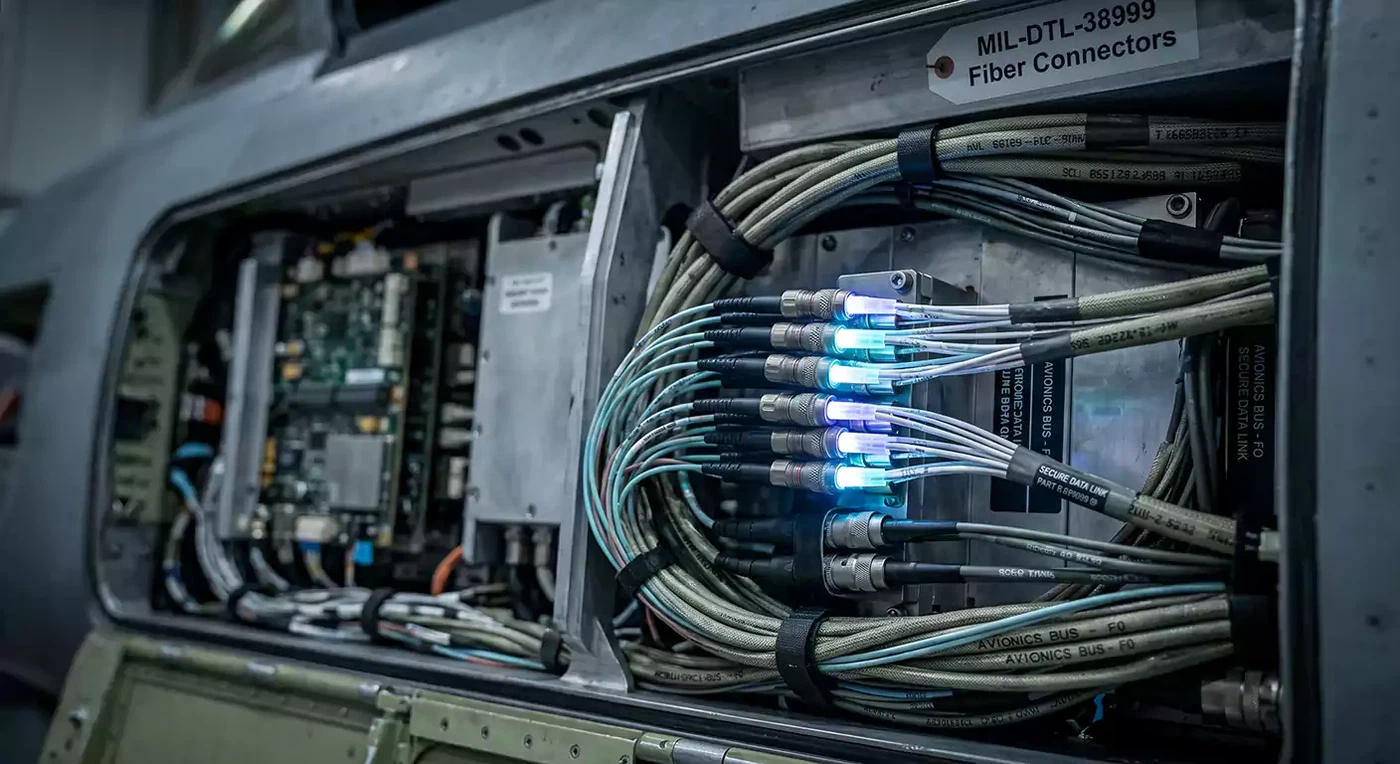
For life-critical systems in the defense sector, reliability must be absolute.
Avionics and Missile Guidance Systems
The military-aerospace sector utilizes ruggedized fiber for mission-critical avionics data buses (e.g., in F-35 fighter jets). B2B procurement prefers fiber not just for speed, but because it is significantly lighter than copper wiring bundles, a vital factor in aircraft and spacecraft fuel efficiency.
Emphasis is also placed on secure, tap-proof data transmission. Because fiber transmits light rather than electricity, it is inherently difficult to "tap" the signal non-invasively without causing a detectable signal loss.
5. [New High-Value] Optical Fiber Sensing (More Than Just Data)
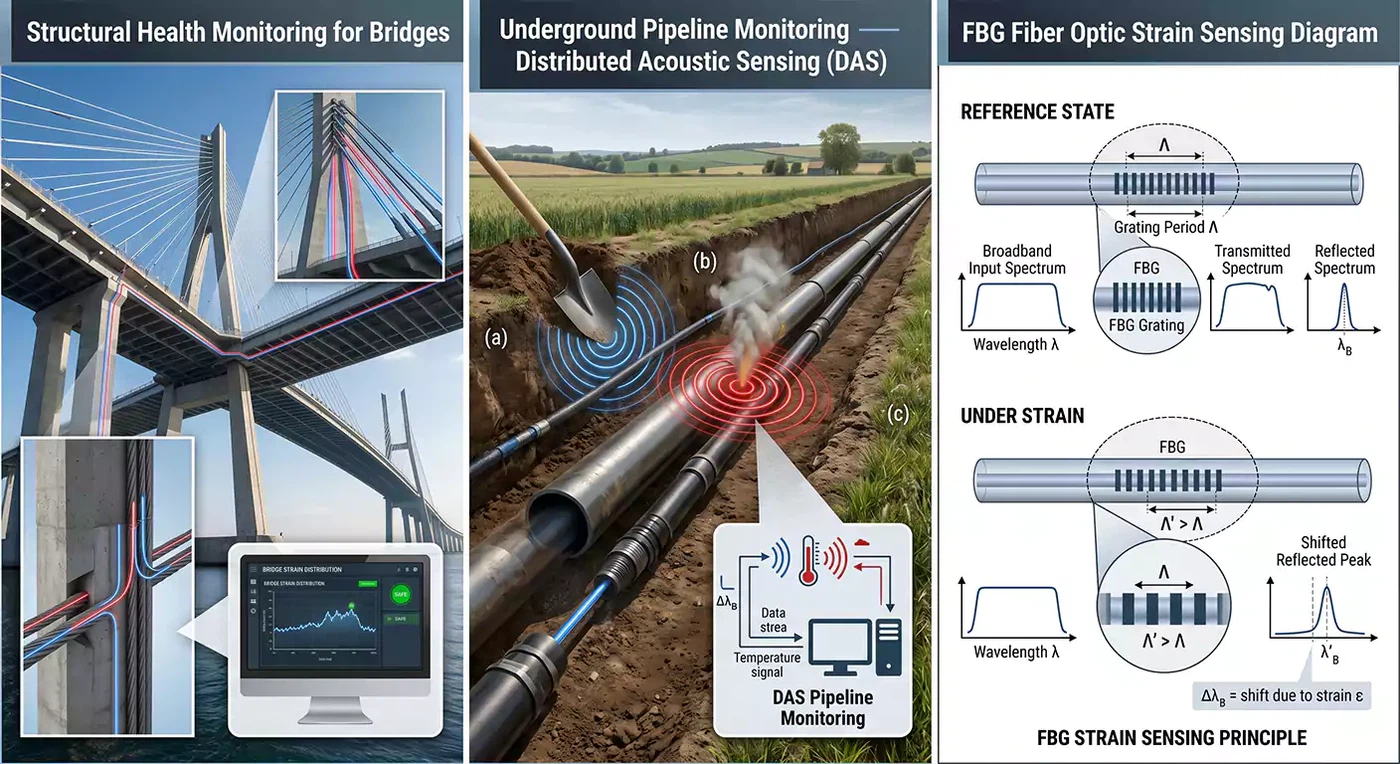
A growing, highly specialized B2B sector utilizes the fiber optic cable itself as a continuous, distributed sensor.
Structural Health Monitoring (Bridges, Dams, Skyscrapers)
Specific fibers (like those using Fiber Bragg Gratings or FBG) can act as distributed sensors to continuously monitor critical infrastructure. These fibers detect tiny changes in strain, temperature, and pressure along their entire length. This provides structural engineers with 24/7 data on the structural health of bridges, dams, or skyscrapers, preventing catastrophic failures without needing powered sensors at every measurement point.
Oil and Gas Pipeline Leak Detection using Distributed Acoustic Sensing (DAS)
In the energy sector, Distributed Acoustic Sensing (DAS) turns a standard fiber optic cable into a continuous microphone. By monitoring backscattered light patterns, operators can detect the unique acoustic signature of a leak, ground movement, or unauthorized encroachment miles away, pinpointing the location exactly along thousands of miles of pipeline.
6. Automotive Industry and Intelligent Transportation
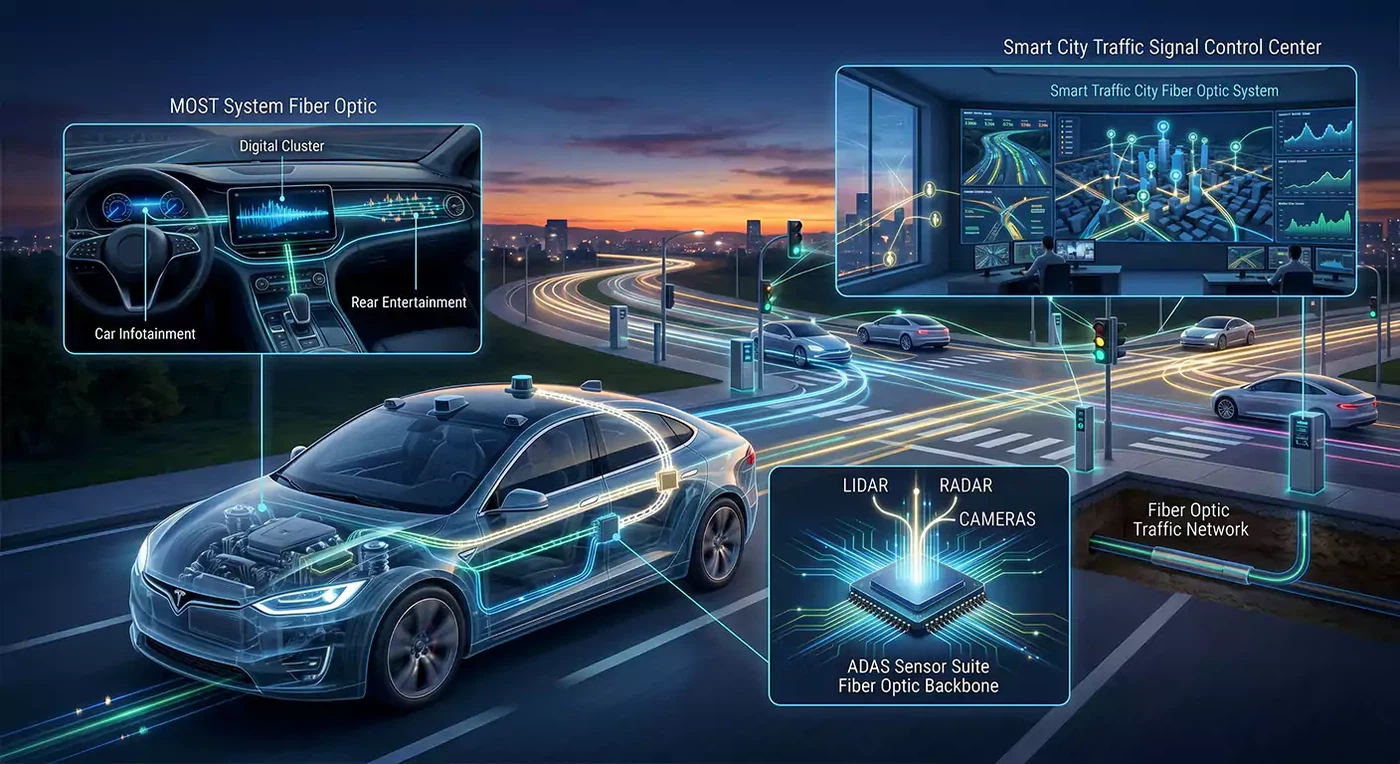
The automotive market is transitioning to high-tech, connected vehicles where fiber plays a growing role.
In-vehicle Infotainment and Safety Sensor Networks
Modern luxury and electric vehicles utilize complex infotainment systems and advanced driver assistance systems (ADAS) that require significant bandwidth. Automotive-grade plastic optical fiber (POF) is increasingly used (referencing standards like MOST-Media Oriented Systems Transport) because it reduces weight, provides EMI resistance, and can withstand the harsh vibrations of an vehicle's engine compartment.
Traffic Management Systems
Smart city infrastructure relies on fiber optic backhaul to connect networks of traffic cameras, tolling systems, and adaptive traffic signals. This high-bandwidth, low-latency connection is essential for real-time video analytics and synchronized traffic management.
7. Other Notable Uses (Lighting, Education, and Research)
While less prominent in mass B2B procurement, fiber optics are also essential for high-power laser transmission in research laboratories, decorative lighting solutions (such as end-glow fiber for architecture), and specialized illumination systems for high-magnification microscopy in educational settings.
Why is Optical Fiber Replacing Copper? Key Advantages
The overwhelming global shift from copper infrastructure to optical fiber is driven by four key performance differentiators.
Bandwidth and Speed:
A single strand of fiber can transmit multiple terabits of data per second, whereas copper is hitting physical limits. Fiber offers nearly symmetrical upload and download speeds, a necessity for IIoT and cloud computing.
Distance (Low Attenuation):
Optical signals experience very low signal loss (attenuation) over distance. While copper requires frequent repeaters (every 100 meters), Single-mode fiber can transmit data over kilometers without signal amplification.
Resistance to Interference (EMI/RFI):
As highlighted in industrial applications, glass fiber is completely impervious to the electrical noise that corrupts copper signals, making it the only choice for modern, high-voltage factory environments.
Security:
Without special equipment, it is nearly impossible to physically tap into an optical fiber without the system detecting the disruption immediately, providing superior data security for military and financial sectors.
Choosing the Right Solution: A Brief Cost-Benefit Consideration
For B2B engineers and procurement specialists, the choice between fiber and copper requires a total cost of ownership (TCO) analysis rather than just comparing initial capital expenditure (Capex).
It is true that fiber optic systems can have higher initial installation costs. Fiber transceivers and splicing equipment are more expensive than their copper counterparts, and glass fiber is fundamentally more fragile than copper, requiring careful handling during installation.
However, over a 10 to 15-year infrastructure lifespan, the argument changes. Optical fiber is future-proof; its bandwidth capacity is effectively limitless. Fiber also has significantly lower maintenance and cooling requirements than copper infrastructure. For critical B2B applications where EMI resilience, data density, or massive distances are involved, fiber is not just an upgrade-it is a necessity.
Conclusion and Future Trends
Optical fiber is no longer just a telecommunications technology; it is the non-negotiable foundation of our digital infrastructure, modern medicine, and industrial reliability. For sectors planning a decade ahead, opting for fiber is a standard future-proofing measure. Emerging trends like Quantum Communication (which requires optical channels for entanglement) and the use of Space-Division Multiplexing (SDM) in next-generation cables will only increase the strategic importance of optical fiber.
FAQ
What is the most common application of optical fiber?
The most common application is in Telecommunications and the internet backbone. specifically, single-mode fiber is used for long-haul networks and submarine cables, while multimode fiber is dominant in data centers. FTTH (Fiber to the Home) is the most recognizable residential application.
Why is optical fiber used in medicine?
Because it is inert (biocompatible), flexible, non-conductive, and has a tiny diameter. These properties allow it to safely transmit illumination light into the body and high-resolution images out during endoscopy or minimally invasive surgeries without electrical risk to the patient.
Are there any disadvantages to using optical fiber cables?
Yes. The initial cost for transceivers and active equipment is higher than copper. Installation complexity is higher, requiring precision splicing. Glass fiber is also fragile and susceptible to damage (microbends) if bent beyond its specified minimum bend radius.
Can optical fiber be used for sensing?
Yes, highly effectively. Distributed Fiber Optic Sensing (DFOS) turns the entire fiber into a continuous sensor for temperature, strain (pressure), and acoustics. This is crucial for pipeline monitoring (leak detection) and structural health monitoring of bridges and dams.