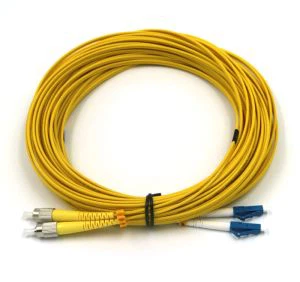


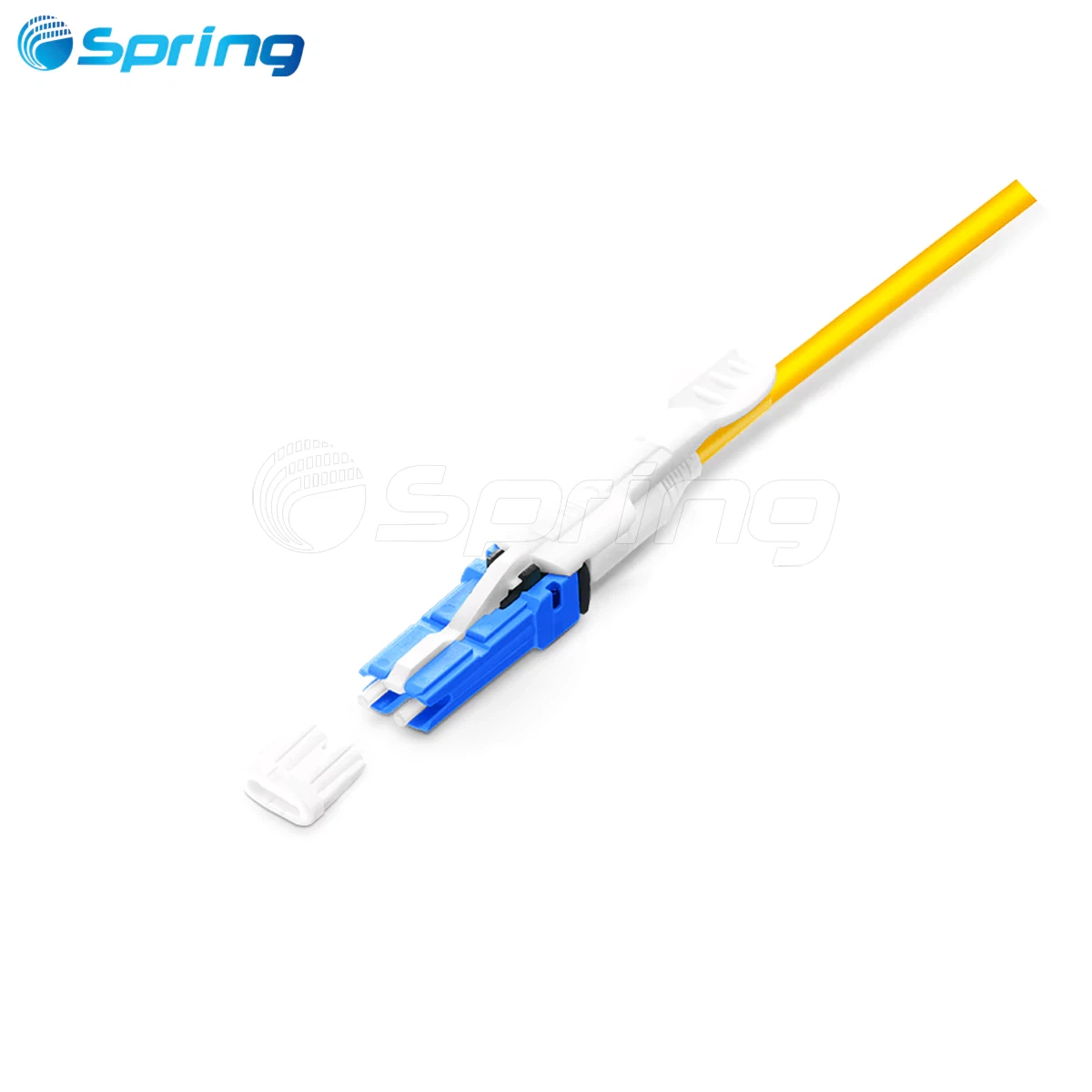
Spring Optical Communication is one of the largest and best cs fiber patch cord for high-density 200g/400g data center networks manufacturers and suppliers with rich experience. Welcome to buy our high quality products or wholesale our customized cs fiber patch cord for high-density 200g/400g data center networks in stock with our factory. Also, free sample is also available if necessary.
Product Overview
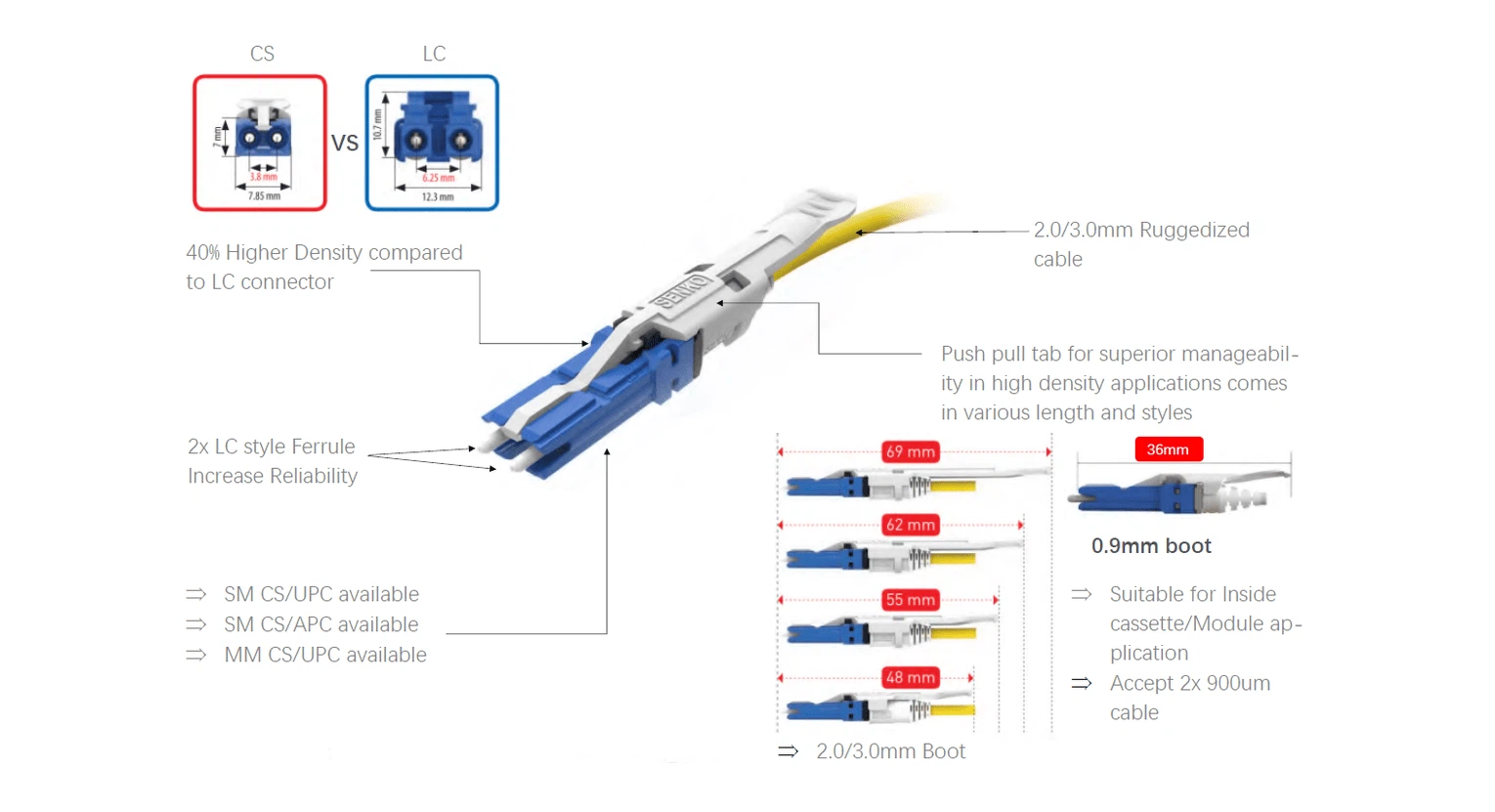
CS Fiber Patch Cords are high-performance fiber optic assemblies designed for next-generation 200G and 400G data center networks. Built around the miniature CS connector, these patch cords offer compact size, low insertion loss, and high return loss comparable to standard LC connectors, making them ideal for high-density environments.
The CS connector features a 1.25 mm duo cylindrical spring-loaded ferrule with a push-pull coupling mechanism, ensuring easy insertion and removal in dense patch panels. Its optical alignment mechanism uses either a rigid or resilient sleeve for precise connection. CS Fiber Patch Cords are fully compatible with QSFP-DD and OSFP transceivers, supporting 2x100G or 200G CWDM4 links.
Widely adopted in hyperscale data centers, cloud computing infrastructure, and AI/HPC clusters, CS Fiber Patch Cords optimize fiber routing, minimize footprint, and improve port density. Spring Optical manufactures these assemblies under strict quality control and in compliance with TIA, IEC, and YD/T standards. They support multiple fiber types including OS2, OM1, OM2, OM3, OM4, and OM5, meeting the requirements of high-speed Ethernet and Fiber Channel applications.
Key Features
·High-density CS connector design for space-constrained environments
·Supports 200G / 400G data center applications with QSFP-DD and OSFP transceivers
·Push-pull coupling mechanism for quick and easy installation
·Low insertion loss ensures stable and reliable signal transmission
·Compatible with OS2 and multimode fibers (OM1–OM5)
·Miniature footprint reduces cable congestion and improves airflow
·Rugged cable design with internal strain relief for long-term durability
Product Variants
Fiber Types: OS2, OM1, OM2, OM3, OM4, OM5
Connector Types: CS, CS-LC, CS-FC, CS-SC, CS-ST, CS-E2000
Cable Types: 0.9 mm, 2.0 mm, 3.0 mm OD
Cable Lengths: 0.5 m – 100 m (tolerance ±0–15 cm depending on length)
Optional MPO/MTP-CS fanout assemblies: 8, 12, 16, 24 cores
Optional gang-clip for 2x4 or 8-fiber simultaneous patching
Applications of CS Fiber Patch Cords
CS Fiber Patch Cords are widely used in:
Hyperscale data centers and cloud platforms
AI and HPC clusters with high port density requirements
200G/400G Ethernet networks (QSFP-DD / OSFP transceivers)
High-speed telecom infrastructures and optical distribution networks
Typical Network Architecture of CS Fiber Patch Cords
In modern data centers, CS Fiber Patch Cords connect QSFP-DD or OSFP transceivers to high-density patch panels. A typical deployment includes:
Topology: Spine-leaf switching
Fiber Routing: CS patch cord → Patch Panel → MPO/MTP trunk → Distribution Area
Deployment Notes:
Short duplex runs connect servers to top-of-rack switches
Fanout assemblies connect MPO trunks to multiple CS or CS-LC patch cords
Push-pull connectors simplify insertion in dense panels
Compact design reduces congestion and allows efficient airflow management
Product Advantages
High scalability supporting future 200G/400G upgrades
Miniature footprint enables ultra-high port density
Push-pull mechanism for easy installation and maintenance
Stable optical performance with low insertion and high return loss
Long-term reliability in harsh data center environments
Diagram of CS Fiber Patch Cords
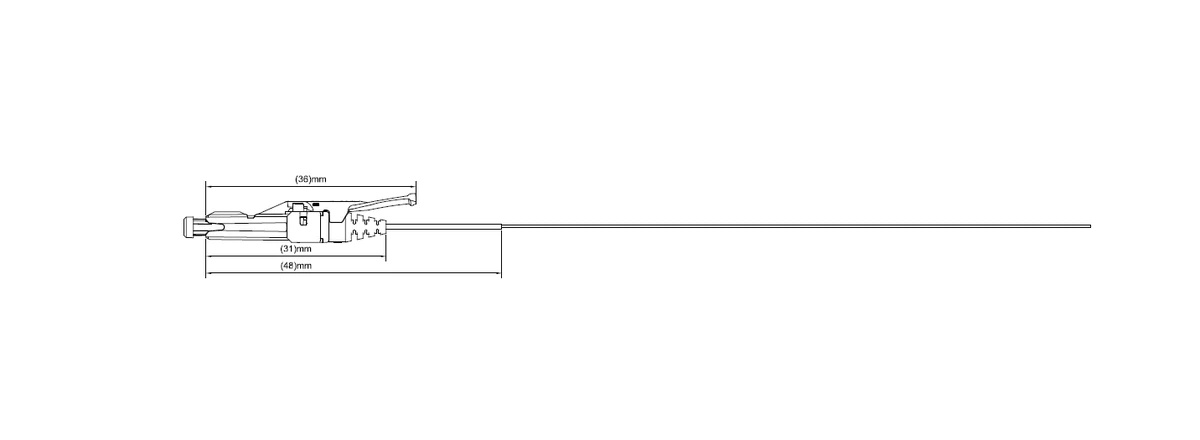
CS 2-Core Pigtails – Available in 2.0 mm, 0.9 mm, and 250 µm cable types for flexible splicing and termination.
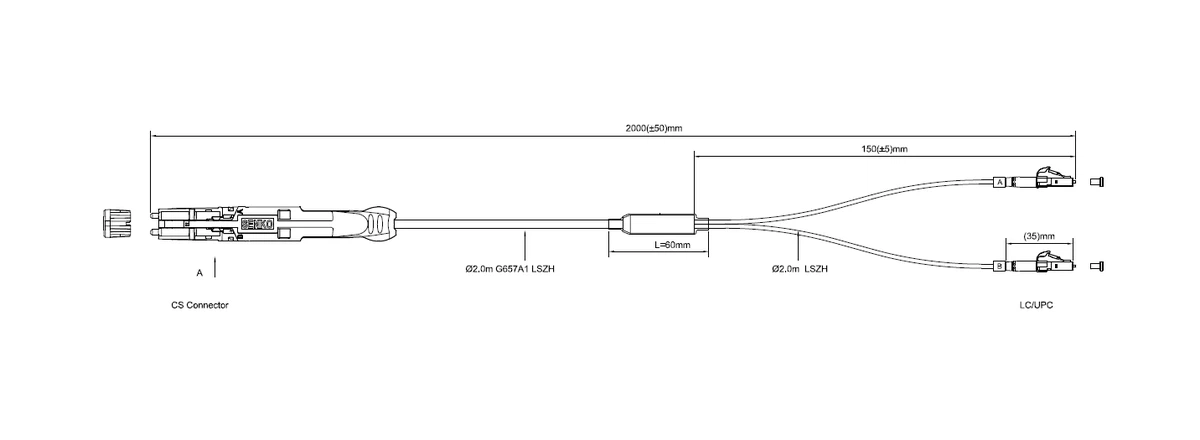
CS-LC 2-Core Patch Cables – Also offered in CS-FC, CS-SC, CS-ST, and CS-E2000 configurations for diverse connectivity needs.
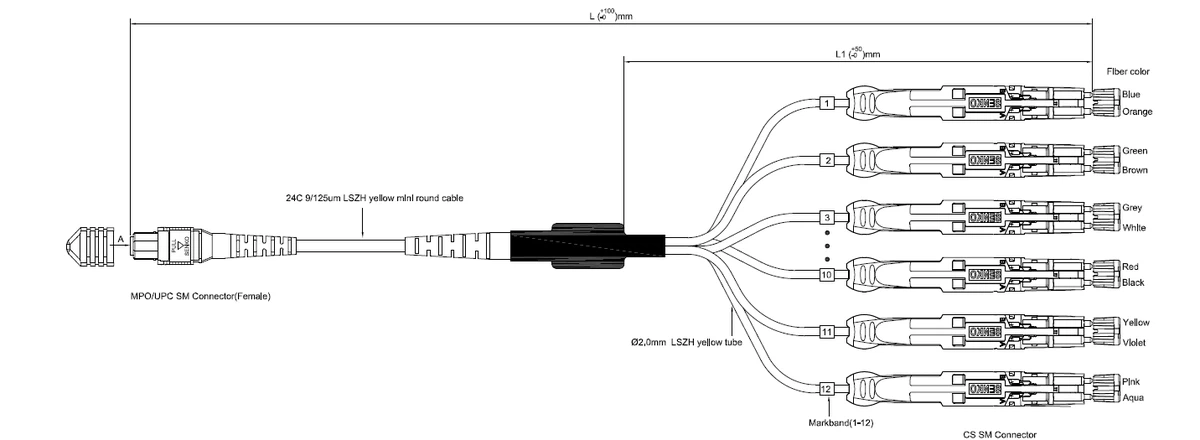
MPO/MTP to CS Fanout Cables – 8, 12, 16, or 24 cores, with 0.9 mm and 2.0 mm fanout options for high-density trunk connections.
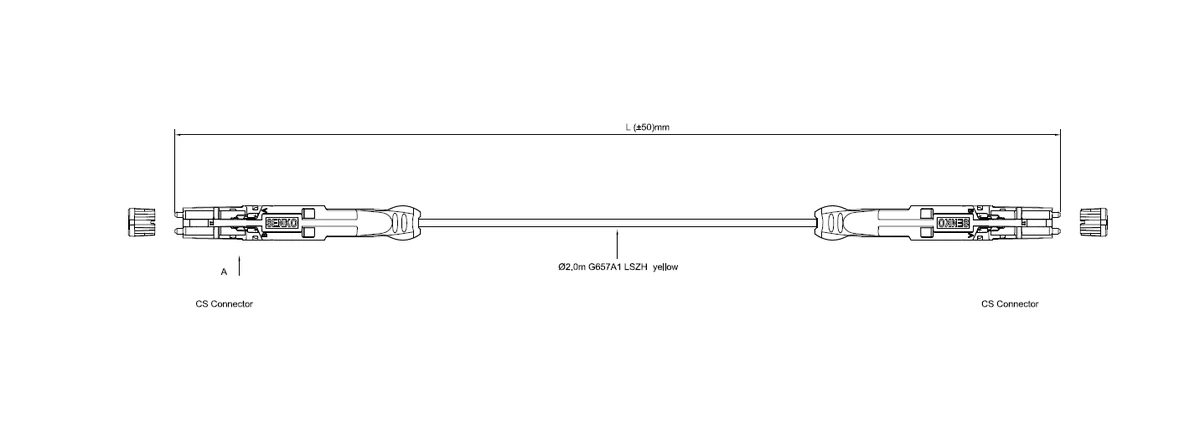
CS-CS 2-Core Patch Cables – Standard duplex CS connections for short-run interconnects or patch panel deployment.
How to Choose the Right Fiber for Your Optical Network
Selecting the appropriate fiber type is critical for achieving optimal performance in 200G/400G data center networks. Spring Optical CS Fiber Patch Cords are compatible with multiple fiber types, each suited for specific applications and transmission distances:
OS2 Single-Mode Fiber (9/125 μm) – Ideal for 1G, 10G, 40G, 100G, and 400G Ethernet connections. Supports up to 10 km at 1310 nm or 40 km at 1550 nm.
OM1 Multimode Fiber (62.5/125 μm) – Suitable for 100/1000BASE-SX transceivers in Fast Ethernet, Gigabit Ethernet, and Fiber Channel applications.
OM2 Multimode Fiber (50/125 μm) – Supports 1000BASE-SX and SFP transceivers for Gigabit Ethernet and Fiber Channel.
OM3 Multimode Fiber (50/125 μm, Laser Optimized) – Preferred for 10G SR, 10G LRM, SFP+ transceivers, supporting 10G, 40G, and 100G Ethernet connections.
OM4 Multimode Fiber (50/125 μm, Laser Optimized) – Ideal for 40G BIDI SR, 10G SR, QSFP+, and SFP+ transceivers, preferred for 40G/100G Ethernet.
OM5 Wideband Multimode Fiber (50/125 μm) – Optimized for multi-wavelength SWDM applications (850–950 nm), reducing fiber count by four times for 40G and 100G links while remaining fully backward compatible with OM4 networks. RoHS compliant, optically tested for insertion loss.
Transmission Distance Table
| Designation | Fiber Dia. (μm) | Type | 100BASE-FX | 1000BASE-SX | 1000BASE-LX | 10GBASE | 40GBASE | 100GBASE |
|---|---|---|---|---|---|---|---|---|
| OM1 | 62.5/125 | Multi-mode | 2000 m | 275 m | 550 m | 33 m | Not supported | Not supported |
| OM2 | 50/125 | Multi-mode | 2000 m | 550 m | 550 m | 82 m | Not supported | Not supported |
| OM3 (Laser Optimized) | 50/125 | Multi-mode | 2000 m | 550 m | 550 m | 300 m | 100 m (SR4) | 100 m (SR4) |
| OM4 (Laser Optimized) | 50/125 | Multi-mode | 2000 m | 550 m | 550 m | 400 m | 150 m (SR4) | 150 m (SR4) |
| OS2 | 9/125 | Single-mode | 2000 m | 5 km @ 1310 nm | 5 km @ 1310 nm | 10 km @ 1310 nm | N/A | N/A |
FAQ
Q: What is a CS Fiber Patch Cord?
A: A high-density fiber assembly with CS connectors for 200G/400G networks.
Q: What is the advantage over LC patch cords?
A: Smaller footprint, higher port density, and push-pull installation ease.
Q: What fiber types are supported?
A: Single-mode OS2 and multimode OM1–OM5.
Q: Are CS patch cords compatible with QSFP-DD and OSFP?
A: Yes, optimized for next-generation 200/400G transceivers.
Q: Can the CS Fiber Patch Cord be customized?
A: Yes, full OEM/ODM services are available.
Looking for a reliable CS Fiber Patch Cord supplier?
Spring Optical provides technical consultation, OEM customization, and fast delivery for global data center and telecom projects.
Contact us to discuss your requirements and receive a detailed quotation.
Hot Tags: SN Fiber Optic Patch Cords,SN patch cord,SN connector
Technical Specifications
Optical Performance
| Parameter | Specification |
|---|---|
| Insertion Loss | ≤0.25 dB Mean (Standard) |
| Interchangeability | ≤0.2 dB |
| Return Loss (SM UPC) | ≥50 dB |
| Return Loss (SM APC) | ≥60 dB |
| Return Loss (MM PC) | ≥35 dB |
| Vibration | ≤0.2 dB |
| Operating Temperature | -40°C ~ +75°C |
| Maximum Pulling Force | 6N (900μm) / 70N (2.0 mm) / 100N (3.0 mm) |
Geometric Specifications
| Items | PC | APC |
|---|---|---|
| ROC | 7–25 mm | 5–12 mm |
| Apex Offset | ≤50 μm | - |
| Fiber Spherical Height | ±100 nm | ±100 nm |
| Angle | ±0.5° | 8° ±0.5 |
End-face Quality (SM)
| Zone | Range (μm) | Scratches | Defects | Reference |
|---|---|---|---|---|
| Core | 0–25 | None | None | IEC 61300-3-35:2015 |
| Cladding | 25–115 | None | None | - |
| Adhesive | 115–135 | None | None | - |
| Contact | 135–250 | None | None | - |
| Rest of Ferrule | - | None | None | - |
End-face Quality (MM)
| Zone | Range (μm) | Scratches | Defects | Reference |
|---|---|---|---|---|
| Core | 0–65 | None | None | IEC 61300-3-35:2015 |
| Cladding | 65–115 | None | None | - |
| Adhesive | 115–135 | None | None | - |
| Contact | 135–250 | None | None | - |
| Rest of Ferrule | - | None | None | - |