

Author: CoCo coco@springoptic.com

What's the Fiber Optic Pigtail?
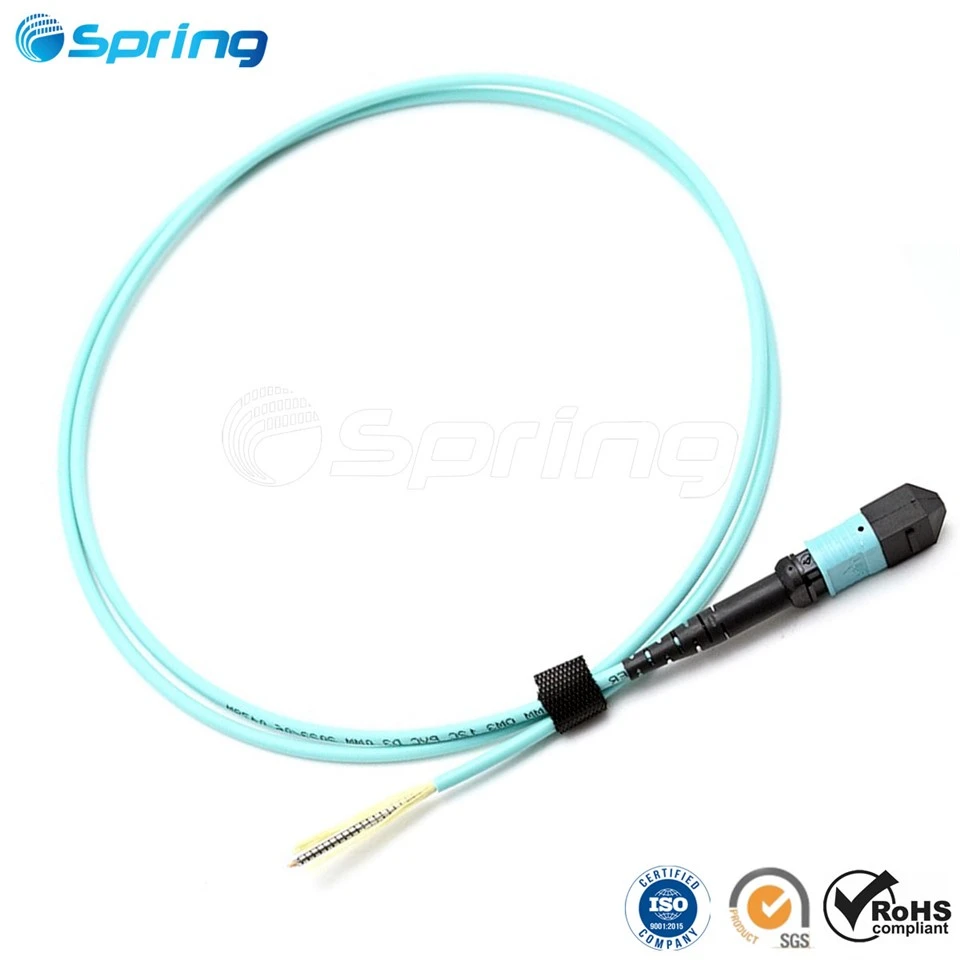
Fiber optic pigtail is a fiber optic cable that has an optical connector on one end and a length of exposed fiber on the other end. The connector side is used to link the equipment, while the other side is melted together with the fiber optic cable.
A fiber pigtail is single, short, usually tight-buffered. The technology of optical fiber fusion splicer is used during the process which can lower the insertion loss, that is, the end of the pigtail is stripped and fusion spliced to a single fiber of a multi-fiber trunk. Splicing of pigtails to each fiber in the trunk "breaks out" the multi-fiber cable into its component fibers for connection to the end equipment.
Fiber Optic Pigtail Connector Types
|
Connector Type |
Physical Design & Appearance |
Primary Applications |
Key Advantages |
Key Disadvantages |
|
LC |
Small, square form factor, push-pull latching. Ceramic ferrule: 1.25mm. |
Data Centers, High-Density Patching, Central Offices, SFP/SFP+ Transceivers. |
High Density, Small Size, Excellent Performance. |
Relatively fragile, lower pull strength. |
|
SC |
Square form factor, push-pull latching. Ceramic ferrule: 2.50mm. |
LANs, FTTH, Single-Mode Networks, CATV. |
Easy insertion/removal, stable connection, cost-effective. |
Lower density than LC. |
|
FC |
Round, threaded barrel for coupling. Ceramic ferrule: 2.50mm. |
Test Equipment, Telecom Rooms, High-Vibration Environments. |
High Stability, Vibration-Resistant, Durable. |
Slower installation/removal (threading), lower density. |
|
ST |
Round, bayonet-style coupling (similar to BNC). Ceramic ferrule: 2.50mm. |
Legacy Multimode Networks, LANs, Security Systems. |
Robust and durable. |
Lower density, prone to accidental disconnection, being phased out. |
|
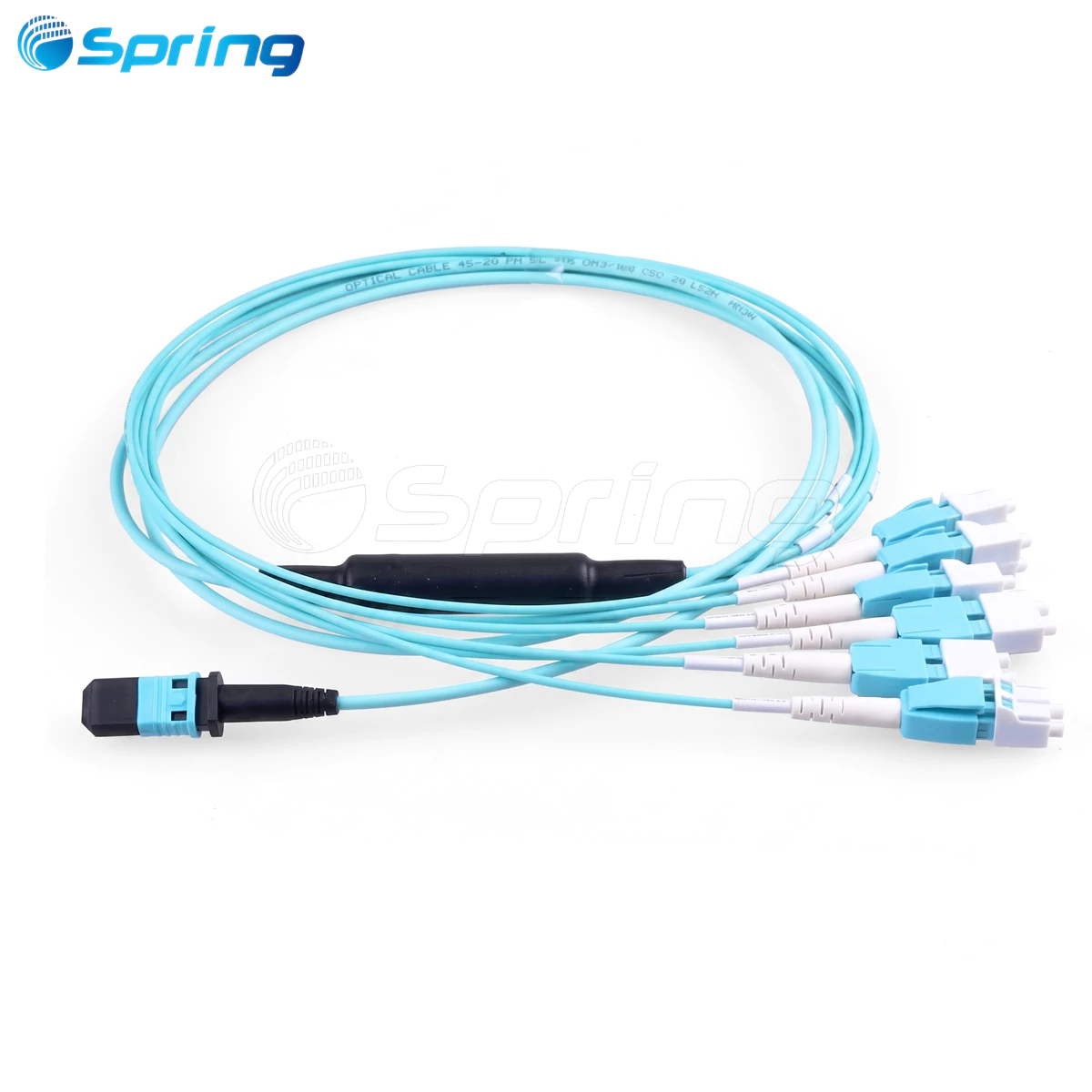
MTP/MPO |
Multi-fiber connector, rectangular shape. Holds 12/24/32 fibers. |
High-Speed Data Centers(40G/100G/400G Ethernet), Parallel Optics. |
Highest Density, Multi-fiber Parallel Transmission. |
Complex end-face cleaning, Higher cost, more complex installation. |
|
E2000 |
Square form factor, push-pull latching, integrated spring-loaded shutter. |
FTTH, Secure Areas, Common in Europe. |
Automatic Dust Protection, Secure, Low Return Loss. |
Less universal, higher cost. |

Fiber Optic Pigtail Color Chart
|
Color |
Primary Meaning |
Fiber Type / Connector Type |
Typical Applications |
|
Yellow |
Single-Mode Fiber |
Single-Mode (OS1/OS2), typically UPC polish |
Long-haul networks, Telecommunications, FTTH |
|
Orange |
Multimode Fiber (OM1/OM2) |
Multimode Fiber (62.5/50um), typically UPC polish |
LANs, Enterprise Networks, Surveillance Systems |
|
Aqua |
Multimode Fiber (OM3/OM4) |
Laser-optimized Multimode Fiber (50um), typically UPC polish |
High-speed Data Centers (40G/100G Ethernet) |
|
Violet / Lime Green |
Multimode Fiber (OM5) |
Wide Band Multimode Fiber, typically UPC polish |
High-capacity Data Centers (supports SWDM) |
|
Green |
APC Connector |
Typically Single-Mode Fiber, always with APC polish |
FTTx, CATV, WDM Systems (reflection-sensitive) |
|
Blue |
UPC Connector |
Can be Single-Mode or Multimode, UPC polish |
General-purpose, one of the most common connector types |
|
Gray |
Multimode Fiber (OM1) |
Older Multimode (62.5um), UPC polish |
Older LAN / Building Backbone Cabling |
|
Beige / Tan |
UPC Connector |
Common for small form factor connectors (e.g., LC), UPC polish |
General-purpose, high-density installations |
|
Black |
General Use / Outdoor |
Can be any type, often used for generic or outdoor cables |
General patching, outdoor applications |
|
Red |
Special Application / Emergency |
Can be any type, used for highlighting critical links |
Critical circuits, emergency systems, designated secure lines |
12 Color Fiber Optic Pigtail


The full forms of the abbreviations in the image above:
| SC | LC | FC | ST | E2C | SM | MM | APC | UPC |
|---|---|---|---|---|---|---|---|---|
| Subscriber Connector | Lucent Connector | Ferrule Connector | Straight Tip | Enhanced 2-Component Connector | Single Mode | Multimode | Angled Physical Contact | Ultra Physical Contact |
If you can't find the fiber optic pigtail you're looking for, please don't hesitate to contact us. We'd be happy to send you more detailed information.
Frequently asked Questions: Fiber Optic Pigtails
1. What is a fiber optic pigtail, and how is it different from a fiber optic patch cord?
Answer: A fiber optic pigtail is normally only equipped with a connector on one end, and the other end is spliced directly onto the fiber optic cable, whereas the fiber optic patch cord has a connector on both ends of the cable and is used for patching or interconnecting devices in a network.
2. Why are fiber optic pigtails used in fiber optic networks?
Answer: Fiber optic pigtails are used in fiber optic networks to connect the individual fibers of a multi-fiber trunk cable to the equipment. They are a very efficient way to make connections in a fiber optic network and are widely used in FTTH and data center applications.
3. What do UPC Polished and APC Polished mean with regard to fiber optic connectors?
Answer: The terms UPC (Ultra Physical Contact) and APC (Angled Physical Contact) refer to the polishing process utilized in the fiber optic connectors. An UPC polished connector has a flat surface contour, giving a very low return loss, while the APC polished connector has an angled connector (generally at an 8° angle) to reduce back reflection and is used in the field of single-mode fiber connections.
4. Why do fiber optic pigtails come in different colors?
Answer: The different colors of fiber optic pigtails assist in differentiating the different types of fibers and connector types involved. Yellow is generally used for single-mode fiber pigtails, while orange and aqua are used for multi-mode fiber pigtails. The different colors differentiate the types of various connection standards as well such as APC and UPC.
5. Can the fibre optic pigtails be used for indoor and outdoor purposes?
Answer: Yes, the fibre optic pigtails can be used for indoor and outdoor applications. The outdoor pigtails, however, are usually designed with extra protection to withstand the weather, particularly UV-resistant jackets.
6. How do we install a fibre optic pigtail?
Answer: The installation of a fibre optic pigtail usually consists of stripping the fibre, fusion splicing to a multi-fibre cable, and coupling the connector with respect to the fibre visible. The procedure requires some special tools, such as a fusion splicer, in order to keep the insertion losses at a minimum and the connection reliable.
7. What is the longest a fibre optic pigtail will go?
Answer: The longest a fibre pigtail will go depends very much on the type of fibre used and the application. The pigtails are generally short (about 1 to 5 metres) but can be obtained to any length for which applications are necessary, such as data centres or longer distance networks.
8. What are the most common fibre optic connector types in use with pigtail cables?
Answer: The commonest connector types for use with fibre optic pigtail connections are LC, SC, ST, MTP/MPO, and FC. The type of connector depends on the exact application in which the connectors are to be used.
9. Are fiber optic pigtails economical in big installations?
Answer: Yes, fiber optic pigtails are economical, particularly in large installations such as data centers and FTTH networks. They shorten installation time and installation costs because they facilitate the splicing procedure and enhance the reliability of connections.
10. How do I know which fiber optic pigtail to choose for my network?
Answer: In selecting a fiber-optic pigtail, the user should consider the kind of fiber used (single mode or multimode), the kind of connector employed (LC, SC, MTP, etc.), and the usage of the installation (data center, FTTH, telecom). Ensure that the pigtail is compatible with the existing equipment and that it satisfies the required performance standards.