

Author: Hayden
What Is a Multiport Service Terminal (MST) in FTTH?
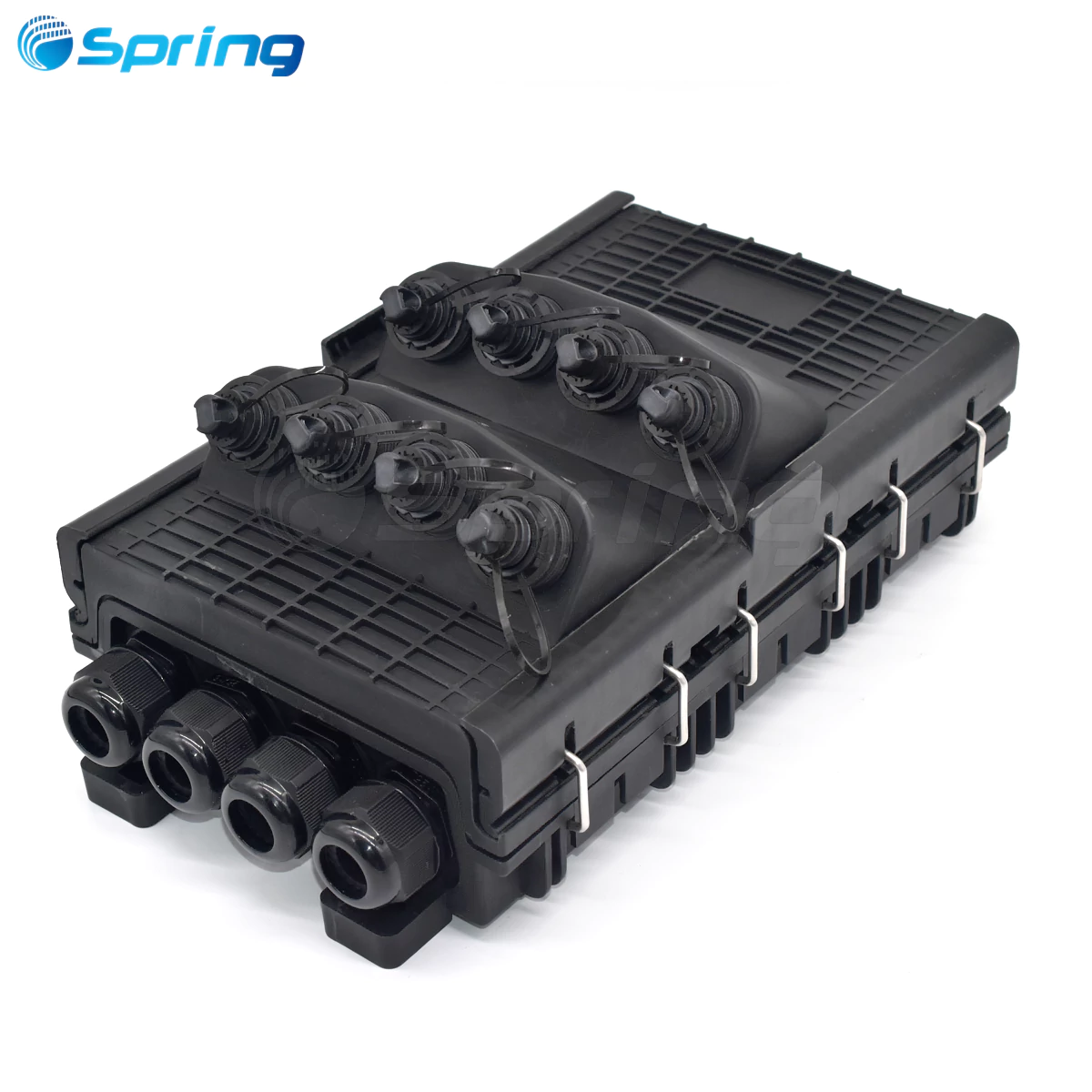
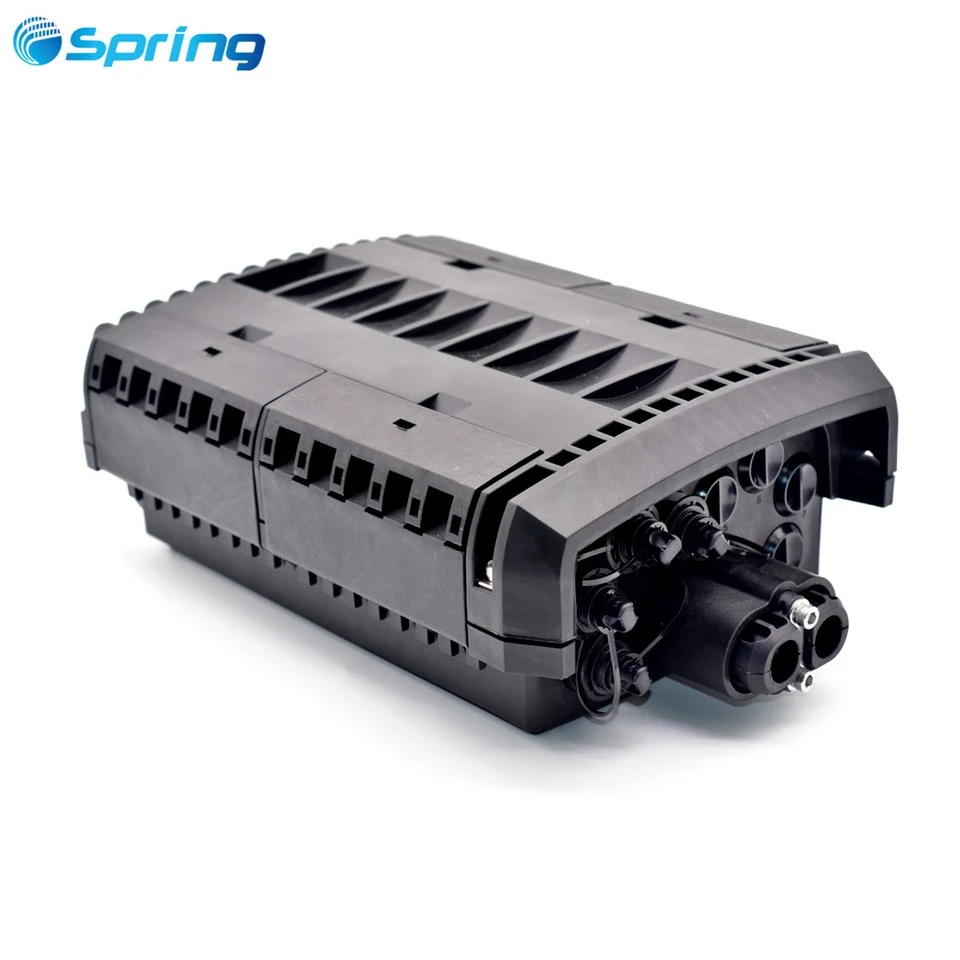
A Multiport Service Terminal (MST), also known as an MST fiber terminal or MST box, is a pre-connectorized fiber distribution device used in FTTH networks to quickly and efficiently connect feeder cables to multiple end users.
Installed in the outdoor Optical Distribution Network (ODN), the MST serves as the final access point before subscriber connections. Unlike traditional splice-based solutions, MST enables plug-and-play connectivity using hardened connectors, significantly reducing installation time, labor costs, and field errors.
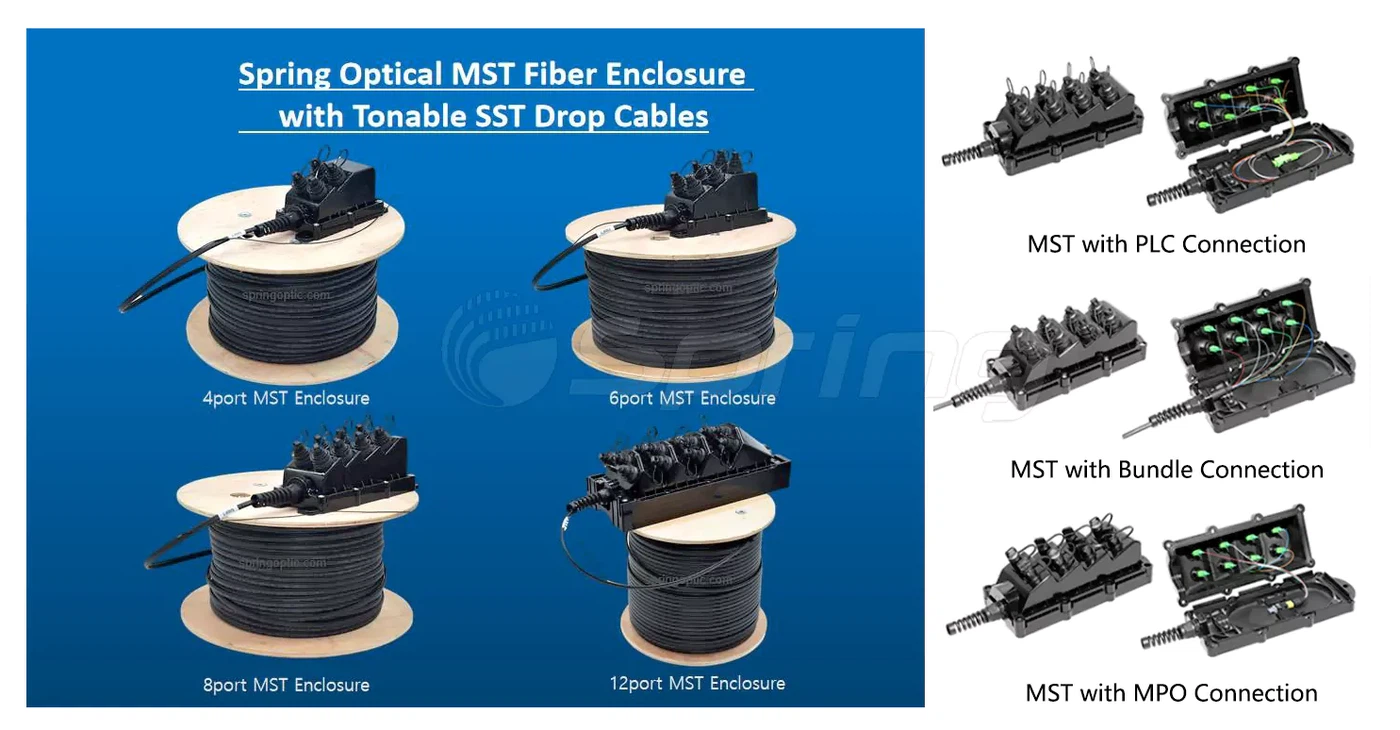
Typical End-to-End FTTH Deployment with Multiport Service Terminal (MST)
In real-world FTTH deployments, the Multiport Service Terminal (MST) is a key part of the complete end-to-end optical distribution solution. A standard architecture connects the feeder network to end users through multiple integrated components, ensuring efficient signal delivery and simplified installation.
Typical FTTH Network Structure OLT → Feeder Cable → FDH → Multiport Service Terminal (MST) → Drop Cable → Subscriber
This structure aligns with modern FTTH deployment principles used in GPON and XGS-PON networks.
Internal System Integration In a complete FTTH ecosystem, the MST works seamlessly with:
Network Interface Device (NID)
This integration ensures compatibility, scalability, and faster service activation.

Typical FTTH Solution Components
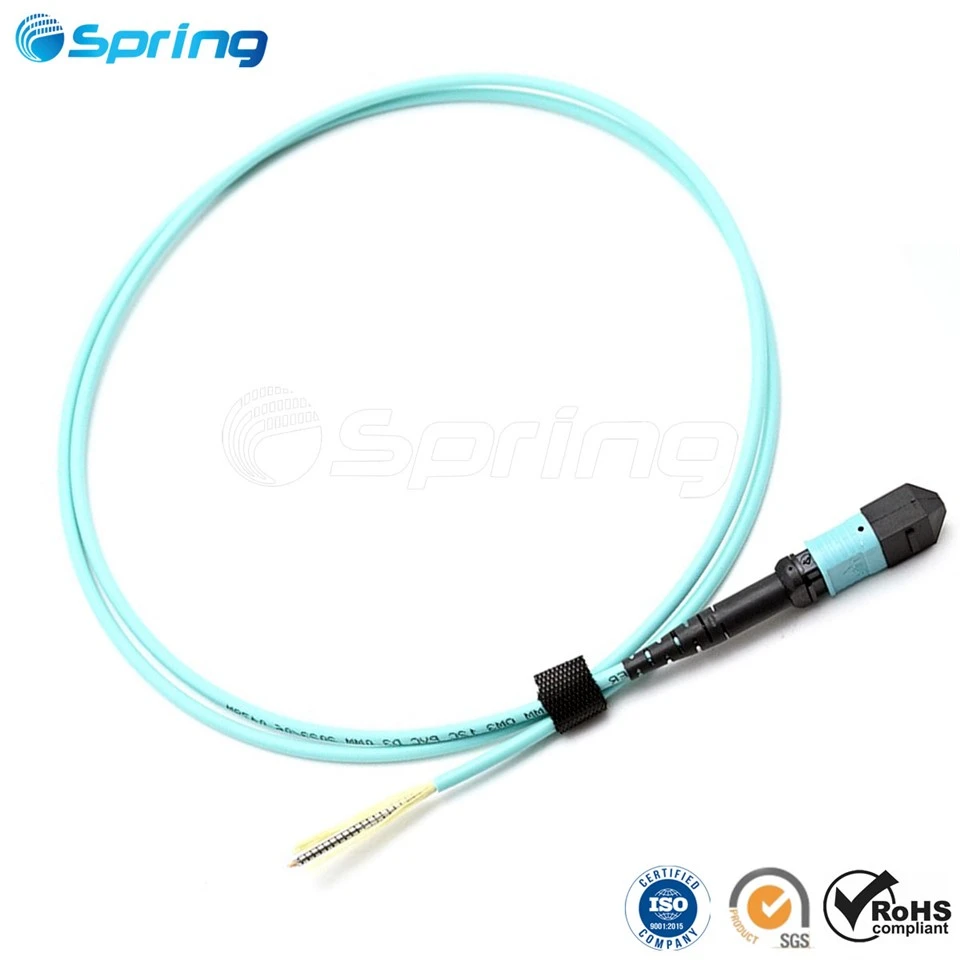
Pre-Connectorized Drop Cable High-quality ROC easy-strip cables and flat drop cables, designed for fast, neat, and cost-effective last-mile deployments.
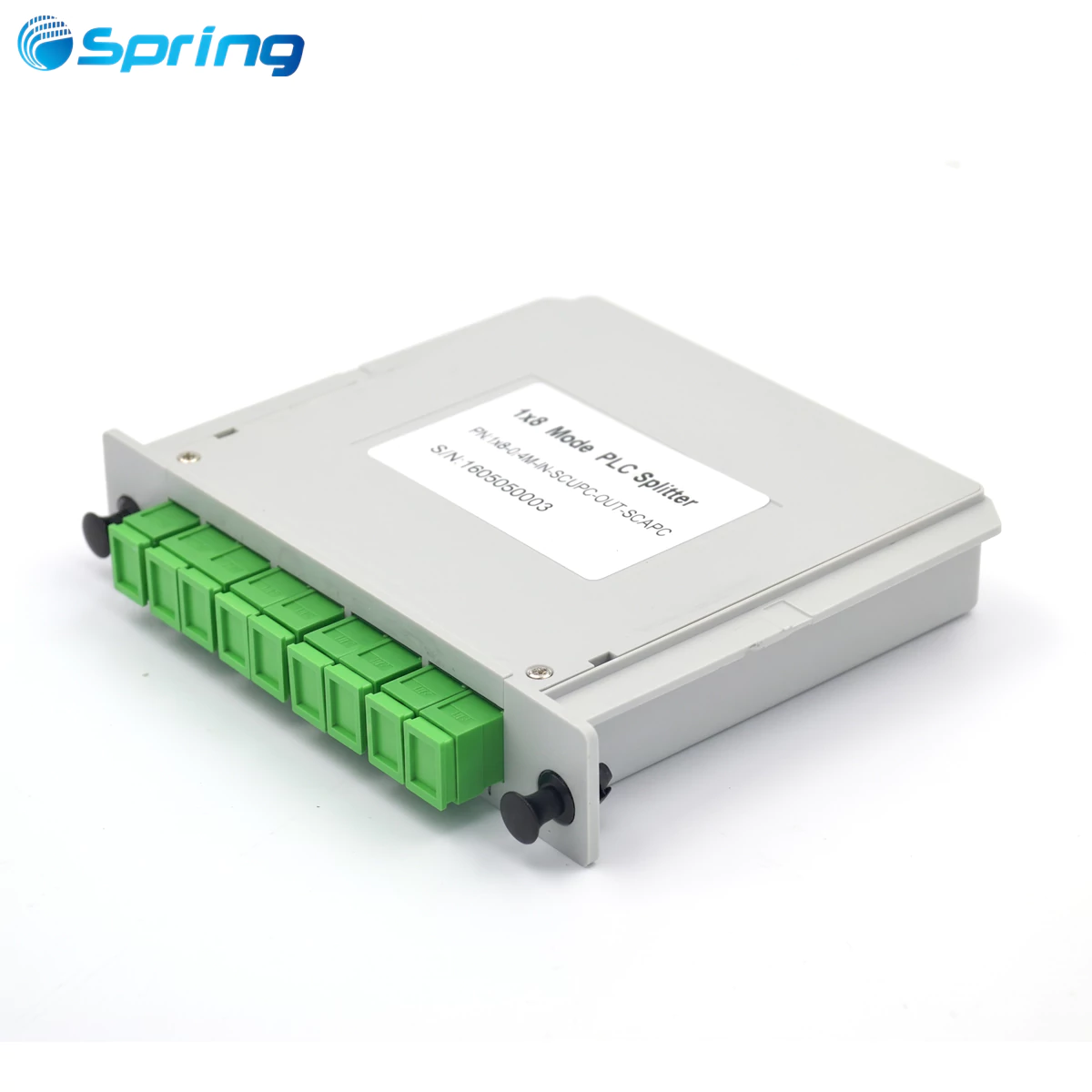
Outdoor Distribution & Connectivity Robust Multiport Service Terminal (MST) solutions (2 to 12 ports), also known as MST boxes, combined with waterproof PLC splitters for stable signal distribution in harsh outdoor environments.
Customer Premises Equipment Rugged and compact Network Interface Device (NID) boxes that provide secure termination at the subscriber's home.
Maintenance & Accessories Drop cable repair closures, patch cords, and pigtails to support long-term network maintenance and service continuity.
Key Functions of a Multiport Service Terminal (MST)
Distributes optical signals from feeder networks to multiple subscribers
Provides IP68-rated sealed outdoor fiber access points
Eliminates or significantly reduces field fusion splicing
Enables fast, scalable plug-and-play FTTH deployment
In short, the MST acts as a plug-and-play fiber access hub for last-mile connectivity.
Types of Multiport Service Terminal (MST)
Aerial MST Installed on utility poles and designed to withstand UV exposure, wind, and temperature variations. Best for: Rural FTTH deployments and overhead aerial networks.
Underground MST Installed in handholes or manholes with enhanced sealing and mechanical protection. Best for: Urban underground fiber networks and municipal infrastructure.
Wall-Mounted MST Designed for building facades and indoor-outdoor transition scenarios. Best for: Apartments and commercial buildings.
Each type is optimized for its specific deployment environment to ensure long-term reliability.
Multiport Service Terminal (MST) vs FAT vs Splice Closure
| Feature | MST | FAT | Splice Closure |
|---|---|---|---|
| Installation | Plug-and-play | Semi pre-terminated | Manual splicing |
| Deployment Speed | Very fast | Medium | Slow |
| Labor Cost | Low | Medium | High |
| Skill Requirement | Low | Medium | High |
| Maintenance | Easy | Moderate | Complex |
| Best Application | FTTH last mile | Access layer | Cable protection |
Key Takeaways
MST eliminates field fusion splicing
Faster deployment than FAT systems
Lower operational risk compared to splice closures
Ideal choice for large-scale FTTH rollouts
MST Deployment Cost vs Traditional Splicing
Compared with traditional splice-based FTTH deployment, MST offers better cost efficiency and faster rollout.
Cost Comparison Overview
| Cost Factor | MST | Traditional Splicing |
|---|---|---|
| Installation Time | Very fast | Slow |
| Labor Cost | Low | High |
| Skill Requirement | Basic technician | Skilled splicer |
| Equipment Cost | Minimal | Fusion splicer required |
| Error Rate | Low | Higher |
Key Cost Benefits
Labor cost reduction of 30–50% in large-scale deployments
Installation time reduced by up to 60%
Lower equipment investment and fewer specialized technicians required
ROI Analysis: Why Operators Are Switching to MST
Example Scenario (5,000 Homes)
Traditional splicing cost: $120–$150 per home
MST deployment cost: $70–$100 per home
Estimated savings: ~$50 per home
Total Project Impact
Total savings: $250,000+
Deployment time reduced by 50–60%
Faster subscriber activation and earlier revenue generation
Long-term benefits include lower maintenance complexity and reduced failure rates due to factory termination.
Key Features of a Multiport Service Terminal (MST)
MST products are designed to pass strict environmental and mechanical testing based on IEC standards:
IP68 Waterproof and Dustproof Protection


IP6X Dust Test: No dust ingress after 8 hours of vacuum testing with talc powder.
IPX8 Waterproof Test: No water ingress after 1-meter submersion for 1 hour.
Corrosion Resistance
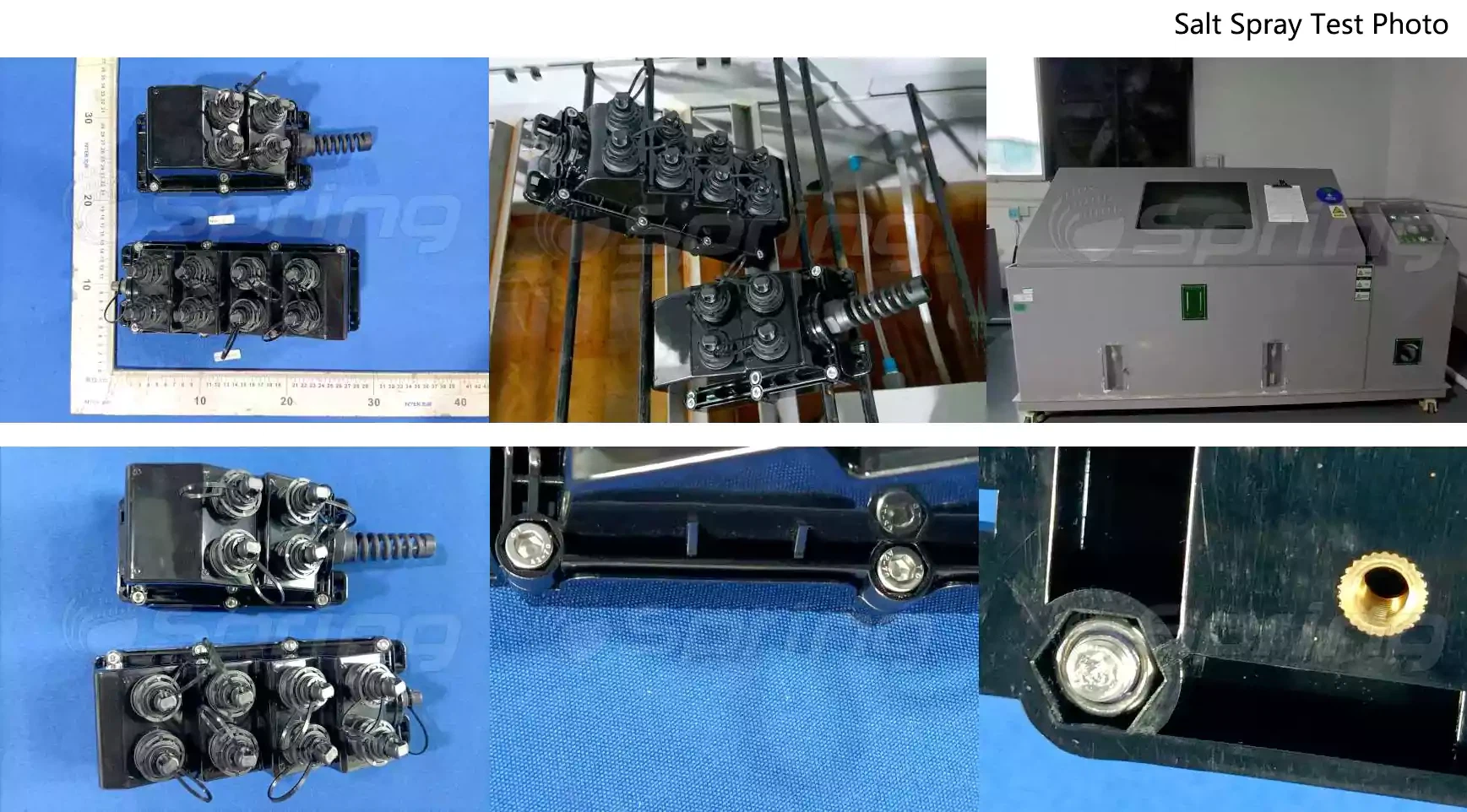
Salt Spray Test (IEC 61300-2-26:2006): No corrosion or discoloration after 24 hours.
Mechanical Strength
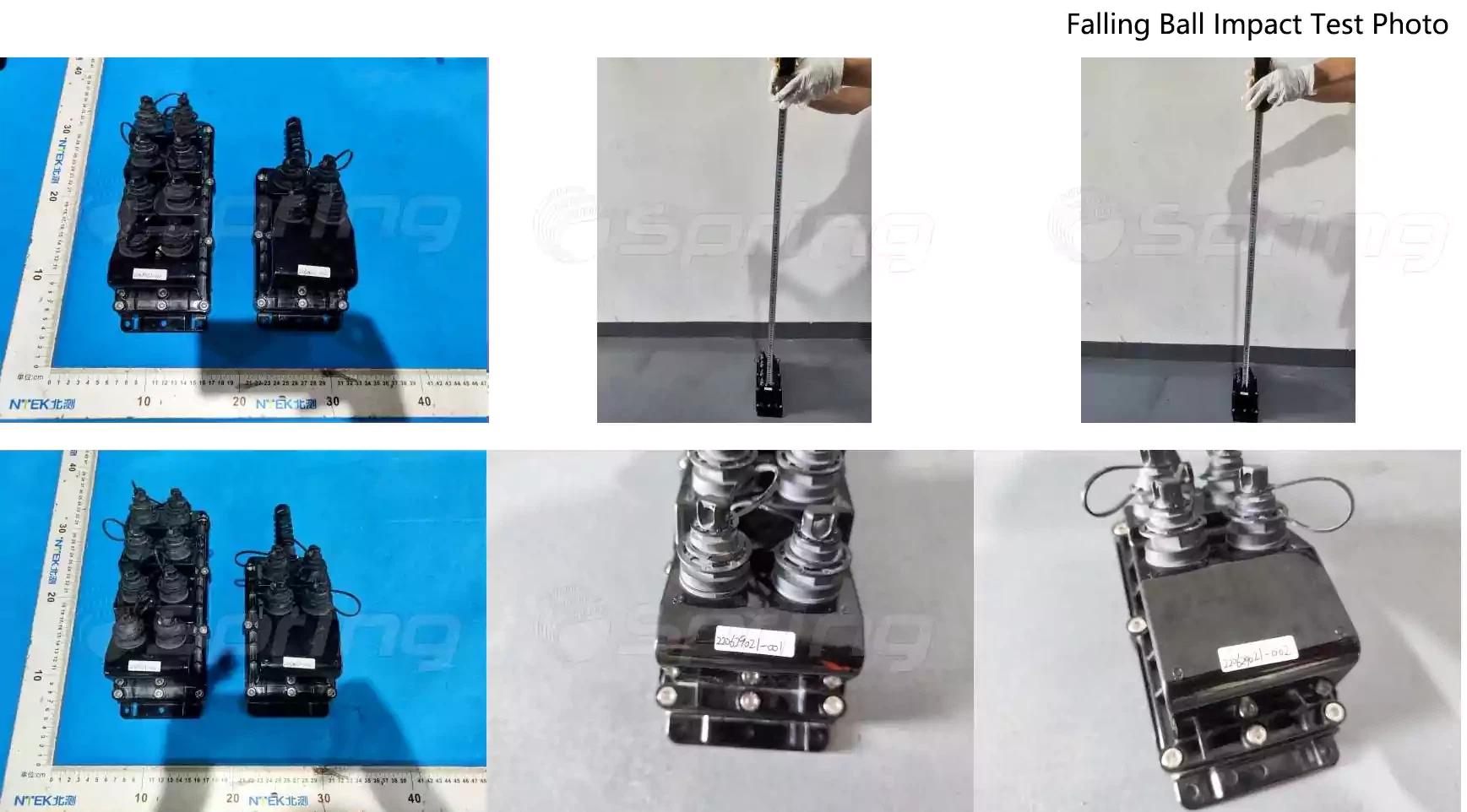

Impact Test: 1 kg steel ball dropped from 1 meter - no structural damage.
Vibration Test: 10 Hz for 30 minutes - stable structure.
Temperature Performance


Temperature Shock and Cycling Tests from -40°C to +65°C - no deformation or performance degradation.
Plug-and-Play Advantage
MST enables tool-free installation using hardened connectors (OPT or Mini SC), ensuring consistent factory-tested performance.
How to Choose the Right MST Solution
Operators should evaluate MST based on:
Port density (4 / 8 / 12 / 16 ports)
Connector type (OPT or Mini SC)
Deployment environment (aerial, underground, or wall-mounted)
System integration and long-term scalability
Real Deployment Case: MST in FTTH Rollout
North America Suburban FTTH Project An ISP deployed FTTH to over 5,000 homes using 8-port OPT-based Multiport Service Terminals installed on utility poles.
Results:
50% faster deployment
35% lower labor costs
Significantly faster subscriber activation
Future Trends of MST
Expansion in 5G FTTA deployments
Growth of XGS-PON architecture
Development of high-density MST solutions
Evolution toward smart ODN
FAQ
Q: What is a Multiport Service Terminal (MST)?
A: A pre-terminated fiber distribution device used in FTTH networks for plug-and-play subscriber connectivity.
Q: MST vs FAT: What is the difference?
A: MST is fully pre-terminated and plug-and-play, while FAT may require partial field splicing.
Q: How long does an MST last?
A: Typically 20+ years under normal outdoor IP68 conditions.
Q: Can MST be used in 5G networks?
A: Yes, MST is widely used in FTTA and 5G backhaul applications.
Conclusion
The Multiport Service Terminal (MST) has become a critical component in modern FTTH architecture. By adopting pre-terminated MST solutions, operators can significantly reduce installation complexity, improve ROI, and accelerate network rollout.
Authoritative References
International Telecommunication Union (ITU-T)
https://www.itu.int/en/ITU-T/
International Electrotechnical Commission (IEC)
https://www.iec.ch/
Fiber Broadband Association (FBA)
https://www.fiberbroadband.org/