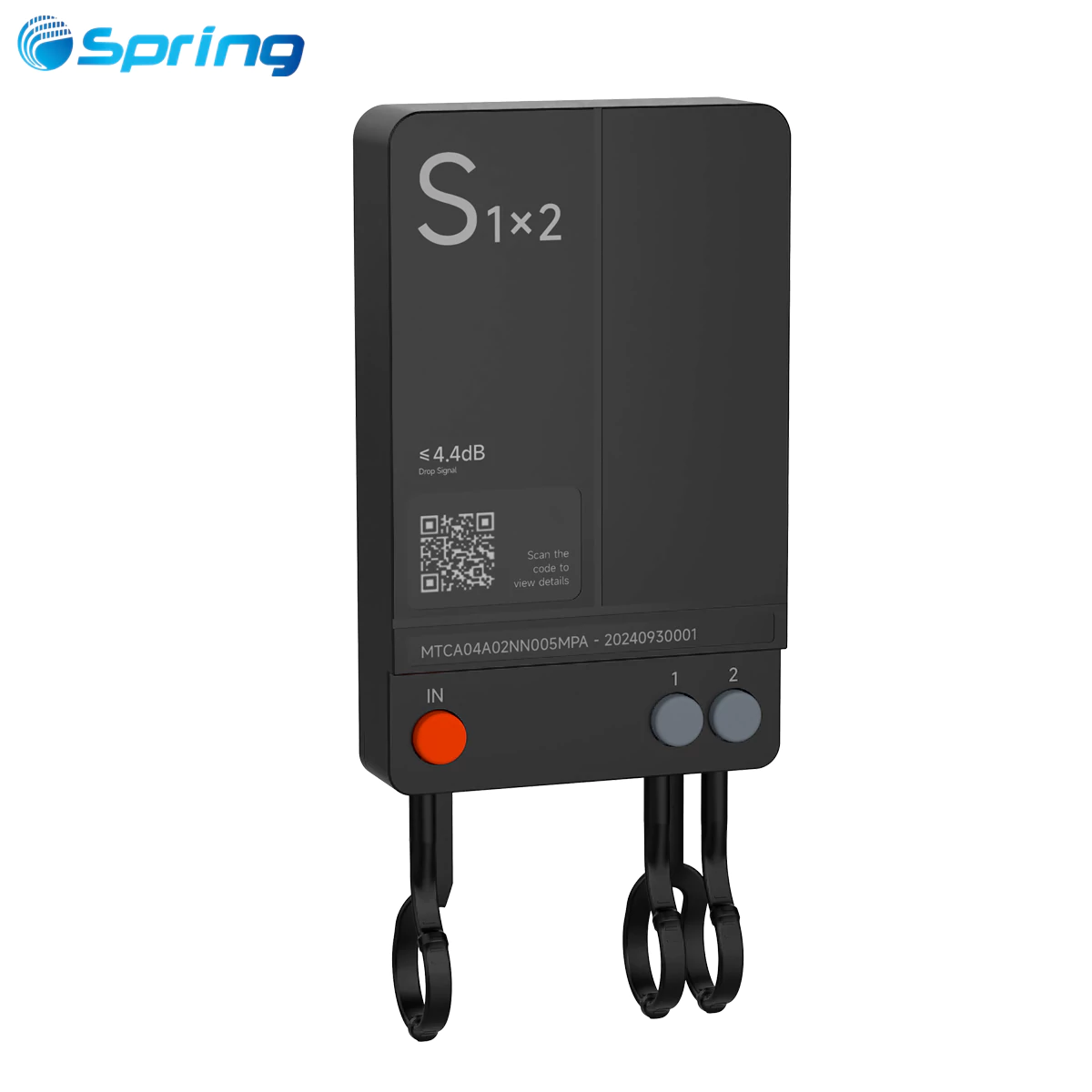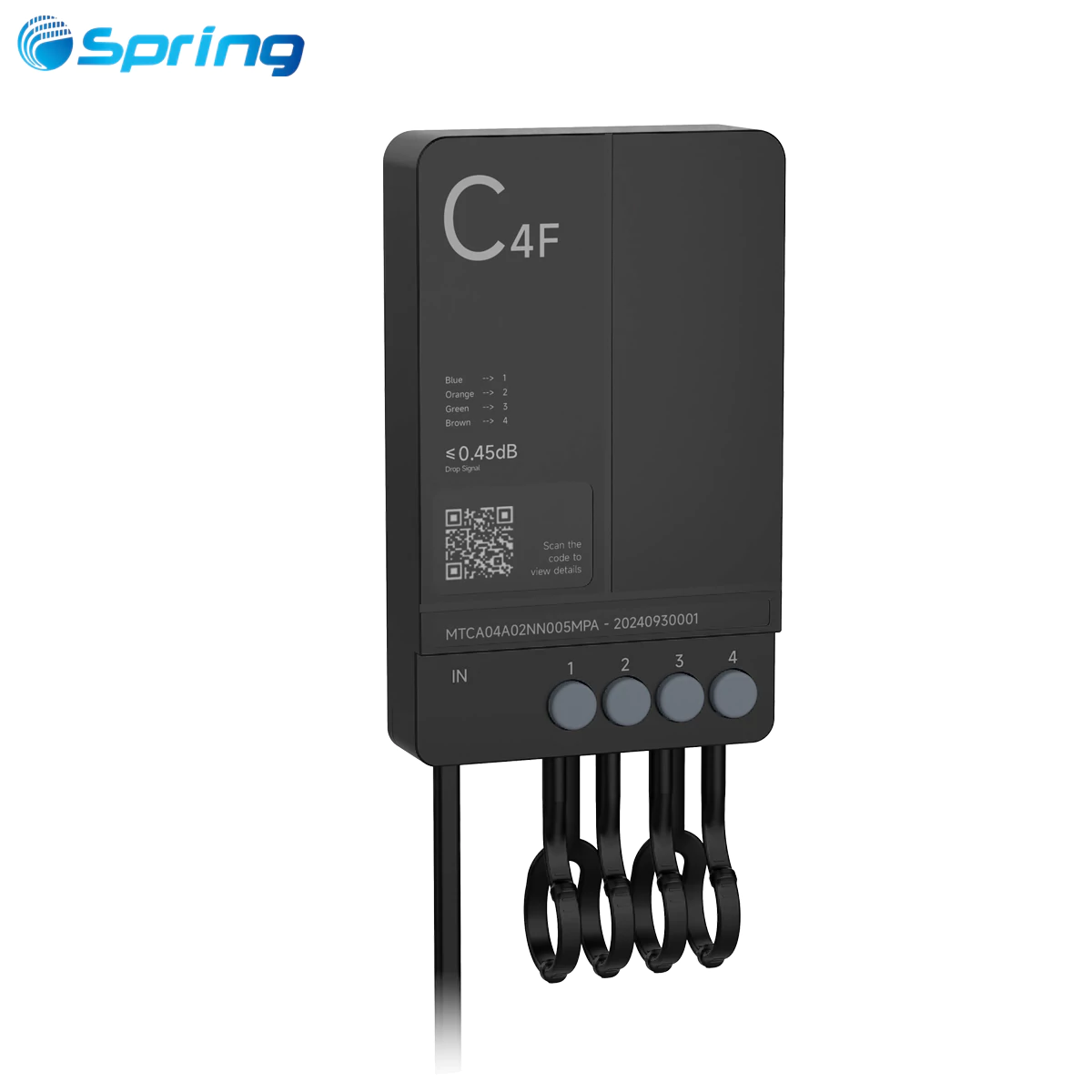


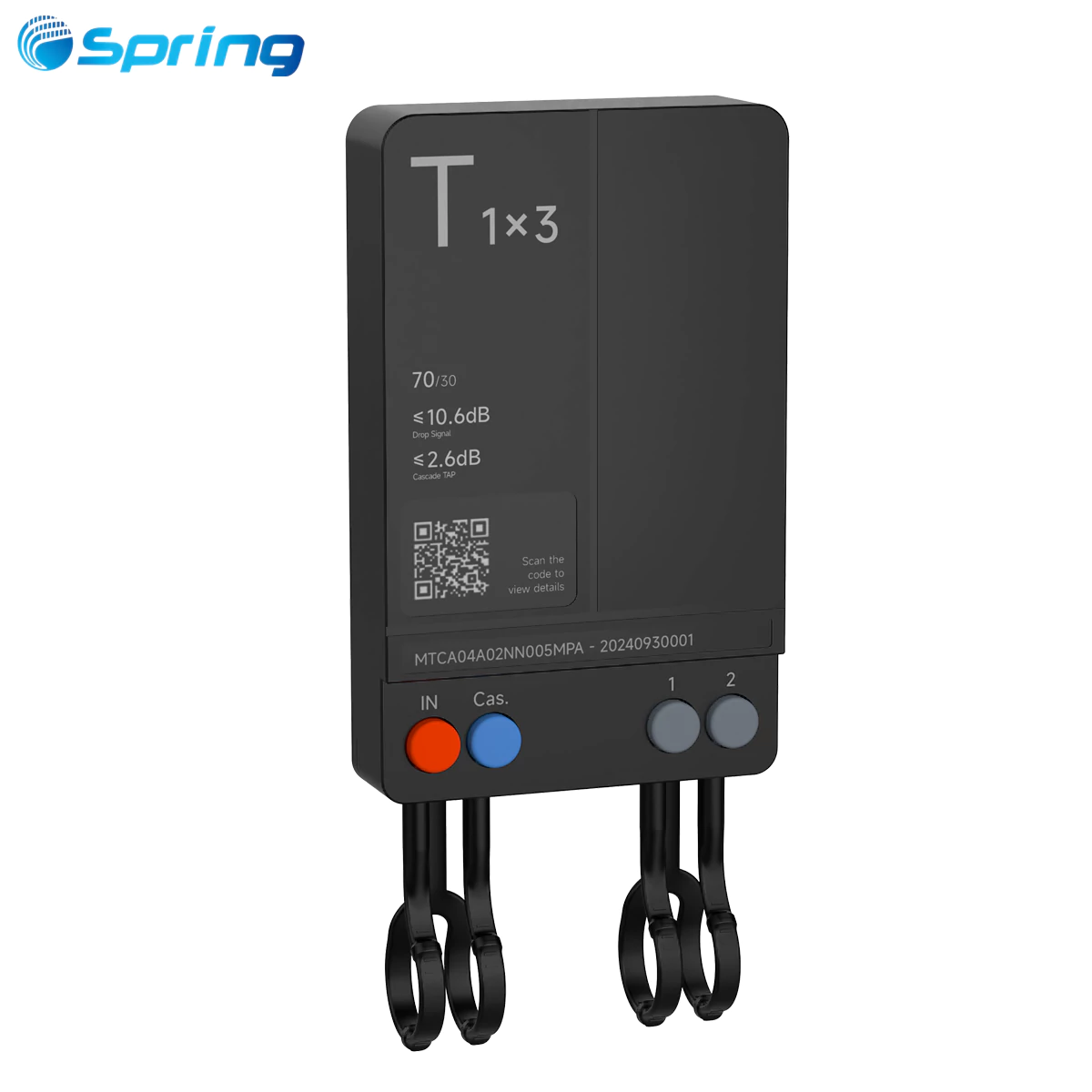
Spring Optical Communication is one of the largest and best mtt series asymmetric fiber tap terminals manufacturers and suppliers with rich experience. Welcome to buy our high quality products or wholesale our customized mtt series asymmetric fiber tap terminals in stock with our factory. Also, free sample is also available if necessary.
Product Overview & Advanced Cascaded PON Topologies
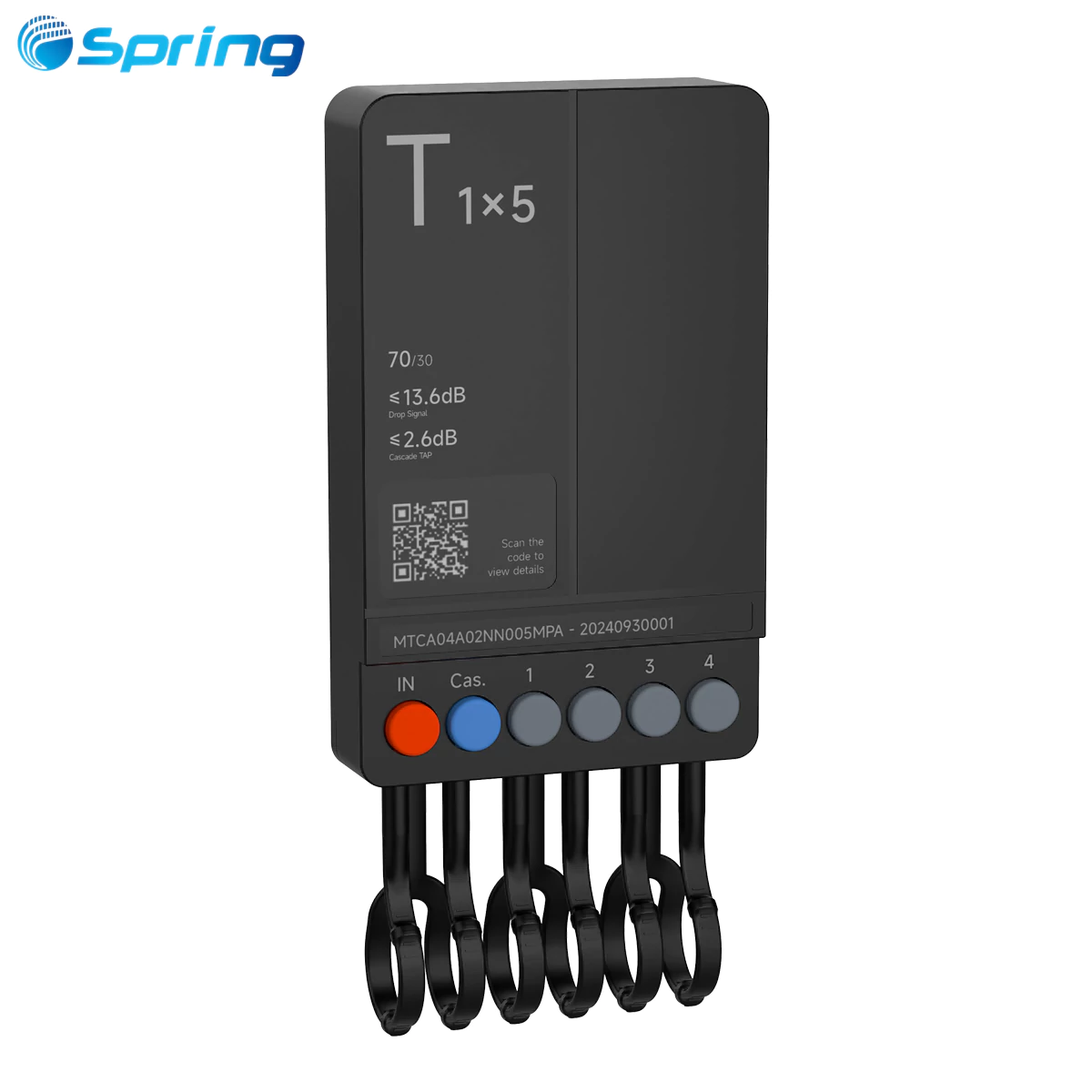
The MTT Series Fiber TAP Terminal Box is a pre-connected, asymmetric optical splitter enclosure designed for cascaded passive optical network (PON) topologies. Unlike conventional balanced hubs, this series incorporates precision uneven optical splitters.
This design routes a high percentage of the incoming signal path directly to a dedicated external Cascade Port to feed subsequent downstream terminals, while provisioning the remaining low percentage of optical power locally to individual subscriber drop ports. Built to act as a direct, high-value replacement in modern optical architectures, all ports are natively Pushlok® compatible, enabling rapid integration into single-mode networks.
By deploying the Fiber TAP family along linear corridors (such as rural highways or suburban streets), network architects can link multiple termination points in a daisy-chain series using just a single single-mode fiber core, reducing upstream backbone cable investment by up to 80%.
Complete MTT Asymmetric Split Ratio Technical Parameters Table
The full specification breakdown across 70:30 and 50:50 asymmetry split profiles is detailed below:
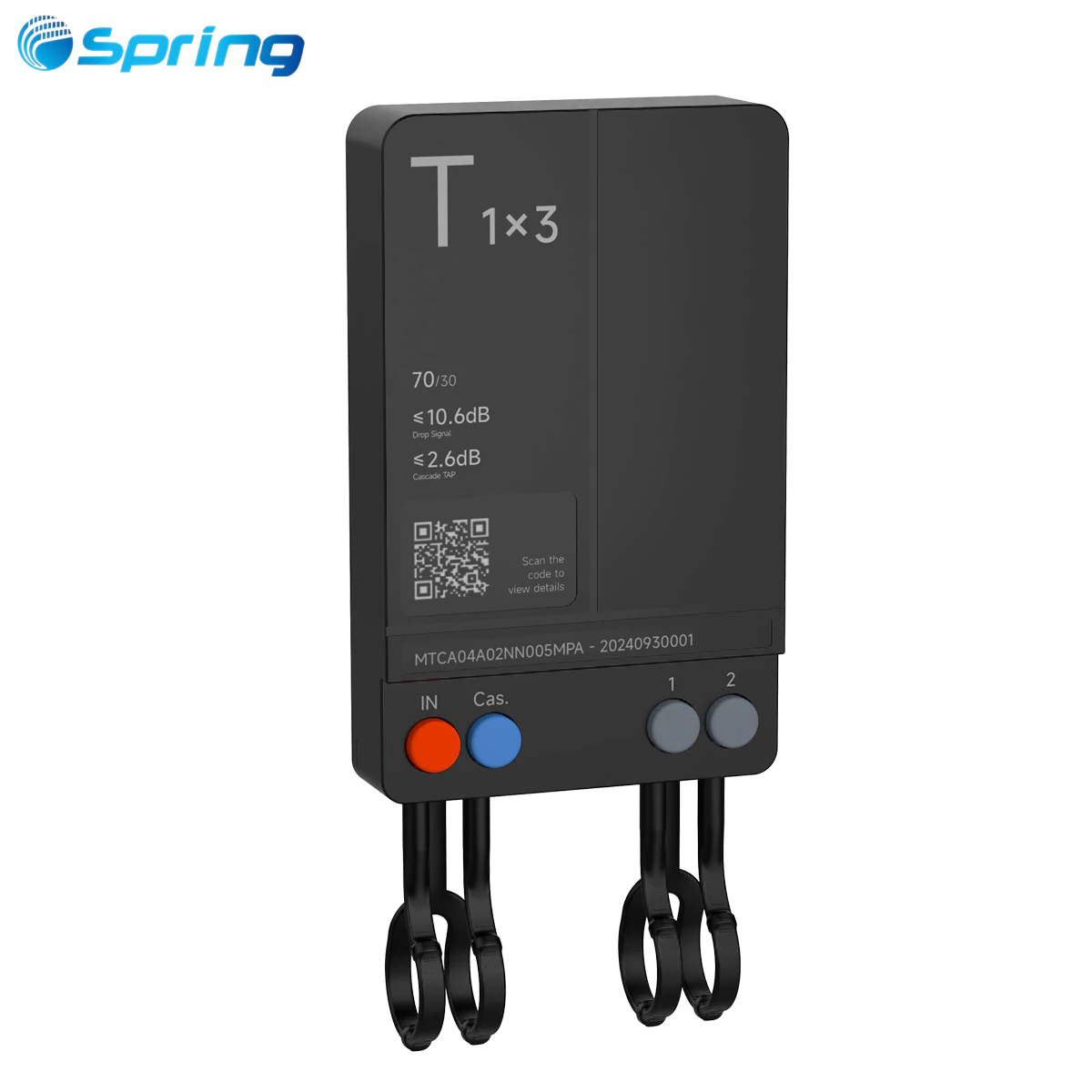
Table 1: 70:30 Asymmetric Ratio Variant Specs

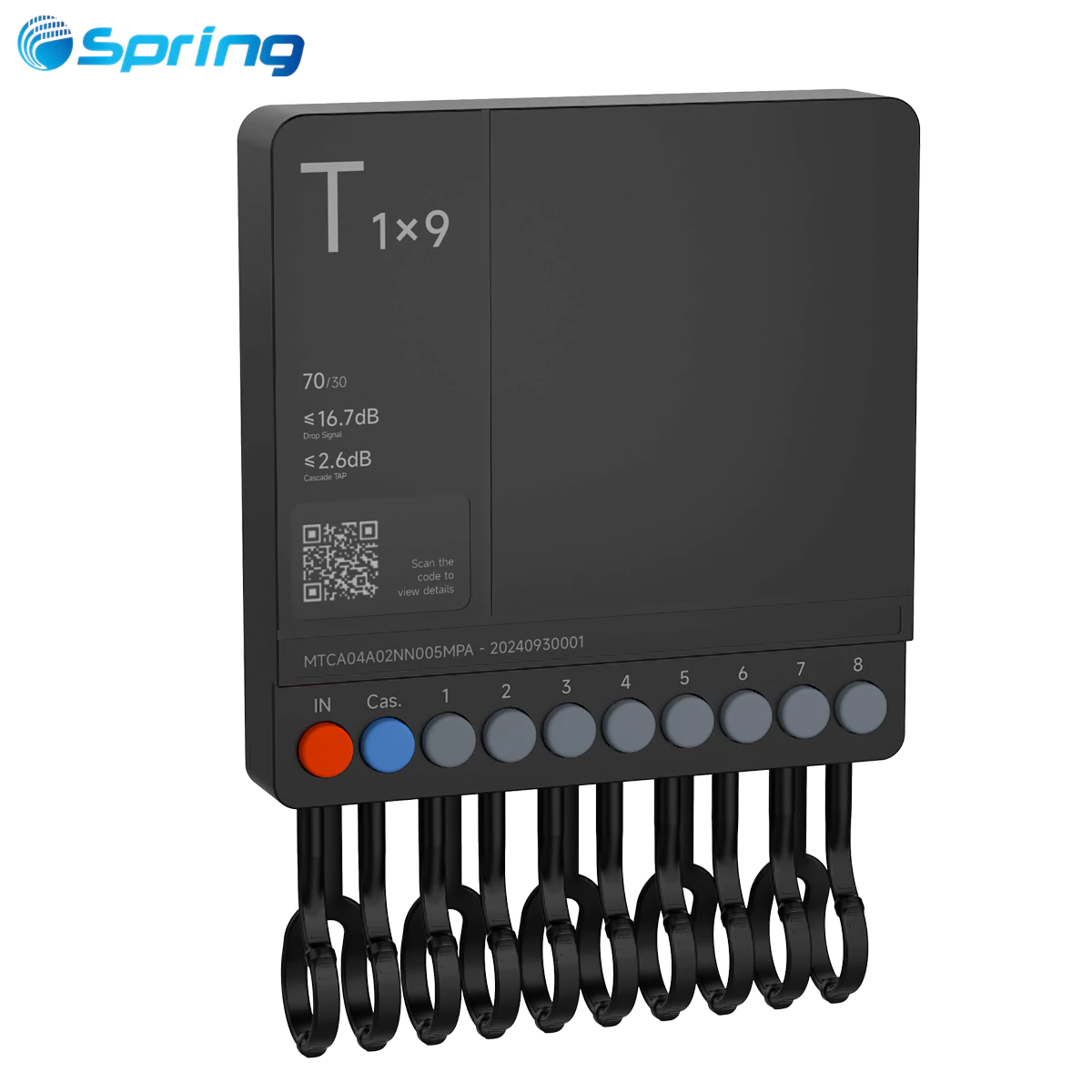
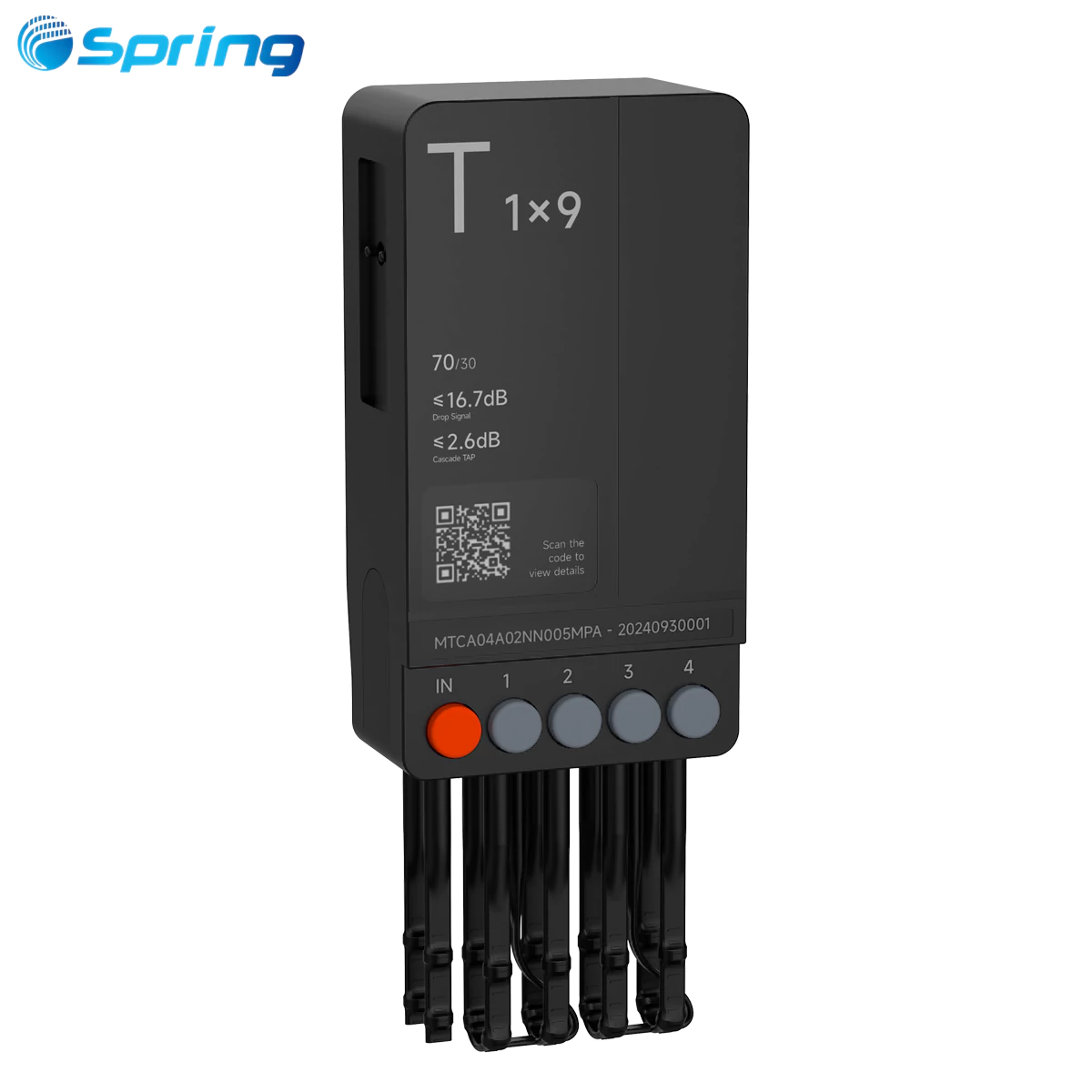
1:9 TAP (70:30) 2 Layers
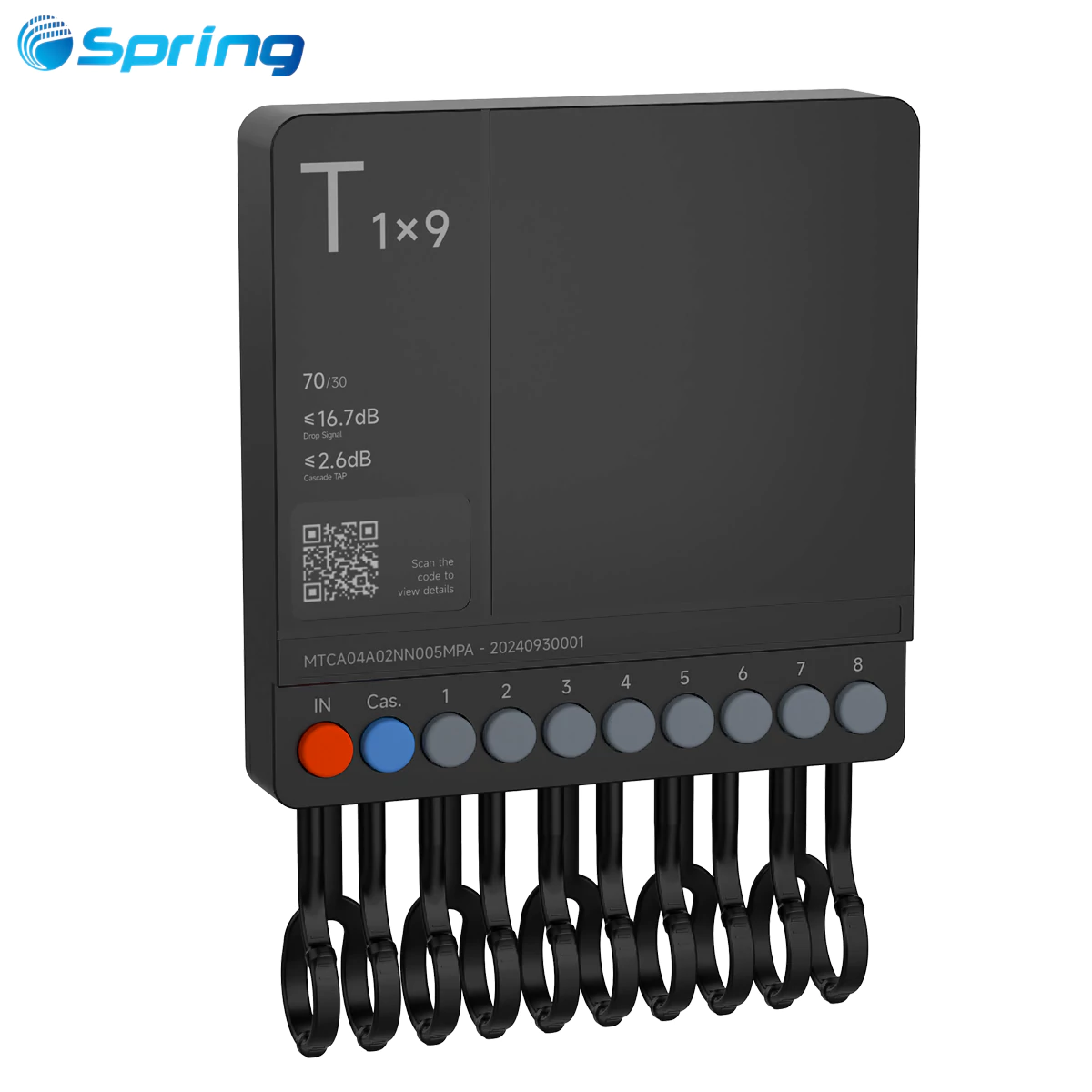
1:9 TAP(70:30)

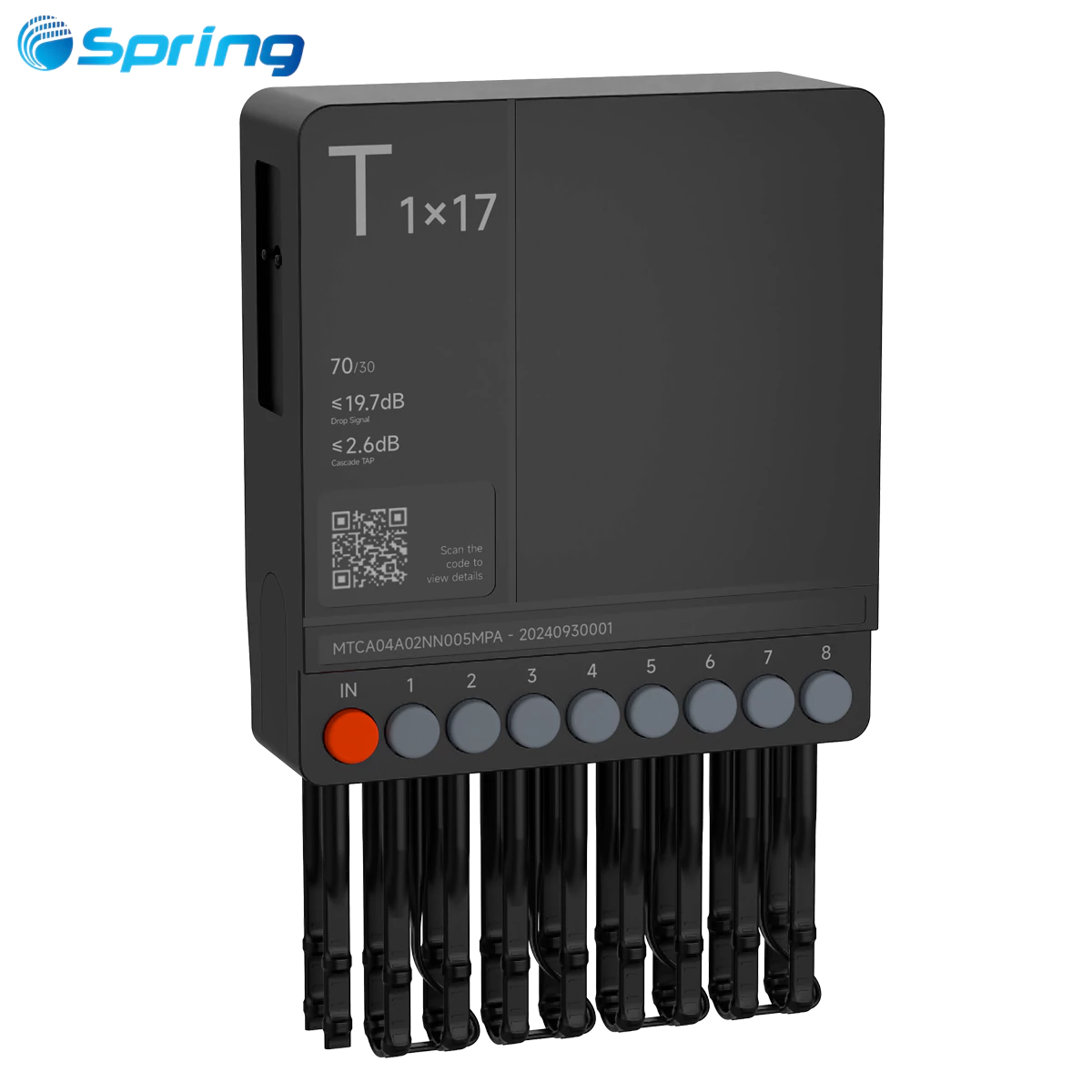
1:17 TAP(70:30) 2 Layers
| Item Model Name | Physical Dimensions (H×W×D) | Integrated TAP Splitter Layout | Split Uniformity | Maximum Insertion Loss (Drop vs. Cascade Link) | Port Configuration Layout | Layer Structure |
| 1:3 TAP (70:30) | 154mm x 97mm x 28mm | 1 pc 1:3 Splitter Module | 70:30 | ≤10.4dB (Drop) / ≤2.4dB(Cascade) | 4 Ports (1 In + 1 Cascade + 2 Local Drops) | 1 Layer Small |
| 1:5 TAP (70:30) | 154mm x 155mm x 28mm | 1 pc 1:5 Splitter Module | 70:30 | ≤13.4dB (Drop) / ≤2.4dB (Cascade) | 6 Ports (1 In + 1 Cascade + 4 Local Drops) | 1 Layer Medium |
|
1:9 TAP (70:30) 2 Layers |
154mm x 82mm x 47.5mm | 1 pc 1:9 Splitter Module | 70:30 |
≤16.5dB (Drop) / ≤2.4dB (Cascade) |
10 Ports (1 In + 1 Cascade + 8 Local Drops) | 2 Layer Small* |
|
1:9 TAP (70:30) |
154mm x 140mm x 47.5mm | 1 pc 1:9 Splitter Module | 70:30 | ≤16.5dB (Drop) / ≤2.4dB (Cascade) | 10 Ports (1 In + 1 Cascade + 8 Local Drops) | 1 Layers Medium |
|
1:17 TAP (70:30) 2 Layers |
154mm x 140mm x 47.5mm | 1 pc 1:17 Splitter Module | 70:30 | ≤19.5dB (Drop) / ≤2.4dB (Cascade) | 18 Ports (1 In + 1 Cascade + 16 Local Drops) | 2 Layers Medium |
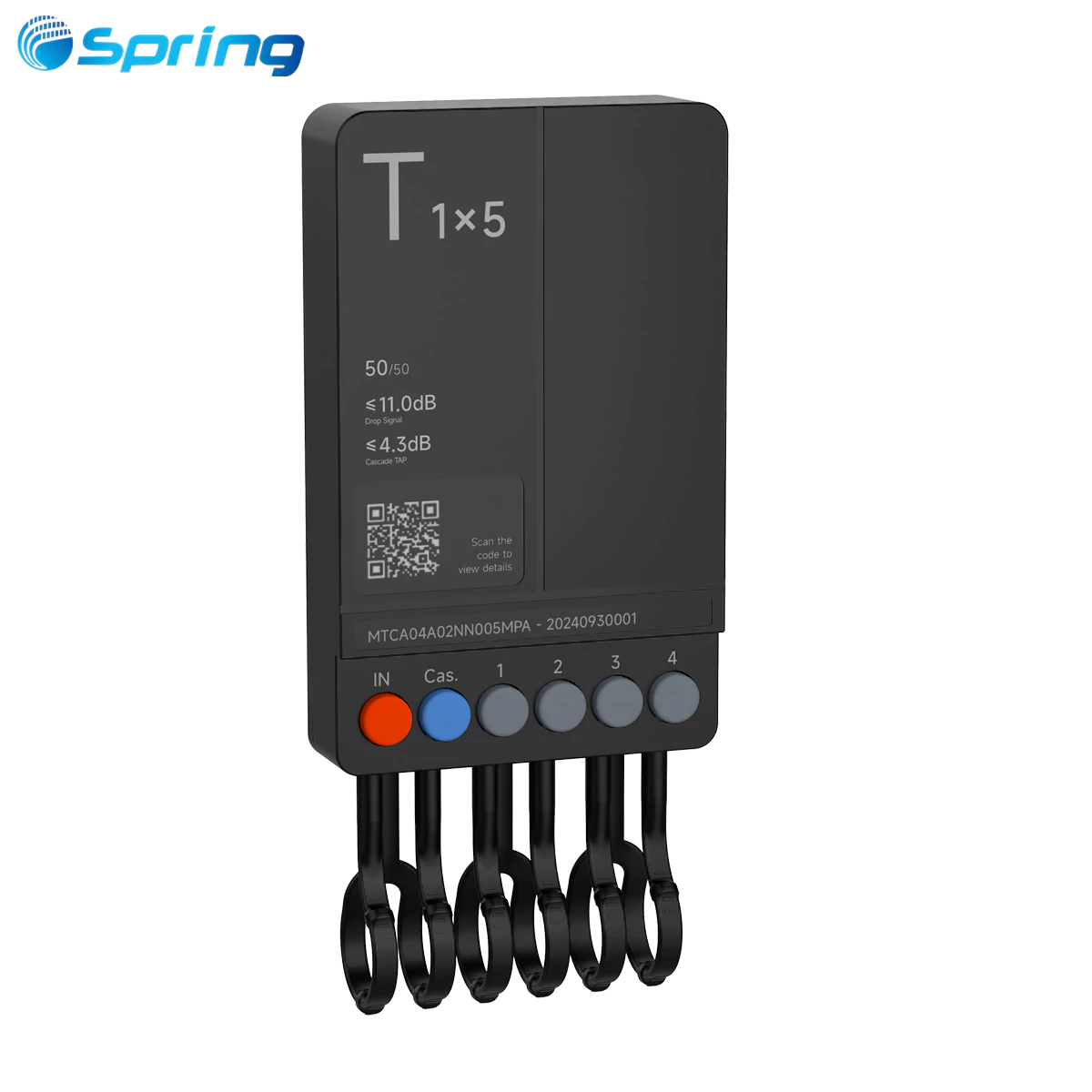
Table 2: 50:50 Asymmetric Ratio Variant Specs

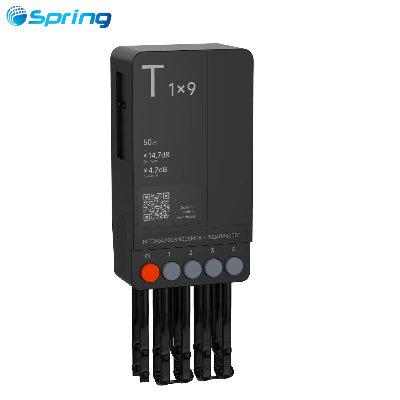
1:9 TAP (50:50) 2 Layers
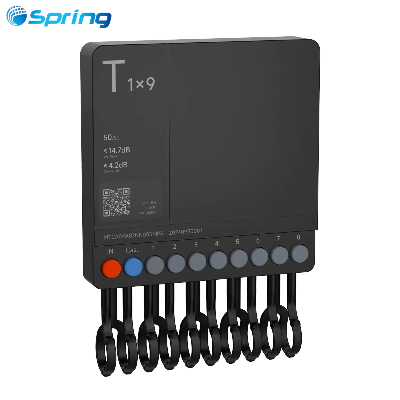
1:9 TAP (50:50) 1 Layers

1:17 TAP (50:50) 2 Layers
| Item Model Name | Physical Dimensions (H×W×D) | Integrated TAP Splitter Layout | Split Uniformity | Maximum Insertion Loss (Drop vs. Cascade Link) | Port Configuration Layout | Layer Structure |
| 1:3 TAP (50:50) | 154mm x 97mm x 28mm | 1 pc 1:3 Splitter Module | 50:50 | ≤ 7.8dB (Drop) / ≤3.6dB (Cascade) | 4 Ports (1 In + 1 Cascade + 2 Local Drops) | 1 Layer Small |
| 1:5 TAP (50:50) | 154mm x 155mm x 28mm | 1 pc 1:5 Splitter Module | 50:50 | ≤10.8dB (Drop) / ≤3.6 dB (Cascade) | 6 Ports (1 In + 1 Cascade + 4 Local Drops) | 1 Layer Medium |
|
1:9 TAP (50:50) 2 Layers |
154mm x 82mm x 47.5mm | 1 pc 1:9 Splitter Module | 50:50 | ≤13.8dB (Drop) / ≤3.6 dB (Cascade) | 10 Ports (1 In + 1 Cascade + 8 Local Drops) | 2 Layer Small* |
|
1:9 TAP
(50:50) 1 Layers |
154mm x 140mm x 47.5mm | 1 pc 1:9 Splitter Module | 50:50 | ≤13.8dB (Drop) / ≤3.6 dB (Cascade) | 10 Ports (1 In + 1 Cascade + 8 Local Drops) | 1 Layers Medium |
|
1:17 TAP
(50:50) 2 Layers |
154mm x 140mm x 47.5mm | 1 pc 1:17 Splitter Module | 50:50 |
≤17.2 dB (Drop) / ≤ 3.6 dB (Cascade) |
18 Ports (1 In + 1 Cascade + 16 Local Drops) | 2 Layers Medium |
Accessory List
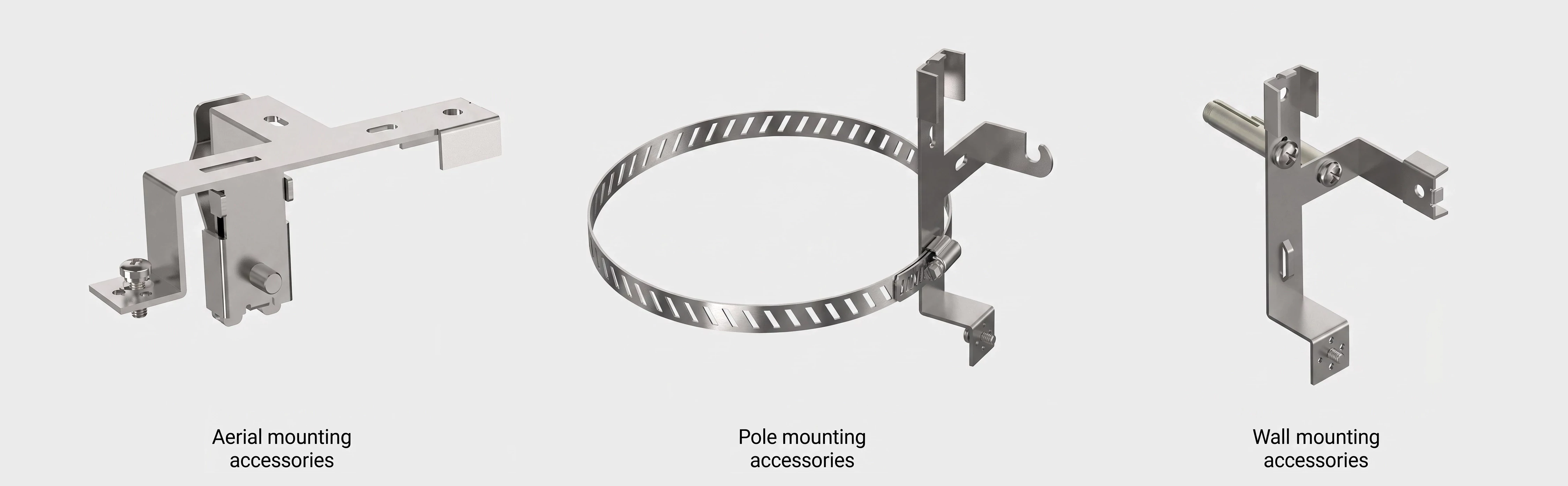
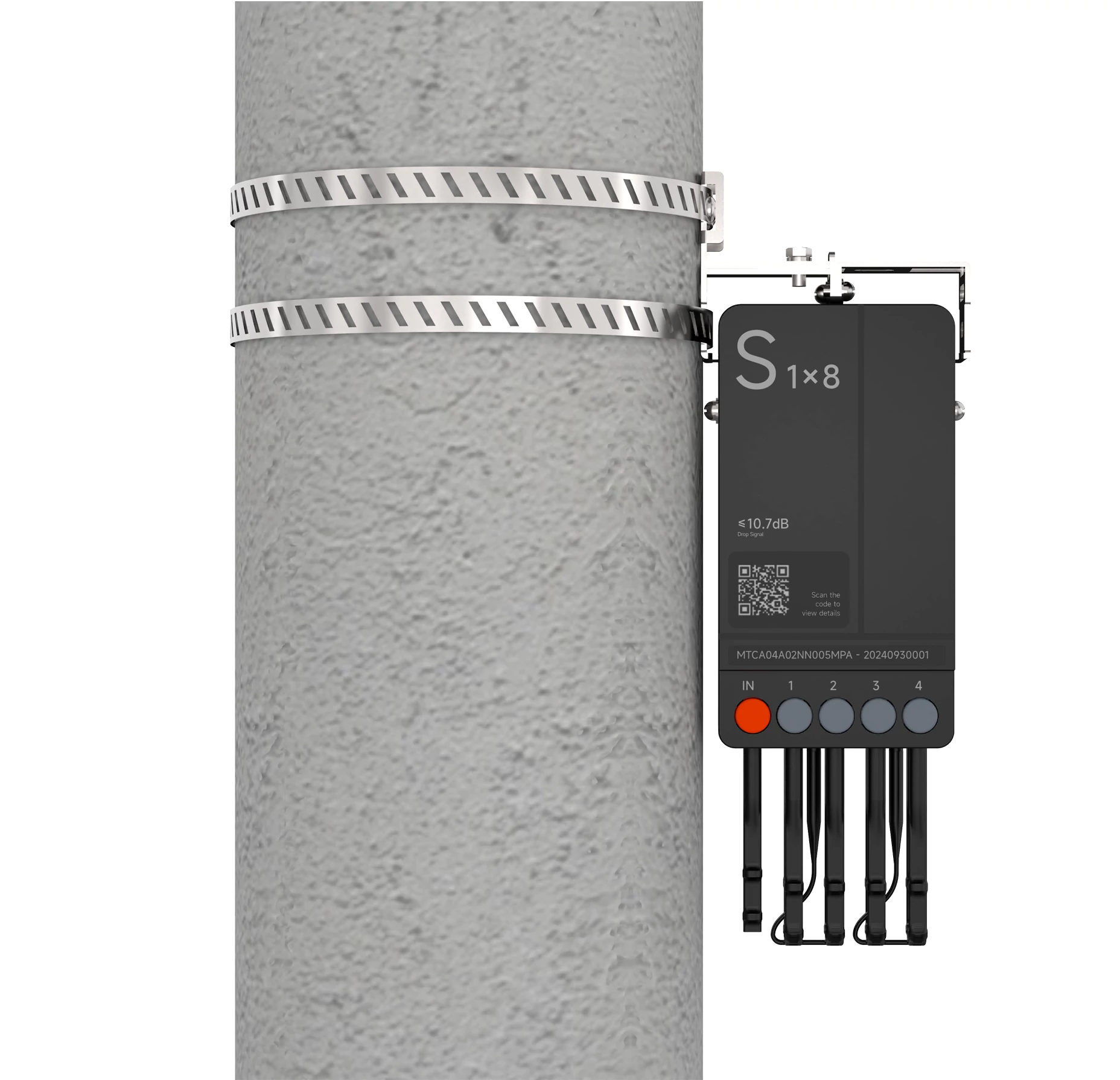
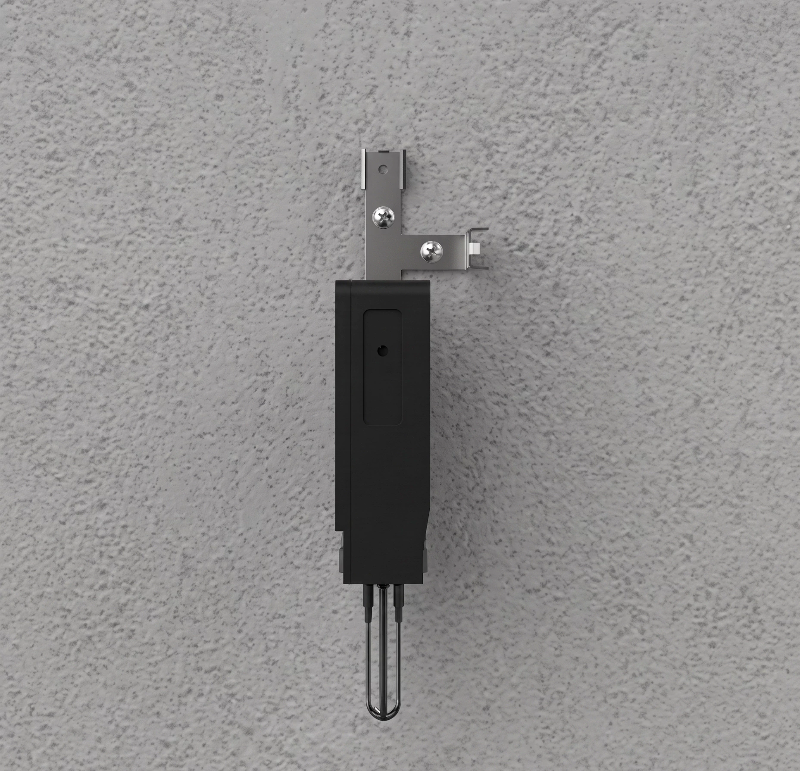
Installation Form

FAQ
What is an asymmetric fiber TAP terminal box and how does it work?
An asymmetric fiber TAP terminal box is a specialized outside plant (OSP) pre-connected enclosure designed for linear or daisy-chained passive optical network (Linear PON) architectures. Unlike standard splitter boxes that divide optical power equally, a TAP terminal utilizes an uneven splitter. It routes the majority of the incoming optical signal power (e.g., 70% or 50%) to a dedicated Cascade Port to feed the next terminal in the chain, while allocating the remaining lower power (e.g., 30% or 50%) locally to distribute to subscriber drop lines.
Are MTT series asymmetric TAP boxes fully compatible with Corning Pushlok® hardware?
Yes, the MTT Series asymmetric TAP boxes are engineered to be 100% Pushlok® compatible. Every input, cascade, and local subscriber drop port features an exact ultra-small form factor (USFF) alignment channel and locking slot that intermates seamlessly with standard Pushlok-style pre-terminated drop lines. This allows service providers to integrate our cost-effective MTT enclosures directly into existing Evolv® or similar slimline hardened network deployments without needing specialized brand tools.
What are the maximum insertion losses for a 70:30 asymmetric TAP terminal?
For our 70:30 asymmetric TAP terminal family, the maximum insertion loss is strictly separated into two technical specifications across 1310nm/1550nm windows:
Downstream Cascade Port: ≤2.4dB, ensuring minimal attenuation so the signal can pass through multiple cascaded boxes over long distances.
Local Subscriber Drop Ports: Ranges from ≤10.4dB (for a 1:3 TAP) up to ≤19.5 dB (for a high-capacity 1:17 TAP), depending on the internal balanced splitter configuration.
What are the differences between 70:30 and 50:50 asymmetric TAP configurations?
The primary difference lies in the optical power budget allocation and the maximum number of terminals you can cascade on a single fiber line:
70:30 Split Ratio: Passes 70% of the light downstream and keeps 30% locally. This configuration allows for a longer daisy chain, typically supporting up to 8 to 10 TAP boxes in a single serial sequence.
50:50 Split Ratio: Passes 50% of the light downstream and keeps 50% locally. This provides more signal power to local subscribers but limits the chain length, typically supporting 4 to 5 cascaded terminals.
Can the MTT asymmetric TAP box be installed in wet underground handholes?
Yes, the MTT series features a certified IP68 ingress protection rating, making it fully qualified for damp or flooded underground environments such as handholes, manholes, and pedestals. The high-strength, UV-stabilized polymer housing is completely moisture-proof and certified to withstand continuous fluid submersion at a depth of 3 meters (10 feet) for 7 consecutive days, ensuring long-term optical reliability and zero signal degradation.
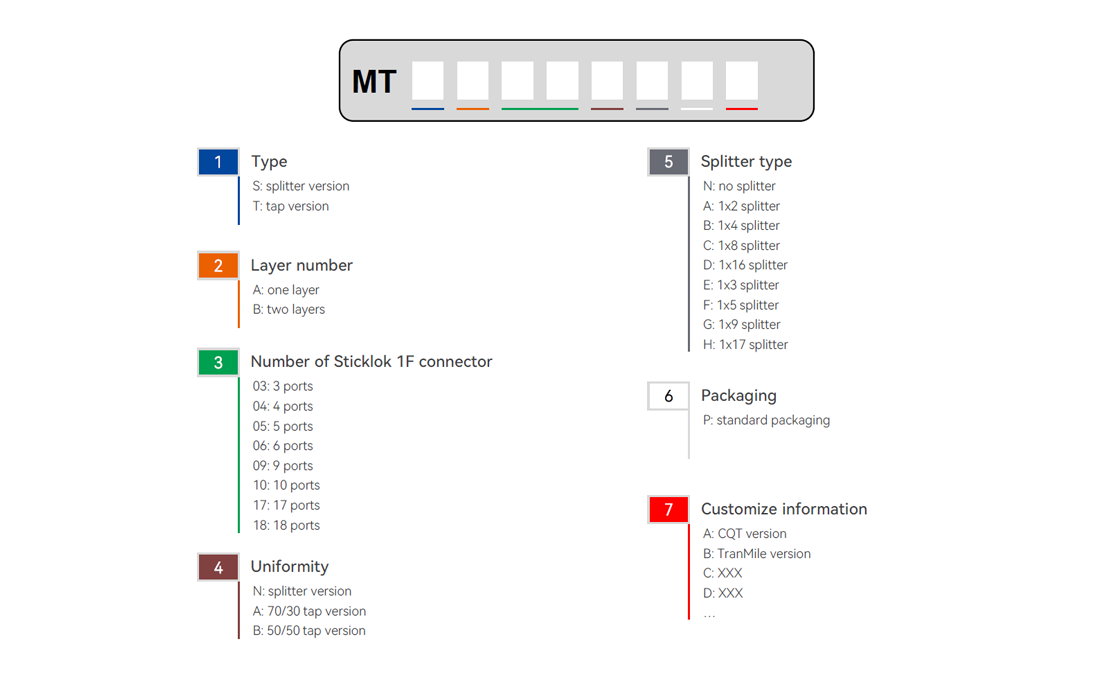
Ordering Code
Hot Tags: mtt series asymmetric fiber tap terminals manufacturers, suppliers, factory, wholesale, customized, buy, bulk, in stock, free sample